PRAHRAN STORE NOW OPEN · THU–MON · 10AM–6PM

Sakai Takayuki  |  SKU: SATA_W3NK_DE150

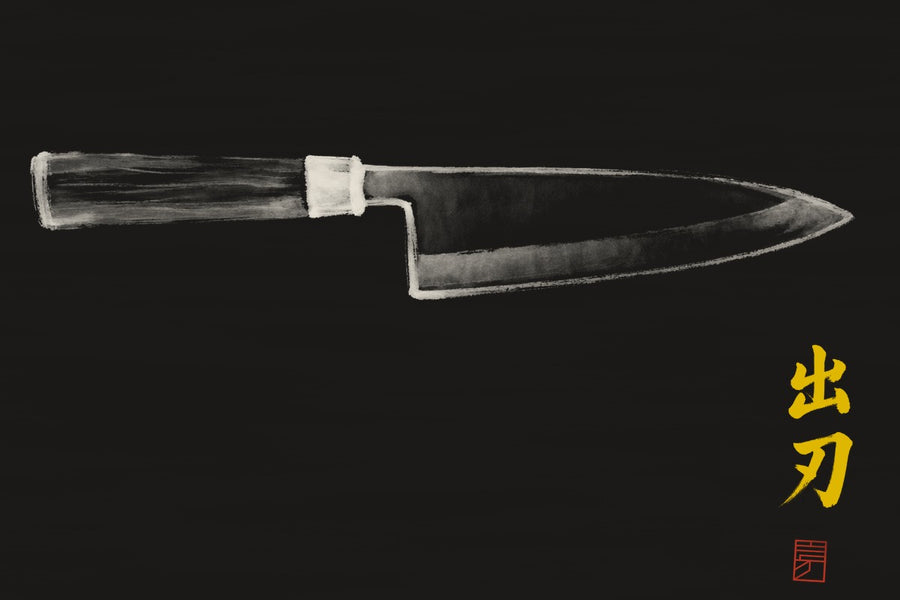
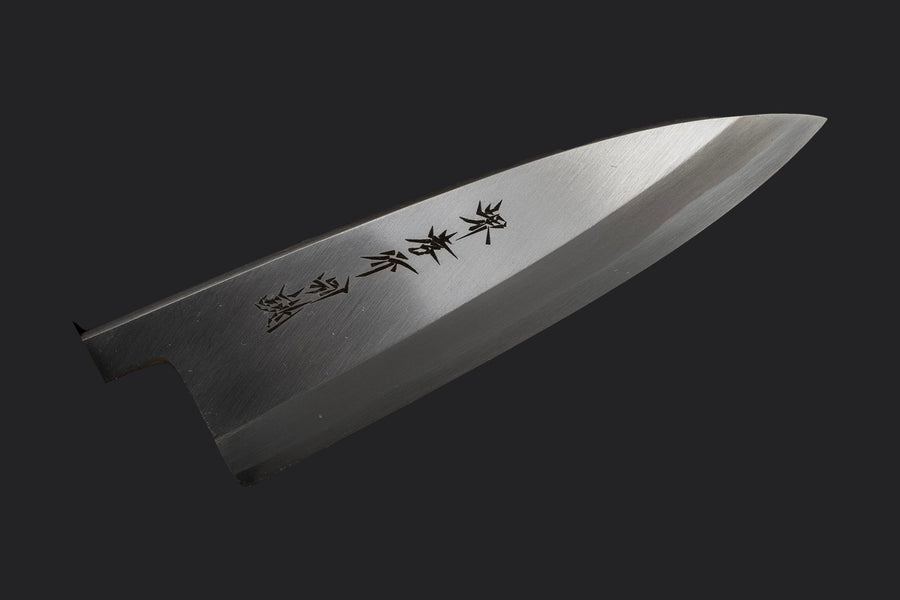
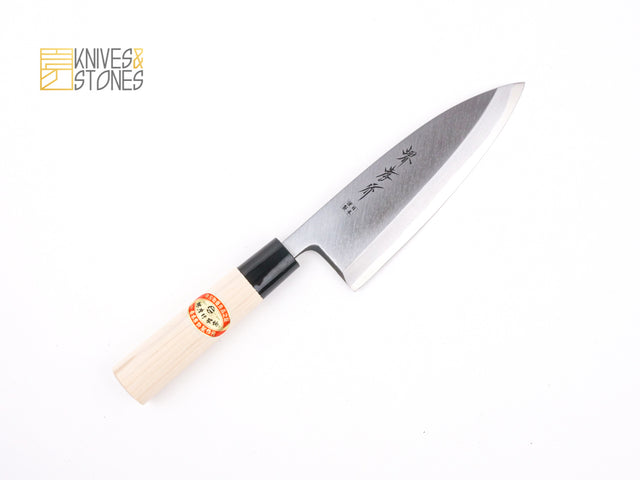
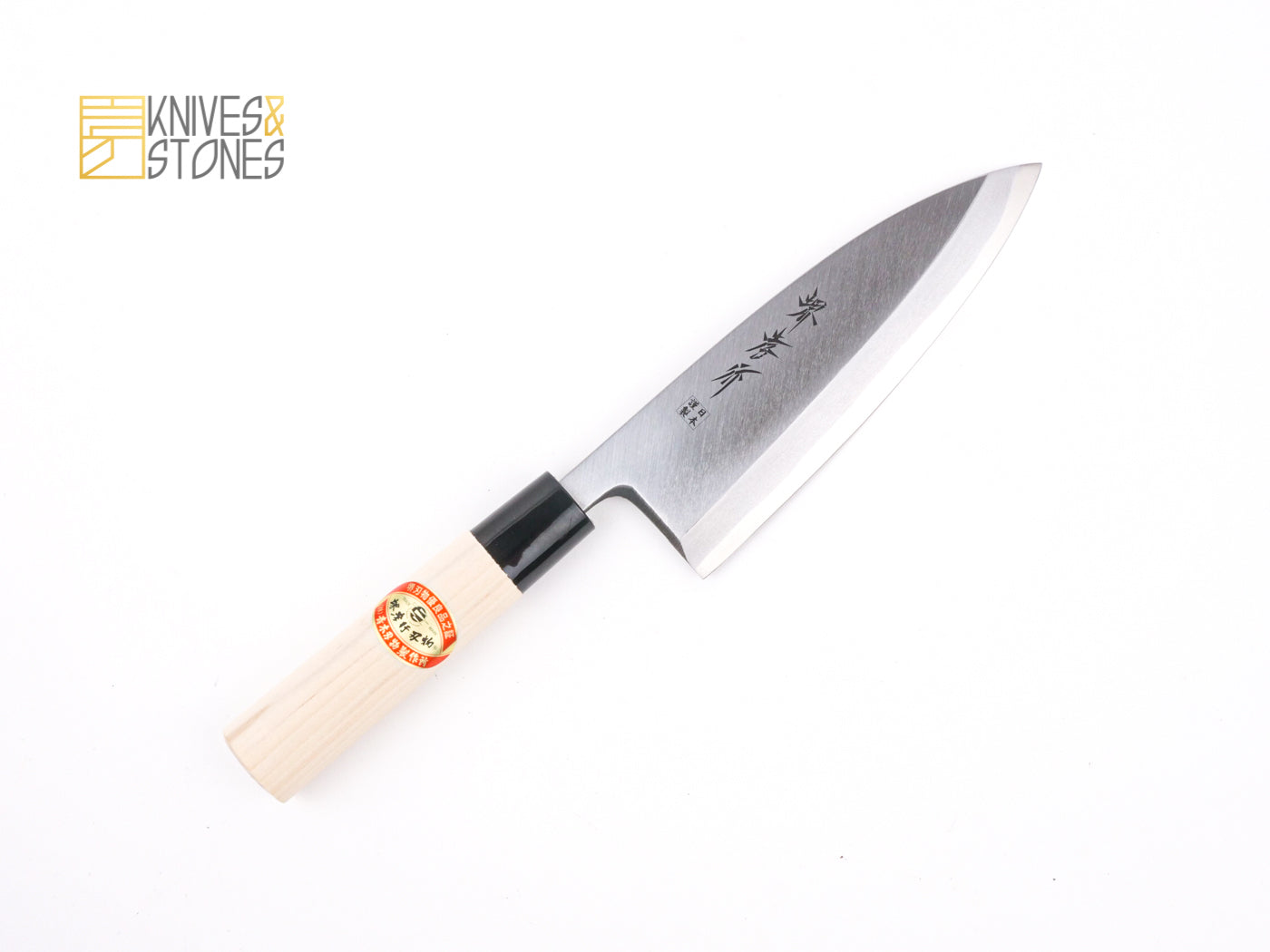
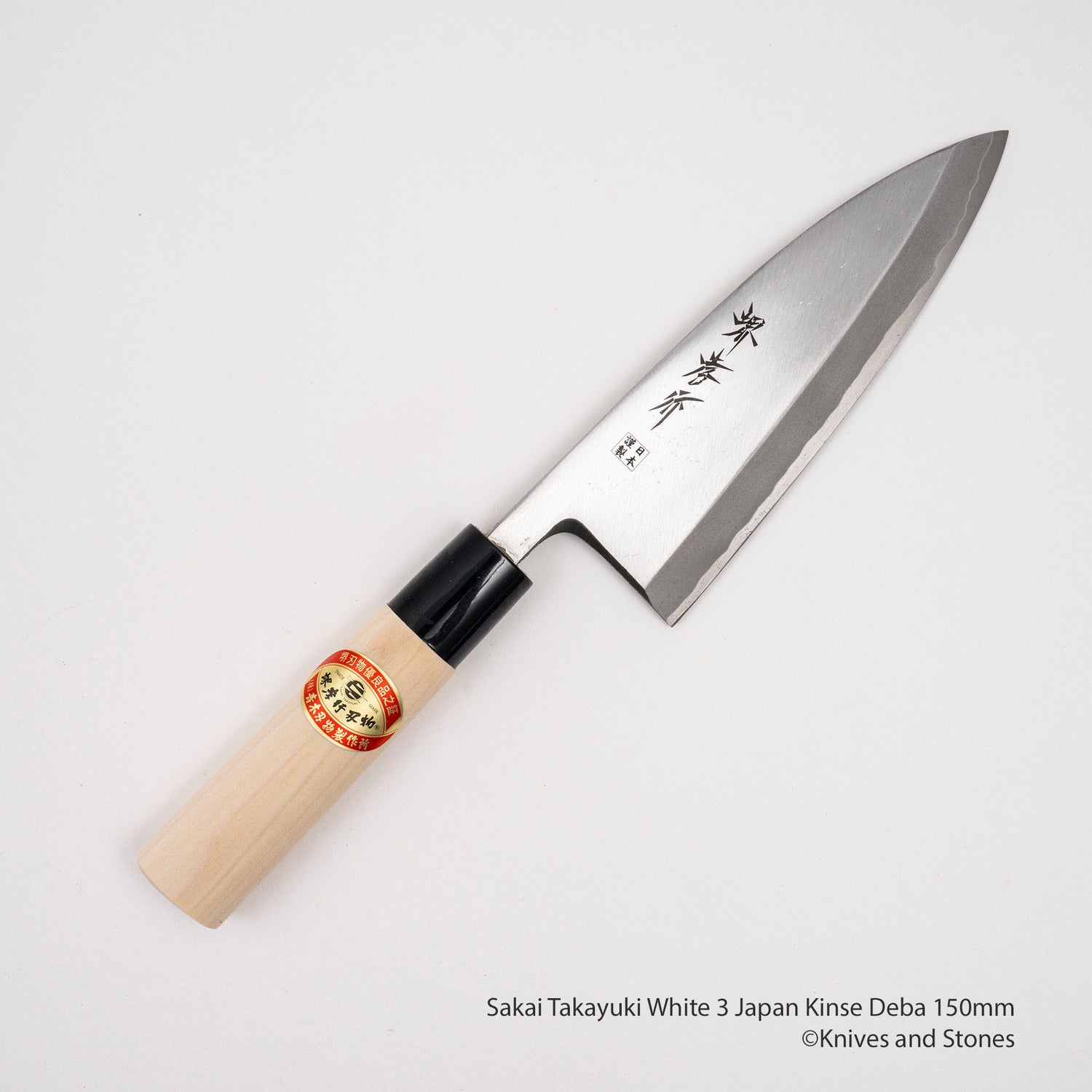
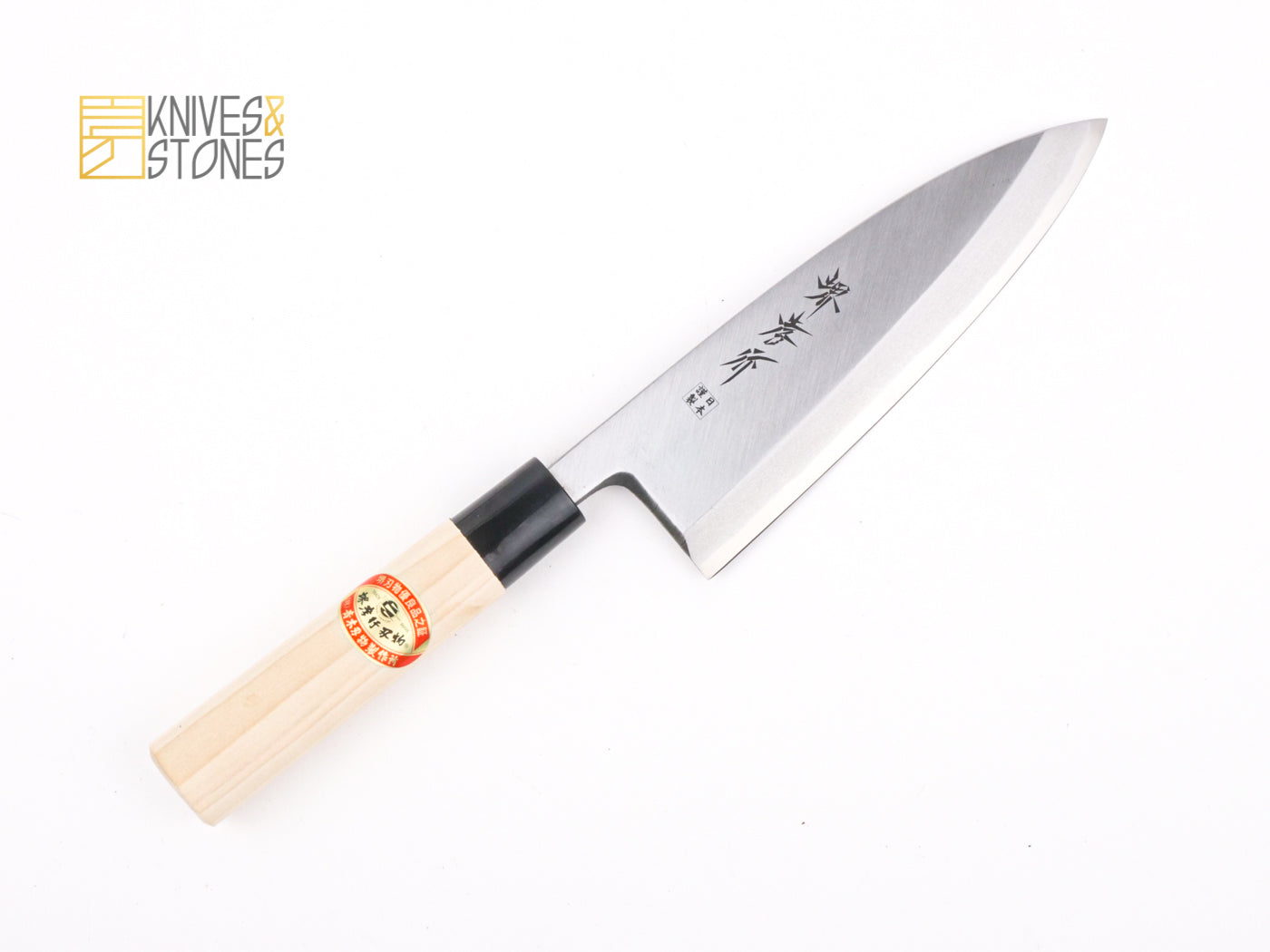
Sakai Takayuki White 3 Japan Kinse Deba 150/165/180 mm

Regular price $159.95
Size

IMPORTANT: Carbon steel knives can rust or patina quickly if not cared for properly. They require regular cleaning, drying, and oiling. If you are unfamiliar with carbon steel maintenance, we recommend choosing a stainless steel option instead.

Sold out right now

Leave your email and we’ll send one message the moment it’s back in stock.

One email, no marketing. Privacy policy.

Availability

  • St Peters, NSW —
    2 Bishop St, Unit 2, St Peters NSW 2044
  • Crows Nest, NSW —
    107 West St, Shop 1, Crows Nest NSW 2065
    Pickup only
  • Prahran, VIC —
    180 Commercial Road, Shop 1, Prahran VIC 3181
    Pickup only
Detailed Specifications
Line Sakai Takayuki Kinse White 3
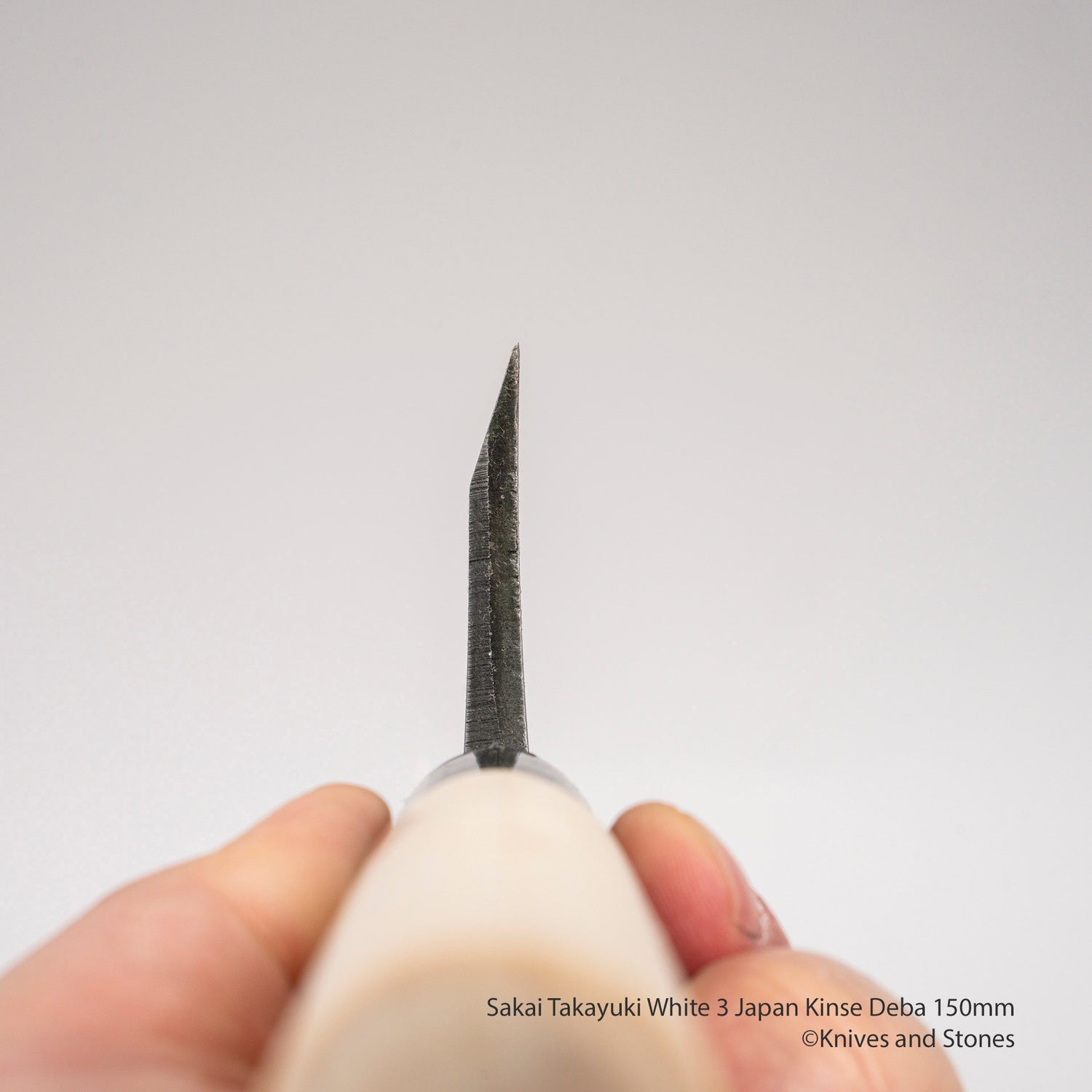
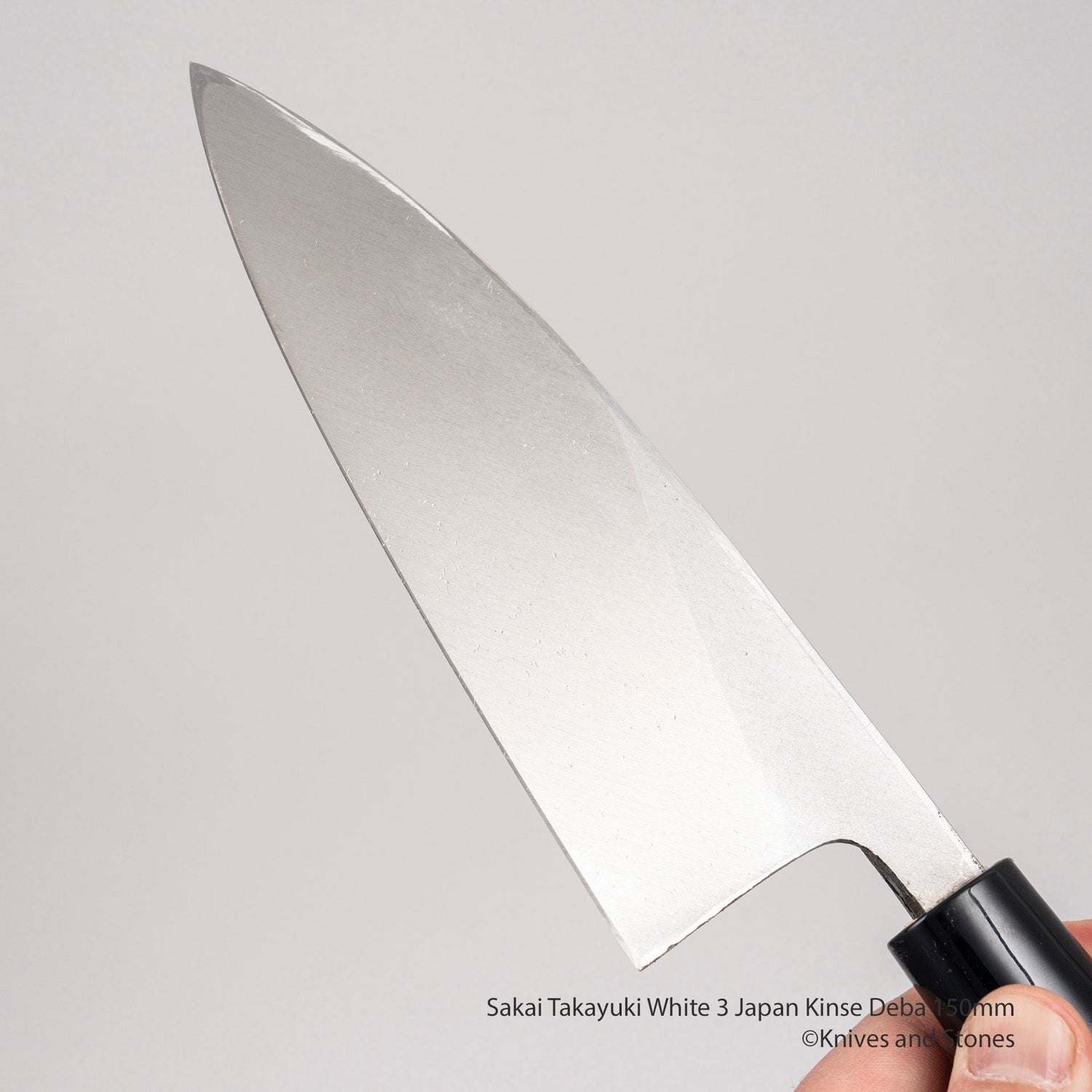
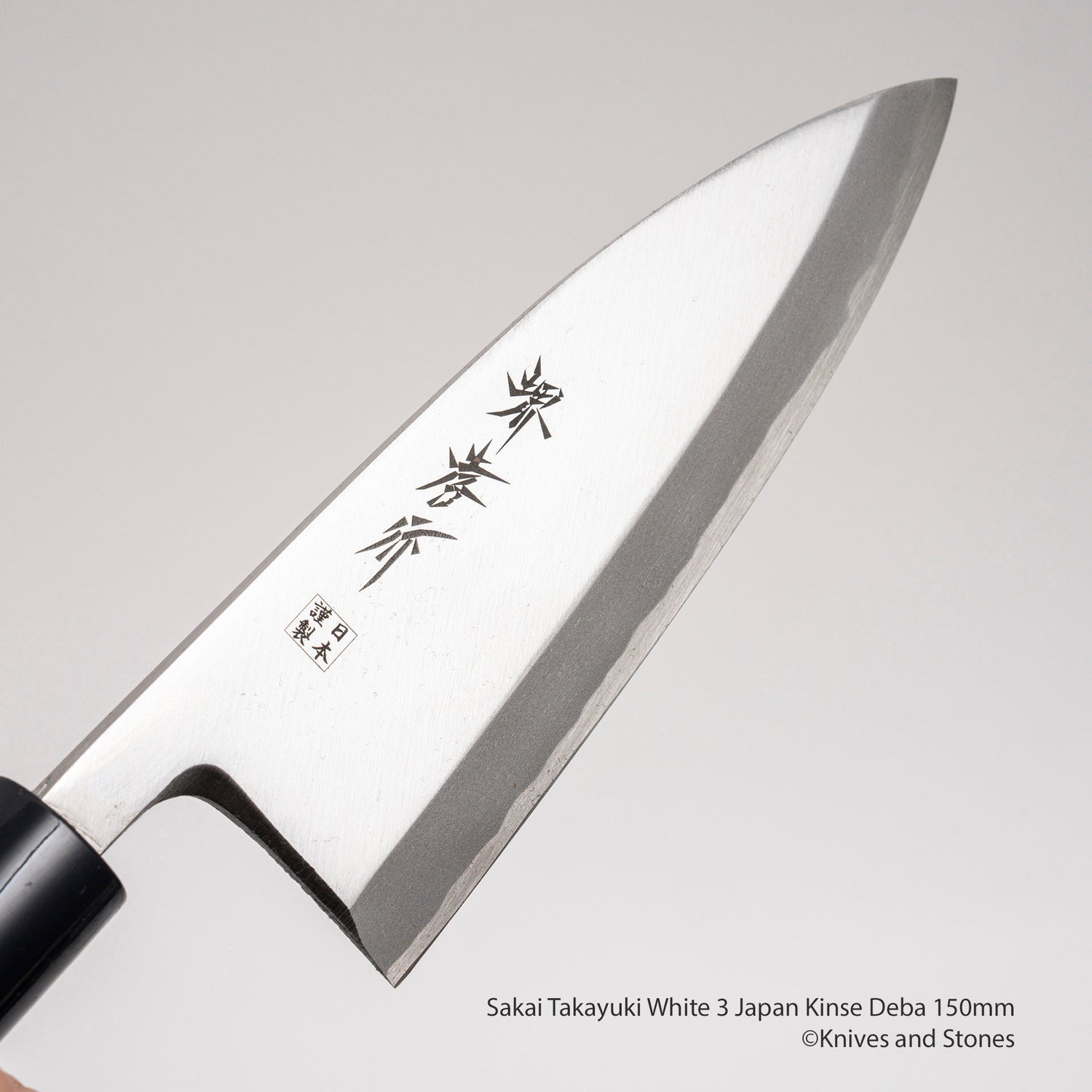
Profile Deba / Japanese fish knife
Steel White 3 / Shirogami #3 | Carbon
Blade Construction Nimai - Soft Iron Clad
Hardness (HRC) 59 - 61
Surface Finish Kasumi
Handle
Region Sakai
Best for
  • Pro chefs
  • Students
  • Free shipping for knives over AU$200 Australia wide.
  • World-wide shipping via DHL Express, 3 to 5 days.


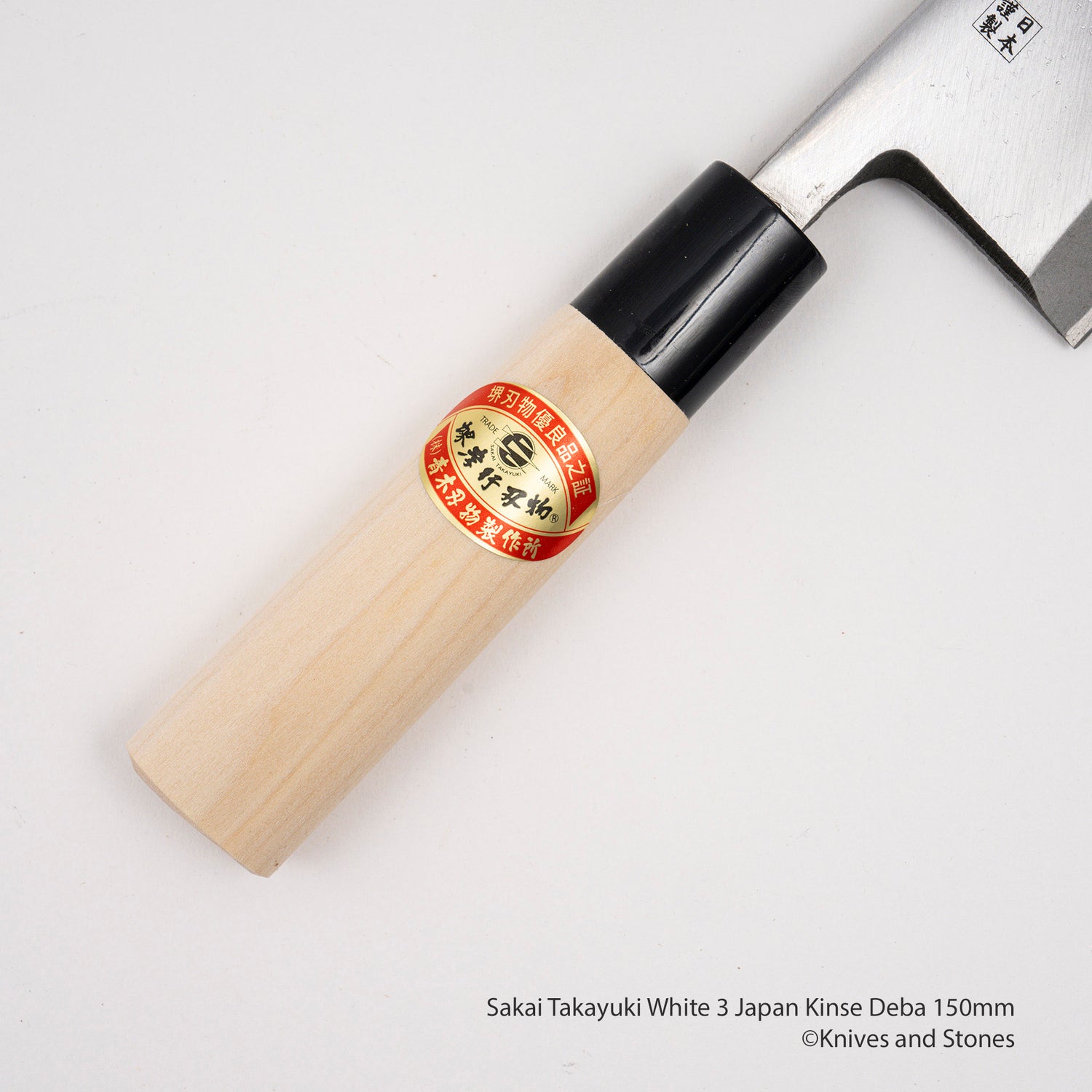
The Sakai Takayuki Kinsei(謹製) line contains a series of single bevel knives in Hitachi Yasugi White #3 carbon steel, made for entry level Japanese chefs who are in need of an entry level but authentic WA Hocho. These knives are forged in the classic Nimai soft iron clad fashion, paired with a Ho wood handle, offering an affordable way to get into the world of single bevel knives as they are a bit harder to find.

The steel used is White #3 carbon steel, although the less carbon content have lead to a slightly lower hardness, the ease of sharpening can be an advantage for a beginner's knife. As single bevel sharpening is different from double bevel, and the amount of material removal required on the bevel is much greater, a softer steel can be beneficial as is can regain its sharpness sooner.

The chipping and damages can also be repaired much easily, which is a big plus considering that many of the single bevel knives have a thinner edge and some of them will be put to heavy use(Deba). The user can repair these damage much easily and modify the profile and geometry with a stone instead of machinery. For those who want to learn advanced sharpening and polishing, the soft iron cladding also offers a great testbed, where a Hongasumi polish can be effectively achieved.

Of course the downside would be the need for maintenance for a carbon steel, plus the Ho wood handle which is not as resistant to moistures and stains. But they are exactly how WA honcho been built for hundreds of years, and I wouldn't be complaining with the price that Sakai Takayuki offers for getting into the world of traditional single bevel knives.

Pros Cons
  • Budget friendly
  • Great for professionals
  • Prone to rust
  • Non-premium steel
Care Instruction
  1. Don't cut hard things! Japanese knives are brittle so bone hacking is a NO NO!
  2. Wash with neutral detergent after use, and wipe dry;
  3. Please don't wash knife with dishwasher, it will damage the wood handle;
  4. Be careful not to leave the knife close to a heat source for a long time;
  5. It is a lot more dangerous to cut with a blunt knife than a sharp knife!
  6. It is best to sharpen a Japanese knife regularly on a waterstone.
  7. Oil the (carbon) knife if storing for an extended period of time to prevent rust.

Sakai Takayuki

Aoki Hamono, the family company behind Sakai Takayuki.

Sakai Takayuki is the knife brand of Aoki Hamono Seisakusho (青木刃物製作所), a family company in Sakai, Osaka, now in its third generation. Ichiro Aoki founded the business in 1947; the second generation, Takayuki Aoki, gave the brand 堺孝行 its given name; and the third, Takahiro Aoki, is president. Sakai's knife tradition goes back over 600 years, which is the region's history, not the company's age. Aoki Hamono sells to customers in more than 20 countries.

The business began in Tondabayashi, Osaka, as a wholesaler of Sakai forged knives. It opened an office in Sakai and took the name Aoki Hamono Seisakusho in 1963, and registered the Sakai Takayuki trademark in 1964. The Sanpo factory in Sakai followed in 1977, and blacksmiths and sharpeners joined it in 1978. In 2015 Sanpo was renovated with an automatic grinding machine for Japanese knives.

Sakai splits the work of knifemaking: forging, grinding and sharpening are done by different specialists. Aoki's craftsman page lists eight blacksmiths and seven sharpeners, six of them certified traditional craftsmen. Kenji Togashi is a certified blacksmith whose specialty is honyaki and forged knives. Itsuo Doi forges for Sakai Takayuki; he trained under his father, Keijiro Doi, whom Aoki calls a master smith. A smith of the Yamatsuka family works Ginsan, a stainless steel Aoki says is rare in Sakai, and learned to forge it from his father. Among the sharpeners, Mitsuo Yamatsuka is a certified traditional craftsman whose specialties are single-bevel, mirror and double-bevel sharpening, and Hirotsugu Tosa, who died in 2025, did honyaki and mirror-finish sharpening.

The company's range runs from Japanese and Western knives to pastry, Chinese and soba knives, and what we list is a slice of it. The single-bevel knives are the Tokujou line in White 2 carbon, Ginsan deba and yanagiba under Ginsanko and Gintan, and the stainless single-bevel INOX line. The double-bevel lines are Kurokage in VG10, the SPG2 line, Ginga in ZA-18 Damascus, and the Blue 2 knives Homura Guren and Aoniko. The honyaki we list are a Kenji Togashi honyaki gyuto and the GinRyu Swedish steel honyaki yanagiba, and the two craftsman lines are Byakko by Kenji Togashi and Hienn by Itsuo Doi. We also list a bread knife and pastry spatulas.

“Three generations of Sakai knives since 1947.”

Est. 1947 | 昭和22年
Known for Classic Sakai knives, unique engraving.
Website aoki-hamono.co.jp Instagram @sakaitakayuki_knife_gallery Read more about Sakai Takayuki

Sakai Takayuki · Sakai

Knife details

Frequently asked questions

Can a deba cut bone?

Yes, the bones of fish and fowl. Japanese dictionaries describe the deba (出刃包丁) as wide, thick-spined and heavy, used to fillet fish, to cut fish and fowl bone and all, and for rough chopping.

When you chop bone, use the heel of the blade (刃元), the Sakai cutlery association says. It is a fish and poultry knife, not a cleaver.

What is White 3 steel used for?

Proterial, which makes Shirogami 3 (白紙3号), lists it for chisels, sickles, axes, planes, gravers, kitchen knives and saws, and describes it as a carbon steel with minimum impurities and middle hardness.

Its page gives the steel 0.80 to 0.90% carbon, and as a carbon steel it can rust, so wash the knife and dry it after use.

Is Sakai Takayuki the same company as Aoki Hamono?

Sakai Takayuki (堺孝行) is a brand of Aoki Hamono Seisakusho (青木刃物製作所) in Sakai, Osaka, and the company's own page says so directly. The trademarks for 堺孝行 and 堺菊孝 were registered in 1964.

The company started in Tondabayashi, Osaka, in 1947 as a wholesaler of Sakai forged knives, moved its office to Sakai in 1963, and built its Sanpo factory in Sakai in 1977. So when you see the Sakai Takayuki name, that is Aoki Hamono's own line.

Who makes Sakai Takayuki knives, and how?

Sakai Takayuki knives are made by Aoki Hamono Seisakusho and its craftsmen in Sakai, Osaka. The company's own traditional-craftsman page profiles its named Sakai smiths.

Sakai works by division of labour: forging, grinding and sharpening are each done by a different specialist. Aoki Hamono's Sanpo factory, home to its smiths and sharpeners since 1978, added an automatic grinding machine for Japanese knives in 2015.

Is a Sakai Takayuki honyaki worth it over the everyday lines?

A honyaki is water quenched with sword-style hardening, so it usually runs about 1 to 2 HRC harder than a comparable knife that is not honyaki, though that varies by maker. The quench has a high failure rate, and that craft is a large part of the price.

A honyaki also needs more care. If your kitchen is busy, an everyday line such as the 33-layer or 45-layer VG10 Damascus, which share a VG10 core and differ mostly in looks, is the easier choice; if you want a harder edge and the craft itself, a honyaki can suit you.

You May Also Like