


Exotic: Genkai Masakuni (玄海正國) White 2 Honyaki Usuba 240mm Ebony Set, Full Mirror Finish with Wavy Hamon
Exotic: Genkai Masakuni (玄海正國) White 2 Honyaki Usuba 240mm Ebony Set, Full Mirror Finish with Wavy Hamon is backordered and will ship as soon as it is back in stock.
Sold out right now
Leave your email and we’ll send one message the moment it’s back in stock.
One email, no marketing. Privacy policy.
We match the item price, not shipping, of in-stock products from reputable specialist knife retailers. Clearance and pre-owned items excluded. Each request is checked by our team.
Availability
Delivery unavailable for this item. Available for in-store pickup only.
-
St Peters, NSW —2 Bishop St, Unit 2, St Peters NSW 2044
-
Crows Nest, NSW —107 West St, Shop 1, Crows Nest NSW 2065Pickup only
-
Prahran, VIC —180 Commercial Road, Shop 1, Prahran VIC 3181Pickup only
Goes well with
Detailed Specifications
| Line | Genkai Honayki |
| Profile | Usuba / Single-bevel vegetable knife |
| Bevel Type | Single Bevel |
| Weight | 294 g 10.37 oz |
| Edge Length | 228 mm .8.98 inch |
| Heel Height | 52 mm .2.05 inch |
| Width @ Spine | 4.4 mm 0.17 inch |
| Width @ Mid | 3.6 mm 0.14 inch |
| Width @ 1cm from Tip | 2.8 mm 0.11 inch |
| Steel | White 2 / Shirogami #2 | Carbon |
| Blade Construction | Honyaki |
| Typical hardness | 60 to 64 HRC |
| Surface Finish | Mirror Polish |
| Handle | triple spacer ebony |
| Region | Kyushu |
| Best for |
|

There are Japanese knives that impress with their cutting performance, and then there are pieces that represent the very highest level of traditional craftsmanship. This extraordinary 240mm Honyaki Usuba from Genkai Masakuni (玄海正國) certainly belongs to the latter. Sharpened and finished by Nori Igarashi (五十嵐 宣), it brings together the renowned Honyaki tradition of Genkai Masakuni with the exceptional finishing skills of a highly accomplished Sakai sharpener. With its full mirror polish and beautifully flowing wavy hamon, this is a knife that deserves to be appreciated as much for its artistry as for its function.
Genkai Masakuni is a highly respected name among Honyaki enthusiasts, particularly known for traditional Japanese differential hardening and elaborate hamon patterns. Unlike conventional laminated Japanese knives, Honyaki blades are made from a single piece of high-carbon steel, differentially hardened to produce a hard cutting edge while retaining a comparatively softer spine. The hamon is the visible transition associated with this hardening process, and its shape reflects the technique and control involved in the heat treatment. On this particular blade, the gently undulating wavy hamon runs beautifully along the length of the knife, creating an elegant contrast against the highly reflective mirror-polished surface.
The blade is made from Shirogami #2 (White 2) carbon steel, a relatively pure Japanese steel known for its ability to take an exceptionally fine edge and its pleasant sharpening characteristics. The 240mm single-bevel Usuba is designed for traditional Japanese vegetable preparation, particularly precision techniques such as katsuramuki and delicate decorative cutting. However, Honyaki construction also demands considerably more skill and care during sharpening than a conventional Kasumi Usuba. The hardened steel can be less forgiving of improper technique, while the mirror-polished surface requires careful handling to preserve its appearance.
The sharpening and finishing were entrusted to Nori Igarashi (五十嵐 宣), a highly skilled sharpener associated with Yamawaki Hamono in Sakai. Achieving a consistent single-bevel geometry on a Honyaki blade is already challenging, but bringing the entire blade to a full mirror polish while revealing the delicate hamon requires another level of patience and expertise. The result is a remarkably clean and reflective finish that allows the flowing hamon to become the centrepiece of the blade. The premium ebony set completes the presentation, offering an understated appearance that complements the knife without distracting from its craftsmanship.
For me, the appeal of this piece goes well beyond cutting performance. A Honyaki Usuba of this calibre represents the intersection of traditional forging, highly specialised sharpening and artistic finishing, with each stage requiring skills developed over many years. The unusual 240mm length, full mirror finish and beautifully executed wavy hamon make this a particularly interesting offering for serious collectors and enthusiasts of traditional Japanese knives. It is certainly not a knife intended for casual kitchen use, but rather a fine example of the level of craftsmanship that makes Japanese Honyaki knives so highly regarded.
- Don't cut hard things! Japanese knives are brittle so bone hacking is a NO NO!
- Wash with neutral detergent after use, and wipe dry;
- Please don't wash knife with dishwasher, it will damage the wood handle;
- Be careful not to leave the knife close to a heat source for a long time;
- It is a lot more dangerous to cut with a blunt knife than a sharp knife!
- It is best to sharpen a Japanese knife regularly on a waterstone.
- Oil the (carbon) knife if storing for an extended period of time to prevent rust.
-

Profile: Usuba
Single-bevel vegetable knife
Slide for more >>
-
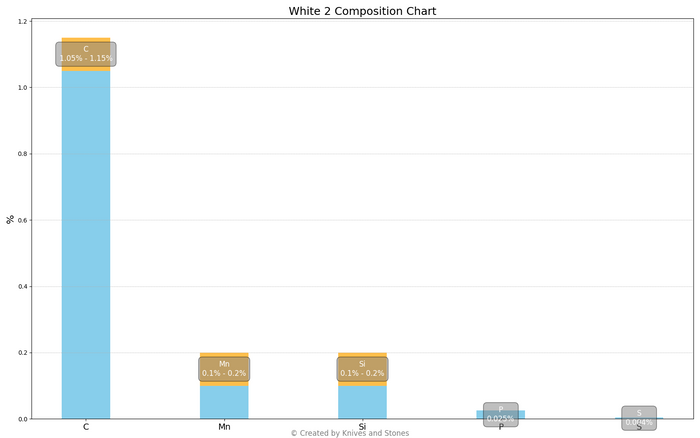
Steel: White 2 / Shirogami #2
Manufacturer:
Nature: Carbon
Typical hardness: 60 to 64 HRC
<< Slide for more >>
-

Handle Specs
Profile: Octagonal WA
Material:
<< Slide for more


You May Also Like
-
Hatsukokoro x Myojin Shirasagi White 2 Kamagata Usuba 180mmSale price $271.98 Regular price $319.95Unit price
-
Sukenari White 2 K-tip Yanagiba 300mm, Ebony Brass HandleSale price $475.98 Regular price $559.95Unit price
-
Yoshikane White 2 KU Nashiji Sujihiki 240mm, Stainless Clad Ebony by HatsukokoroSale price $514.98 Regular price $539.95Unit price
-
Masakage Yuki White2 Gyuto 210mm Stainless CladSale price $390.98 Regular price $459.95Unit price
-
Hatsukokoro x Myojin Shirasagi White 2 Left Handed Mioroshi Deba 270mmSale price $509.98 Regular price $599.95Unit price
-
Hatsukokoro x Myojin Shirasagi White 2 Left Handed Yanagiba 240mmSale price $339.98 Regular price $399.95Unit price
-
Sukenari Blue 2 Kanto Usuba 210mm, Ebony Spacer HandleSale price $501.98 Regular price $589.95Unit price
-
Masamoto Sohonten Kasumi White 2 Series Usuba 210 mm KK0621 with SAYASale price $628.98 Regular price $739.95Unit price
