PRAHRAN STORE NOW OPEN · THU–MON · 10AM–6PM

Hatsukokoro  |  SKU: YAUJ_G3DA_PE150

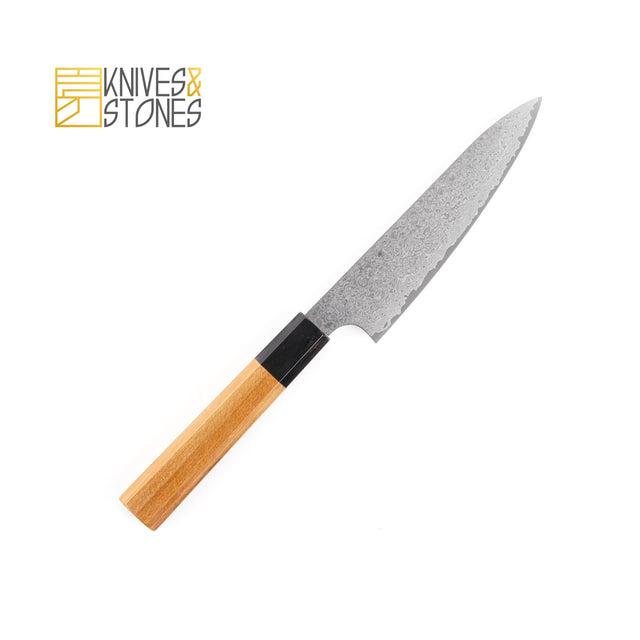
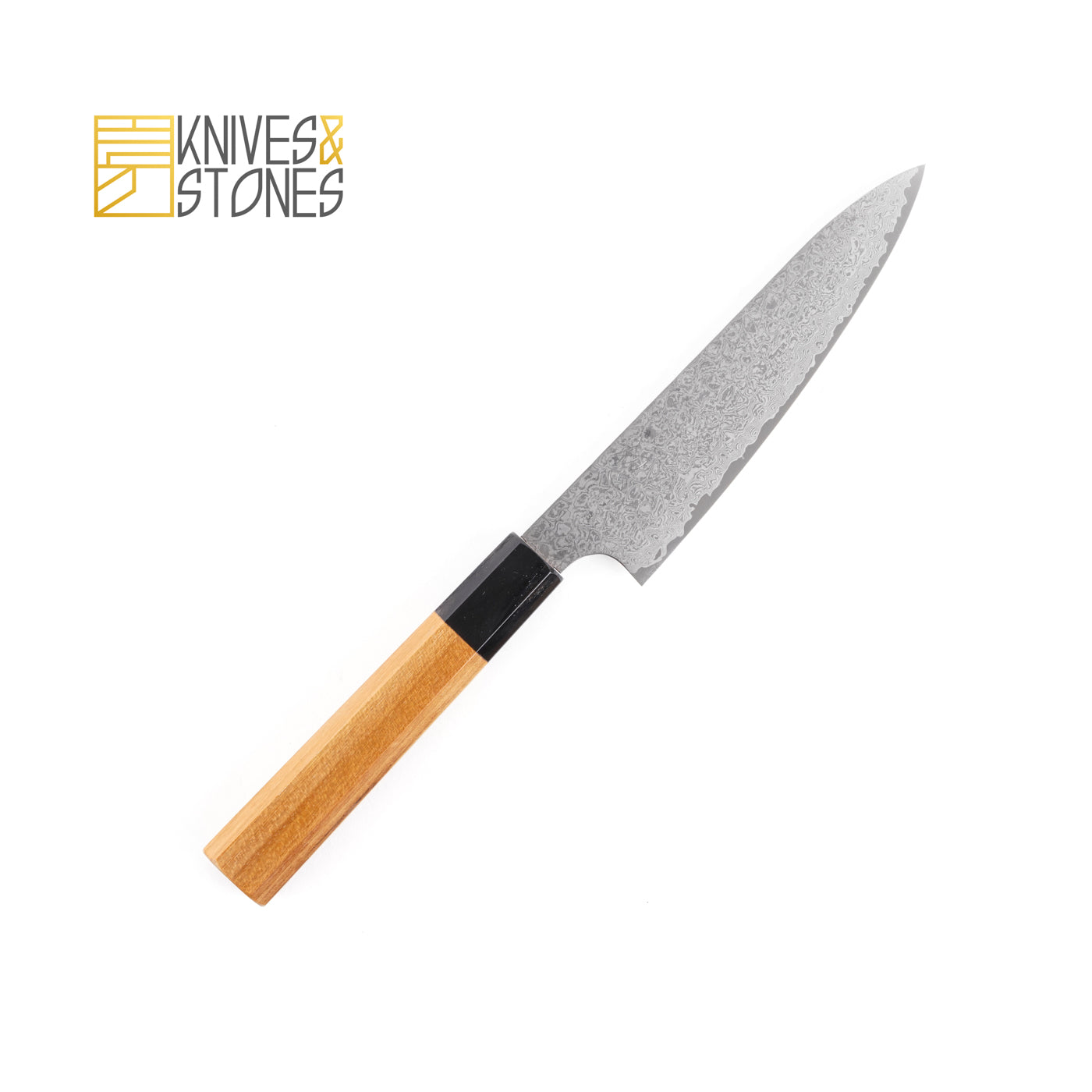
Hatsukokoro Ginsan Damascus Tsuchime Petty 150mm with Teak Wood Handle, by Yoshihiro Yauji

Regular price $359.00

Sold out right now

Leave your email and we’ll send one message the moment it’s back in stock.

One email, no marketing. Privacy policy.

Availability

  • St Peters, NSW —
    2 Bishop St, Unit 2, St Peters NSW 2044
  • Crows Nest, NSW —
    107 West St, Shop 1, Crows Nest NSW 2065
    Pickup only
  • Prahran, VIC —
    180 Commercial Road, Shop 1, Prahran VIC 3181
    Pickup only
Detailed Specifications
Line Hatsukokoro by Yoshihiro Yauji Ginsan Damascus Tsuchime
Profile Petty / Utility knife
Steel Ginsan / Silver #3 | Stainless
Blade Construction Sanmai - Stainless Damascus Clad
Hardness (HRC) 60 - 62
Surface Finish Tsuchime
Handle
Region Takefu
Best for
  • Pro chefs
  • Household
  • Free shipping for knives over AU$200 Australia wide.
  • World-wide shipping via DHL Express, 3 to 5 days.


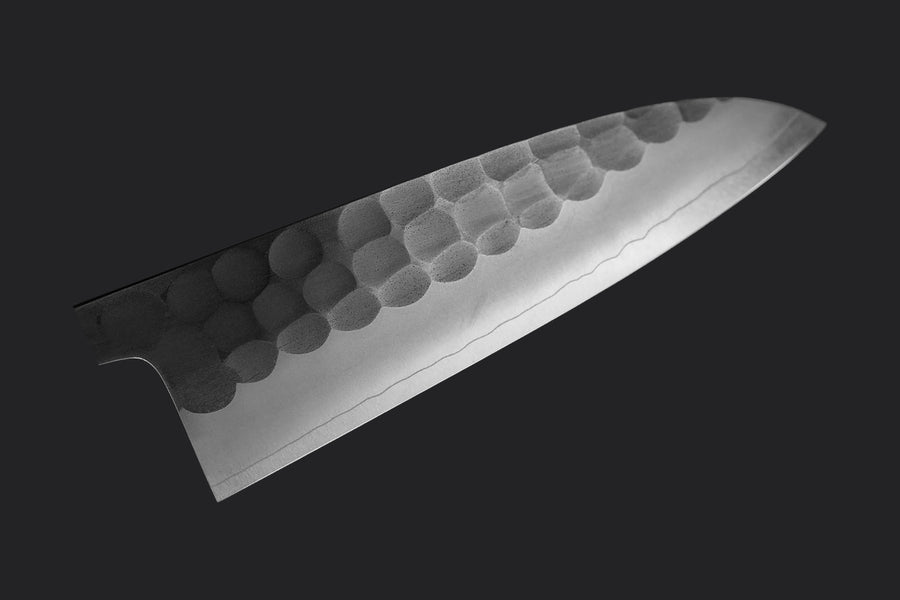
This Hatsukokoro line is by Yoshihiro Yauji and carries a Tsuchime hammer texture across a full kitchen: Santoku, Gyuto in two sizes, Nakiri and a Petty, all with a K&S teak wood handle.

Inside is a Ginsan stainless core with stainless Damascus cladding, hardened to 60 to 62 HRC. Because the blade is stainless, care stays simple: wash it, dry it, and put it away rather than leaving it wet.

The gyuto runs from 210 to 240 mm at 190 and 240 g, the santoku is a compact everyday blade at 172 g, and the nakiri brings a 52 mm tall blade to leafy greens. These are unfussy knives for daily vegetable and meat work, and optional handle upgrades are available if you want to dress one up.

Pros Cons
  • Excellent performance
  • Ideal for the household
Care Instruction
  1. Don't cut hard things! Japanese knives are brittle so bone hacking is a NO NO!
  2. Wash with neutral detergent after use, and wipe dry;
  3. Please don't wash knife with dishwasher, it will damage the wood handle;
  4. Be careful not to leave the knife close to a heat source for a long time;
  5. It is a lot more dangerous to cut with a blunt knife than a sharp knife!
  6. It is best to sharpen a Japanese knife regularly on a waterstone.

Yoshihiro Yauji

Yoshihiro Yauji — Echizen's Rising Independent

Yauji Yoshihiro(弥氏 良寬), born in Echizen, Fukui Perfecture in 1983. At age of 20 in 2003, he entered Kitaoka Knives to apprentice under Kitaoka Hideo(北岡 英雄), the third generation bladesmith of Kitaoka Knives. In 2019, he acquired the Traditional Craftsman Certification, which is quite remarkable, considering by average it take 25 years for a bladesmith to accomplish this goal.

In April of 2021, Yoshihiro Yauji left Kitaoka Knives and set up his own independent knife workshop Kutsurogi(寬), which shares a same Kanji with part of his name. Kutsurogi along with Yoshihiro Yauji is now a part of the Takefu Knife Village, which is an association that consists 14 knife companies and more than 40 bladesmiths, all located in Echizen area. With big names like Yu Kurosaki, Shiro Kamo and Yoshimi Kato, the Takefu Knife Village has a total of 17 Certified Traditional Craftsman, working and communicating with each others, they make the association a remarkable force in the industry.

Yoshihiro Yauji's knives are often found in damascus, with a color that is usually brighter than what you find on other makers. These blades seems to be grinded with a convex bevel, which helps prevent food sticking greatly, especially when paired with a more"sticky" finish like a mirror polish. With this skilful grinding and great fit and finish, Yoshihiro quickly gained fame and reputation as a relatively young bladesmith in Takefu Knife Village.

“Echizen's youngest traditional craftsman — 15 years under Kitaoka, now forging solo at Takefu.”

Est. 2021 | 令和3年
Known for Solo one-man operation, certified traditional craftsman at unusually young age
Website takefu-knifevillage.jp Instagram @yoshihiro_yaichi Read more about Yoshihiro Yauji

Yoshihiro Yauji · Takefu

Knife details

Frequently asked questions

What is a petty knife and when do I need one?

A petty knife is a small Japanese utility knife, typically with a blade between 120mm and 180mm, designed for precision tasks like peeling, trimming, and slicing fruits and vegetables. You need one when your main chef’s knife feels too large for detail work, think deveining shrimp, cutting garnishes, or any in-hand peeling where a bigger blade gets in the way. Its slightly longer and slimmer profile than a Western paring knife gives you more control for intricate cuts without sacrificing the nimble feel you want for small jobs. If you regularly find yourself reaching for a smaller blade for finishing work, a petty fills that gap cleanly.

A petty is not a replacement for a gyuto or santoku. It lacks the blade length and belly for efficient chopping, rocking, or breaking down larger proteins. If your work is mostly bulk prep, like dicing onions or slicing roasts, a petty will feel slow and underpowered. It also won’t handle heavy tasks like splitting bones or prying, so treat it as a precision tool, not an all-rounder.

The petty’s role in a Japanese kitchen is as the smaller counterpart to the gyuto, built for tasks where a full-size blade is clumsy. At Knives and Stones, the petty category covers a range of steels including VG10, White#2, Swedish Steel, VG5, SG2, and MV, from makers like Sakai Takayuki, Masamoto Sohonten, Ryusen, Nigara, Hatsukokoro, and Sentan. Most are double-beveled, and the blade length runs from 120mm to 180mm, which is what gives it that balance of reach and precision. For more on how this fits into your knife kit, see the Knives and Stones Education Centre.

What is Ginsan steel, and why do some Japanese knives use it?

Ginsan steel, also known as Silver #3 or G3, is a stainless steel made by Hitachi Special Steel in Japan, containing 1.02% carbon and 13.75% chromium, and it is used in Japanese knives because it combines the sharpness and ease of sharpening of carbon steel with the rust resistance of stainless steel. It is a fine-grained steel that takes a very sharp edge, and at a hardness of 60-62 HRC, it offers a practical balance of edge retention and sharpenability for everyday kitchen use.

The name "Ginsan" (銀三) literally means "silver three," referring to its Silver #3 designation. Its moderate chromium content makes it far less reactive than carbon steels, so it won't discolor or rust as quickly, while its carbon content keeps the edge keen and responsive on the stones. For home cooks and professionals who want a stainless knife that still feels like a traditional Japanese blade, Ginsan is a common middle ground.

You May Also Like