PRAHRAN STORE NOW OPEN · THU–MON · 10AM–6PM

Drag to spin · pinch or scroll to zoom

Hatsukokoro  |  SKU: HST-KAJNB2-KGY21-OTMPSS

Hatsukokoro Kaijin Blue 2 K-tip Gyuto 210mm Migaki Curly Maple

Regular price $198.00

IMPORTANT: Carbon steel knives can rust or patina quickly if not cared for properly. They require regular cleaning, drying, and oiling. If you are unfamiliar with carbon steel maintenance, we recommend choosing a stainless steel option instead.

Sold out right now

Leave your email and we’ll send one message the moment it’s back in stock.

One email, no marketing. Privacy policy.

Availability

  • St Peters, NSW —
    2 Bishop St, Unit 2, St Peters NSW 2044
  • Crows Nest, NSW —
    107 West St, Shop 1, Crows Nest NSW 2065
    Pickup only
  • Prahran, VIC —
    180 Commercial Road, Shop 1, Prahran VIC 3181
    Pickup only
Detailed Specifications
Line Hatsukokoro Kaijin Blue 2
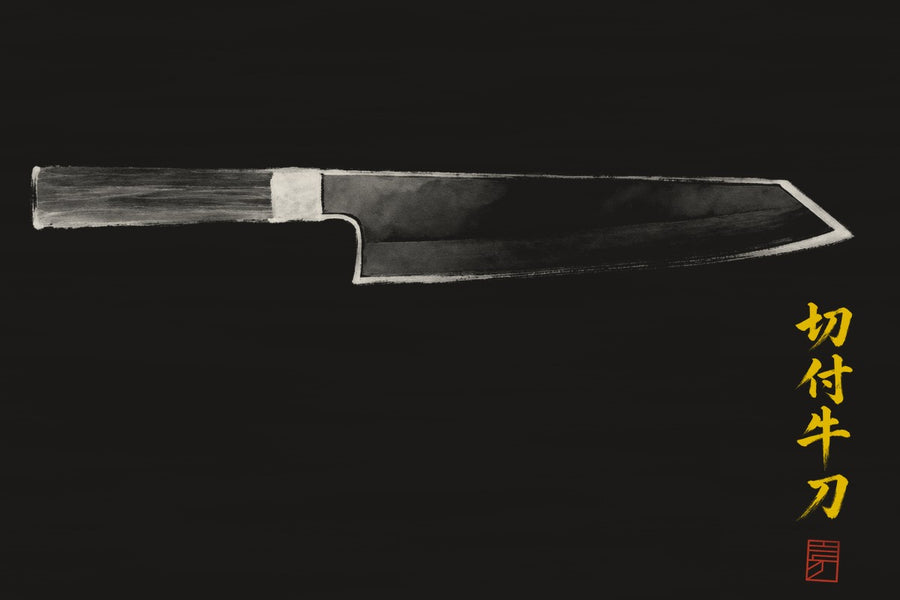
Profile K-tip Gyuto / K-tip chef's knife
Bevel Type Double Bevel
Weight 167 g | 5.9 oz
Edge Length 222 mm | 8 47/64″
Heel Height 48 mm | 1 57/64″
Width @ Heel 2.3 mm | 3/32″
Width @ Mid 2.0 mm | 5/64″
Width @ 1cm from Tip 0.5 mm | 1/64″
Steel Blue 2 / Aogami #2 | Carbon
Blade Construction Sanmai - Stainless Clad
Hardness (HRC) 61 - 63
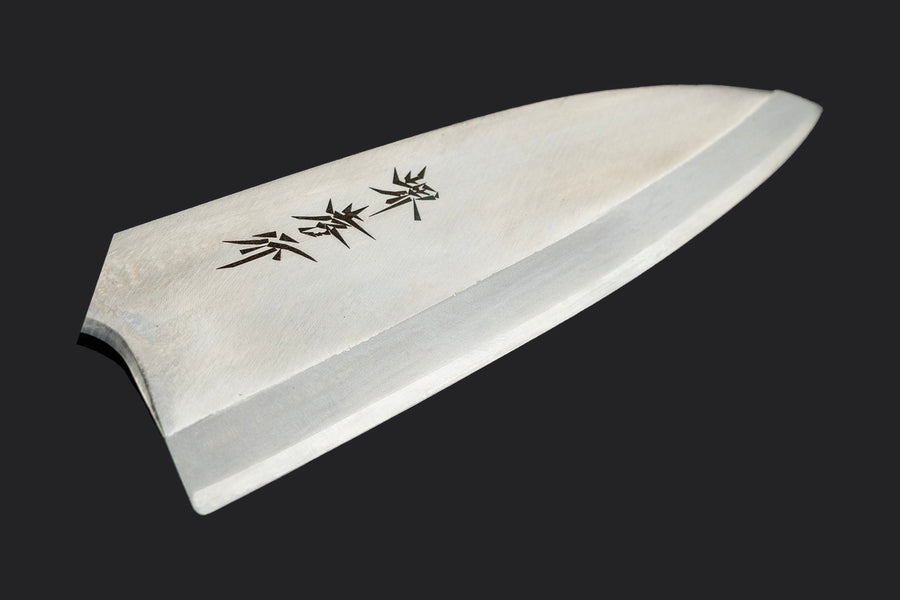
Surface Finish Migaki
Handle Curly Maple with S/S Ferrule- Blue
Region Hyogo
Best for
  • Pro chefs
  • Enthusiasts
  • Free shipping for knives over AU$200 Australia wide.
  • World-wide shipping via DHL Express, 3 to 5 days.


Hatsukokoro Kaijin(海神, Sea God), is a rather budget friendly line for its name, it has a pretty plain look with polished edge and sandblasted bevel, and zero additional design feature. But I have to say, if your next knife purchase is all about performance, this can deliver it at a price that is very hard to beat.

The key in a good cutting knife is the combination of an edge that cuts aggressively and a bevel geometry that penetrates and releases off food smoothly, and Kaijin does both fairly well. The steel choice is Blue No.2, a common carbon steel produced by Hitachi that excels at producing a really “bitey” edge. This type of edge can slice open soft items like proteins and tough surfaces like skins, and it’s an experience that stainless steel just couldn’t deliver. 

The magic of simple carbon steel is, they can be heat treated to a higher hardness and still retain a more decent toughness than most of the conventional stainless steel, this means they can perform when the edge gets pretty thin. In this case, it is exactly what Kaijin did. The bevel of Kaijin gets sharpened to a very low thickness near the edge, and this thickness gradually increases, transitions into two parallel surfaces. This type of convex grind and an extremely low thickness behind the edge is the key in delivering a smooth food penetration and food release, and it’s not an exception in the case of Kaijin. Although in some cases the very thin slice of food would stick to the flat zone of the blade, this still outperformed most of the knives we’ve tested on potatoes outside of the ones with more complicated hand grinded bevel.

Completing the package is the latest dyed and stabilized blue curly maple handle, paired with an elegant stainless steel ferrule. This modern handle not only looks striking but also improves durability and balance, it is our interpretation of "the ocean", adding significant value and complete the blade into one refined package.

Despite the carbon steel core used on the Kaijin, I still consider it as a rather practical line as the cladding is stainless. So the downside of the line really is the small amount of care needed to keep the exposed core steel dry and clean and a rather delicate edge that can’t handle much of a beating. I recommend this knife to anyone who already has some experience on an entry level VG10 or other stainless steel, and looking to upgrade into a carbon steel. This Kaijin line would deliver the desired smooth cut while keeping the maintenance and cost very manageable.

Pros Cons
  • Great for professionals
  • Great artistic
  • Budget friendly
  • Relatively hard to sharpen
  • Prone to rust
Care Instruction
  1. Don't cut hard things! Japanese knives are brittle so bone hacking is a NO NO!
  2. Wash with neutral detergent after use, and wipe dry;
  3. Please don't wash knife with dishwasher, it will damage the wood handle;
  4. Be careful not to leave the knife close to a heat source for a long time;
  5. It is a lot more dangerous to cut with a blunt knife than a sharp knife!
  6. It is best to sharpen a Japanese knife regularly on a waterstone.
  7. Oil the (carbon) knife if storing for an extended period of time to prevent rust.

Hatsukokoro

Rising star of the industry

Hatsukokoro as a brand works extensively with the Japanese kitchen knife industry. Through collaboration with makers and manufacturers across the Japan, they’ve designed and created a huge collection of different knives, covering every possible price range while having a great value in many of their product lines. Their capabilities to incorporate resources have built a strong relation with knife makers, and more and more are happy to send their knives down to Amagasaki and have them delivered across the world.

“The rapidly expanding new brand in the industry based in Amagasaki, offering great varieties by working close with different makers across entire Japan to the entire globe while innovating in product design and metal fabrication.”

Est. 2019 | 令和元年
Known for Unrivalled product availability, exceptional performance at a highly competitive price.
Website handk.co Instagram @handk_official Read more about Hatsukokoro

Hatsukokoro · Hyogo

Knife details

Frequently asked questions

Is a K-tip Gyuto the same as a traditional Kiritsuke?

Not quite - and it is the single most common point of confusion when people shop for a kiritsuke. The two knives share the same striking angled, reverse-tanto tip, but underneath that tip they are very different tools.

A K-tip gyuto is a double-bevel knife: it is ground on both sides like any Western-style chef's knife, so it is ambidextrous, forgiving to use, and sharpened exactly the way you would sharpen a normal gyuto. You get the dramatic kiritsuke look with the everyday usability of an all-purpose chef's knife.

A traditional kiritsuke - including the kiritsuke-yanagiba (slicer) and kiritsuke-gyuto shapes - is a single-bevel knife, ground on one side only. It is historically a master chef's knife: it takes real practice to use well, is set up for right-handed users by default, and needs single-bevel sharpening technique to maintain.

So if you want the kiritsuke silhouette with no learning curve, choose a K-tip gyuto. If you specifically want the traditional single-bevel discipline - and the precision it allows on fish and vegetables - choose a true kiritsuke. At Knives and Stones we stock both, and each product page tells you which construction you are looking at.

Will a carbon steel knife rust, and how do I look after it?

Yes - carbon steels such as Aogami (Blue) and Shirogami (White) react with food, moisture, and acids. Left wet they can spot or rust, and with normal use they develop a grey-blue patina. That patina is expected and is part of owning a carbon-steel knife; it is not damage.

Care is simple once it becomes habit: hand-wash in warm water, never leave the knife soaking or sitting in a wet sink, and dry it thoroughly the moment you finish. Avoid the dishwasher entirely, and wipe the blade between tasks when you are cutting acidic foods like citrus, tomato, or onion.

If the knife will sit unused for a while, wipe a very thin film of food-safe camellia oil (or a neutral mineral oil) onto the blade before storing it. A light surface rust spot lifts easily with a rust eraser or a little Bar Keepers Friend; sustained neglect is the only thing to really avoid.

Carbon steel rewards this small amount of attention with a keener edge and easier sharpening than most stainless. If you would rather not think about maintenance at all, ask us about stainless or stainless-clad options instead.

Blue 2 vs White 2 steel for Japanese kitchen knives

Blue 2 (Aogami #2) and White 2 (Shirogami #2) are both Hitachi high-carbon steels, but Blue 2 adds chromium and tungsten to White 2’s base, giving it noticeably better edge retention while keeping similar sharpness. The trade-off is that Blue 2 is slightly more abrasion-resistant during sharpening, so it takes a little more time to refine an edge, whereas White 2 is easier to sharpen and can take a finer, more aggressive edge but dulls faster in use.

You May Also Like