PRAHRAN STORE NOW OPEN · THU–MON · 10AM–6PM

Drag to spin · pinch or scroll to zoom

Knives and Stones  |  SKU: KNS-VGTSDA-PE150

K&S VG10 Tsuchime Damascus Petty 150mm

Regular price $179.95

Sold out right now

Leave your email and we’ll send one message the moment it’s back in stock.

One email, no marketing. Privacy policy.

Availability

  • St Peters, NSW —
    2 Bishop St, Unit 2, St Peters NSW 2044
  • Crows Nest, NSW —
    107 West St, Shop 1, Crows Nest NSW 2065
    Pickup only
  • Prahran, VIC —
    180 Commercial Road, Shop 1, Prahran VIC 3181
    Pickup only
Detailed Specifications
Line K&S VG10 Tsuchime Damascus
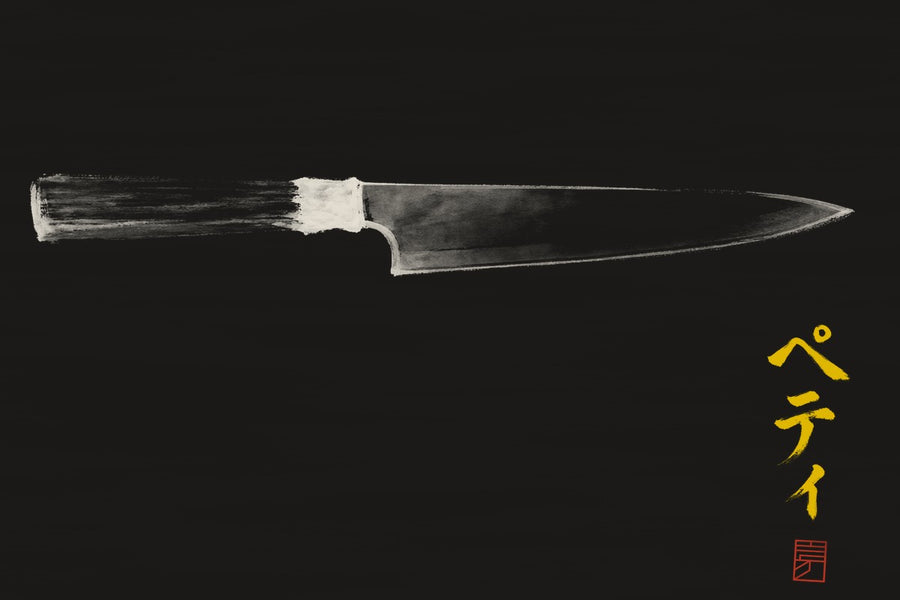
Profile Petty / Utility knife
Bevel Type Double Bevel
Weight 69 g | 2.4 oz
Edge Length 150 mm | 5 29/32″
Heel Height 30 mm | 1 3/16″
Width @ Heel 1.9 mm | 5/64″
Width @ Mid 1.9 mm | 5/64″
Width @ 1cm from Tip 1.0 mm | 3/64″
Steel VG10 | Stainless
Blade Construction Sanmai - Stainless Damascus Clad
Hardness (HRC) 59 - 61
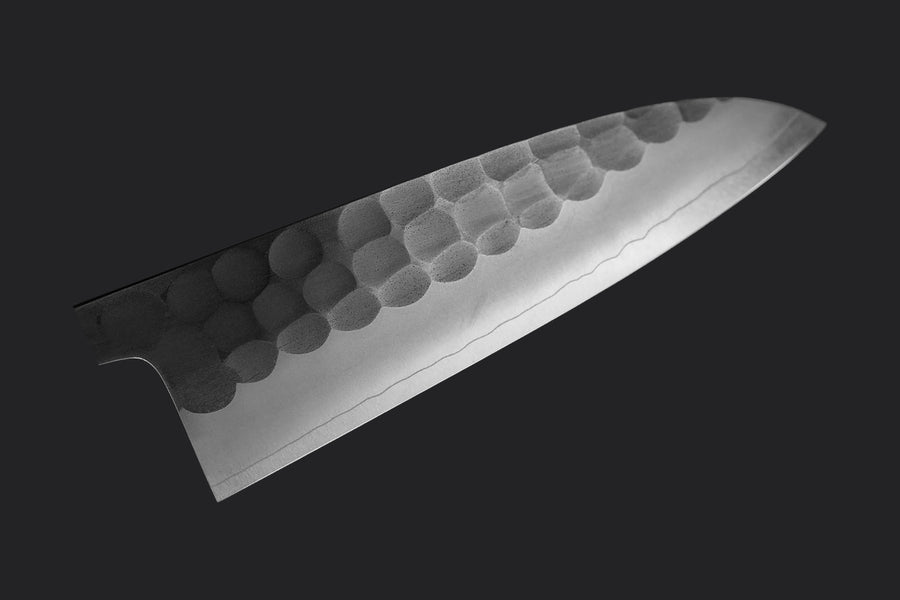
Surface Finish Tsuchime
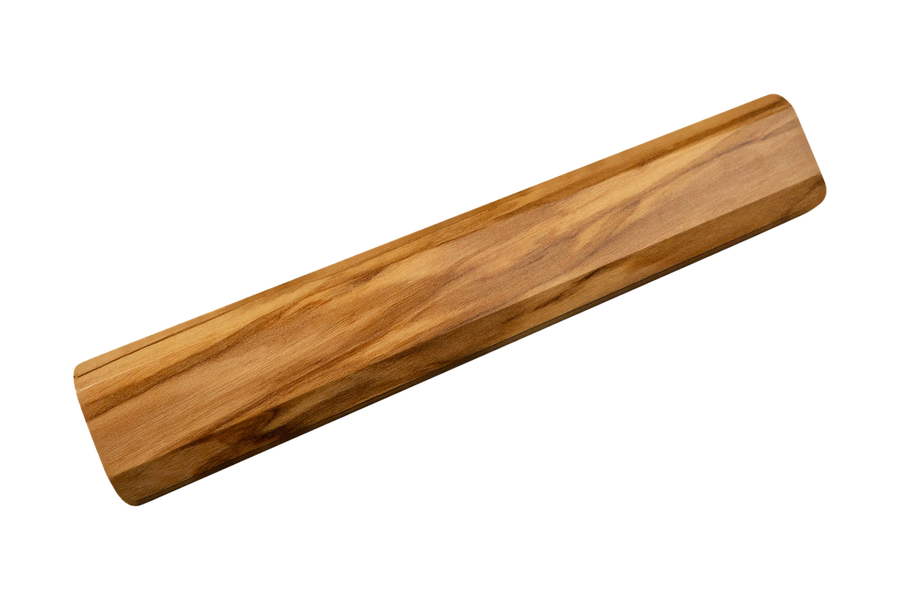
Handle Olivewood Octagonal
Region Other
Best for
  • Pro chefs
  • First-timers
  • Students
  • Free shipping for knives over AU$200 Australia wide.
  • World-wide shipping via DHL Express, 3 to 5 days.


Following the success of the K&S Tsuchime Sanmai, we are proud to introduce the K&S Tsuchime Damascus Finish — the latest addition under our own branding 岩刃 (Stone/Knife). Bearing this name means we are putting our reputation behind these knives, and you can expect that we only choose items that meet our standards and stand out in their categories.

These VG10 blades are produced in Seki, a region renowned for its advanced factory blade manufacturing. What’s special about this VG10 line is its exceptional cutting performance. I once thought machine-manufactured blades often had less optimized geometry, resulting in wedging, sticking, and resistance that compromised cutting feel (Kireaji). However, the smooth, effortless cut from these blades proved me wrong.

With a very thin geometry behind the edge, they deliver excellent food penetration, while the well-polished bevel ensures food releases cleanly along the Shinogi line halfway across the blade.

This kind of refined cutting performance is not unusual in stores specializing in high-performance Japanese kitchen knives, but what excites me is that this level of precision is now available in a factory-manufactured knife — at a price comparable to a typical European counterpart of the same size.

As much as I enjoy viewing or owning collector pieces and “Unicorn Knives,” an affordable knife that cuts beautifully is what benefits most users at the end of the day. The Tsuchime Damascus Finish line continues the philosophy behind the original Sanmai series — combining optimized design, precise manufacturing, and a durable, low-maintenance steel — now enhanced with a stunning Damascus finish that adds visual depth and elegance to its already outstanding performance.

Pros Cons
  • Budget friendly
  • Excellent performance
  • Great OOTB
  • Etched damascus can be hard to maintain
Care Instruction
  1. Don't cut hard things! Japanese knives are brittle so bone hacking is a NO NO!
  2. Wash with neutral detergent after use, and wipe dry;
  3. Please don't wash knife with dishwasher, it will damage the wood handle;
  4. Be careful not to leave the knife close to a heat source for a long time;
  5. It is a lot more dangerous to cut with a blunt knife than a sharp knife!
  6. It is best to sharpen a Japanese knife regularly on a waterstone.

Knives and Stones (K&S)

Established in 2014 and based in Sydney, Australia, Knives and Stones (K&S) is an Australian kitchen knife retailer with international customers. Through close relationships with Japanese blacksmiths, K&S directly imports Japanese kitchen knives.

Founder James Zhang’s Chinese heritage also brings a unique dimension to the business: collaborating with Chinese craftsmen to forge high-performance cleavers using Japanese steels—what James proudly calls “the real deal.”

Read more

Founded in 2014 and headquartered in Sydney, Australia, Knives and Stones (K&S) has grown from a small project into a kitchen knife retailer with customers in Australia, the USA, and China. What started as a small business dedicated to sourcing Japanese blades now serves chefs, collectors, and home enthusiasts across three countries.

At the heart of K&S is a personal connection with Japanese blacksmiths. Over the years, we have built relationships with established and new blacksmiths, allowing us to import their knives directly. This not only keeps each knife's origin clear and its craftsmanship intact, but also delivers outstanding value to our customers by removing unnecessary layers between the maker and the end user. K&S stocks both well-known and smaller Japanese knife brands.

Our international outlook is also shaped by founder James Zhang’s Chinese heritage. With a vision to bridge traditions, James has introduced Japanese steel to skilled Chinese makers to create a series of Japanese-steel cleavers. These blades, which James calls “the real deal”, combine Japanese steel with Chinese cooking use.

With physical presence and distribution networks in Australia, the USA, and China, Knives and Stones brings Japanese kitchen knives to customers in those three countries. Whether you’re a professional chef seeking a reliable workhorse, a collector chasing rare masterpieces, or a home cook ready to elevate your craft, K&S is committed to delivering tools that inspire confidence and creativity in the kitchen.

Est. 2014
Website knivesandstones.com.au Instagram @knivesandstones Read more about Knives and Stones (K&S)

Knife details

Frequently asked questions

What is a petty knife and when do I need one?

A petty knife is a small Japanese utility knife, typically with a blade between 120mm and 180mm, designed for precision tasks like peeling, trimming, and slicing fruits and vegetables. You need one when your main chef’s knife feels too large for detail work, think deveining shrimp, cutting garnishes, or any in-hand peeling where a bigger blade gets in the way. Its slightly longer and slimmer profile than a Western paring knife gives you more control for intricate cuts without sacrificing the nimble feel you want for small jobs. If you regularly find yourself reaching for a smaller blade for finishing work, a petty fills that gap cleanly.

A petty is not a replacement for a gyuto or santoku. It lacks the blade length and belly for efficient chopping, rocking, or breaking down larger proteins. If your work is mostly bulk prep, like dicing onions or slicing roasts, a petty will feel slow and underpowered. It also won’t handle heavy tasks like splitting bones or prying, so treat it as a precision tool, not an all-rounder.

The petty’s role in a Japanese kitchen is as the smaller counterpart to the gyuto, built for tasks where a full-size blade is clumsy. At Knives and Stones, the petty category covers a range of steels including VG10, White#2, Swedish Steel, VG5, SG2, and MV, from makers like Sakai Takayuki, Masamoto Sohonten, Ryusen, Nigara, Hatsukokoro, and Sentan. Most are double-beveled, and the blade length runs from 120mm to 180mm, which is what gives it that balance of reach and precision. For more on how this fits into your knife kit, see the Knives and Stones Education Centre.

How long is a petty knife?

Petty knife lengths vary by maker: KAI's guide defines a petty (ペティナイフ) as a small knife with a narrow blade measuring 150 mm or under. Its table gives 90 to 150 mm, and it describes the shape as a smaller gyuto with a pointed tip.

We list petty knives from 70 mm to 165 mm, including lengths above the limit used in KAI's guide.

Does VG10 rust?

Yes, it can, though it rusts less readily. VG10 (V金10号) is a stainless steel, and stainless strictly means a steel that rusts less, not one that never rusts.

Takefu, which makes VG10, lists 15% chromium, above the 10.5% that defines stainless steel, and describes its corrosion resistance as excellent. Dry the knife after washing.

How hard is VG10?

Takefu, the steelmaker behind VG10, gives HRC 60 or more as a standard value. The hardness of a finished knife depends on its maker.

Takefu says the steel's 15% chromium, 1% molybdenum and 1.55% cobalt give it high hardness and a long-lasting edge, and that it is easy to sharpen.

You May Also Like