PRAHRAN STORE NOW OPEN · THU–MON · 10AM–6PM

Motokyuuichi  |  SKU: HSK-KS-KGY21BC

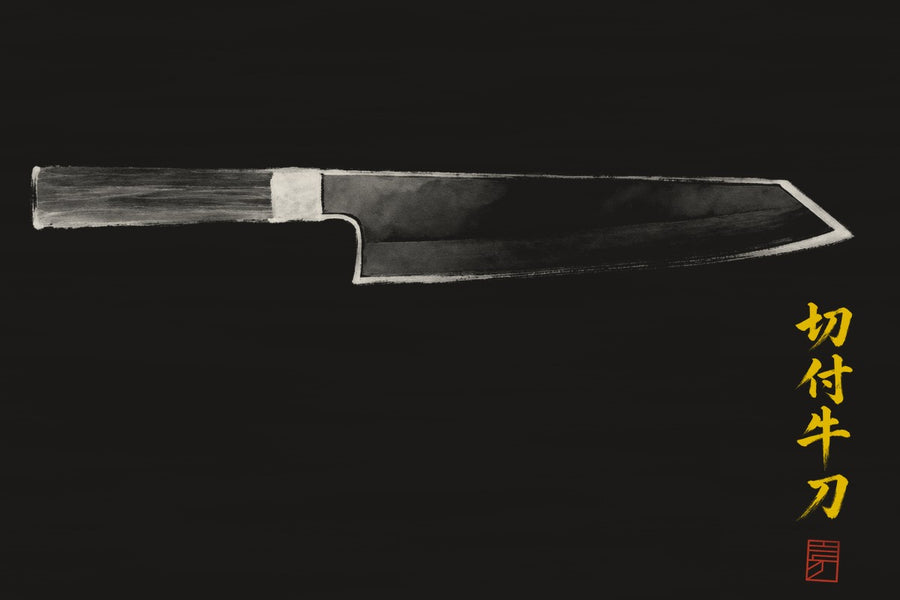
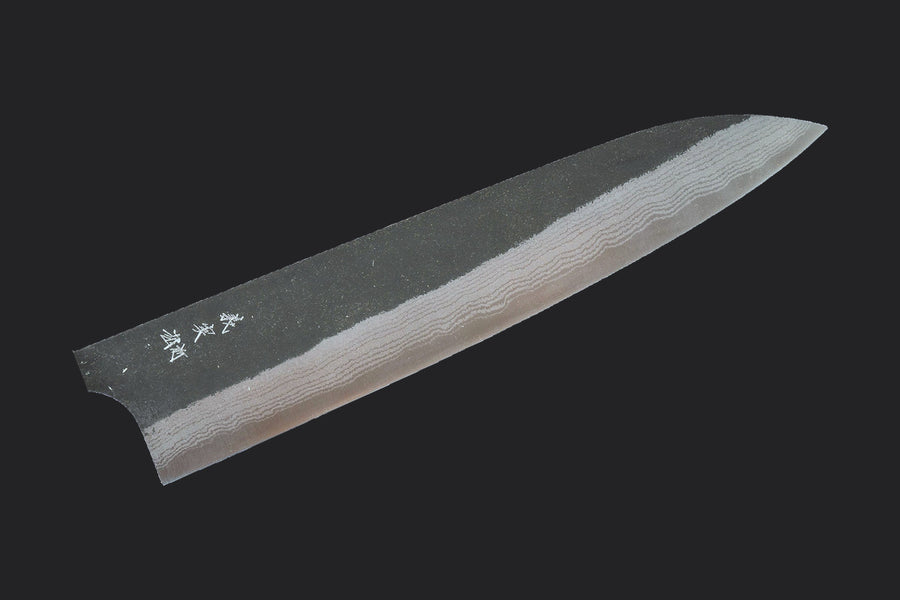
Motokyuuichi Kurosagi AS KU K-tip Gyuto 210mm Kurouchi by Hatsukokoro Black Chacate

Regular price $199.95

IMPORTANT: Carbon steel knives can rust or patina quickly if not cared for properly. They require regular cleaning, drying, and oiling. If you are unfamiliar with carbon steel maintenance, we recommend choosing a stainless steel option instead.

Sold out right now

Leave your email and we’ll send one message the moment it’s back in stock.

One email, no marketing. Privacy policy.

Availability

  • St Peters, NSW —
    2 Bishop St, Unit 2, St Peters NSW 2044
  • Crows Nest, NSW —
    107 West St, Shop 1, Crows Nest NSW 2065
    Pickup only
  • Prahran, VIC —
    180 Commercial Road, Shop 1, Prahran VIC 3181
    Pickup only
Detailed Specifications
Line Hatsukokoro Motokyuuichi Kurosagi AS
Profile K-tip Gyuto / K-tip chef's knife
Bevel Type Double Bevel
Weight 194 g | 6.8 oz
Edge Length 204 mm | 8 1/32″
Heel Height 42 mm | 1 21/32″
Width @ Heel 3.4 mm | 9/64″
Width @ Mid 2.4 mm | 3/32″
Width @ 1cm from Tip 0.8 mm | 1/32″
Steel Blue Super / Aogami Super | Carbon
Blade Construction Sanmai - Soft Iron Clad
Hardness (HRC) 62 - 65
Surface Finish Kurouchi
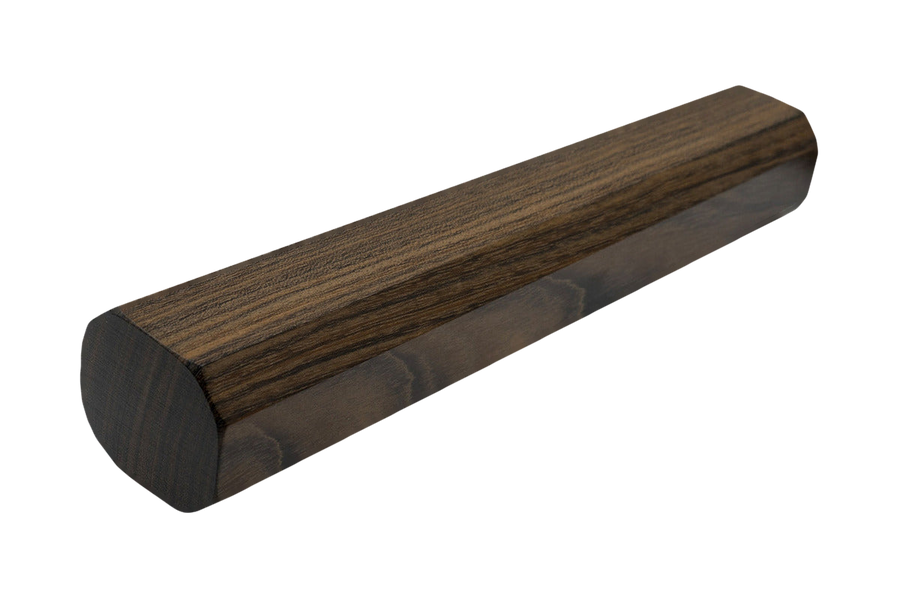
Handle Octagonal Black Chacate
Region Nagasaki
Best for
  • Pro chefs
  • Enthusiasts
  • Free shipping for knives over AU$200 Australia wide.
  • World-wide shipping via DHL Express, 3 to 5 days.


This isn’t a knife for Instagram – it’s a hardworking Aogami Super beast with a cult following among chefs who care more about cutting than cosmetics. Master smith Motokyuuichi (of "Tsubaya Black" fame) applies his legendary low-temperature, long-soak heat treatment to Hitachi’s premium steel, achieving a 64+ HRC edge that stays viciously sharp yet resists chipping.

The hand-forged AS core is clad in soft iron, with a deliberately rustic finish – uneven hammer marks, subtle warps, and all. These aren’t flaws; they’re proof of real workshop craftsmanship over factory perfection. Expect stellar food release from the coarser finish, and a thin-but-sturdy grind that handles everything from herbs to squash.

Why it’s a sleeper hit:

→ Unmatched edge retention – "Stays sharp longer than knives twice its price" (Reddit user)

→ Forgiving toughness – Motokyuuichi’s tempering prevents AS’s usual brittleness

→ Zero pretension – No fancy branding, just a fierce cutter that pros quietly recommend

For those tired of overpolined "luxury" blades, this is the anti-status-symbol workhorse – rough around the edges, relentless where it counts.

Pros Cons
  • Budget friendly
  • Excellent performance
  • Workhorse grind
  • Relatively hard to sharpen
  • Prone to rust
  • Fit and finish can be improved
Care Instruction
  1. Don't cut hard things! Japanese knives are brittle so bone hacking is a NO NO!
  2. Wash with neutral detergent after use, and wipe dry;
  3. Please don't wash knife with dishwasher, it will damage the wood handle;
  4. Be careful not to leave the knife close to a heat source for a long time;
  5. It is a lot more dangerous to cut with a blunt knife than a sharp knife!
  6. It is best to sharpen a Japanese knife regularly on a waterstone.
  7. Oil the (carbon) knife if storing for an extended period of time to prevent rust.

Motokyuuichi

Motokyuuichi — Shimabara's Swordsmith-Turned-Knifemaker

Born from samurai swordsmiths in Shimabara, Motokyuuichi Hamono carries the "Kyuichi" lineage since 1895. Forged by the Maeda family across five generations, these knives transform Edo-period swordcraft into exceptional kitchen blades. The secret lies in Shimabara's pristine volcanic spring water – famed nationally for its purity – used exclusively in the critical quenching process. This mineral-rich water, filtered through Mount Unzen's earth, imparts extraordinary resilience and a uniquely sharp, long-lasting edge to every blade.

Current masters Kiyonori (4th gen) and Yasuhide Maeda (5th gen) uphold their ancestors' ethos: quality craftsmanship, sincere service, and fair pricing. Each hand-forged knife embodies this promise – no flashy gimmicks, just honest durability and precision cutting performance. More than tools, Motokyuuichi knives are heirlooms connecting your kitchen to the soul of Shimabara’s 130-year forging tradition.

Read more

Motokyuuichi Hamono: Shimabara's Living Sword Legacy, Forged in Pristine Waters

In the shadow of Mount Unzen, within Shimabara's historic castle town, the Maeda family hammers a centuries-old legacy into existence. Motokyuuichi Hamono traces its spirit to the Edo-period "Kyuichi" swordsmiths of Hizen-Shimabara. When that lineage neared extinction, Maeda Shojirou answered the call in 1895. He transformed sacred sword-forging techniques into the creation of essential tools – kitchen knives, sickles, and hoes – birthing the Motokyuuichi ("Original Kyuichi") brand. Today, fourth-generation master Kiyonori Maeda and his son Yasuhide (fifth-gen) guard this heritage with reverence.

What defines a Motokyuuichi blade? Shimabara's water. Recognized among Japan's "Top 100 Waters," the region's volcanic spring water is the irreplaceable heart of their craft. Filtered through mineral-rich earth, this exceptionally soft, pure water is used in the critical quenching stage. The result? Blades achieve a remarkable harmony of hardness and flexibility, renowned for their fierce sharpness, bite, and uncanny edge retention. It’s a physical manifestation of Shimabara’s terroir – impossible to replicate elsewhere.

The Maedas operate by a simple, profound creed: "Quality Good, Sincere Service, Fair Price." Every knife reflects this. Hand-forged using techniques refined since samurai times, they prioritize functional perfection over ornamentation. Grinds are precise, handles are ergonomically sound, and heat treatment is meticulous. Whether it’s a nimble nakiri or a sturdy gyuto, each blade is built to endure decades of daily use.

Visiting their workshop means witnessing living history – the hiss of hot steel meeting Shimabara’s sacred water, the rhythmic hammer strikes echoing generations. Motokyuuichi offers no mass production, only authentic te-uchi (hand-forged) craftsmanship. Choosing their knife isn't just selecting a tool; it's preserving a legacy of resilience, honoring water's alchemy, and bringing the spirit of the samurai smith into your kitchen. It’s heirloom quality, forged by a father and son, one blade at a time.

“Samurai swordsmith lineage from Shimabara — five generations forging with volcanic spring water.”

Est. 1895 | 明治28年
Known for Swordsmith heritage, volcanic spring water quenching, father-and-son forge
Read more about Motokyuuichi

Motokyuuichi · Nagasaki

Knife details

Frequently asked questions

Is a K-tip Gyuto the same as a traditional Kiritsuke?

Not quite - and it is the single most common point of confusion when people shop for a kiritsuke. The two knives share the same striking angled, reverse-tanto tip, but underneath that tip they are very different tools.

A K-tip gyuto is a double-bevel knife: it is ground on both sides like any Western-style chef's knife, so it is ambidextrous, forgiving to use, and sharpened exactly the way you would sharpen a normal gyuto. You get the dramatic kiritsuke look with the everyday usability of an all-purpose chef's knife.

A traditional kiritsuke - including the kiritsuke-yanagiba (slicer) and kiritsuke-gyuto shapes - is a single-bevel knife, ground on one side only. It is historically a master chef's knife: it takes real practice to use well, is set up for right-handed users by default, and needs single-bevel sharpening technique to maintain.

So if you want the kiritsuke silhouette with no learning curve, choose a K-tip gyuto. If you specifically want the traditional single-bevel discipline - and the precision it allows on fish and vegetables - choose a true kiritsuke. At Knives and Stones we stock both, and each product page tells you which construction you are looking at.

Will a carbon steel knife rust, and how do I look after it?

Yes - carbon steels such as Aogami (Blue) and Shirogami (White) react with food, moisture, and acids. Left wet they can spot or rust, and with normal use they develop a grey-blue patina. That patina is expected and is part of owning a carbon-steel knife; it is not damage.

Care is simple once it becomes habit: hand-wash in warm water, never leave the knife soaking or sitting in a wet sink, and dry it thoroughly the moment you finish. Avoid the dishwasher entirely, and wipe the blade between tasks when you are cutting acidic foods like citrus, tomato, or onion.

If the knife will sit unused for a while, wipe a very thin film of food-safe camellia oil (or a neutral mineral oil) onto the blade before storing it. A light surface rust spot lifts easily with a rust eraser or a little Bar Keepers Friend; sustained neglect is the only thing to really avoid.

Carbon steel rewards this small amount of attention with a keener edge and easier sharpening than most stainless. If you would rather not think about maintenance at all, ask us about stainless or stainless-clad options instead.

What is Aogami Blue steel and why do chefs like it?

Aogami Blue steel, specifically Aogami Super (Blue Super), is a high-carbon Japanese knife steel made by Hitachi that chefs value for its ability to take an extremely sharp edge and hold it longer than most other carbon steels, thanks to a composition with 1.45% carbon, 2.25% tungsten, and added vanadium.

The "Blue" in Aogami refers to the color of the paper the steel is wrapped in at the mill, not the steel itself. Aogami Super is an upgraded version of Blue Steel No. 1, with higher carbon and tungsten content plus vanadium, which refines the grain structure. This lets the steel be hardened to HRC 62–65 without becoming overly brittle, giving you a blade that can be ground very thin for aggressive cutting performance while still resisting chipping in normal use. The trade-off is that, like all high-carbon steels, it is not stainless—it will rust if left wet or acidic, so you need to wipe it down and keep it dry.

How do I keep aogami carbon steel from rusting?

Dry it as soon as you finish, keep it somewhere dry, and let a patina build. Do that and aogami (Blue) steel will hardly ever rust.

Aogami #1, #2 and Super all have less than half a percent of chromium, nowhere near what a stainless steel needs, so water left sitting on the blade will spot it.

The routine:

  • Wipe the blade as you go, especially after onion, citrus or tomato.
  • When you finish, wash it in warm water with a little soap and dry it straight away with a towel. Don't let it air dry or leave it in the sink or the dish rack, and never put it in the dishwasher.
  • Store it dry: on a magnetic strip, in a saya or in a block in a dry spot. A damp drawer is the worst place for it.
  • If it's going to sit unused for a while, wipe on a thin film of camellia or mineral oil.
  • Let a patina form. The grey, blue and brown colours you get from cutting meat and vegetables are a stable oxide layer, and it slows rust down. Orange or red specks are rust.

If you do find rust, lift light orange spots with a rust eraser and a little water, then dry and oil the blade. We stock the CKK and Naniwa rust erasers. Rust on the edge itself comes off the next time you sharpen. Deep pitting is a job for us, so bring the knife in.

On a stainless-clad knife only the thin line of aogami along the edge can rust; the cladding stays clean. A carbon-clad or honyaki blade can rust over its whole face and needs the same care all over.

You May Also Like