PRAHRAN STORE NOW OPEN · THU–MON · 10AM–6PM

Myojin Riki  |  SKU: MYOJ_B2KU_KGY210_SGL

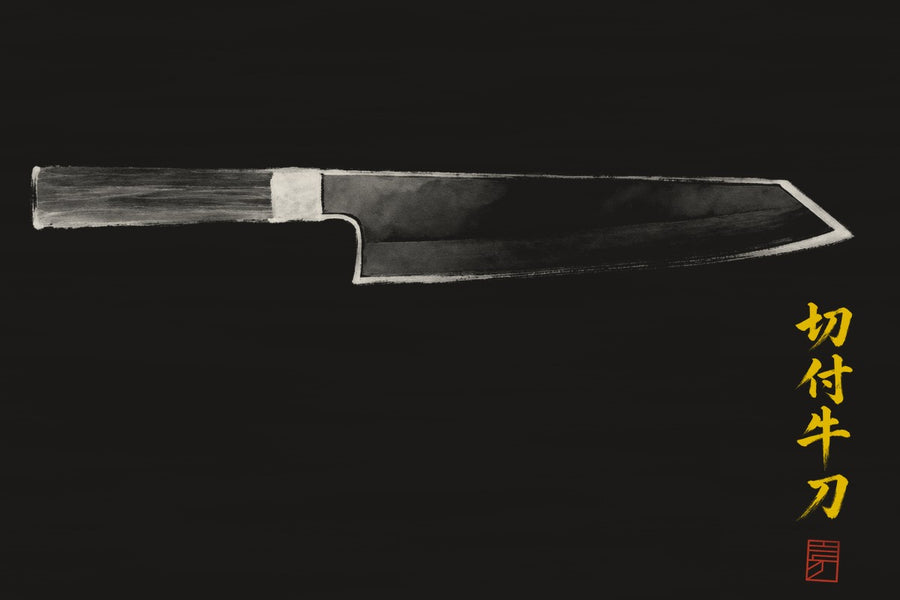
Myojin Shirasagi Blue 2 Kurouchi Single-Bevel K-Tip Gyuto 210mm/ 240mm

Regular price $395.00
Length

IMPORTANT: Carbon steel knives can rust or patina quickly if not cared for properly. They require regular cleaning, drying, and oiling. If you are unfamiliar with carbon steel maintenance, we recommend choosing a stainless steel option instead.

Sold out right now

Leave your email and we’ll send one message the moment it’s back in stock.

One email, no marketing. Privacy policy.

Availability

  • St Peters, NSW —
    2 Bishop St, Unit 2, St Peters NSW 2044
  • Crows Nest, NSW —
    107 West St, Shop 1, Crows Nest NSW 2065
    Pickup only
  • Prahran, VIC —
    180 Commercial Road, Shop 1, Prahran VIC 3181
    Pickup only
Detailed Specifications
Line Hatsukokoro Shirasagi Blue 2 KU Single bevel
Profile K-tip Gyuto / K-tip chef's knife
Steel Blue 2 / Aogami #2 | Carbon
Blade Construction Nimai - Soft Iron Clad
Hardness (HRC) 61 - 63
Surface Finish Kurouchi Tsuchime
Handle
Region Tosa
Best for
  • Pro chefs
  • Enthusiasts
  • Free shipping for knives over AU$200 Australia wide.
  • World-wide shipping via DHL Express, 3 to 5 days.


The Hatsukokoro by Myojin Shirasagi(白鷺)Blue 2 Kurouchi single bevel is a line of "practical single bevel" knives produced by Myojin Riki Seisakusho and comisioned by Hatsukokoro. It has a twin sister line Shirasagi White 2 that offers a different look made by same maker. If you are not familiar with Myojin is a father and son knife workshop based in Tosa prefecture, in the island of Shikoku. Father Tateo, is specialised in single bevel knife sharpening, whereas son Naohito Myojin specialises in double bevel knife sharpening, and Toru Tamura is their primary blacksmith.

This line as a single bevel line, is sharpened by Tateo Myojin(明神 健) and forged by Toru Tamura(田村 徹). Rarely, you can find not only the traditional profiles like yanagiba in this line, but also modern shapes like gyuto, all made in single bevel fashion. The fit and finish is superb as expected from Myojin Riki Seisakusho, a very uniform finish can be seen across the entire blade, even on the Kissaki of the Sakimaru Yanagiba, some other knives at higher price can have some trouble achieving that. Hatsukokoro have given this well-finished line a well deserved name Kirasagi(Little Egret), the smooth polish working in conjunction with the Kurouchi finish, match the elegant white feather and dark beak of egret perfectly.

This line can be an opportunity for those who are interested in the experience of owning a single bevel knife, but found the Yanagiba, Deba and Usuba being too job-specific. Having a single bevel gyuto will give you an idea of how single bevel blade works, while not restrain you with what could be cut with it. In addition, the combination of Kurouchi and carbon steel will offer some level of rust protection while maintain that authentic carbon steel "cutting taste"

That being said, the single bevel construction does make these knives quite thicker than typical knives of same size and shape. This not only makes the knives heavier, but also create more resistance when cutting into denser food like potatoes. However, the traditional single bevel knives in this line still have great value, with great fit and finish that are found on any blade sharpened by Myojin Riki Seisakusho, the Kurouchi finish and light Tsuchime pattern can make this line an interesting alternative to the typical shiny silver Yanagiba/Deba with quite a lower price. If you want that traditional look, the twin sister line Shirasagi White 2 line will off you the same level of craftsmanship.

Pros Cons
  • Budget friendly
  • Excellent fit and finish
  • Prone to rust
  • Heavy
Care Instruction
  1. Don't cut hard things! Japanese knives are brittle so bone hacking is a NO NO!
  2. Wash with neutral detergent after use, and wipe dry;
  3. Please don't wash knife with dishwasher, it will damage the wood handle;
  4. Be careful not to leave the knife close to a heat source for a long time;
  5. It is a lot more dangerous to cut with a blunt knife than a sharp knife!
  6. It is best to sharpen a Japanese knife regularly on a waterstone.
  7. Oil the (carbon) knife if storing for an extended period of time to prevent rust.

Myojin Riki

Myojin Riki Seisakusho — Tosa's Sharpening Prodigy

Myojin Riki Seisakusho grew out of a forge in Susaki opened by Naohito Myojin's grandfather, who trained in Sakai; his father later established the sharpening workshop that carries the name today. Specializing in knives made from steel and iron, they've recently focused on stainless steel knives, valued for their light weight, resistance to rust, and exceptional sharpness. These knives are popular among both professionals and general consumers, partly due to their application of the "stacked steel pattern" traditionally found in swords. The second generation continues to innovate, customizing products to meet users' needs, while also contributing to cultural preservation through their involvement with local traditional performances and blade repairs.

Naohito Myojin, the second generation craftsman of Myojin Riki, has dedicated himself to continuing the legacy of his predecessor's craftsmanship in knife making. Focused on innovation while preserving traditional techniques, Naohito has made a significant mark in the field by customizing knives that not only meet the practical needs of users but also contribute to the cultural heritage through his involvement in local traditions and blade restoration efforts. His work reflects a deep commitment to quality, functionality, and the preservation of the artistry involved in Japanese knife making.

“From Sakai-trained roots in Tosa — a father-son workshop where the grind is everything.”

Known for Exceptional grinding and sharpening, tanryusen (metal flow) finish
Instagram @tetsujin_labo Read more about Myojin Riki

Myojin Riki · Tosa

Knife details

Frequently asked questions

Is a K-tip Gyuto the same as a traditional Kiritsuke?

Not quite - and it is the single most common point of confusion when people shop for a kiritsuke. The two knives share the same striking angled, reverse-tanto tip, but underneath that tip they are very different tools.

A K-tip gyuto is normally a double-bevel knife: it is ground on both sides like any Western-style chef's knife, so it is forgiving to use, and sharpened exactly the way you would sharpen a normal gyuto. You get the dramatic kiritsuke look with the everyday usability of an all-purpose chef's knife.

A traditional kiritsuke, including the kiritsuke-yanagiba (slicer), is a single-bevel knife, ground on one side only. It is historically a master chef's knife: it takes real practice to use well, is set up for right-handed users by default, and needs single-bevel sharpening technique to maintain.

So if you want the kiritsuke silhouette with no learning curve, choose a K-tip gyuto. If you specifically want the traditional single-bevel discipline - and the precision it allows on fish and vegetables - choose a true kiritsuke. At Knives and Stones we stock both, and each product page tells you which construction you are looking at.

Will a carbon steel knife rust, and how do I look after it?

Yes - carbon steels such as Aogami (Blue) and Shirogami (White) react with food, moisture, and acids. Left wet they can spot or rust, and with normal use they develop a grey-blue patina. That patina is expected and is part of owning a carbon-steel knife; it is not damage.

Care is simple once it becomes habit: hand-wash in warm water, never leave the knife soaking or sitting in a wet sink, and dry it thoroughly the moment you finish. Avoid the dishwasher entirely, and wipe the blade between tasks when you are cutting acidic foods like citrus, tomato, or onion.

If the knife will sit unused for a while, wipe a very thin film of food-safe camellia oil (or a neutral mineral oil) onto the blade before storing it. A light surface rust spot lifts easily with a rust eraser or a little Bar Keepers Friend; sustained neglect is the only thing to really avoid.

Carbon steel rewards this small amount of attention with a keener edge and easier sharpening than most stainless. If you would rather not think about maintenance at all, ask us about stainless or stainless-clad options instead.

Blue 2 vs White 2 steel for Japanese kitchen knives

Blue 2 (Aogami #2) and White 2 (Shirogami #2) are both Hitachi high-carbon steels, but Blue 2 adds chromium and tungsten to White 2’s base, giving it noticeably better edge retention while keeping similar sharpness. The trade-off is that Blue 2 is slightly more abrasion-resistant during sharpening, so it takes a little more time to refine an edge, whereas White 2 is easier to sharpen and can take a finer, more aggressive edge but dulls faster in use.

You May Also Like