PRAHRAN STORE NOW OPEN · THU–MON · 10AM–6PM

Shiro Kamo  |  SKU: KAMO-ASKU-SA165

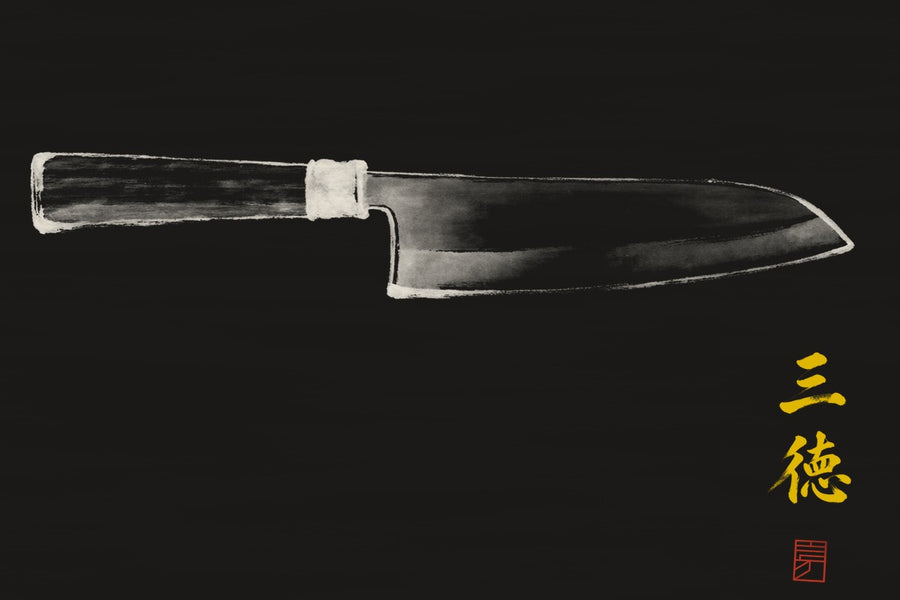
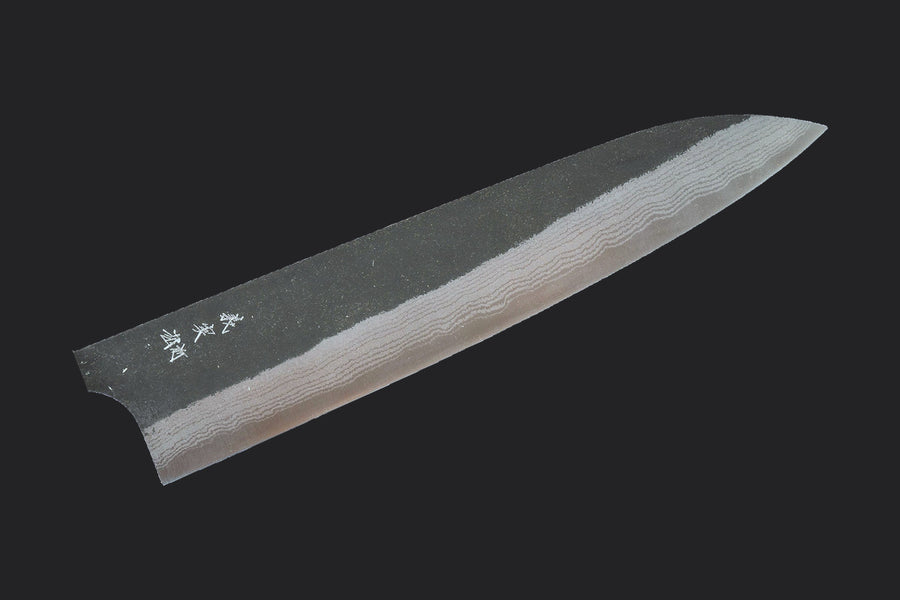
Shiro Kamo AS Kurouchi Santoku 165mm

Regular price $219.95

IMPORTANT: Carbon steel knives can rust or patina quickly if not cared for properly. They require regular cleaning, drying, and oiling. If you are unfamiliar with carbon steel maintenance, we recommend choosing a stainless steel option instead.

Sold out right now

Leave your email and we’ll send one message the moment it’s back in stock.

One email, no marketing. Privacy policy.

Availability

  • St Peters, NSW —
    2 Bishop St, Unit 2, St Peters NSW 2044
  • Crows Nest, NSW —
    107 West St, Shop 1, Crows Nest NSW 2065
    Pickup only
  • Prahran, VIC —
    180 Commercial Road, Shop 1, Prahran VIC 3181
    Pickup only
Detailed Specifications
Line Shiro Kamo Blue Super Kurouchi (Seilan)
Profile Santoku / Santoku
Bevel Type Double Bevel
Weight 132 g | 4.7 oz
Edge Length 168 mm | 6 39/64″
Heel Height 45 mm | 1 49/64″
Width @ Heel 3.0 mm | 1/8″
Width @ Mid 1.6 mm | 1/16″
Width @ 1cm from Tip 1.0 mm | 3/64″
Steel Blue Super / Aogami Super | Carbon
Blade Construction Sanmai - Soft Iron Clad
Hardness (HRC) 62 - 65
Surface Finish Kurouchi
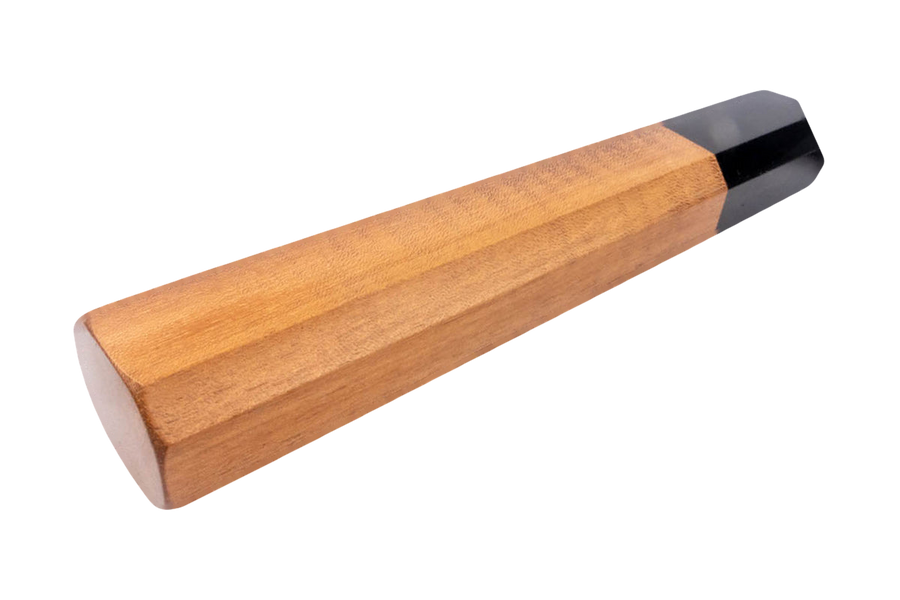
Handle Octagonal Teak Black Ferrule
Region Echizen
Best for
  • Pro chefs
  • Enthusiasts
  • Free shipping for knives over AU$200 Australia wide.
  • World-wide shipping via DHL Express, 3 to 5 days.


The Shiro Kamo Blue Super(Aogami Super) might be a familiar item for our long term supporters. Back in 2018, we worked with Kamo-san to have a series of blade with the line name Seilan(青嵐, blue storm)and our own brand name Shinko stamped on them. As these being sold out, we haven't acquired more of it, but I think everyone who purchased one of these blade would be fairly impressed by its extreme thinness and outstanding cutting feel.

What we called Seilan is now stamped with Kamo-san's own brand name "Kamotou", but the great performance is something that hasn't changed by a single bit. The majority of the blade are still very thin from the edge to the spine, yet thanks to the forging process, the thickened neck near the handle has kept this blade rigid. When cutting with this knife it is very responsive, it will follow the exact trajectory that you want it to create as most food cannot stop or flex its thin edge, including dense ones like sweet potato.

I would say the price is fairly good for a knife that is masterfully crafted, but one downside that we cannot ignore is the cladding on these knives. This blue super line features a iron cladding, and from the experience we had with Seilan, this is a particular reactive cladding(more reactive than the Blue Super core). It would need a good care and maintenance to stay beautiful, but having this soft iron jacket means it will be quite easy when comes to sharpening, polishing and thinning.

Pros Cons
  • Thin behind the edge
  • Excellent performance
  • Great OOTB
  • Prone to rust
  • A little bit brittle
Care Instruction
  1. Don't cut hard things! Japanese knives are brittle so bone hacking is a NO NO!
  2. Wash with neutral detergent after use, and wipe dry;
  3. Please don't wash knife with dishwasher, it will damage the wood handle;
  4. Be careful not to leave the knife close to a heat source for a long time;
  5. It is a lot more dangerous to cut with a blunt knife than a sharp knife!
  6. It is best to sharpen a Japanese knife regularly on a waterstone.
  7. Oil the (carbon) knife if storing for an extended period of time to prevent rust.

Shiro Kamo

Shiro Kamo — Echizen's Forging Purist

Shiro Kamo, the second generation blade smith of the Kamotou Hamono, is an expert of forging. He only keep feel designs but they are tuned to near perfect. Kamo san's knife is known for the broad profile and extreme thin bevel, paired with high hardness SG2 and Blue Super steel, his blades are some of the best cutters especially for hard and dense vegetables.

It is worth mentioning Kamo san do forge stainless and carbon steel alike, while the SG2 is much hard to deform under forging temperature, he seems to be able to command steel into his desired shape with little effort. His understanding and experience in forging and sharpening lead to incredibly well polished designs, which excels in handling, lightness and cutting smoothness.

Read more

Shiro Kamo, the second generation blade smith of the Kamotou Hamono, is an expert of forging extremely high performance blades. Being a member of the TAKEFU Knife Village, his skill level is top notch in the entire Fukui prefecture.

The most know work done by master Shiro Kamo would be his SG2 Suminagashi series. As one of the few blacksmith in this industry that does hand forging of powder stainless steel, his knife is the thinnest I've ever seen. As stainless steel tend to be much harder to shape at forging temperature, it just says how impressive of a skill that Kamo san possess being about to keep his knife so thin but straight at the same time.

The matching sharpening is also very aggressive, his SG2 has a small convexity but due to the low overall thickness and broad knife profile,the edges are still very thin. The Kurouchi Blue super has a concave grind which goes through tough food with little effort with its extreme thinness. However, these thin blade are still pretty rigid, thanks to the forged taper that thickens the tang. The combination of these features just shows how much understanding that Kamo san has to blade, and he do have the skill to achieve these details with his hammer like it takes no effort.

We found that Shiro Kamo has only few designs that he forge, and that is somewhat remarkable to me. When we are constantly seeking the shiny new things that just come out, we can always count on Kamo san when we need a knife with solid performance. His dedication and focus have lead to a near perfection of what he do, and anyone who picked up his knife and tried will feel the result of years of tuning over one design. If you want a authentically forged knife from Japan, I will definitely check out master Kamo's knives.

“Former chairman of Takefu Knife Village — an Echizen forging master who keeps only a few perfect designs.”

Est. 1955 | 昭和30年
Known for Expert forging, broad profile geometry, few but perfected designs
Instagram @shiro_kamo Read more about Shiro Kamo

Shiro Kamo · Echizen

Knife details

Frequently asked questions

Gyuto or santoku - which should I choose?

Both are all-purpose Japanese knives, and for most home cooks either will handle the bulk of daily prep. The choice comes down to length, blade shape, and how you like to cut.

A gyuto is the Japanese chef's knife - typically 210 to 240mm with a gently curved edge that lets you rock and slide through cuts as well as chop. The extra length and pointed tip give you reach and versatility, from proteins to large produce.

A santoku is shorter, usually 165 to 180mm, with a flatter profile and a rounded sheep's-foot tip. It rewards a straight up-and-down push cut, feels nimble in smaller hands or tight kitchens, and is the classic Japanese household knife.

Rule of thumb: choose a gyuto if you want one do-everything knife with more reach, or a santoku if you prefer a compact, easy-to-control blade. Plenty of our customers end up owning both.

Will a carbon steel knife rust, and how do I look after it?

Yes - carbon steels such as Aogami (Blue) and Shirogami (White) react with food, moisture, and acids. Left wet they can spot or rust, and with normal use they develop a grey-blue patina. That patina is expected and is part of owning a carbon-steel knife; it is not damage.

Care is simple once it becomes habit: hand-wash in warm water, never leave the knife soaking or sitting in a wet sink, and dry it thoroughly the moment you finish. Avoid the dishwasher entirely, and wipe the blade between tasks when you are cutting acidic foods like citrus, tomato, or onion.

If the knife will sit unused for a while, wipe a very thin film of food-safe camellia oil (or a neutral mineral oil) onto the blade before storing it. A light surface rust spot lifts easily with a rust eraser or a little Bar Keepers Friend; sustained neglect is the only thing to really avoid.

Carbon steel rewards this small amount of attention with a keener edge and easier sharpening than most stainless. If you would rather not think about maintenance at all, ask us about stainless or stainless-clad options instead.

What is Aogami Blue steel and why do chefs like it?

Aogami Blue steel, specifically Aogami Super (Blue Super), is a high-carbon Japanese knife steel made by Hitachi that chefs value for its ability to take an extremely sharp edge and hold it longer than most other carbon steels, thanks to a composition with 1.45% carbon, 2.25% tungsten, and added vanadium.

The "Blue" in Aogami refers to the color of the paper the steel is wrapped in at the mill, not the steel itself. Aogami Super is an upgraded version of Blue Steel No. 1, with higher carbon and tungsten content plus vanadium, which refines the grain structure. This lets the steel be hardened to HRC 62–65 without becoming overly brittle, giving you a blade that can be ground very thin for aggressive cutting performance while still resisting chipping in normal use. The trade-off is that, like all high-carbon steels, it is not stainless—it will rust if left wet or acidic, so you need to wipe it down and keep it dry.

How do I keep aogami carbon steel from rusting?

Dry it as soon as you finish, keep it somewhere dry, and let a patina build. Do that and aogami (Blue) steel will hardly ever rust.

Aogami #1, #2 and Super all have less than half a percent of chromium, nowhere near what a stainless steel needs, so water left sitting on the blade will spot it.

The routine:

  • Wipe the blade as you go, especially after onion, citrus or tomato.
  • When you finish, wash it in warm water with a little soap and dry it straight away with a towel. Don't let it air dry or leave it in the sink or the dish rack, and never put it in the dishwasher.
  • Store it dry: on a magnetic strip, in a saya or in a block in a dry spot. A damp drawer is the worst place for it.
  • If it's going to sit unused for a while, wipe on a thin film of camellia or mineral oil.
  • Let a patina form. The grey, blue and brown colours you get from cutting meat and vegetables are a stable oxide layer, and it slows rust down. Orange or red specks are rust.

If you do find rust, lift light orange spots with a rust eraser and a little water, then dry and oil the blade. We stock the CKK and Naniwa rust erasers. Rust on the edge itself comes off the next time you sharpen. Deep pitting is a job for us, so bring the knife in.

On a stainless-clad knife only the thin line of aogami along the edge can rust; the cladding stays clean. A carbon-clad or honyaki blade can rust over its whole face and needs the same care all over.

You May Also Like