PRAHRAN STORE NOW OPEN · THU–MON · 10AM–6PM

Yoshimi Kato Kintaro  |  SKU: KT-MINAMO-BU180MOP_SKT

Yoshimi Kato Minamo SG2 Bunka 180mm Mother-of-pearl Handle

Sale price $594.98 Regular price $699.95

Sold out right now

Leave your email and we’ll send one message the moment it’s back in stock.

One email, no marketing. Privacy policy.

Availability

  • St Peters, NSW —
    2 Bishop St, Unit 2, St Peters NSW 2044
  • Crows Nest, NSW —
    107 West St, Shop 1, Crows Nest NSW 2065
    Pickup only
  • Prahran, VIC —
    180 Commercial Road, Shop 1, Prahran VIC 3181
    Pickup only
Detailed Specifications
Line Yoshimi Kato SG2 Minamo
Profile Bunka / K-tip santoku
Bevel Type Double Bevel
Weight 200 g | 7.1 oz
Edge Length 177 mm | 6 31/32″
Heel Height 51 mm | 2 1/64″
Width @ Heel 2.0 mm | 5/64″
Width @ Mid 2.0 mm | 5/64″
Width @ 1cm from Tip 1.0 mm | 3/64″
Steel SG2 / R2 | Powdered | Stainless
Blade Construction Sanmai - Stainless Clad
Hardness (HRC) 61 to 65
Surface Finish Tsuchime
Handle Special Handle
Region Echizen
Best for
  • Pro chefs
  • Enthusiasts

Free shipping for knives over AU$200 Australia wide.

World-wide shipping via DHL Express, 3 to 6 days (not available in the UK).


The Minamo is the latest offering from master Yoshimi Kato from Kintaro Hamono of Takefu Knife Village. The Minamo line is forged with the SG2 powdered steel that is very fine, sharp and has great edge retention.

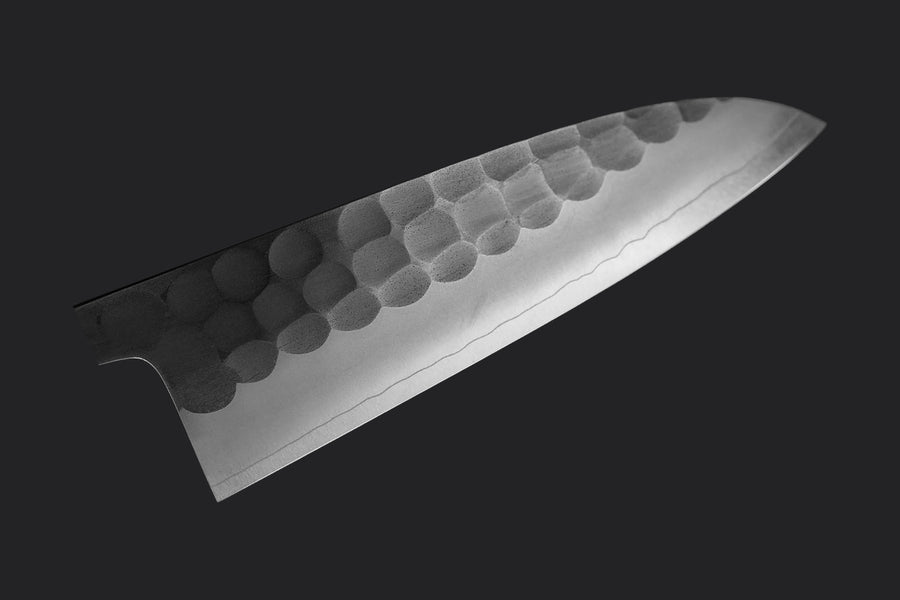
The elegant hammered "Minamo" pattern is inspired by the summer Thunderstorm, and the way they lines up along the blade forms patterns looks like ancient coins. As master Kato has been working with Master Kurosaki for a very long period of time, and their knives are highly similar in terms of design and performance: super thin behind the edge, with a great OOTB edge and excellent food penetration, on top of that, they often put very unique patterns that differentiate their knives from other lineups, just like how this Minamo line does.

Like any other knives made by Yoshimi Kato, these blades are thin and nimble in hands, while retaining that excellent trait, the line bring some shiny appearance along with good performance. Considering the level of finish, artistic value and the SG2 core steel, I believe the pricing for this line is actually very good, thus I would bring it out for anyone who is after a SG2 knife.

Pros Cons
  • Excellent performance
  • Great artistic
  • Thin behind the edge
  • Relatively hard to sharpen
Care Instruction
  1. Don't cut hard things! Japanese knives are brittle so bone hacking is a NO NO!
  2. Wash with neutral detergent after use, and wipe dry;
  3. Please don't wash knife with dishwasher, it will damage the wood handle;
  4. Be careful not to leave the knife close to a heat source for a long time;
  5. It is a lot more dangerous to cut with a blunt knife than a sharp knife!
  6. It is best to sharpen a Japanese knife regularly on a waterstone.

Yoshimi Kato

Yoshimi Kato: Damascus knives from Takefu

Kato Knife Manufacturing Inc. is Yoshimi Kato's workshop in the Takefu Knife Village. The company was founded in May 1948, and Yoshimi Kato, its third-generation representative, began knife smithing in July 2012. The workshop works in hand-forged Damascus and heat treatment of high-end steels.

Read more

Kato Knife Manufacturing, or カトウ打刃物製作所, traces back to 1948, when the Kato family first set up in what later became the Takefu Knife Village cooperative. Hiroshi Kato (加藤 弘), the second generation, spent over fifty years at the anvil and helped found the cooperative itself.

Yoshimi is the company's third-generation representative and began knife smithing in July 2012.

His Damascus patterns are multi-layered, and his heat treatment is consistent across a wide range of steels, from SG2 and VG10 to Aogami Super and Ginsan. Every step of production happens in-house.

The Kintaro and Kanehiro lines are made at the Kato workshop, and they have a following among cooks who want both looks and cutting performance.

“Three generations of Echizen knife making at Takefu Knife Village.”

Est. 1948 | 昭和23年
Known for Hand-forged Damascus, masterful heat treatment of SG2 and Aogami Super
Website kato-knife-mfg.jp Read more about Yoshimi Kato

Yoshimi Kato · Echizen

Knife details

Frequently asked questions

Why is it called a bunka knife?

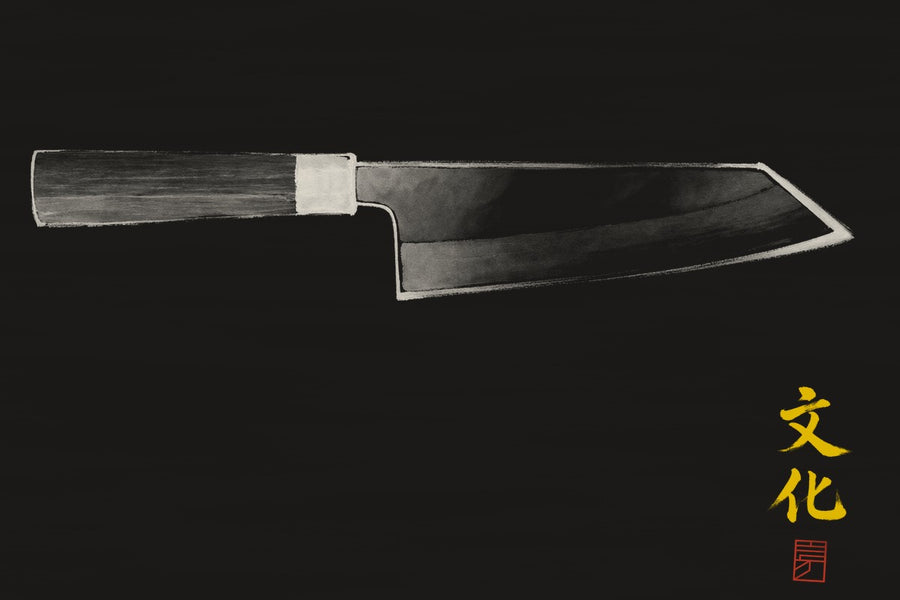
The bunka knife (文化包丁) takes its name from bunka, culture. A Sakai knife maker ties the name to Japan's modernisation, when Western culture and Japanese tradition merged, and says it stands for that new era and for the knife's wide range of uses.

The same maker says that as diets broadened to meat, fish and vegetables, an all-purpose knife was wanted, and the bunka took features from both Japanese and Western knives.

What is the difference between a bunka and a santoku?

The tip. One Japanese knife maker describes the bunka (文化包丁, kengata) as combining the good points of the gyuto and the nakiri with the tip cut at an angle, and the santoku as coming after it, by rounding that tip.

Both are all-purpose knives for the home; santoku (三徳) means three virtues, for the three foods it cuts: meat, fish and vegetables.

SG2 steel knives at Knives and Stones

SG2 (Super Gold 2, which Takefu writes as SPG2) is Takefu Special Steel's own blade steel, made by powder metallurgy. Takefu says it meets all four of what it calls the major requirements for a blade: high hardness, high toughness, good wear resistance and excellent corrosion resistance.

SG2 runs 61 to 65 HRC depending on the maker, and Takefu does not publish its composition. As of 18 October 2026, 291 of the knives we list have SG2 in their title.

SG2 vs AS steel for kitchen knives: which is better?

Neither is objectively better, it just depends on whether you value stainless convenience or a laser-sharp carbon edge. Go with SG2 if you want a knife that holds a screaming edge without any babysitting. Choose AS if you are chasing the thinnest possible edge and don't mind wiping the blade down after every use.

SG2 is a powdered stainless steel from Takefu, 61 to 65 HRC depending on the maker. It is tough and resists corrosion, which is why I reach for it when working with acidic foods. Aogami Super is high carbon, and Proterial gives it a hardening hardness of over 60 HRC. It sharpens to a hair-whittling edge that lasts slightly longer than SG2, but it will rust if you neglect it.

R2 steel vs SG2: are they the same?

We can't confirm that from a steelmaker. SG2 (Super Gold 2, which Takefu writes as SPG2) is Takefu Special Steel's own blade steel, made by powder metallurgy. Takefu does not publish its composition; SG2 runs 61 to 65 HRC depending on the maker.

As of 18 October 2026, we found no steelmaker page for a steel called R2. Some knives on our shelf are listed as SG2/R2: six as of 18 October 2026, from Kurosaki, Shiro Kamo and Yoshimi Kato.

What is the difference between VG10 and SG2?

Both are Takefu blade steels, and they differ in class and in what Takefu publishes about each. Takefu lists VG10 as a stainless steel with 1.00% carbon, 15.00% chromium, 1.00% molybdenum, 0.25% vanadium and 1.55% cobalt, at HRC 60 or more.

Takefu describes SG2, its Super Gold 2, as a blade steel created by powder metallurgy, lists its composition as not disclosed, and SG2 runs 61 to 65 HRC depending on the maker. Takefu also calls SG2 a powdered stainless high-speed steel.

What is the difference between SG2 and ZDP-189?

They come from different steelmakers, and both are made by powder metallurgy. Takefu lists SG2 as a blade steel created by powder metallurgy, with its composition not disclosed; SG2 runs 61 to 65 HRC depending on the maker.

Proterial describes ZDP-189 as a stainless blade steel made by powder metallurgy, lists 3.00% carbon and 20.00% chromium with its other elements not published, and gives a hardening hardness of over 65 HRC.

You May Also Like