Crows Nest store now open from Friday to Tuesday, in store specials!

Hatsukokoro  |  SKU: HS-ST-B2KU-CH190-HVY

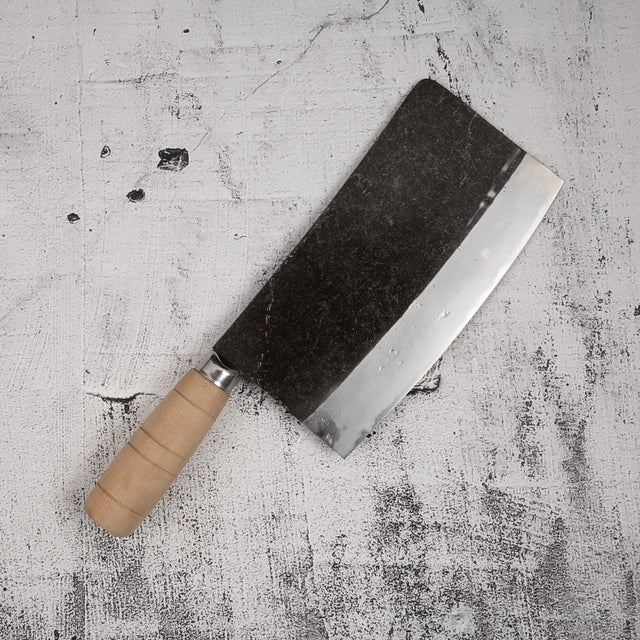
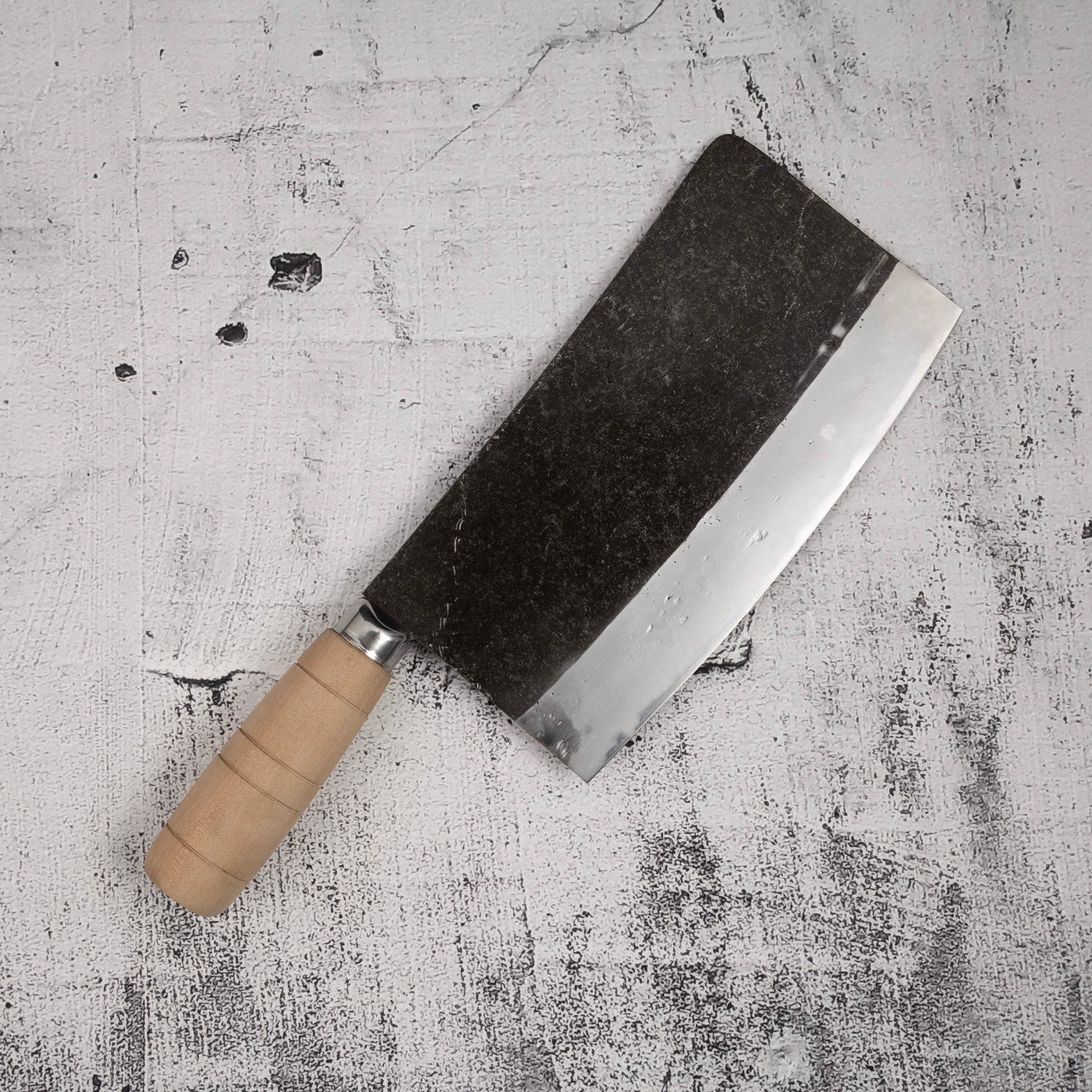
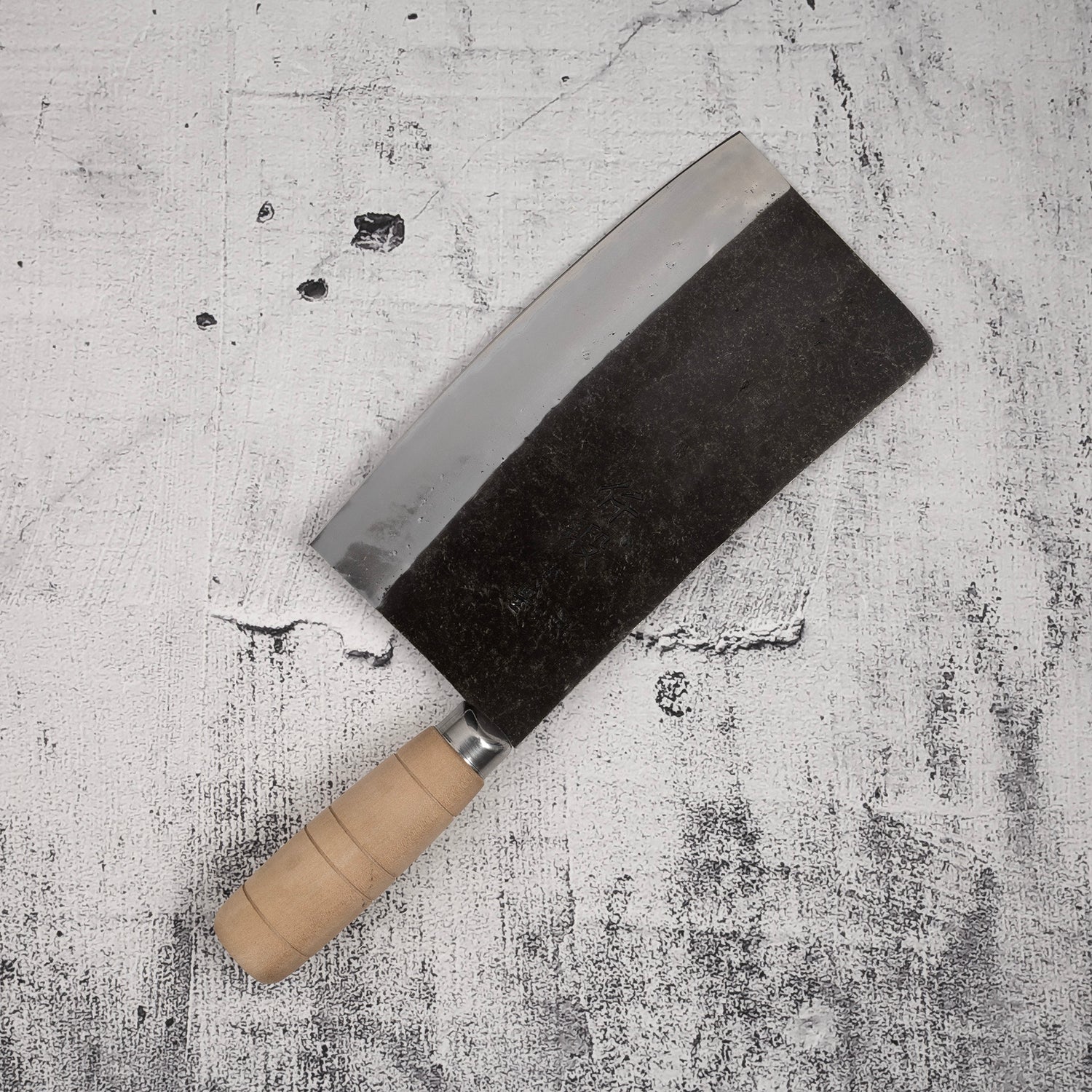
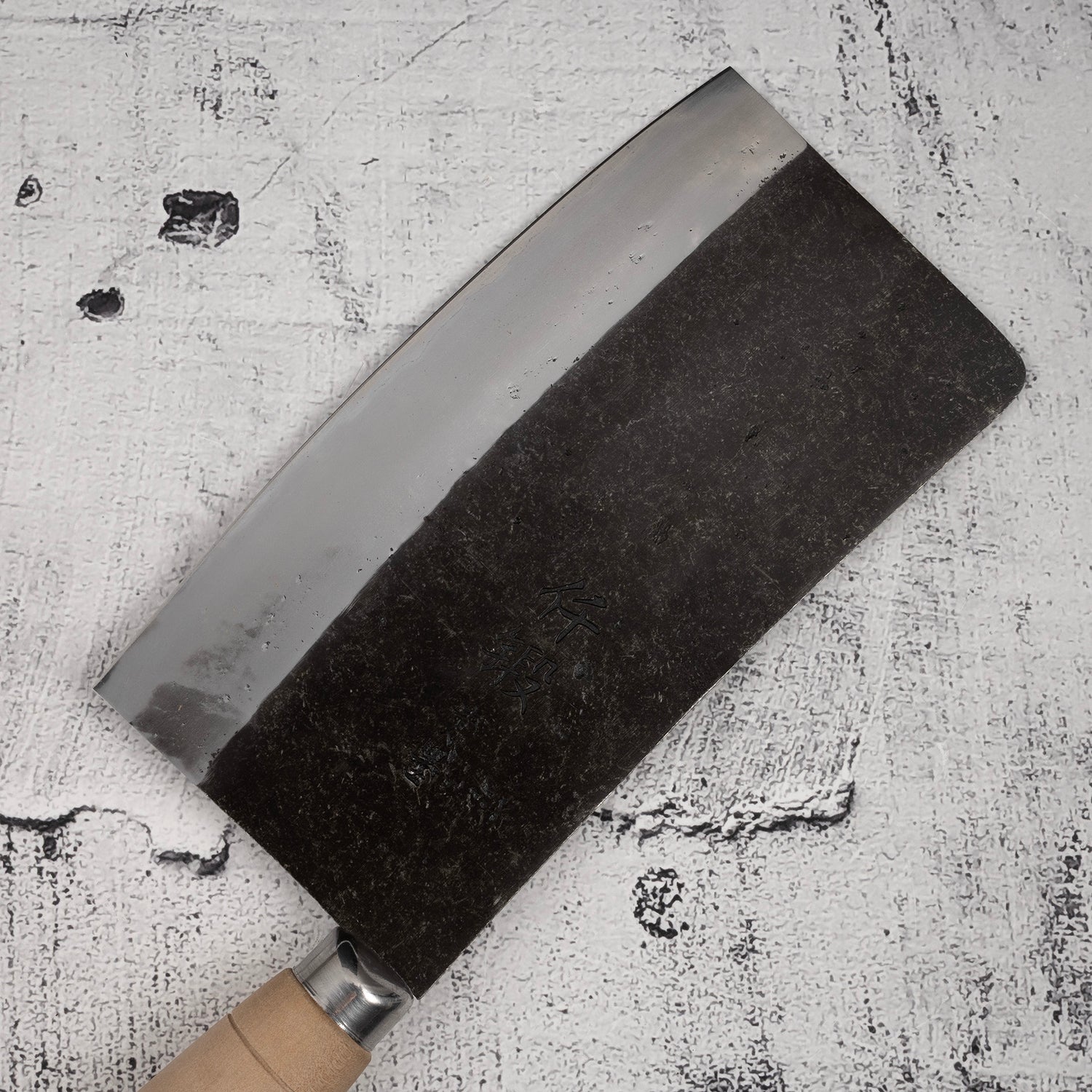
Hatsukokoro Sentan Blue 2 Stainless Clad Chinese Cleaver 190mm Heavy

Regular price $229.95

IMPORTANT: Carbon steel knives can rust or patina quickly if not cared for properly. They require regular cleaning, drying, and oiling. If you are unfamiliar with carbon steel maintenance, we recommend choosing a stainless steel option instead.

Pickup currently unavailable at Crows Nest

Add a saya or K&S Knife Roll to receive $20 bundle discount!

Sentan Blue 2 Kurouchi Stainless Clad
Chuka (Cleaver) / Chinese Cleaver
Double Bevel
Weight 423 g | 14.9 oz
Edge Length 195 mm | 7 43/64″
Heel Height 92 mm | 3 5/8″
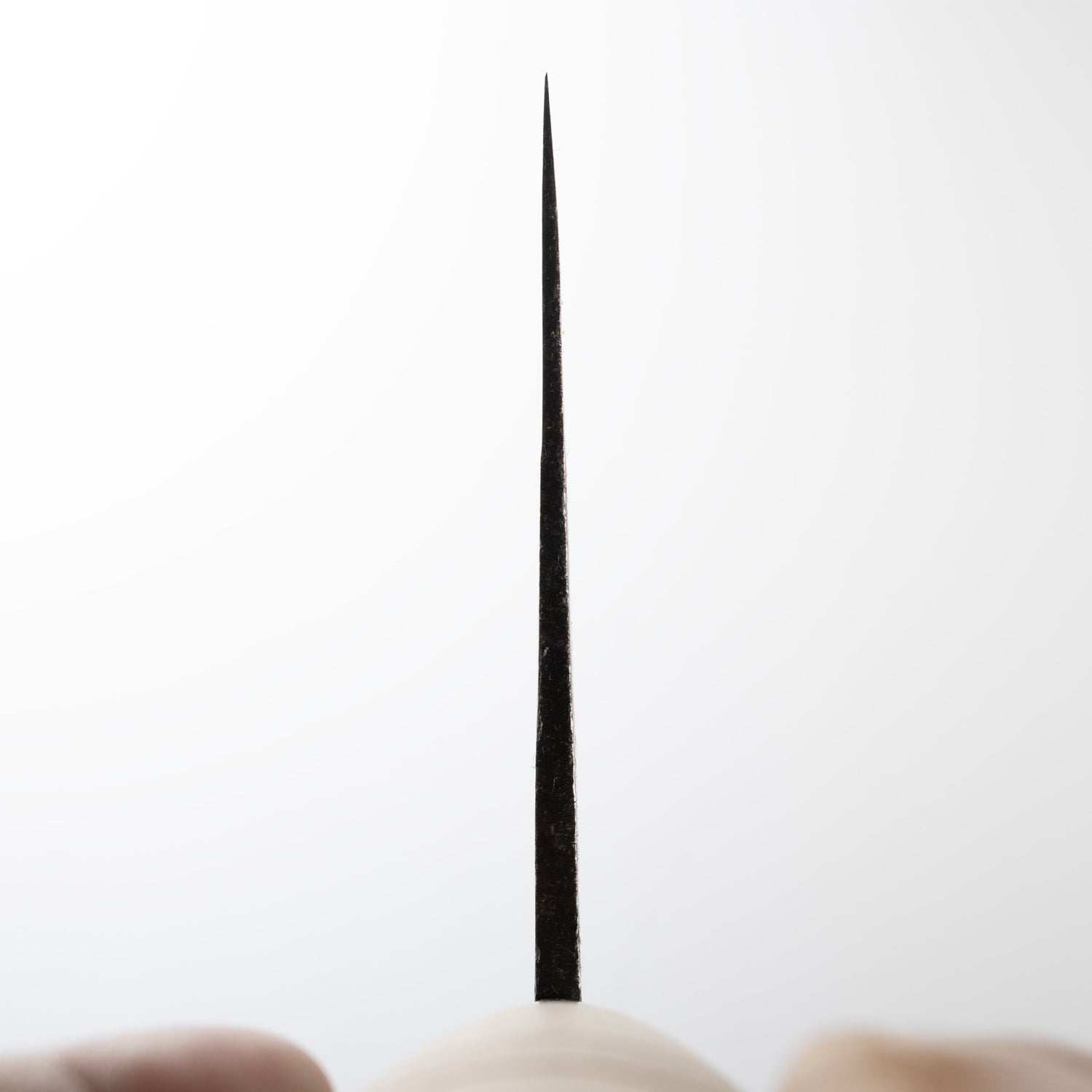
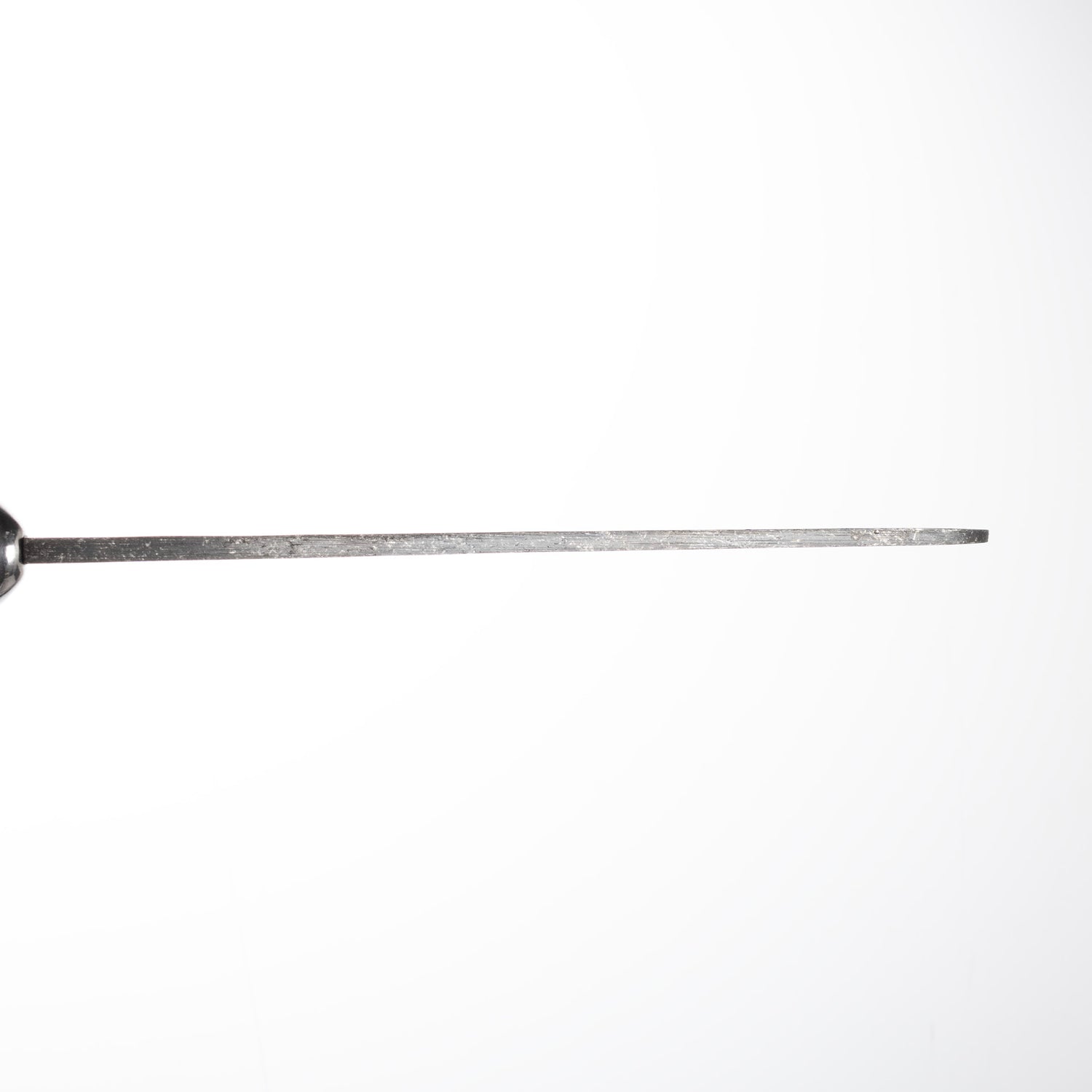
Width @ Heel 4.5 mm | 11/64″
Width @ Mid 3.7 mm | 9/64″
Width @ 1cm from Tip 3.3 mm | 1/8″
Steel Blue 2 / Aogami #2 | Carbon
Blade Construction Sanmai - Stainless Clad
Hardness (HRC) 61 - 63
Surface Finish Kurouchi
Handle Cleaver Handle
Region Other
Best for
  • Pro chefs
  • Students
  • Free shipping for knives over AU$200 Australia wide.
  • World-wide shipping via DHL Express, 3 to 5 days.


Sentan Blue 2 Kurouchi Stainless Clad series is the sister line of the White 2 cleavers under the same brand, it keeps the low maintenance stainless Sanmai structure, changes the core steel to the Blue 2 and now has a more uniform Kurouchi finish. Featuring a variety of different profiles, this is a line that can easily fulfil your need for Chinese cleavers regardless of the specific task you need to complete.

There is an existing blank in the market of Chinese cleavers. From what we can see, Japanese makers rarely forge this type of knife and they tend to create a blade that has a different sectional profile compared to Chinese ones. This leads to different cutting behaviour and often heavier weight. On the other hand a reputable maker like CCK would forge their knife down to the thickness of a leaf with excellent cutting performance and balance, but the lower edge retention and high maintenance can often put off many potential users.

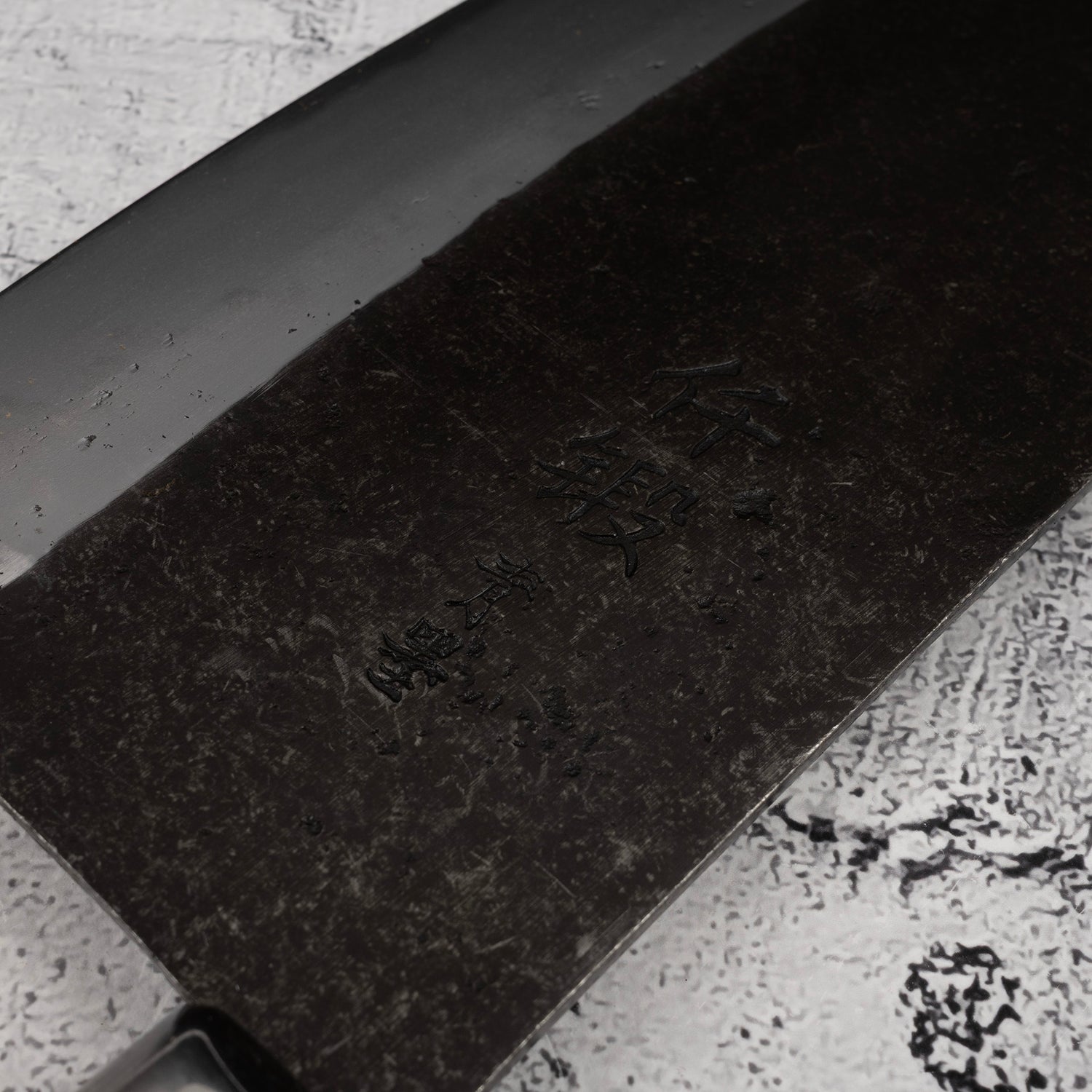
This is a line that is designed in house by Knives and Stones to fulfil this blank, our aim was to create a series of authentic Chinese cleavers, while incorporating the characteristics and performances you would find on a fine Japanese knife. We chose the classic Hitachi Blue 2 carbon steel for its high carbon content, then a layer of stainless cladding was forged on each side to create a low maintenance blade. As a result, we get an aggressive cutting  edge made with a pretty hard carbon steel that is only exposed on the very edge of the blade, most of the blade would be free from rusting or patina and even if the exposed carbon steel rusts, they can be removed easily by sharpening.

The blade is forged into shape before the final bevel is put on, and by looking at the front of the knife, you can see there is a “S” shape contour on each side of the blade. The spine starts thick, giving the knife the stiffness it needs when doing precise cut, it then tapers down to reduce the weight of the blade so it is not tiring to cut for an extensive amount of time. The blade then thickens up again at the beginning of the bevel, this allows it to have some volume so it can build the geometry that we desire.

We chose a rather strong convex grind as the primary bevel geometry, it emphasises on food release rather than low thickness behind the edge. When slicing with these knives, there will be a very positive release, the slice of food will curl sideways and fall off the blade easily without much chance of sticking to the side of the knife. The wedging issue can be mitigated by the cutting method, as the common way of cutting with Chinese cleaver is a strong push cut, the momentum of the blade can usually push through the food without getting stuck halfway.

This line offers two different profiles other than the standard 175mm and 195mm rectangular cleavers. This blade features a raised tip and a thickened edge, allowing more energy to be delivered during chopping while providing the necessary strength to cut through small bones, such as fish bones, without chipping. The “Tall Santoku” is more useful in butchery, having a more clearly defined tip allows it to perform precise dissection and carving in these scenarios.

This Blue 2 line is our answer to the demand of a great workhorse chinese cleaver, it combines many features we believe are useful and it also offers many different profiles to fit the needs of different users. I have to mention they are not the most beautiful knives you can find because at the end of the day, they are still hand forged products. We opt for performance and value instead of beauty, so you can get these very organic looking, great performing knives at a very reasonable price.

Pros Cons
  • Great for professionals
  • Workhorse grind
  • Budget friendly
  • Fit and finish can be improved
  • Prone to rust
Care Instruction
  1. Don't cut hard things! Japanese knives are brittle so bone hacking is a NO NO!
  2. Wash with neutral detergent after use, and wipe dry;
  3. Please don't wash knife with dishwasher, it will damage the wood handle;
  4. Be careful not to leave the knife close to a heat source for a long time;
  5. It is a lot more dangerous to cut with a blunt knife than a sharp knife!
  6. It is best to sharpen a Japanese knife regularly on a waterstone.
  7. Oil the (carbon) knife if storing for an extended period of time to prevent rust.

Knives and Stones (K&S)

Established in 2014 and based in Sydney, Australia, Knives and Stones (K&S) has grown into the country’s leading premium kitchen knife retailer, with a reputation recognized worldwide. Through close relationships with renowned Japanese blacksmiths, K&S directly imports some of the most sought-after Japanese kitchen knives, offering unmatched authenticity and value.

Founder James Zhang’s Chinese heritage also brings a unique dimension to the business: collaborating with Chinese craftsmen to forge high-performance cleavers using premium Japanese steels—what James proudly calls “the real deal.”

Read more

Founded in 2014 and headquartered in Sydney, Australia, Knives and Stones (K&S) has grown from a passionate project into one of the most respected premium kitchen knife retailers in the world. What started as a small business dedicated to sourcing the very best Japanese blades has now become a trusted global name, serving chefs, collectors, and home enthusiasts across Australia, the USA, and China.

At the heart of K&S is a deep and personal connection with Japan’s most celebrated blacksmiths. Over the years, we have built strong relationships with both traditional masters and rising talents, allowing us to import their knives directly. This not only ensures authenticity and craftsmanship but also delivers outstanding value to our customers by removing unnecessary layers between the maker and the end user. From household names to exclusive collaborations, K&S offers access to some of the most coveted Japanese kitchen knives available today.

Our international outlook is also shaped by founder James Zhang’s Chinese heritage. With a vision to bridge traditions, James has introduced Japanese steel to skilled Chinese makers to create a series of cleavers that stand apart in both quality and performance. These blades, which James calls “the real deal”, embody the perfect balance of Japanese metallurgy and Chinese culinary tradition.

With physical presence and distribution networks in Australia, the USA, and China, Knives and Stones is uniquely positioned to bring world-class kitchen knives to customers around the globe. Whether you’re a professional chef seeking a reliable workhorse, a collector chasing rare masterpieces, or a home cook ready to elevate your craft, K&S is committed to delivering tools that inspire confidence and creativity in the kitchen.

Est. 2014
Read more about Knives and Stones (K&S)
Knives and Stones (K&S) — Other
Open in Maps app
Tip: add map_place_id for best accuracy.
Profile: Chuka (Cleaver)
Profile

Chuka (Cleaver)

Chinese Cleaver

The Chuka Bocho, or Chinese cleaver, is a large, versatile knife central to Chinese cooking, featuring a broad, rectangular blade with slightly curved belly and defined tip. Beyond its primary functions of slicing, dicing, and chopping vegetables and meat, its wide blade also excels at crushing garlic and scooping up prepared ingredients for easy transfer from cutting board to pan. Despite its formidable size, it is not intended for cutting through bone, but rather for precision tasks and handling both fine and heavy-duty chopping. Blade lengths typically range from 180mm to 220mm, offering a generous cutting surface. The signature tall height not only enables the scooping function, but allows users to grip the blade deeply in a pinch grip and have very precise control on the direction of the cut. as a result, Chinese cleavers can give you strong confidence when producing thin cuts on tall and tough produces. Unlike Nakiri, cleavers always have a sharp tip, this allows it to do scoring, carving and slicing with great precision too. This knife's unique blend of functionality makes it an indispensable tool in kitchens, especially where quick and precise preparation of large ingredient volumes is essential.
Composition

Blue 2 / Aogami #2 Element Composition

Compare with
    Blue 2 / Aogami #2
    1.05% 0.8% 0.5% 0.3% 0
    C Carbon 1.05%
    Primary hardening element. Raises hardness and wear resistance — but too much increases brittleness and corrosion susceptibility. As a reference: German 1.4112 (~0.5%) sits at the low end; VG-10 (~1.0%) is a common mid-range; SG2 (1.25–1.45%) and ZDP-189 (~3.0%) represent high and extreme ends respectively.
    C
    1.05%
    Cr Chromium 0.2%
    Raises corrosion resistance; 13%+ qualifies steel as stainless. Also improves hardenability and wear resistance. In kitchen use, higher chromium levels contribute to a slight drag or sticking sensation when cutting — a trade-off for the rust resistance it provides.
    Cr
    0.2%
    W Tungsten 1.0%
    Forms hard carbides for wear resistance and edge retention. Gives the steel hardness even at elevated temperatures.
    W
    1.0%
    Mn Manganese 0.2%
    Aids hardenability and strength. Acts as a deoxidiser during smelting. Excess can reduce toughness.
    Mn
    0.2%
    Si Silicon 0.1%
    Strengthens the steel matrix and acts as a deoxidiser. Improves hardness and resistance to oxidation.
    Si
    0.1%
    P Phosphorus 0.025%
    Impurity from the smelting process. Even small amounts cause brittleness — steelmakers keep this as low as possible.
    P
    0.025%
    S Sulfur 0.004%
    Impurity that reduces toughness and promotes brittleness. Intentionally added only in free-machining steels.
    S
    0.004%
    C — Carbon Cr — Chromium W — Tungsten Mn — Manganese Si — Silicon P — Phosphorus S — Sulfur
    Hardness 61–63 HRC
    555759616365+
    Steel
    Blue 2 / Aogami #2
    Category
    Carbon
    Manufacturer
    Hitachi Special Steel, Japan 🇯🇵
    Hardness
    61–63 HRC
    Steel

    Blue 2 / Aogami #2

    • Manufacturer
      • Hitachi Special Steel, Japan
    • Nature Carbon
    • Hardness61–63 HRC
    Blue Steel No.2, also recognized as Aogami No.2, is a distinguished high carbon steel produced by Hitachi Metals Ltd, enhanced by the addition of chromium and tungsten to the base of White Steel No.2. This modification brings about an improvement in toughness and the creation of hard carbide molecules, which significantly boost edge retention. Although its sharpness is comparable to that of White Steel No.2, Blue Steel No.2 offers a slight advantage in maintaining its edge.

    Widely favored for its versatility, Aogami No.2 is celebrated for its ease of sharpening and robust resistance to chipping, making it an ideal choice for those new to Aogami steel knives. Containing 1.0–1.2% carbon and achieving a typical hardness of 62–63 HRC on the Rockwell scale, it stands as the benchmark in evaluating Aogami steel cutlery.
    Construction: Sanmai - Stainless Clad
    Construction

    Sanmai - Stainless Clad

    Sanmai(Three-Piece) is a common construction for double bevel knives where two pieces of softer cladding steel are forgewelded to each side of a harder core steel. The harder but more brittle core steel will form the hard cutting edge after heat treating, and the softer cladding will support the core to increase the overall strength of the blade.

    The soft cladding enables the thinning process to be a lot easier than a honyaki or monosteel construction. And in the case where the cladding steel are stainless in nature, it can offer protection for the carbon or semi-stainless cores against rusting and discoluoring.

    Finish: Kurouchi
    Finish

    Kurouchi

    Kurouchi refers to the rustic, unpolished finish found on the blade of many traditional Japanese kitchen knives. This blacksmith's finish is characterized by its dark, textured appearance, which is the result of leaving the blade forge-scale on the steel during production. Kurouchi finish not only adds a unique aesthetic appeal but also provides certain practical benefits. It acts as a protective layer against rust and corrosion, and helps to reduce food sticking to the blade during cutting. Commonly seen on high-quality, hand-forged knives, the kurouchi finish emphasizes the artisanal nature of the knife and its heritage, making each piece distinctively unique.

    Handle
    Handle

    Handle Specs

    • Profile Chinese Cleaver Handle
    • Material
      • Ho Wood

    Traditional chinese cleaver handle, short but very easy to grip. Designed to hold with two fingers on the blade and three fingers wrapping around the small handle. The short lenght is to balance the knife into a more blade heavy position which is a desired balance point for Chinese cleavers.

    1 / 5

    You May Also Like