Prahran, VIC store now open from Friday to Tuesday, 10am till 6pm.

Masutani  |  SKU: MASU_V10KKR_SA180_WA

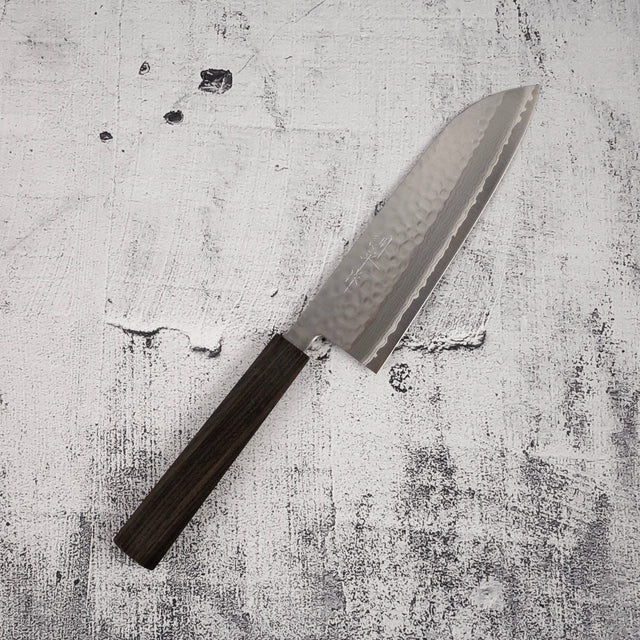
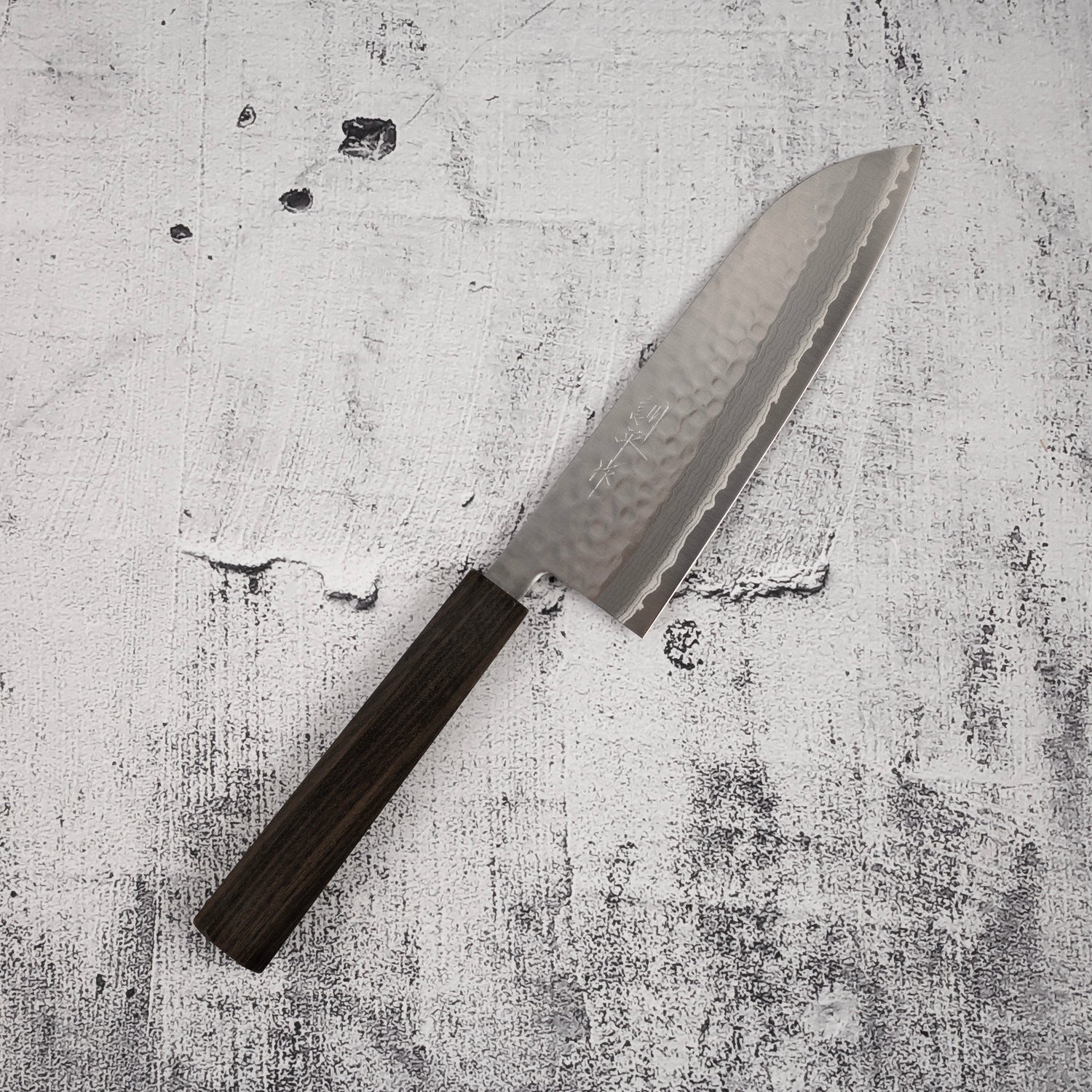
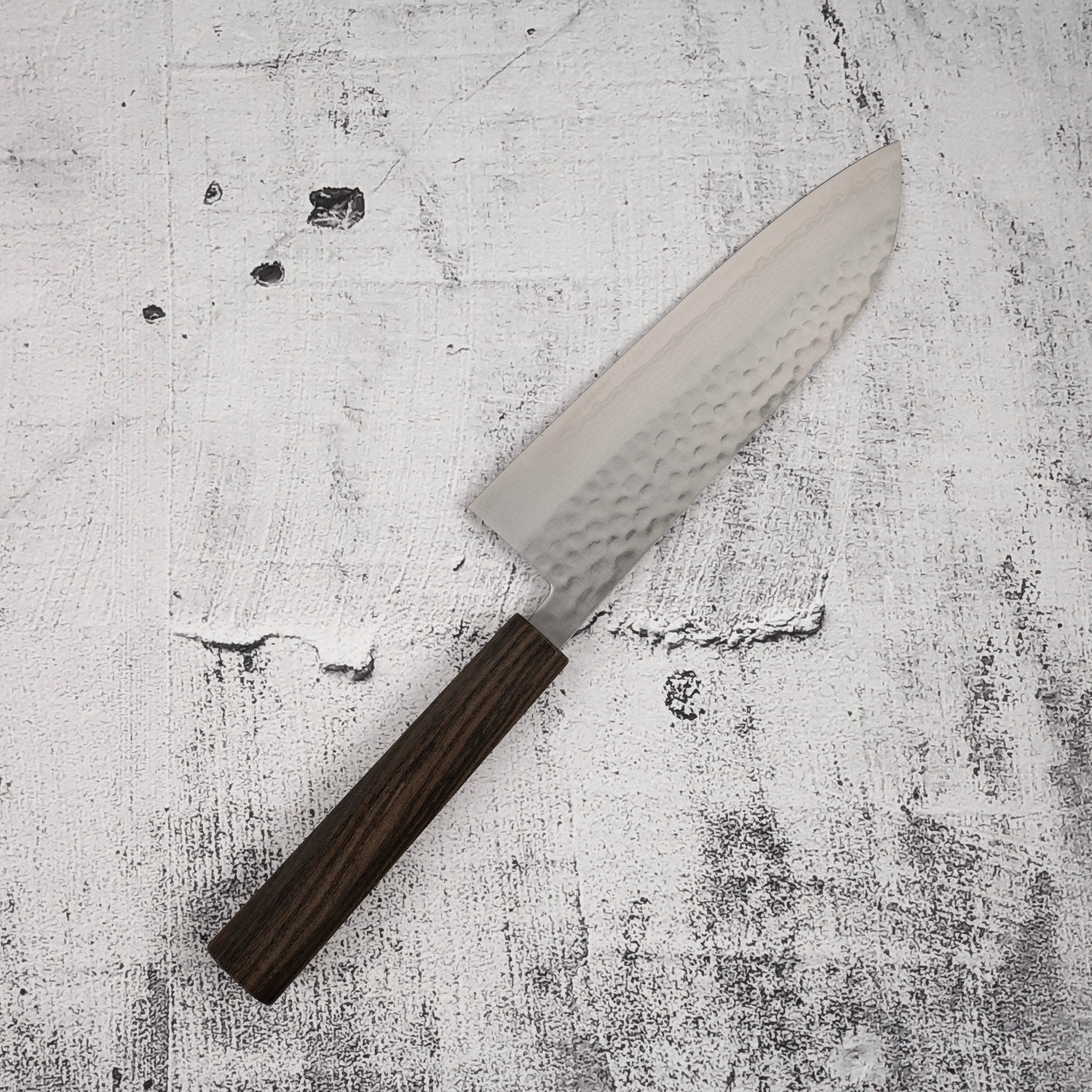
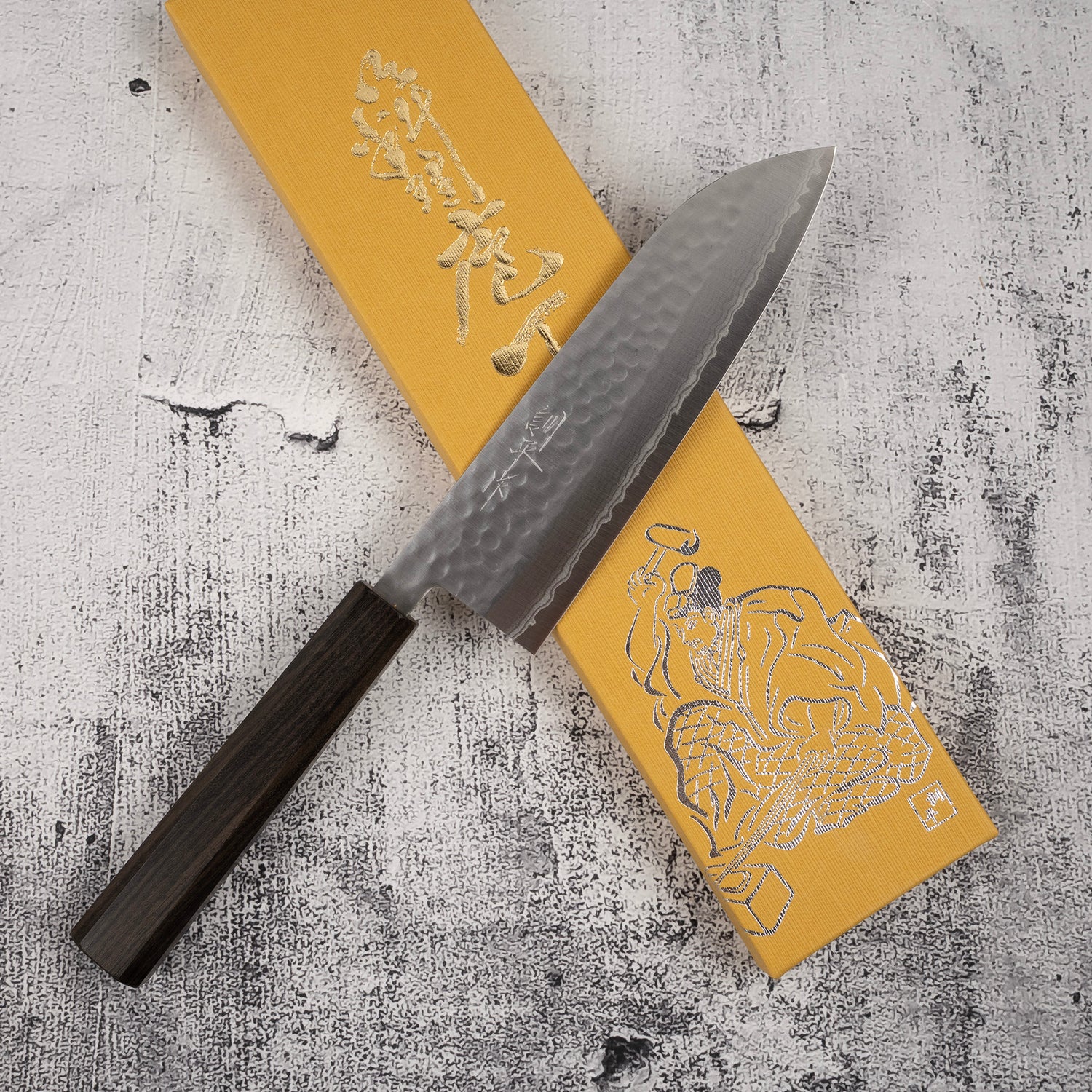
Masutani Kokuryu VG10 Damascus Tsuchime Santoku 170mm WA Handle

Regular price $159.95

Availability

  • St Peters, NSW
    2 Bishop St, Unit 2, St Peters NSW 2044
  • Crows Nest, NSW
    107 West St, Shop 1, Crows Nest NSW 2065
    Pickup only
  • Prahran, VIC
    180 Commercial Road, Shop 1, Prahran VIC 3181
    Pickup only
Detailed Specifications
Line Masutani Kokuryu VG10 Tsuchime Damascus
Profile Santoku / Santoku
Bevel Type Double Bevel
Weight 134 g | 4.7 oz
Edge Length 170 mm | 6 11/16″
Heel Height 48 mm | 1 57/64″
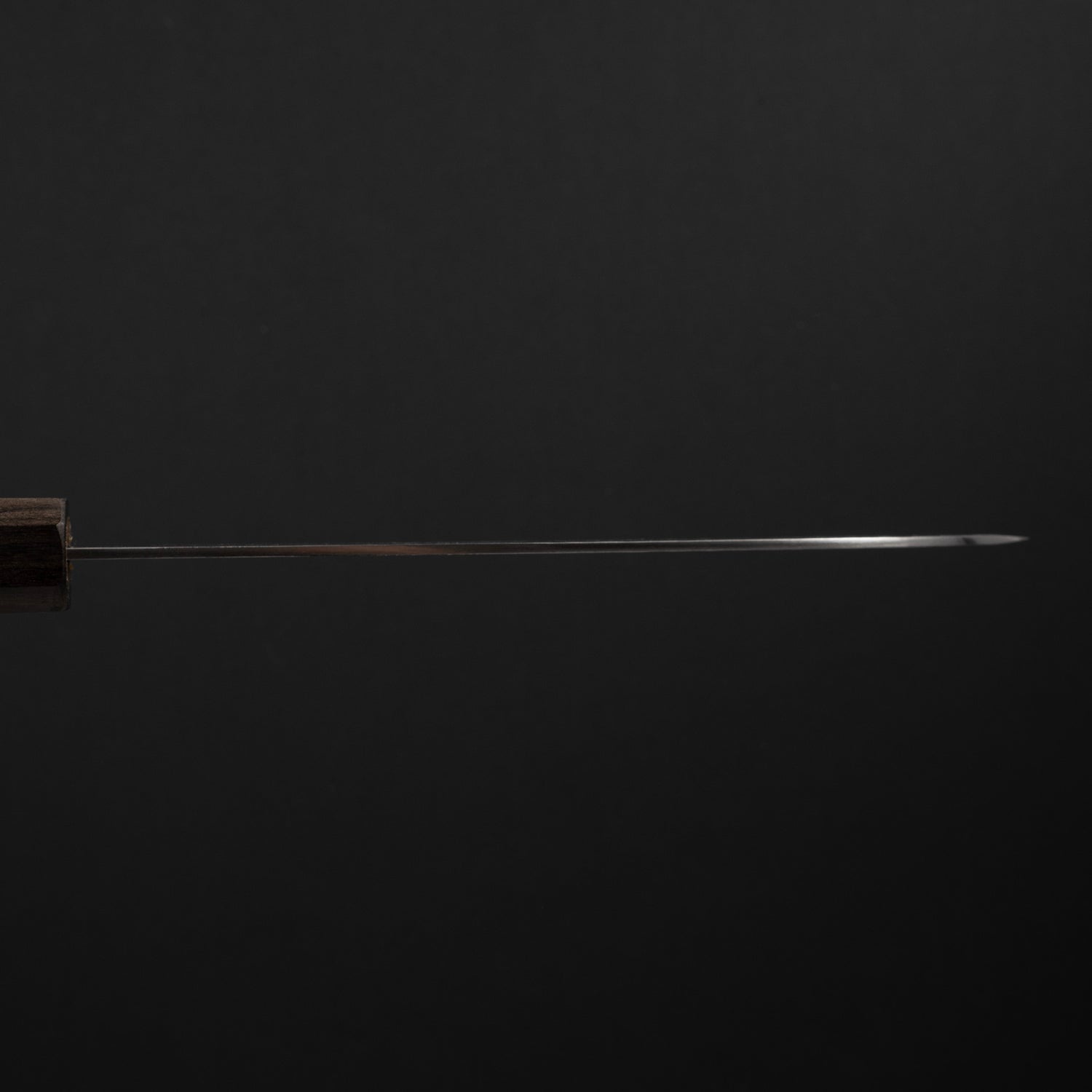
Width @ Heel 1.7 mm | 1/16″
Width @ Mid 1.7 mm | 1/16″
Width @ 1cm from Tip 1.1 mm | 3/64″
Steel VG10 | Stainless
Blade Construction Sanmai - Stainless Damascus Clad
Hardness (HRC) 59 - 61
Surface Finish Tsuchime
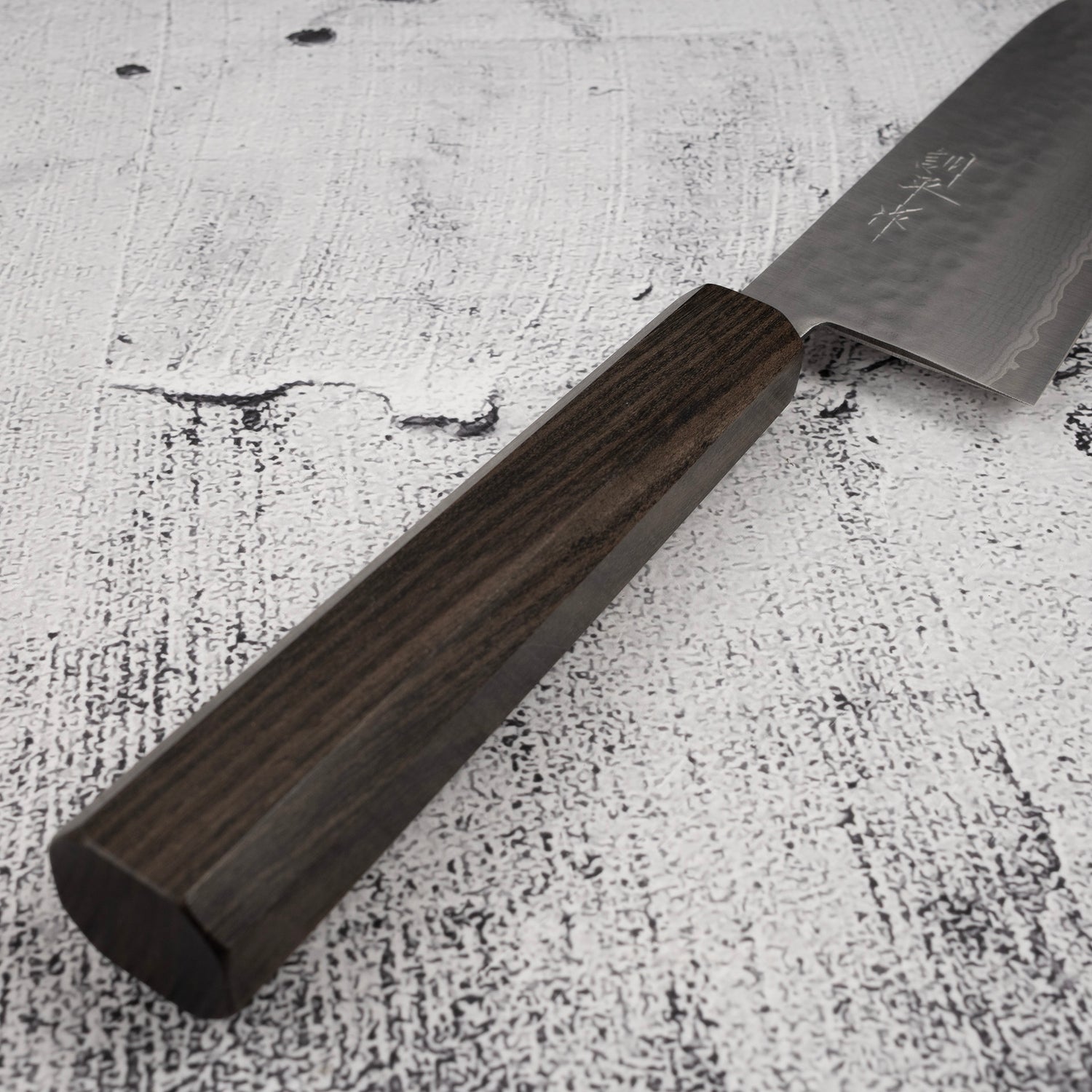
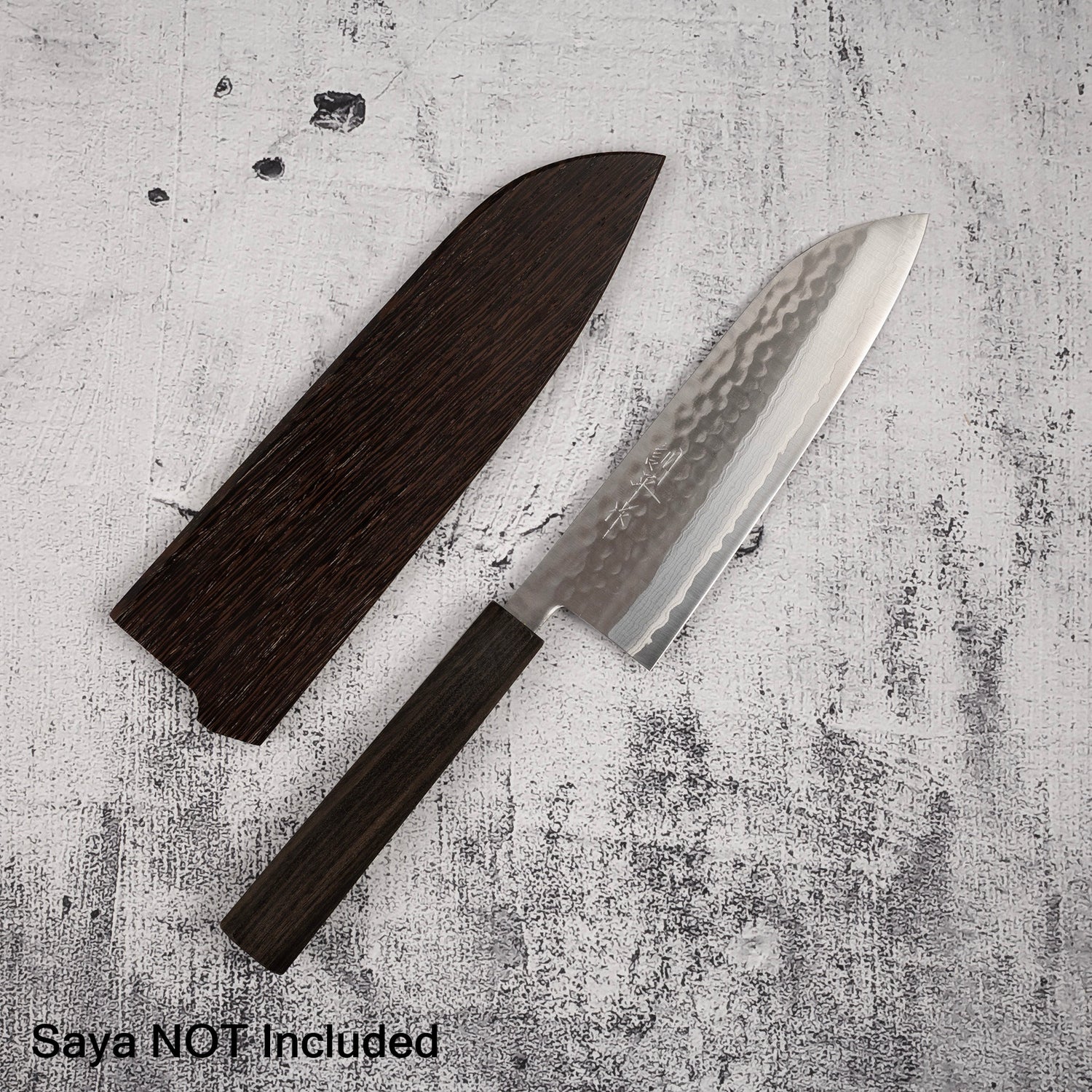
Handle Octagonal Black Chacate
Region Echizen
Best for
  • First-timers
  • Gift buyers
  • Students
  • Free shipping for knives over AU$200 Australia wide.
  • World-wide shipping via DHL Express, 3 to 5 days.


At under 180 AUD for any model in the range, the Kokuryu (刻流, Engraved Flow) line from Masutani is one of those knives that's genuinely hard to argue with. Hand sharpened in Echizen with a VG10 core, it delivers a cutting smoothness that most knives at this price simply can't match — and that gap becomes obvious the first time you run it through something dense.

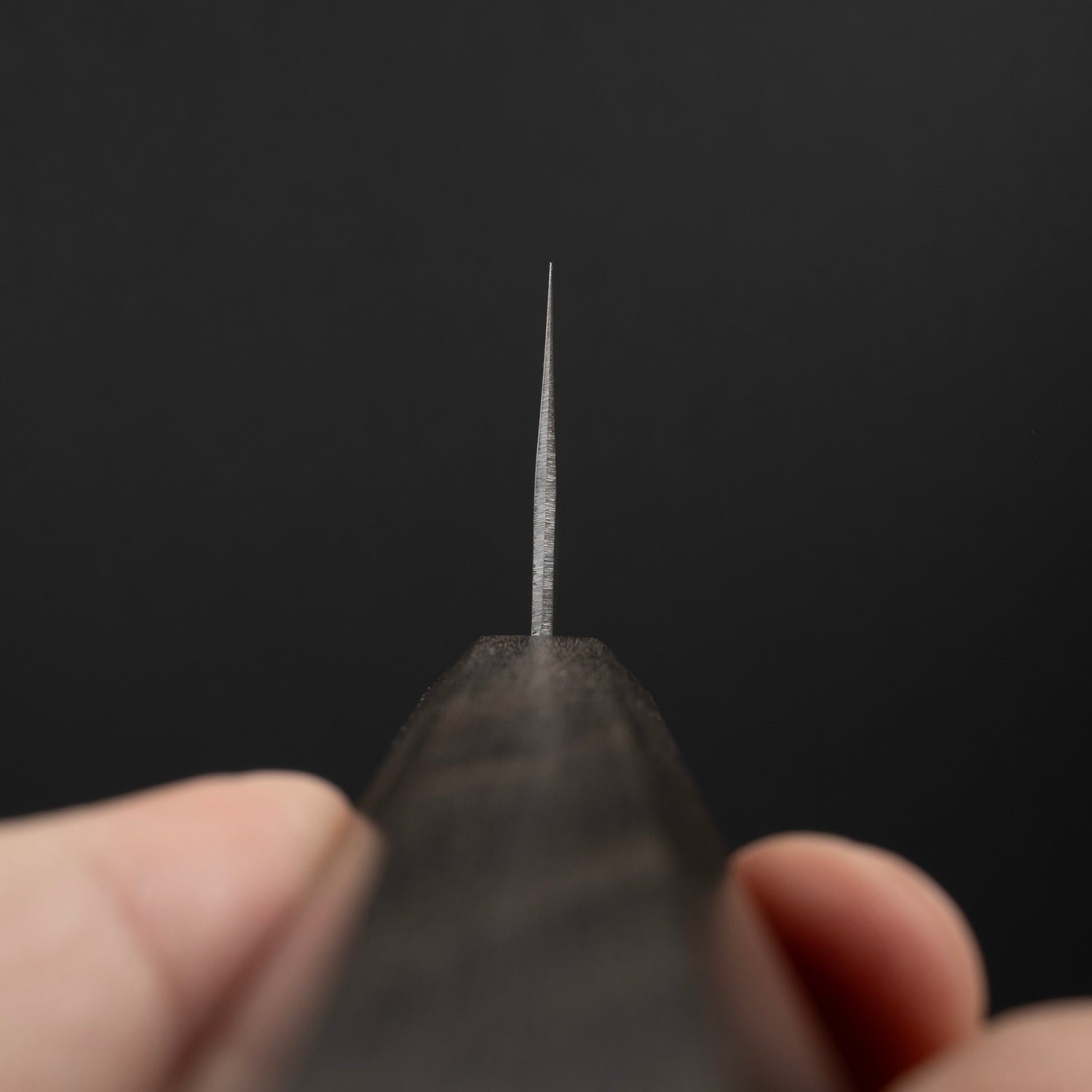
The geometry is the real story here. The concave grind comes down from the Shinogi line to a very low thickness behind the edge, a level of refinement that you'd typically only find on significantly more expensive knives. This kind of sharpening is achieved on an Ento — a round grinding stone — and requires a level of skill that most budget production lines don't invest in. The result is a blade that enters food cleanly and releases it well, without the resistance and drag that plagues many knives in this price bracket. It's a geometry that also holds up well over repeated sharpenings, which means the performance you get out of the box isn't a one-time experience.

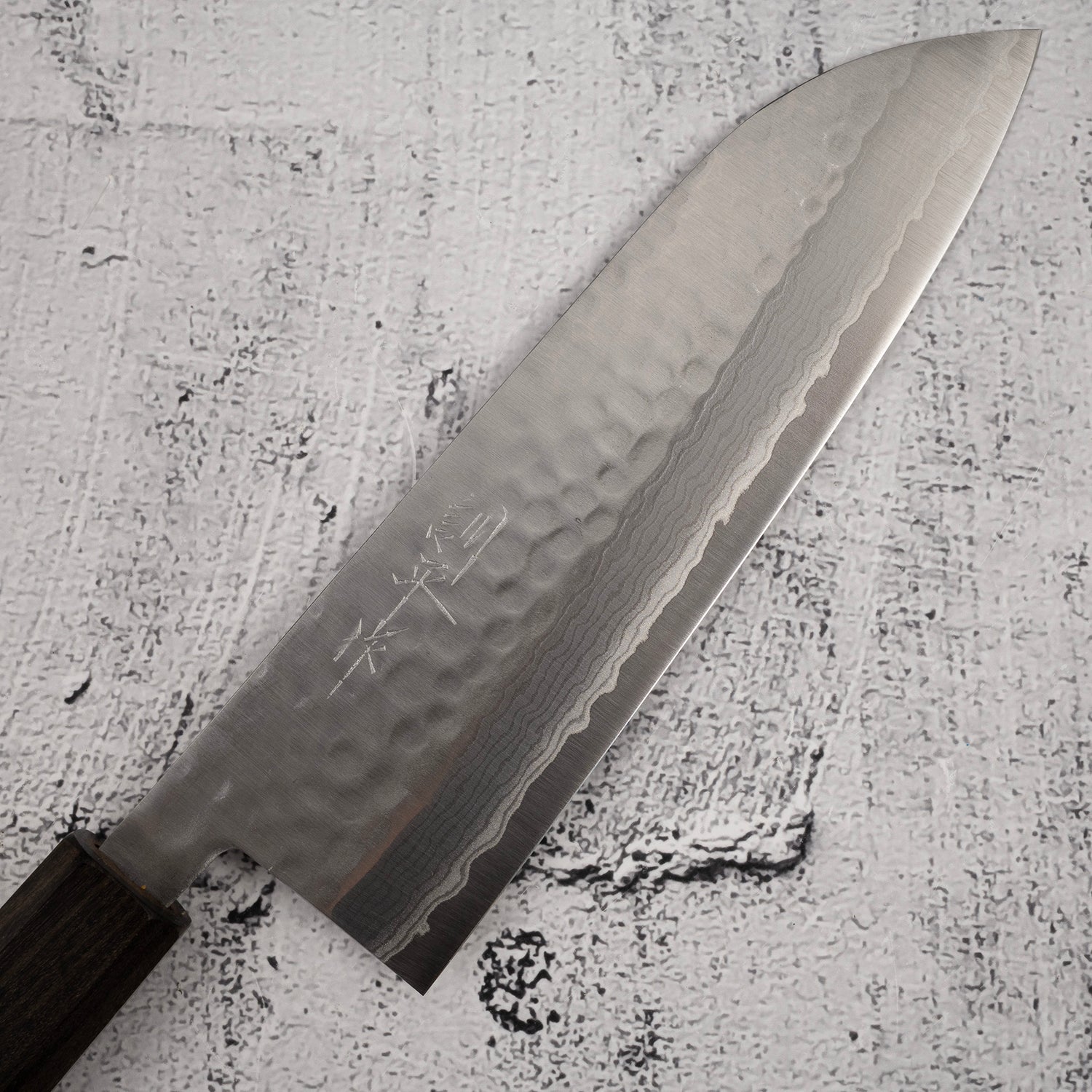
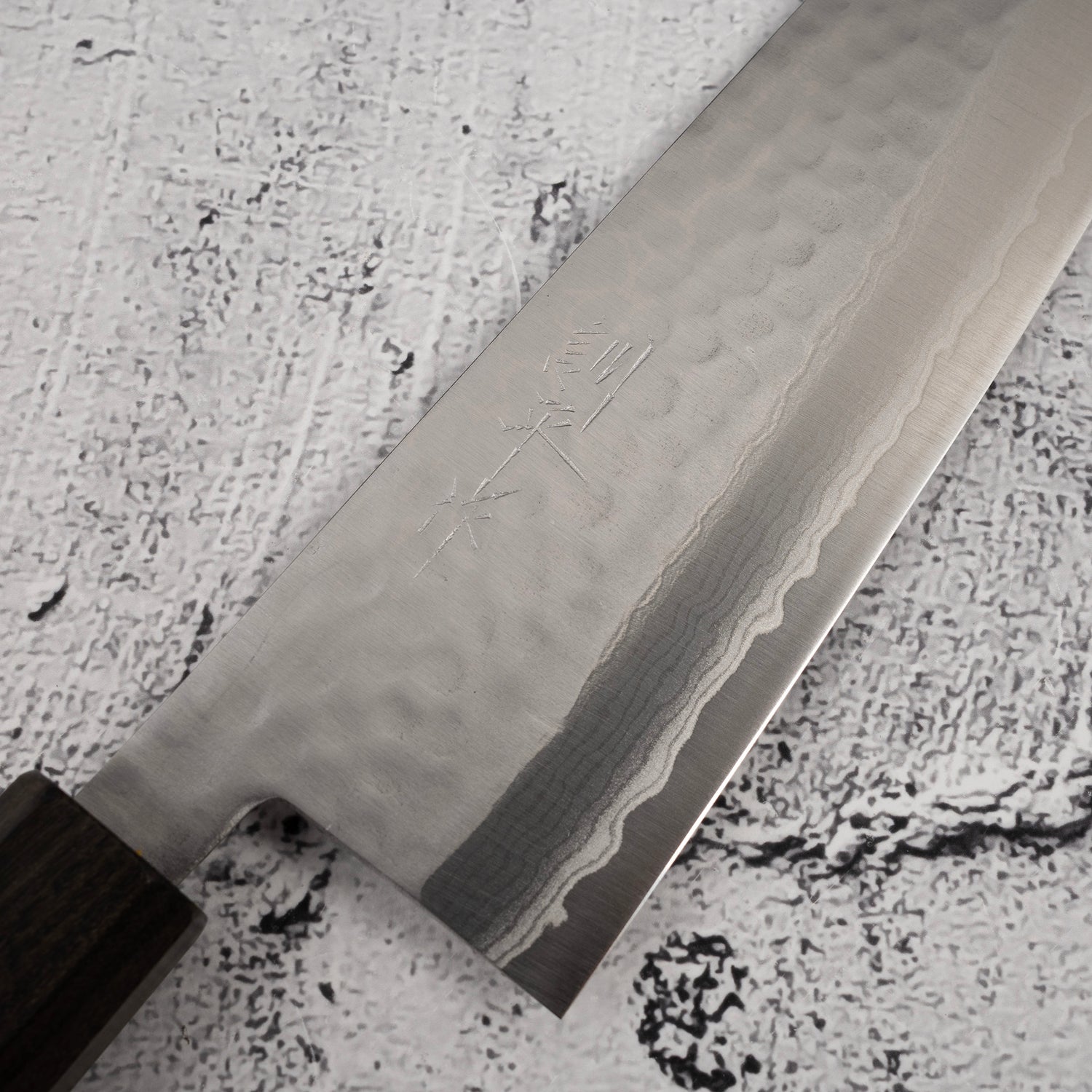
The cladding is a stainless Damascus with a light Tsuchime pattern over it — subtle rather than showy, which suits the knife's character. The focus here is clearly on what the knife does rather than how it looks, though the Damascus texture gives it enough visual interest to feel like a proper Japanese knife rather than a generic budget option. VG10 keeps maintenance simple and the edge retention honest, which makes this a particularly sensible first Japanese knife for anyone not ready to commit to carbon steel.

The one genuine limitation worth knowing is that Masutani doesn't produce this line beyond 185mm — a deliberate decision by the family business rather than an oversight. For home cooks and students who don't need the reach of a 210mm or 240mm, that's a non-issue. The spine and choil can feel a little sharp out of the box, which is easy enough to address with some sandpaper. For first-timers, gift buyers and anyone looking for an honest, high-performing entry point into Japanese kitchen knives, the Kokuryu is a very easy recommendation.

Pros Cons
  • Budget friendly
  • Thin behind the edge
  • Excellent performance
  • A little bit brittle
Care Instruction
  1. Don't cut hard things! Japanese knives are brittle so bone hacking is a NO NO!
  2. Wash with neutral detergent after use, and wipe dry;
  3. Please don't wash knife with dishwasher, it will damage the wood handle;
  4. Be careful not to leave the knife close to a heat source for a long time;
  5. It is a lot more dangerous to cut with a blunt knife than a sharp knife!
  6. It is best to sharpen a Japanese knife regularly on a waterstone.

Masutani

Masutani Hamono — Echizen Performance Without the Premium

Masutani Hamono, leveraging both VG-1 and VG-10 steel, has established itself within the competitive sphere of Japanese knife-making by offering a cutting feel comparable to premium Echizen brands such as Kurosaki and Takamura. This alignment in performance with high-end brands, despite their more accessible price point, positions Masutani knives as exceptional within their category. Their craftsmanship ensures a blend of traditional skill and modern technology, making Masutani knives highly regarded for their sharpness and durability, leading the way in value-for-money within the Japanese knife market.

Read more

Masutani Hamono, nestled in the historic knife-making region of Echizen, Japan, has carved a niche for itself by merging traditional craftsmanship with modern innovations. Utilizing high-quality VG-1 and VG-10 steels, Masutani creates knives that are not only durable and sharp but also provide a cutting experience comparable to the much-admired Echizen brands like Kurosaki and Takamura. This blend of heritage and innovation allows Masutani knives to stand out in the market, offering unparalleled value within their price range.

The company’s dedication to excellence is evident in every knife produced, ensuring each piece embodies the perfect balance between age-old techniques and cutting-edge steel technology. As a result, Masutani knives are celebrated for their exceptional performance and affordability, appealing to a wide range of users from professional chefs to culinary enthusiasts. This reputation for quality, coupled with a cutting feel reminiscent of more premium brands, positions Masutani as a leading choice for those seeking the best Japanese knives without the premium price tag.

“Echizen's quiet overachiever — premium cutting feel at an honest price, from the brother forge of Ryusen.”

Est. 1974 | 昭和49年
Known for Affordable high-performance stainless knives, excellent grinding and OOTB sharpness
Website masutani-hamono.shop Read more about Masutani
Masutani — Echizen
Profile: Santoku
Profile

Santoku

Santoku

The Santoku(三徳) knife, embodying the meaning "three uses," is a cornerstone in Japanese kitchens, adept at slicing, dicing, and mincing. Esteemed for its versatility, it features a blade length typically between 15cm and 20cm (6 to 8 inches), catering to a wide array of culinary tasks. Distinguished by its less pointy tip compared to the Gyuto, the Santoku boasts a unique profile that contributes to its functionality and popularity. Its design is more controllable in chopping and slicing, and the profile is less aggressive, for those reasons, it has bacame a preferred choice for home cooks.
Composition

VG10 Element Composition

Compare with
    VG10
    15.0% 11.3% 7.5% 3.8% 0
    C Carbon 1.0%
    Primary hardening element. Raises hardness and wear resistance — but too much increases brittleness and corrosion susceptibility. As a reference: German 1.4112 (~0.5%) sits at the low end; VG-10 (~1.0%) is a common mid-range; SG2 (1.25–1.45%) and ZDP-189 (~3.0%) represent high and extreme ends respectively.
    C
    1.0%
    Cr Chromium 15.0%
    Raises corrosion resistance; 13%+ qualifies steel as stainless. Also improves hardenability and wear resistance. In kitchen use, higher chromium levels contribute to a slight drag or sticking sensation when cutting — a trade-off for the rust resistance it provides.
    Cr
    15.0%
    V Vanadium 0.25%
    Forms extremely hard carbides for superior edge retention. Also refines grain structure, improving toughness.
    V
    0.25%
    Mo Molybdenum 1.0%
    Improves hardenability and toughness. Boosts corrosion resistance and helps the steel hold hardness under heat.
    Mo
    1.0%
    Co Cobalt 1.55%
    Allows higher hardening temperatures, increasing hardness and wear resistance. Slightly reduces toughness at high levels.
    Co
    1.55%
    C — Carbon Cr — Chromium V — Vanadium Mo — Molybdenum Co — Cobalt
    Hardness 59–61 HRC
    555759616365+
    Steel
    VG10
    Category
    Stainless
    Manufacturer
    Takefu Special Steel, Japan 🇯🇵
    Hardness
    59–61 HRC
    Steel

    VG10

    • Manufacturer
      • Takefu Special Steel, Japan
    • Nature Stainless
    • Hardness59–61 HRC
    Takefu VG10, is a high-end stainless steel celebrated for its exceptional edge retention and sharpness. It is a popular choice among Japanese kitchen knife makers and widely used in various types of knives, including kitchen knives, folders, and fixed blades.

    VG10 achieves a hardness of around 60-61 HRC, with some makers pushing it to 62 HRC, ensuring good edge holding and stain resistance. The steel's composition includes 15% chromium (Cr) for corrosion resistance, 1% molybdenum (Mo), and 1.5% cobalt (Co) for matrix strengthening, leading to high hardness and durability. The addition of vanadium (V) refines its microstructure and, along with Cr and Mo, produces hard carbides that enhance wear resistance. VG10 is easy to sharpen, has good machinability, and supports secondary hardening with high-temperature tempering, making it suitable for blades that may undergo surface coating treatments up to about 450℃. Its well-rounded attributes make VG10 steel highly versatile, performing excellently in a range of applications from kitchen and general-purpose knives to machine blades.
    Construction: Sanmai - Stainless Damascus Clad
    Construction

    Sanmai - Stainless Damascus Clad

    Sanmai(Three-Piece) is a common construction for double bevel knives where two pieces of softer cladding steel are forgewelded to each side of a harder core steel. The harder but more brittle core steel will form the hard cutting edge after heat treating, and the softer cladding will support the core to increase the overall strength of the blade.

    Damascus Sanmai utilize damascus steel as the cladding material for the Sanmai construction, which adds aesthetic feature to the blade. On the Kitchen knives with stainless core steel, the damascus cladding will be stainless, this means they will also protect the carbon/semi-stainless core from rusting/discolouration.

    The soft cladding enables the thinning process to be a lot easier than a honyaki or monosteel construction. However, when the cladding is made of damascus, whether etched, polished or mirror polished, the thinning process will take a toll on the cladding, meaning the damascus won't look the same as when it was taken out of the box.

    Finish: Tsuchime
    Finish

    Tsuchime

    The "Tsuchime" finish in Japanese kitchen knives refers to a distinctive hammered texture on the blade's surface. This traditional technique not only adds a unique aesthetic appeal but also provides practical benefits, such as reducing drag and preventing food from sticking to the blade during slicing. It's a hallmark of craftsmanship that blends functionality with artistry, making each knife not only a tool but a piece of art.

    Handle
    Handle

    Octagonal Black Chacate

    • Profile Octagonal WA
    • Material
      • Black Chacate

    Black Chacate is a highly valued timber known for its deep, rich brown to almost black coloration, fine texture, and exceptional durability. It polishes well, offering an exquisite finish that highlights its subtle, elegant grain patterns. This wood is often used in fine woodworking projects, including luxury furniture, decorative items, and high-end knife handles.

    An octagonal wa handle made from Black Chacate wood would exhibit a sleek, geometric shape that fits comfortably in the hand, enhancing the user's grip and control. The deep hues and natural luster of Black Chacate add a touch of sophistication and unparalleled beauty to the handle, making it not only a functional component of a kitchen knife but also a piece of art. The durability and stability of Black Chacate ensure that the handle withstands the rigors of kitchen use while maintaining its aesthetic appeal over time.

    1 / 5

    Frequently asked questions

    Gyuto or santoku - which should I choose?

    Both are all-purpose Japanese knives, and for most home cooks either will handle the bulk of daily prep. The choice comes down to length, blade shape, and how you like to cut.

    A gyuto is the Japanese chef's knife - typically 210 to 240mm with a gently curved edge that lets you rock and slide through cuts as well as chop. The extra length and pointed tip give you reach and versatility, from proteins to large produce.

    A santoku is shorter, usually 165 to 180mm, with a flatter profile and a rounded sheep's-foot tip. It rewards a straight up-and-down push cut, feels nimble in smaller hands or tight kitchens, and is the classic Japanese household knife.

    Rule of thumb: choose a gyuto if you want one do-everything knife with more reach, or a santoku if you prefer a compact, easy-to-control blade. Plenty of our customers end up owning both.

    We trust this information is correct at the time of writing, but it is not an official document and details may change without notice. If you spot an error, tell us and we'll fix it.

    You May Also Like