PRAHRAN STORE NOW OPEN · THU–MON · 10AM–6PM

Drag to spin · pinch or scroll to zoom

Hatsukokoro  |  SKU: HT-HBVG10DM-PT150EB

Hatsukokoro Hayabusa VG10 Damascus Tsuchime Petty 150mm Ebony Handle

Sale price $135.98 Regular price $159.95

Free knife guard with this knife until 30 Nov: plastic at no cost, or magnetic for A$14.00 more. Choose in your cart.

Sold out right now

Leave your email and we’ll send one message the moment it’s back in stock.

One email, no marketing. Privacy policy.

Availability

  • St Peters, NSW —
    2 Bishop St, Unit 2, St Peters NSW 2044
  • Crows Nest, NSW —
    107 West St, Shop 1, Crows Nest NSW 2065
    Pickup only
  • Prahran, VIC —
    180 Commercial Road, Shop 1, Prahran VIC 3181
    Pickup only

Goes well with

Detailed Specifications
Line Hatsukokoro Hayabusa VG10 Damascus WA
Profile Petty / Utility knife
Bevel Type Double Bevel
Weight 83 g | 2.9 oz
Edge Length 150 mm | 5 29/32″
Heel Height 29 mm | 1 9/64″
Width @ Heel 2.0 mm | 5/64″
Width @ Mid 2.0 mm | 5/64″
Width @ 1cm from Tip 1.1 mm | 3/64″
Steel VG10 | Stainless
Blade Construction Sanmai - Stainless Damascus Clad
Maker's hardening hardness 60 HRC or more
Surface Finish Tsuchime
Handle Octagonal Ebony
Region Hyogo
Best for
  • First-timers
  • Pro chefs
  • Students

Free shipping for knives over AU$200 Australia wide.

World-wide shipping via DHL Express, 3 to 6 days (not available in the UK).


The Hayabusa VG10 Damascus series is made in Seki City, Gifu, by a maker whose own branded knives cost at least twice as much.

The blades use Takefu VG10 cutlery steel, which holds an edge well, is durable, and is easy to sharpen. The Damascus pattern and the tsuchime finish give each knife a rustic, individual look.

The series has polished surfaces, a rounded spine and choil for a comfortable grip. For its price range the knives cut smoothly and with little effort. They serve professional chefs and home cooks alike.

Pros Cons
  • Great artistic
  • Ideal for the household
  • Excellent fit and finish
  • Etched damascus can be hard to maintain
Care Instruction
  1. Don't cut hard things! Japanese knives are brittle so bone hacking is a NO NO!
  2. Wash with neutral detergent after use, and wipe dry;
  3. Please don't wash knife with dishwasher, it will damage the wood handle;
  4. Be careful not to leave the knife close to a heat source for a long time;
  5. It is a lot more dangerous to cut with a blunt knife than a sharp knife!
  6. It is best to sharpen a Japanese knife regularly on a waterstone.

Hatsukokoro

Hatsukokoro, a knife brand from Amagasaki

Hatsukokoro (初心) is a knife brand from Amagasaki, Hyogo, launched in 2019. It is a brand rather than a forge: it works with knife makers instead of forging itself.

The name comes from the proverb 初心忘るべからず, roughly never forget your beginner's mind. For the same characters the brand chose the gentler reading hatsukokoro over shoshin.

The brand's own catalogue names the place behind some of its lines, and the maker behind a few: Shinkiro comes from Fukushima, and Hayabusa HAP40, Saihyo and Sunaarashi from Seki City, while for others the maker or the place stays private. Some of our listing titles also carry the maker alongside the brand, such as Hatsukokoro x Yoshikane and the Hatsukokoro x Yoshihiro Yauji collaboration.

The Hatsukokoro lines we list include both carbon and stainless steels. Our listings include Hayabusa in SG2 and Aogami Super, Saihyo in SG2 and Ginrei in Ginsan. Carbon steel kurouchi lines include Aosagi, Aokitae, Kurokaze and Kurogane.

“A knife brand from Amagasaki that works with knife makers rather than forging.”

Est. 2019 | 令和元年
Known for Lines made with partner makers, from Seki City to Fukushima
Website handk.co Instagram @handk_official Read more about Hatsukokoro

Hatsukokoro · Hyogo

Knife details

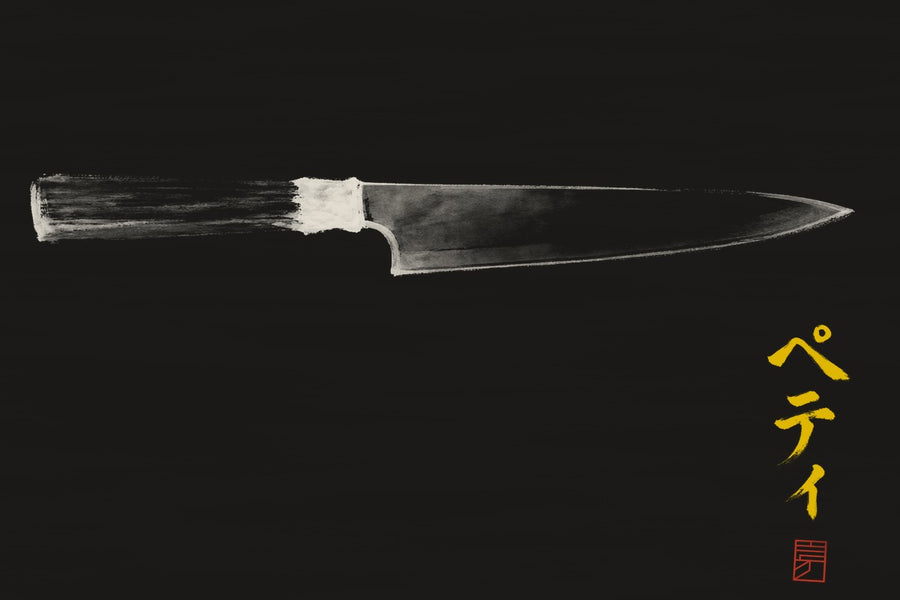
Petty — knife profile
Profile

Petty

ペティ

Utility knife · Double bevel

Small, slim double-bevel utility knife for peeling, trimming and small board jobs.

Read more
Steel properties
  1. Hardness Fair
  2. Edge retention Good
  3. Toughness Fair
  4. Rust resistance High
  5. Ease of sharpening Good
  6. Sharpness Good

Our ratings, inferred from published lab tests and composition.

Steel

VG10

V金10

Stainless · Takefu Special Steel

Takefu stainless, 1% carbon, 15% chromium, 1.55% cobalt. Easy to sharpen.

Read more
CladdingCoreClad line
Construction

Sanmai - Stainless Damascus Clad

三枚ダマスカス

3 layers · damascus clad

Hard core between stainless damascus layers, bare at the edge. Thinning wears the pattern.

Read more
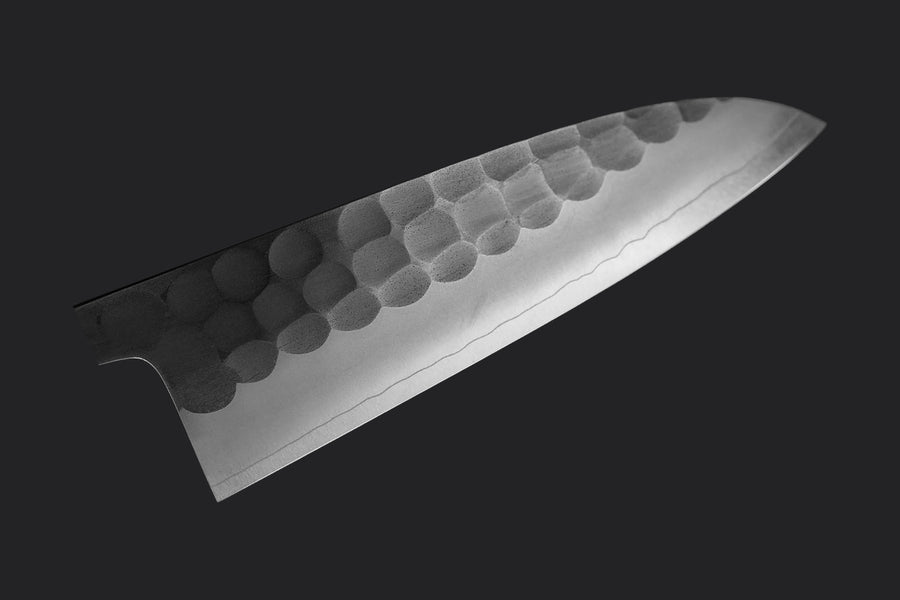
Tsuchime — blade surface finish
Finish

Tsuchime

Hammered surface

Hammer marks across the upper blade. The dimples may help food release.

Read more
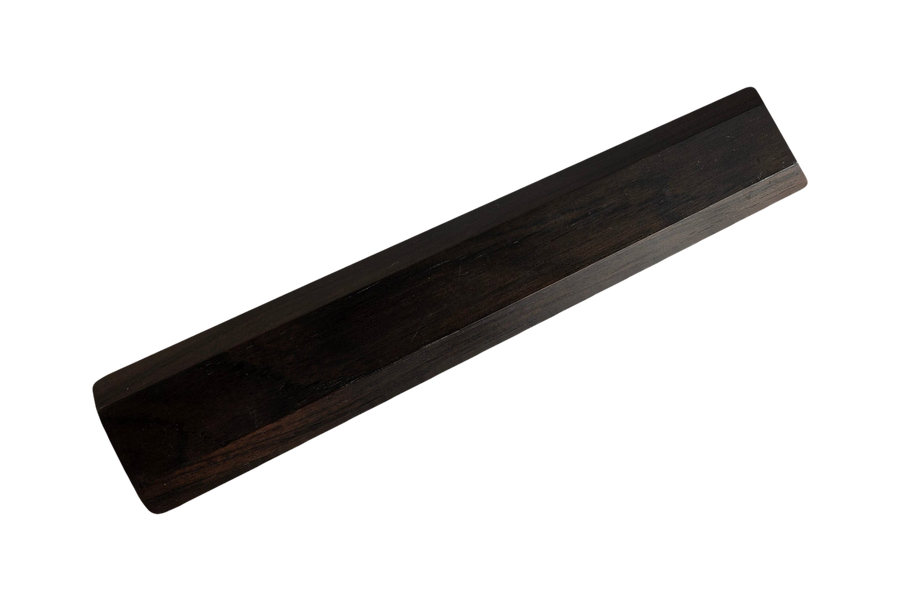
Octagonal Ebony handle
Handle

Octagonal Ebony

Octagonal WA

Dense, dark ebony in the eight-sided wa shape. The flats give a sure grip for either hand.

Frequently asked questions

What is a petty knife and when do I need one?

A petty is a small utility knife, from the French petit. It is commonly shaped like a small gyuto and runs from 120 to 150 mm, up to 180 mm. Its clearest role is detailed work where a larger knife feels cumbersome: fruit peeling, garnish work, condiments, and small board work beside a gyuto or santoku.

A knife maker, Tojiro, frames the petty as a useful second knife, not an automatic necessity, and recommends santoku plus petty or gyuto plus petty combinations. It is not a replacement for a full size chef's knife; it lacks the blade length and belly for efficient chopping, rocking, or breaking down larger proteins. Treat it as a precision tool, not an all-rounder.

How long is a petty knife?

Petty knife lengths vary by maker: KAI's guide defines a petty (ペティナイフ) as a small knife with a narrow blade measuring 150 mm or under. Its table gives 90 to 150 mm, and it describes the shape as a smaller gyuto with a pointed tip.

We list petty knives from 70 mm to 165 mm, including lengths above the limit used in KAI's guide.

What is a good second Japanese knife after a gyuto?

For most cooks the second knife after a gyuto is a small utility knife (petty) of about 150mm. If most of your cooking is vegetables, make it a vegetable knife (nakiri) instead; if you carve or slice a lot of meat or fish, a slicing knife (sujihiki).

A gyuto covers the main board work, so the gap it leaves is small work. A petty does the jobs where a full-size blade is clumsy: peeling, trimming and coring in the hand, and small board jobs such as shallots, fruit and herbs. Our petty knife FAQ covers the shape in detail.

A nakiri earns the second slot if you prep vegetables every day. Its flat edge meets the board along its whole length, so slices separate cleanly. It has no pointed tip, so the gyuto still does the tip work.

A sujihiki is the choice for carving roasts and portioning large pieces of meat or fish. The long, narrow blade has less surface touching the food than a gyuto, so slices come away cleaner. 240mm and 270mm are the popular lengths.

A santoku or a bunka is a weak second knife: both are all-purpose shapes that repeat what the gyuto does. If your gyuto already handles the small jobs comfortably, the second knife can wait, and a whetstone to keep the first one sharp is the better spend.

Does VG10 rust?

Yes, it can. Takefu, which makes VG10 (V金10), lists it among its stainless steels, and the JSSA notes that stainless strictly means rust-resistant, not rust-proof.

Takefu lists VG10's chromium content as 15% and describes its corrosion resistance as excellent. We recommend drying the knife after washing.

How hard is VG10?

Takefu, the steelmaker behind VG10, gives HRC 60 or more as its hardening hardness, measured straight after quenching. The hardness of a finished knife depends on its maker.

Takefu says the steel's 15% chromium, 1% molybdenum and 1.55% cobalt give it high hardness and a long-lasting edge, and that it is easy to sharpen.

What is the difference between VG10 and SG2?

Both are Takefu blade steels, and they differ in class and in what Takefu publishes about each. Takefu lists VG10 as a stainless steel with 1.00% carbon, 15.00% chromium, 1.00% molybdenum, 0.25% vanadium and 1.55% cobalt, at a hardening hardness of HRC 60 or more.

Takefu describes SG2, its Super Gold 2, as a blade steel created by powder metallurgy, lists its composition as not disclosed, and SG2 runs 61 to 65 HRC depending on the maker. Takefu also calls SG2 a powdered stainless high-speed steel.

Is VG-10 a good steel for a first Japanese knife?

Yes. VG-10 is our default suggestion for a first Japanese knife, because it is stainless and easy to sharpen, and it holds a good working edge through everyday home cooking.

VG-10 is made by Takefu Special Steel, with about 1% carbon, 15% chromium and 1.55% cobalt, and is usually hardened to around 60 HRC. Takefu describes it as corrosion resistant and easy to sharpen. Day to day you rinse it and wipe it dry, with none of the rust watching carbon steel asks for.

It is also a kind steel to learn sharpening on. It takes an edge readily on a basic waterstone, so you can feel when your technique is working. A harder steel such as SG2 holds its edge longer but is less forgiving on the stone, as our VG-10 vs SG2 comparison explains.

Stainless steel can still stain: VG-10 will spot if it is left wet with acidic food on the edge, and it should never go in the dishwasher. Like any hard, thin Japanese edge, it should also stay away from bones, frozen food and glass boards. If your household is rough on knives, the slightly softer AUS-10 is the safer choice.

Steel is only part of the decision. Heat treatment and grind change how the same VG-10 cuts from one maker to the next, so choose the shape and size first. Our first Japanese knife guide walks through that.

Is Hatsukokoro a maker or a brand, and who makes the knives?

Hatsukokoro (初心) is a brand, not a forge. H&K, a company founded in 2013 and based in Amagasaki, Hyogo, created it in 2019.

H&K names the producer for some lines, for example Shinkiro by Takahiro Nihei in Fukushima, Ginyou by Yoshihiro Yauji in Echizen and Kurosagi by Motokyuichi Hamono in Nagasaki, and keeps others confidential. Some knives we stock carry the maker in the title, such as Hatsukokoro x Yoshikane SKD Nashiji.

You May Also Like