PRAHRAN STORE NOW OPEN · THU–MON · 10AM–6PM

Sugimoto  |  SKU: SUGI_4007

Sugimoto Chuka (Chinese Cleaver) #7 (4007) Mid Weight White 2, Full Size

Sale price $594.98 Regular price $698.95

IMPORTANT: Carbon steel knives can rust or patina quickly if not cared for properly. They require regular cleaning, drying, and oiling. If you are unfamiliar with carbon steel maintenance, we recommend choosing a stainless steel option instead.

In Stock Now

Availability

  • St Peters, NSW —
    2 Bishop St, Unit 2, St Peters NSW 2044
  • Crows Nest, NSW —
    107 West St, Shop 1, Crows Nest NSW 2065
    Pickup only
  • Prahran, VIC —
    180 Commercial Road, Shop 1, Prahran VIC 3181
    Pickup only
Detailed Specifications
Line Sugimoto Chuka White 2
Profile Chuka (Cleaver) / Chinese cleaver
Steel White 2 / Shirogami #2 | Carbon
Typical hardness 60 to 64 HRC
Handle
Region Tokyo
Best for
  • Pro chefs

Free shipping for knives over AU$200 Australia wide.

World-wide shipping via DHL Express, 3 to 6 days (not available in the UK).


The Sugimoto Chuka is the classic Chinese-style cleaver from a maker whose history goes back to the 1830s, when Sugimoto started as a metal smith specialized in sword and knife making. Sugimoto sharpens each of their knives diligently all by hand, and the line is recognized by professional chefs world-wide.

These full-size cleavers are made in White 2 carbon steel. The #6 (4006) is the Slicer, ground thinner behind the edge, and the #7 (4007) is the Mid Weight, a burlier blade with a thicker spine. Both have a 220 mm tip-to-heel length and a 110 mm blade height, so they weigh in at 436 g and 517 g respectively. They are big, capable cleavers, and the good ones sit at a high price tier.

Because this is a carbon steel, wipe the blade and dry it after each use rather than leaving it wet. For heavy vegetables, herbs and meat broken down off the bone, few cleavers cover as much ground.

Pros Cons
  • Great for professionals
  • Prone to rust
  • Heavy
  • High budget
Care Instruction
  1. Don't cut hard things! Japanese knives are brittle so bone hacking is a NO NO!
  2. Wash with neutral detergent after use, and wipe dry;
  3. Please don't wash knife with dishwasher, it will damage the wood handle;
  4. Be careful not to leave the knife close to a heat source for a long time;
  5. It is a lot more dangerous to cut with a blunt knife than a sharp knife!
  6. It is best to sharpen a Japanese knife regularly on a waterstone.
  7. Oil the (carbon) knife if storing for an extended period of time to prevent rust.

Sugimoto

Sugimoto Hamono (杉本刃物) is based in Tsukiji, Tokyo. On its own site, Sugimoto says it began with a sword smith of the Tenpō era of the Edo period, and that its craftsmen still forge and edge each knife one by one with that technique. Its company page lists Japanese, Western and Chinese kitchen knives.

Sugimoto says it gives every knife a full working edge (honba-tsuke) so it can be used straight after purchase, and it takes resharpening and handle repairs. The numbers on its Chinese cleavers are Sugimoto's own production numbers; its online shop groups 1 and 6 as thin, 2, 7 and 11 as medium-thick, 3 as thick and 22 as extra-thick. We list its #6 and #7 cleavers in White 2 and two stainless large nakiri.

“A Tsukiji knife maker that says it began with an Edo-period sword smith.”

Est. 1948 | 昭和23年
Known for Chinese cleavers in its own numbered series, and knives sold with a full working edge
Website sugimoto-hamono.com Read more about Sugimoto

Sugimoto · Tokyo

Knife details

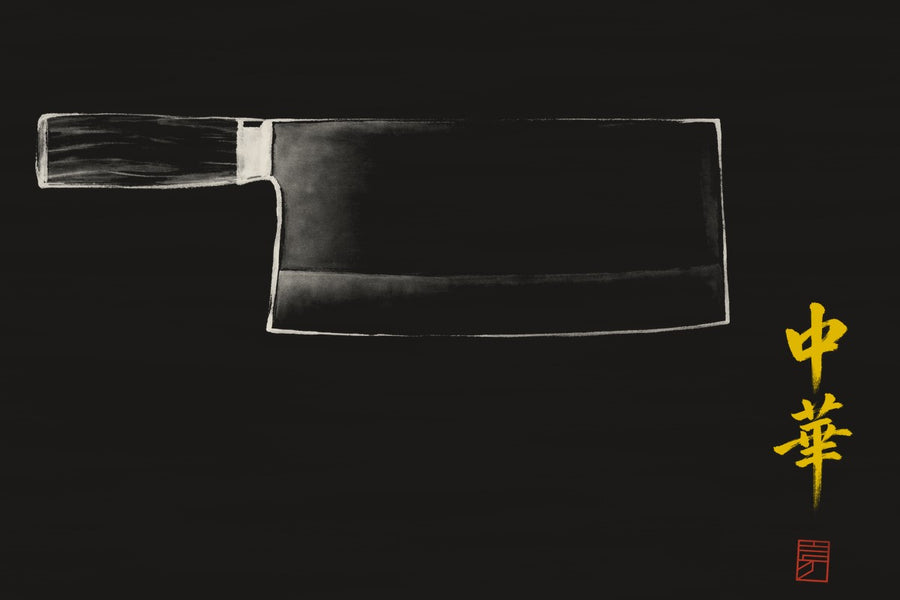
Chuka (Cleaver) — knife profile
Profile

Chuka (Cleaver)

中華

Chinese cleaver · Double bevel

Large, wide-bladed Chinese-style knife; KAI says the thicker blades take bone-in chicken and meat.

Read more
Steel properties
  1. Hardness Very good
  2. Edge retention Good
  3. Toughness Good
  4. Rust resistance Low
  5. Ease of sharpening High
  6. Sharpness Very high
Our ratings, inferred from published lab tests and composition.

Our edge-retention grade is a kitchen rating. It weighs the hardness each steel is sold at, which keeps a thin edge from rolling, twice as heavily as lab wear tests, and the final grade is our judgment from selling and sharpening these knives for over a decade. Lab card-cutting tests measure abrasive wear only, so they can rank carbon steels lower. Tap ? for the lab figure.

Steel

White 2 / Shirogami #2

白二鋼

Carbon · Hitachi Metals (now Proterial)

Proterial carbon steel, 1.05 to 1.15% carbon, no chromium or tungsten; not stainless.

Read more

Frequently asked questions

Can a chuka cleaver cut bone?

It depends on the blade thickness. A knife maker's guide sorts the chuka cleaver (中華包丁) into three thicknesses, each suited to different foods.

The thin kind (薄刃), the lightest, is for the everyday foods a supermarket sells; the medium-thick kind (中厚刃) can also cut hard foods such as bone-in chicken and fish bones; and the thick kind (厚刃), the heaviest and meant for experienced users, suits bone-in block meat and frozen food. Check the thickness of your blade before you cut any bone.

Can a Chinese cleaver replace a chef's knife (gyuto) as my one all-purpose knife?

Yes, as long as it is the thin slicing kind and you keep it off bone. A Chinese cleaver is a general-purpose prep knife, and it covers the same board work as a chef's knife (gyuto): slicing and chopping vegetables and boneless meat.

The tall, broad blade is what you are buying. It clears your knuckles, lets you pinch high on the blade for thin, straight cuts through tall vegetables, crushes garlic under the flat and scoops the lot from board to pan. The sharp front corner will score and carve.

What you give up is lightness and a slim point. The full-size cleavers we have measured weigh from about 240g to about 420g, against a median of 163g for our 210mm gyutos. A gyuto's pointed tip works into tight spots and its curved belly rocks through herbs; a cleaver is made for a chopping motion.

Stay with a gyuto if you want a light knife or do a lot of tip work such as trimming sinew. Do not buy a slicing cleaver to chop bones. Despite the name it has a thin edge, and it is not made for cutting through bone.

Not every cleaver we sell is Japanese. The Japanese-made version is called a chuka bocho, from makers such as Sugimoto in Tokyo, and our Chinese cleaver range also includes Chan Chi Kee (CCK) of Hong Kong.

Shirogami 1 vs Shirogami 2: what is the difference?

Shirogami 1 (White 1) has more carbon than Shirogami 2 (White 2): Proterial lists 1.25 to 1.35% carbon for Shirogami 1 and 1.05 to 1.15% for Shirogami 2, with the same silicon (0.10 to 0.20%) and manganese (0.20 to 0.30%) ranges for both.

Proterial describes both as carbon steel with minimum impurities, Shirogami 1 with the highest hardness and Shirogami 2 with high hardness, and gives a hardening hardness of over 60 HRC for both. It lists Shirogami 1 for the highest quality tipped tools, planes, chisels and razors, and Shirogami 2 for high quality tipped tools, chisels, razors, sickles, axes and gravers.

What is the difference between White 1, White 2 and White 3?

White 1, White 2 and White 3 are Proterial's Shirogami 1, Shirogami 2 and Shirogami 3. Proterial lists carbon at 1.25 to 1.35% for Shirogami 1, 1.05 to 1.15% for Shirogami 2 and 0.80 to 0.90% for Shirogami 3, with the same silicon and manganese ranges for all three and no chromium listed.

Proterial describes all three as carbon steel with minimum impurities, at highest, high and middle hardness in that order, and gives a hardening hardness of over 60 HRC for each.

What is the difference between Blue 2 and White 2 steel?

Blue 2 is White 2 with tungsten and a little chromium added. Blue 2 holds its edge longer. White 2 sharpens faster and takes a very keen edge. Both are carbon steels that will rust if left wet.

The figures come from Proterial, which makes both. Each has 1.05 to 1.15% carbon. Blue 2 (Aogami 2) adds 1.00 to 1.50% tungsten and 0.20 to 0.50% chromium. White 2 (Shirogami 2) lists neither, and Proterial describes it as a carbon steel with minimum impurities. Proterial says the tungsten and chromium improve heat treatment and wear resistance, and gives a hardening hardness over 60 HRC for both.

In use, the tungsten forms hard carbides that resist wear, so a Blue 2 edge lasts longer between sharpenings. White 2 has none, so it comes back on a whetstone very quickly. The chromium in Blue 2 is far below the 10.5% a steel needs to be stainless, so it gives no real rust protection. Wipe either steel dry after use and expect a patina.

Choose Blue 2 if you want to sharpen less often. Choose White 2 if you enjoy sharpening and want the keenest edge. We list both widely: Blue 2 from Nigara, Myojin Riki and Anryu, and White 2 from Masamoto Sohonten, Sakai Takayuki and Yoshikane.

What do the numbers on a Sugimoto cleaver mean?

They are Sugimoto's own production numbers, original to the company, its shop says, and its cleaver categories group them by thickness: numbers 1 and 6 thin (薄口), 2, 7 and 11 medium-thick (中厚口), 3 thick (厚口) and 22 extra-thick (極厚口).

Within that numbering system, #6 is in the thin group and #7 is in the medium-thick group.