Crows Nest store now open from Friday to Tuesday, in store specials!

Hatsukokoro  |  SKU: HS-GINSODM-BK180BC

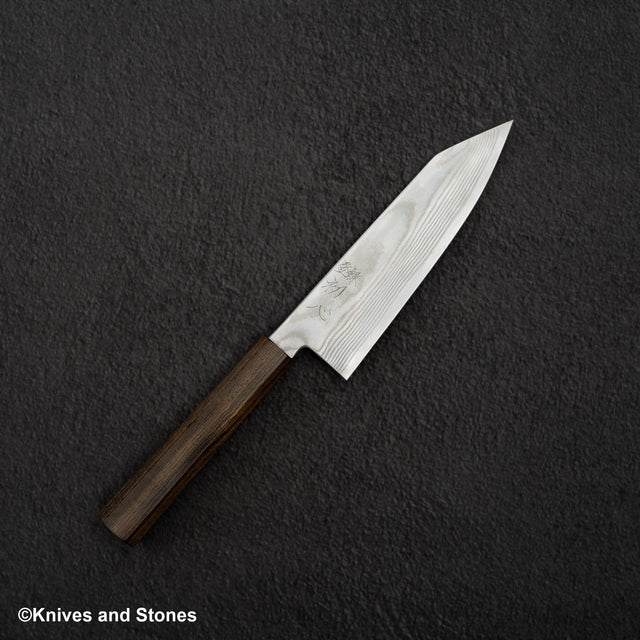
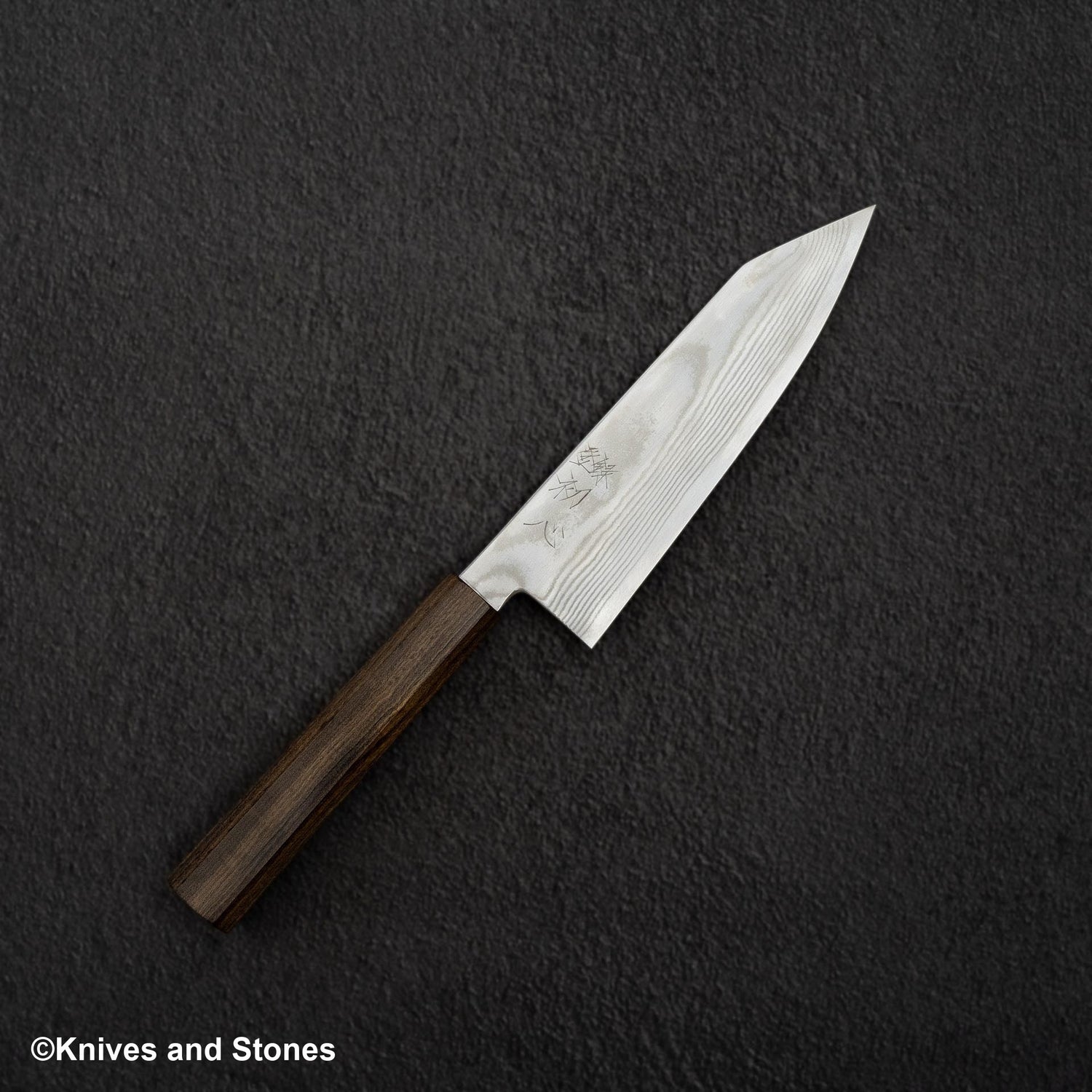
Hatsukokoro Ginso Ginsan Nickel Damascus Bunka 180mm Black Chacate

Sale price $272.00 Regular price $319.95

Add a saya or K&S Knife Roll to receive $20 bundle discount!

Hatsukokoro Ginso Ginsan Damascus
Bunka
Double Bevel
Weight 130 g | 4.6 oz
Edge Length 173 mm | 6 13/16″
Heel Height 47 mm | 1 27/32″
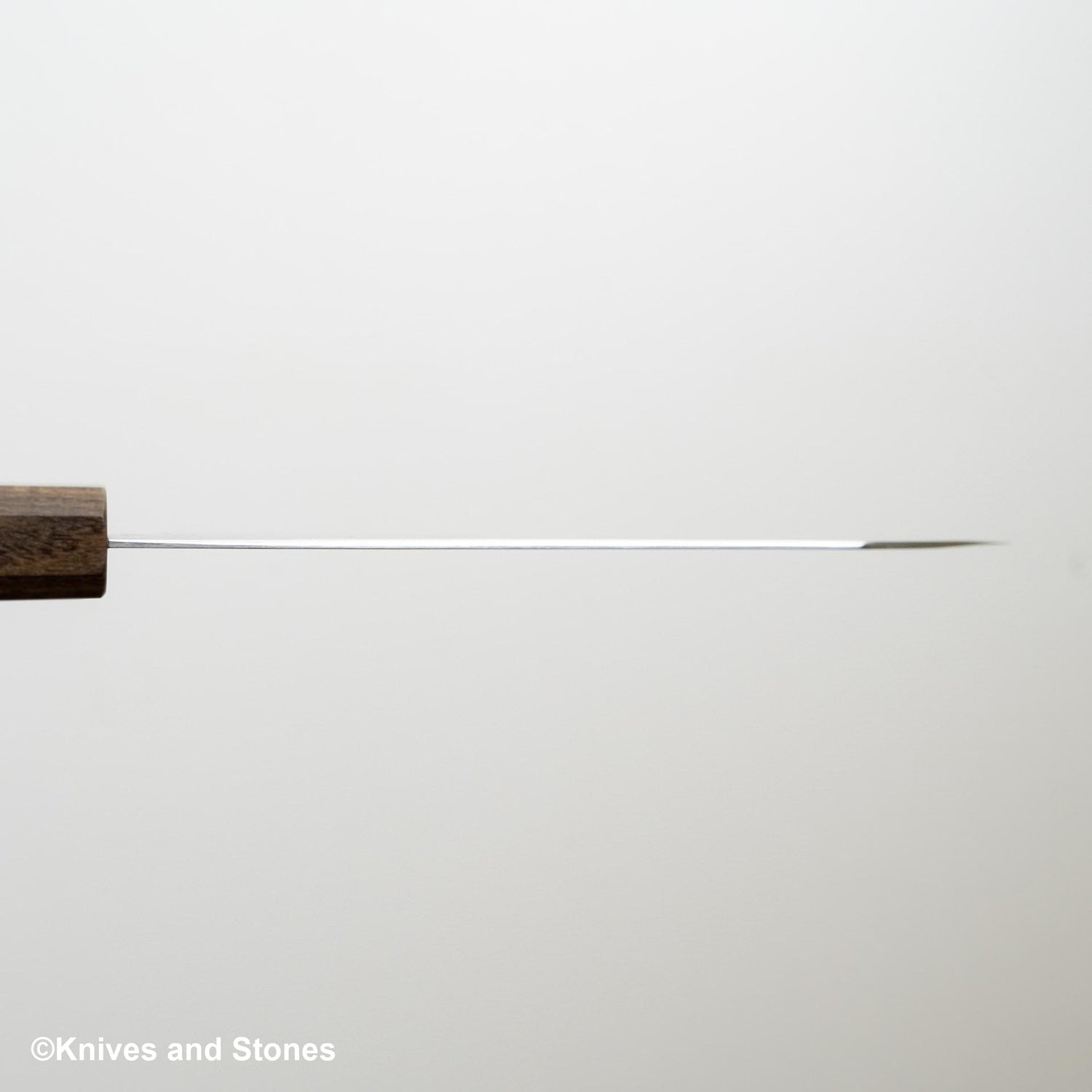
Width @ Heel 1.8 mm | 5/64″
Width @ Mid 1.7 mm | 1/16″
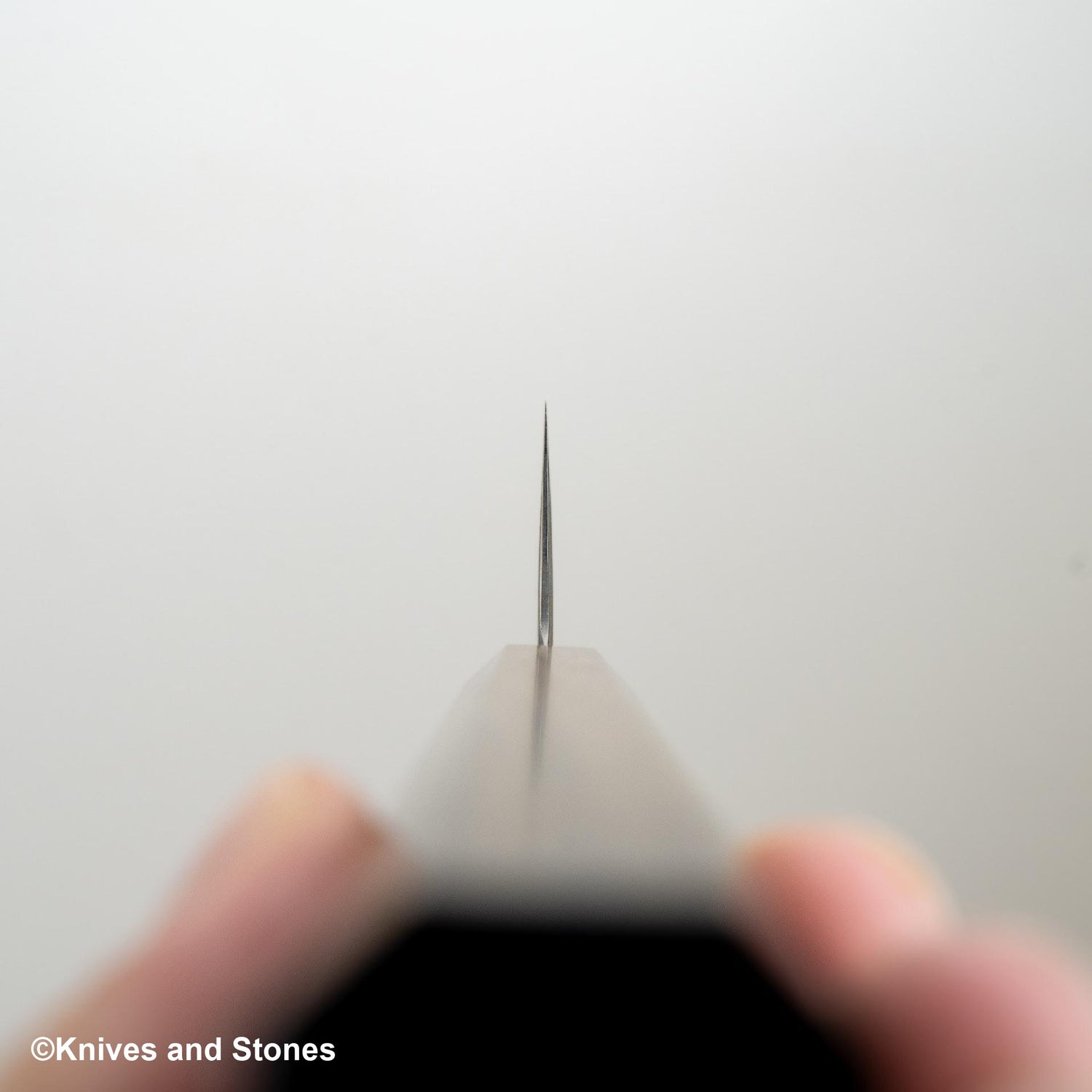
Width @ 1cm from Tip 0.5 mm | 1/64″
Steel Ginsan / Silver #3 | Stainless
Blade Construction Sanmai - Stainless Damascus Clad
Hardness (HRC) 60 - 62
Surface Finish Kasumi
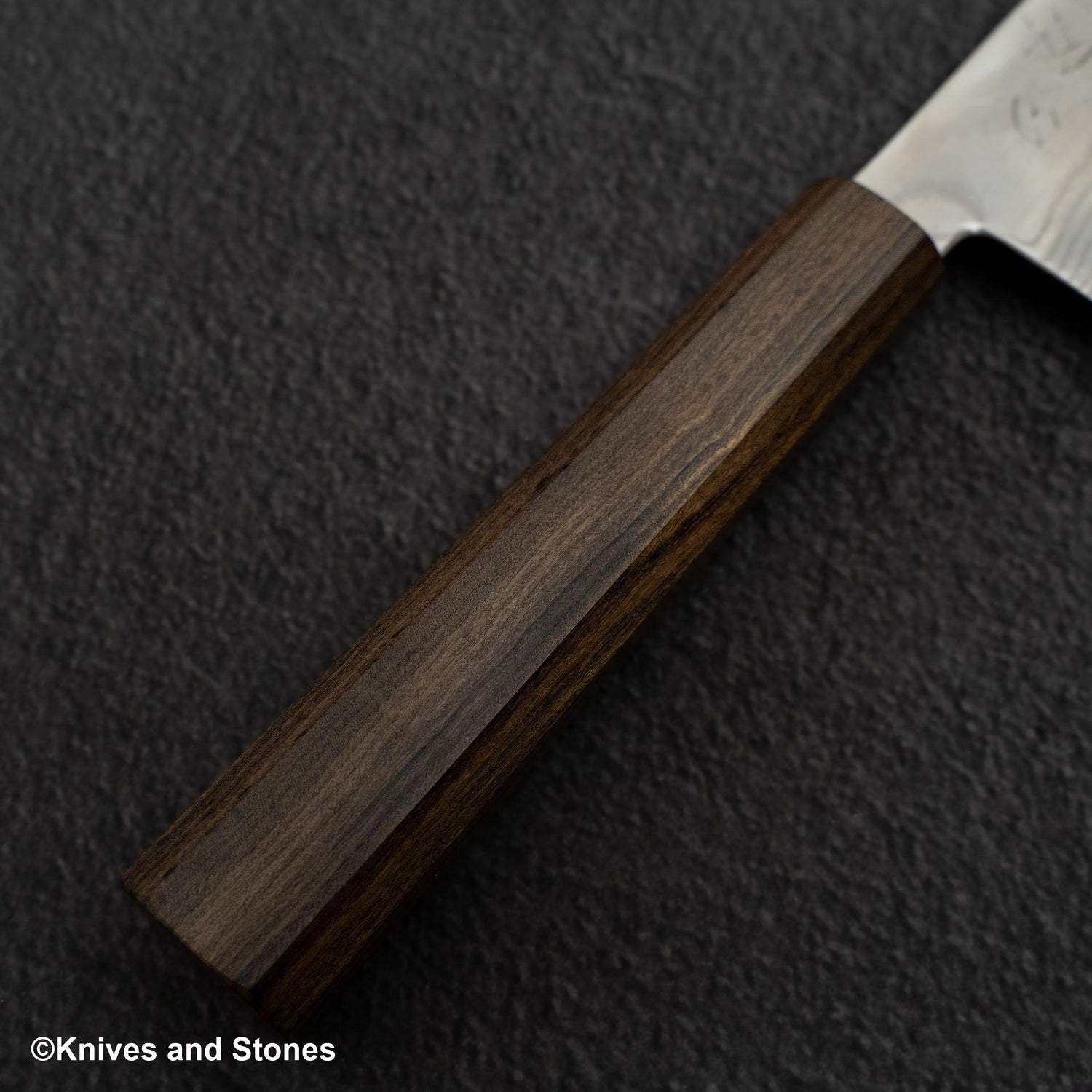
Handle Octagonal Black Chacate
Region Hyogo
Best for
  • First-timers
  • Enthusiasts
  • Pro chefs
  • Free shipping for knives over AU$200 Australia wide.
  • World-wide shipping via DHL Express, 3 to 5 days.


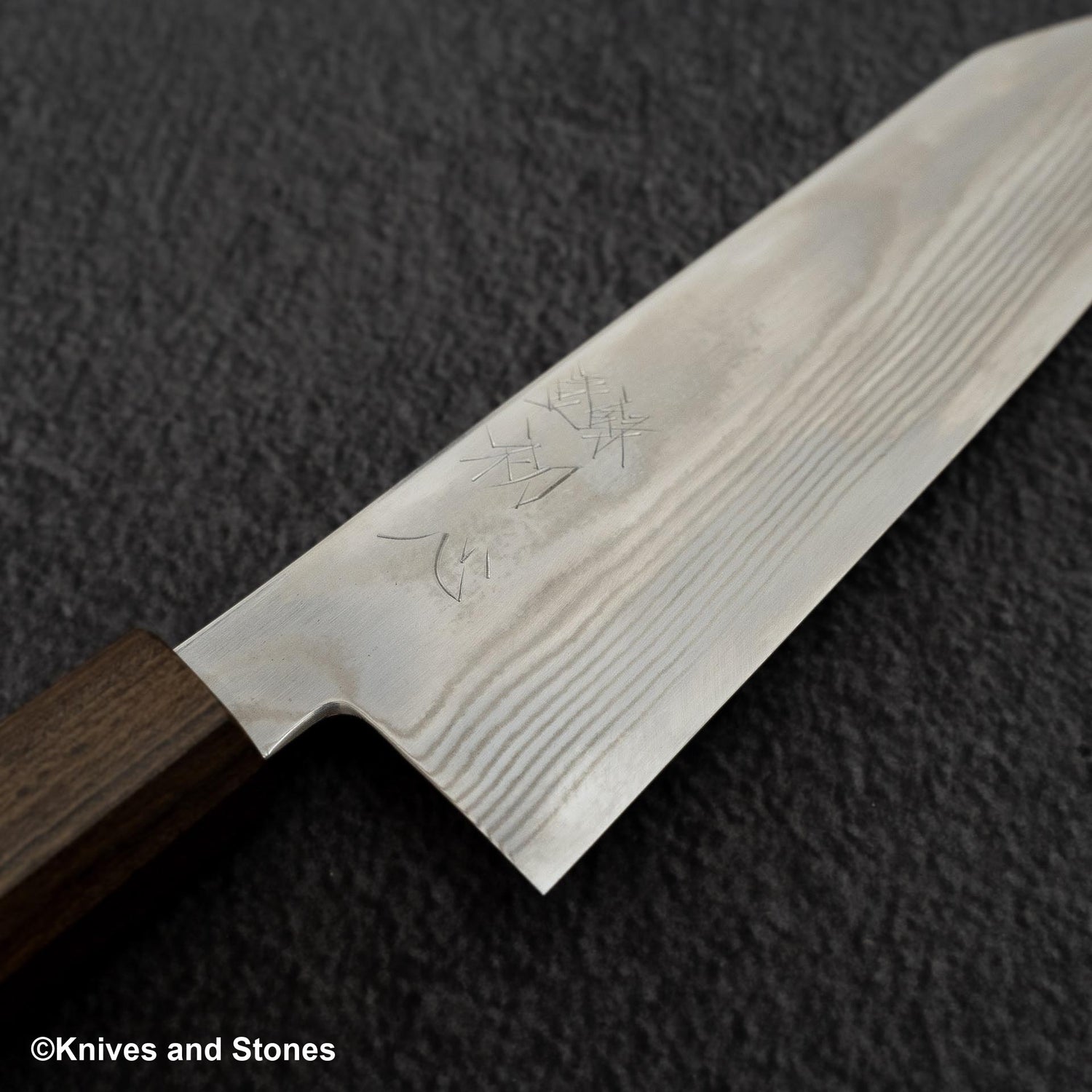
This Damascus version of Ginso(銀霜, Silver Frost) commissioned by Hatsukokoro carries forward the subtle beauty of the original Ginso line. Although the more complex construction lead to a higher price, it still offers an option for those who want try out this easy to sharpen stainless steel.

To get it out of the way, this Damascus Ginso is identical in terms of cutting performance comparing to the OG Migaki Hazy finish one. The slightly rougher surface would cause a bit of more stickiness in theory, but it seems barely noticeable when cutting potatoes. The biggest attraction of this line would still be the core steel, as Ginsan is still one of the easiest to sharpen stainless knife steel with an edge retention close to VG10.

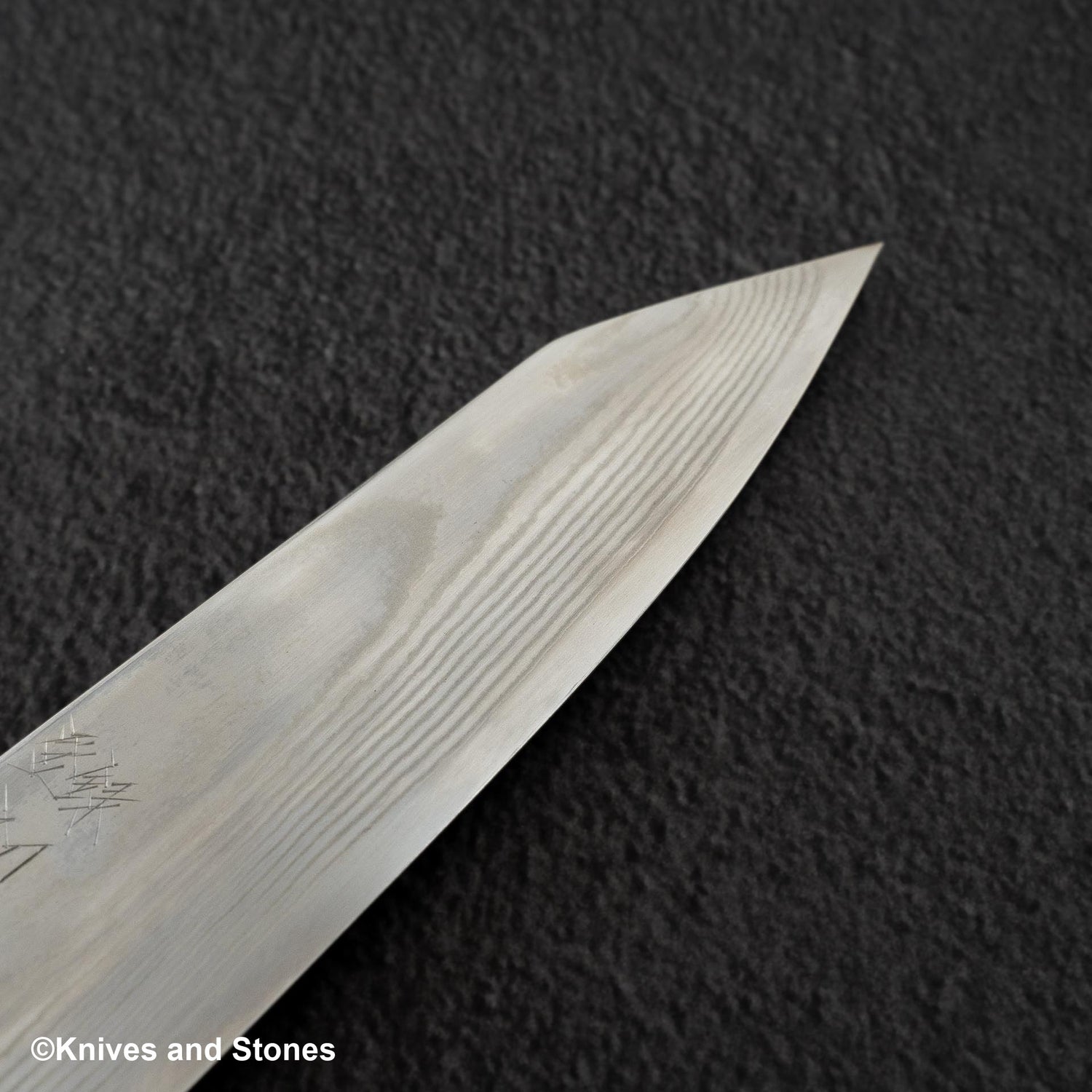
Finish is the main different of this knife compare to the original Ginso. Obviously the introduction of the Damascus pattern changes the appearance of the blade drastically, but the pattern of this cladding is very constrained. The layer count of the Damascus is very low, leading to a loose pattern that spreads gently across the blade. Instead of sliver frost, it appears more like layer of frozen ice. No dazzling patter or night-contrast etching, this Damascus Ginso stays true to the subtle approach of the predecessor.

The Ginsan double bevel Knife is a relatively uncommon category, so it is always nice to see more options with various look and price available for people to choose from.

Pros Cons
  • Easy to look after
  • Ideal for the household
  • Excellent fit and finish
  • More sharpening needed
Care Instruction
  1. Don't cut hard things! Japanese knives are brittle so bone hacking is a NO NO!
  2. Wash with neutral detergent after use, and wipe dry;
  3. Please don't wash knife with dishwasher, it will damage the wood handle;
  4. Be careful not to leave the knife close to a heat source for a long time;
  5. It is a lot more dangerous to cut with a blunt knife than a sharp knife!
  6. It is best to sharpen a Japanese knife regularly on a waterstone.

Hatsukokoro

Rising star of the industry

Hatsukokoro as a brand works extensively with the Japanese kitchen knife industry. Through collaboration with makers and manufacturers across the Japan, they’ve designed and created a huge collection of different knives, covering every possible price range while having a great value in many of their product lines. Their capabilities to incorporate resources have built a strong relation with knife makers, and more and more are happy to send their knives down to Amagasaki and have them delivered across the world.

“The rapidly expanding new brand in the industry based in Amagasaki, offering great varieties by working close with different makers across entire Japan to the entire globe while innovating in product design and metal fabrication.”

Est. 2019 | 令和元年
Known for Unrivalled product availability, exceptional performance at a highly competitive price.
Website handk.co Instagram @handk_official Read more about Hatsukokoro
Hatsukokoro — Hyogo
Profile: Bunka
Profile

Bunka

A pointier version of the Santoku. The Bunka knife features a distinctive profile with a straighter edge and a pointed tip, making it versatile for a variety of kitchen tasks. Its design is a blend of the Santoku and K-tip Gyuto knives, with a blade length typically around 165mm to 180mm. The Bunka is particularly adept at slicing, dicing, and chopping fruits, vegetables, and meats, thanks to the precision and control enabled by its length and flat edge profile. The angled tip, also known as a reverse tanto, provides additional precision for intricate tasks such as julienning. With its unique shape and functionality, the Bunka stands out as a multifunctional knife in the culinary world.
Composition

Ginsan / Silver #3 Element Composition

Compare with
    Ginsan / Silver #3
    13.0% 9.8% 6.5% 3.3% 0
    C Carbon 1.0%
    Primary hardening element. Raises hardness and wear resistance — but too much increases brittleness and corrosion susceptibility. As a reference: German 1.4112 (~0.5%) sits at the low end; VG-10 (~1.0%) is a common mid-range; SG2 (1.25–1.45%) and ZDP-189 (~3.0%) represent high and extreme ends respectively.
    C
    1.0%
    Cr Chromium 13.0%
    Raises corrosion resistance; 13%+ qualifies steel as stainless. Also improves hardenability and wear resistance. In kitchen use, higher chromium levels contribute to a slight drag or sticking sensation when cutting — a trade-off for the rust resistance it provides.
    Cr
    13.0%
    Mn Manganese 0.7%
    Aids hardenability and strength. Acts as a deoxidiser during smelting. Excess can reduce toughness.
    Mn
    0.7%
    Si Silicon 0.35%
    Strengthens the steel matrix and acts as a deoxidiser. Improves hardness and resistance to oxidation.
    Si
    0.35%
    P Phosphorus 0.03%
    Impurity from the smelting process. Even small amounts cause brittleness — steelmakers keep this as low as possible.
    P
    0.03%
    S Sulfur 0.02%
    Impurity that reduces toughness and promotes brittleness. Intentionally added only in free-machining steels.
    S
    0.02%
    C — Carbon Cr — Chromium Mn — Manganese Si — Silicon P — Phosphorus S — Sulfur
    Hardness 60–62 HRC
    555759616365+
    Steel
    Ginsan / Silver #3
    Category
    Stainless
    Manufacturer
    Hitachi Special Steel, Japan 🇯🇵
    Hardness
    60–62 HRC
    Steel

    Ginsan / Silver #3

    • Manufacturer
      • Hitachi Special Steel, Japan
    • Nature Stainless
    • Hardness60–62 HRC
    Ginsan steel, also known as Silver 3 or G3 steel, is a type of stainless steel used in high-quality kitchen knives. It is appreciated for its ability to offer the traditional feel and sharpness of carbon steel while providing the corrosion resistance of stainless steel. Ginsan steel contains a moderate amount of carbon, chromium, and other alloying elements that ensure a good balance between edge retention and ease of sharpening. This steel is particularly favored for its fine grain structure, which allows for a very sharp edge, and its resistance to rust makes it a popular choice among professional chefs and home cooks who seek the performance of carbon steel without the maintenance challenges. Ginsan steel knives are known for their durability, ease of care, and excellent cutting performance, making them a preferred option for those looking for high-quality stainless steel cutlery.
    Construction: Sanmai - Stainless Damascus Clad
    Construction

    Sanmai - Stainless Damascus Clad

    Sanmai(Three-Piece) is a common construction for double bevel knives where two pieces of softer cladding steel are forgewelded to each side of a harder core steel. The harder but more brittle core steel will form the hard cutting edge after heat treating, and the softer cladding will support the core to increase the overall strength of the blade.

    Damascus Sanmai utilize damascus steel as the cladding material for the Sanmai construction, which adds aesthetic feature to the blade. On the Kitchen knives with stainless core steel, the damascus cladding will be stainless, this means they will also protect the carbon/semi-stainless core from rusting/discolouration.

    The soft cladding enables the thinning process to be a lot easier than a honyaki or monosteel construction. However, when the cladding is made of damascus, whether etched, polished or mirror polished, the thinning process will take a toll on the cladding, meaning the damascus won't look the same as when it was taken out of the box.

    Finish: Kasumi
    Finish

    Kasumi

    A Kasumi finish refers to a traditional Japanese blade-finishing technique used on knives, particularly those made from a combination of soft iron and harder steel. The term "Kasumi" means "mist" in Japanese, aptly describing the hazy, matte appearance achieved on the blade's bevel where the two metals meet. This effect is not only aesthetic but also showcases the craftsmanship involved in blending these materials, highlighting the skill in creating a knife that is both beautiful and functional.

    Handle
    Handle

    Handle Specs

    • Profile Octagonal WA
    • Material
      • Black Chacate

    Black Chacate is a highly valued timber known for its deep, rich brown to almost black coloration, fine texture, and exceptional durability. It polishes well, offering an exquisite finish that highlights its subtle, elegant grain patterns. This wood is often used in fine woodworking projects, including luxury furniture, decorative items, and high-end knife handles.

    An octagonal wa handle made from Black Chacate wood would exhibit a sleek, geometric shape that fits comfortably in the hand, enhancing the user's grip and control. The deep hues and natural luster of Black Chacate add a touch of sophistication and unparalleled beauty to the handle, making it not only a functional component of a kitchen knife but also a piece of art. The durability and stability of Black Chacate ensure that the handle withstands the rigors of kitchen use while maintaining its aesthetic appeal over time.

    1 / 5

    You May Also Like