Crows Nest store now open from Friday to Tuesday, 10am till 6pm.

Nigara Hamono  |  SKU: NG-ASTSU-BK180BC

Nigara Aogami (Blue) Super Matt Migaki Tsuchime Finished Bunka 180mm Black Chacate

Regular price $279.95

IMPORTANT: Carbon steel knives can rust or patina quickly if not cared for properly. They require regular cleaning, drying, and oiling. If you are unfamiliar with carbon steel maintenance, we recommend choosing a stainless steel option instead.

Availability

  • St Peters
    2 Bishop St Unit 2 St Peters NSW 2044
  • Crows Nest
    107 West St, Crows Nest NSW 2065
    Pickup only
Detailed Specifications
Line Niagara Aogami Super Tsuchime
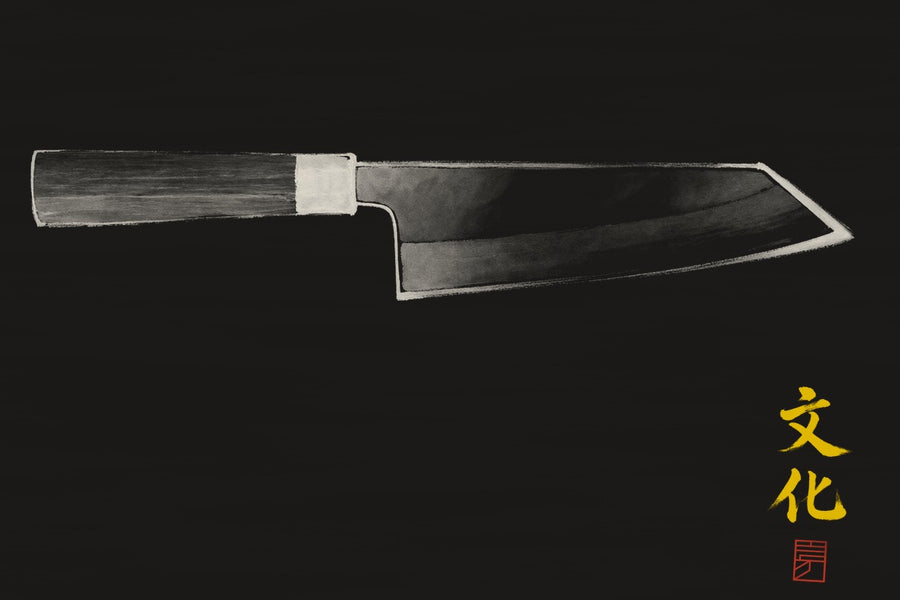
Profile Bunka
Bevel Type Double Bevel
Weight 158 g | 5.6 oz
Edge Length 167 mm | 6 37/64″
Heel Height 48 mm | 1 57/64″
Width @ Heel 2.4 mm | 3/32″
Width @ Mid 2.4 mm | 3/32″
Width @ 1cm from Tip 0.5 mm | 1/64″
Steel Blue Super / Aogami Super | Carbon
Blade Construction Sanmai - Stainless Clad
Hardness (HRC) 62 - 65
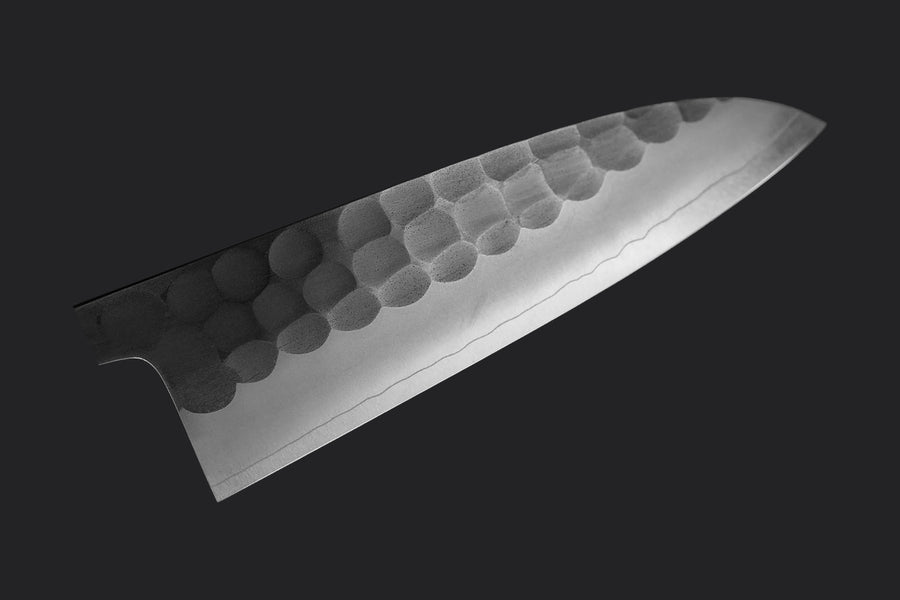
Surface Finish Tsuchime
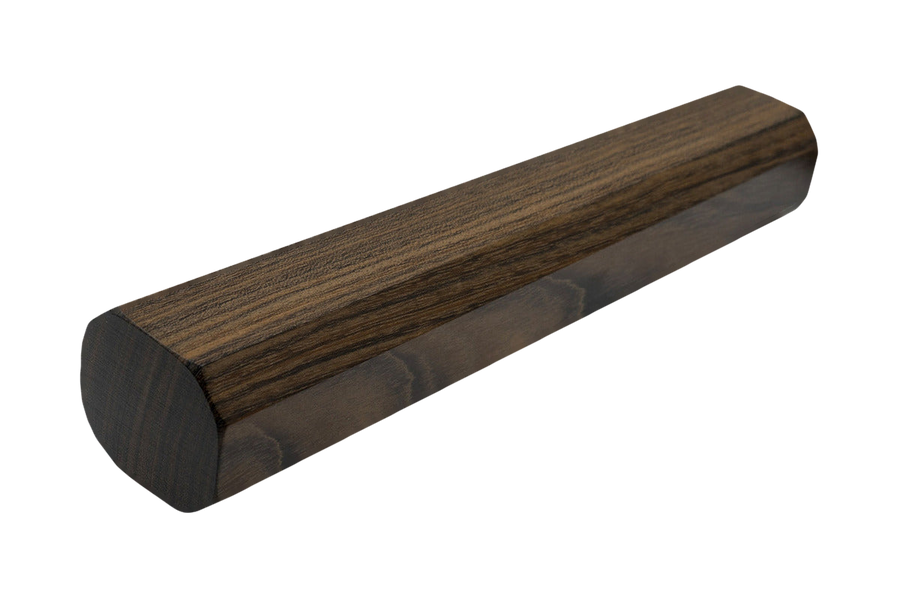
Handle Octagonal Black Chacate
Region Aomori
Best for
  • Pro chefs
  • Enthusiasts
  • Free shipping for knives over AU$200 Australia wide.
  • World-wide shipping via DHL Express, 3 to 5 days.


Nigara’s Aogami Super Tsuchime line of kitchen knives is the perfect blend of traditional craftsmanship and high-performance materials. Made with premium Aogami Super carbon steel, these knives offer unparalleled sharpness and edge retention, making them ideal for precision cutting tasks. The core of Aogami Super steel is wrapped in a protective stainless steel cladding, which not only enhances durability but also makes maintenance easier, reducing the need for constant care typically required by high-carbon knives.

The knives also feature a stunning tsuchime (hammered) pattern, which adds an artisanal aesthetic while improving food release during slicing. This combination of beauty and function ensures a smooth, effortless cutting experience, whether you’re handling delicate vegetables or tougher cuts of meat. Designed for both professional chefs and home cooks, Nigara’s Aogami Super Tsuchime knives are a testament to Japanese knife-making excellence, offering superior performance and easy maintenance in one elegant package.

Pros Cons
  • Budget friendly
  • Excellent performance
  • Great artistic
  • Relatively hard to sharpen
  • Need extra care
Care Instruction
  1. Don't cut hard things! Japanese knives are brittle so bone hacking is a NO NO!
  2. Wash with neutral detergent after use, and wipe dry;
  3. Please don't wash knife with dishwasher, it will damage the wood handle;
  4. Be careful not to leave the knife close to a heat source for a long time;
  5. It is a lot more dangerous to cut with a blunt knife than a sharp knife!
  6. It is best to sharpen a Japanese knife regularly on a waterstone.
  7. Oil the (carbon) knife if storing for an extended period of time to prevent rust.

Nigara

Hirosaki sword and knife artisan

Based in the small yet beautiful city of Hirosaki in the northern prefecture of  Aomori, Nigara hamono has been making samurai swords for 350 yearas, with master Kunitoshi  (國俊) being one of the most famous sword smith in his generation. Now headed by the 8th generation mastersmith Go Yoshizawa (吉澤 剛) supported by his father Toshiju Yoshizawa (吉澤 俊寿), Nigara is becoming very popular thanks of its exquisite forging skills and second to none quality control. 

“Katana making family in Aomori carrying their linage with creativity and innovation, known for the striking "Anmon" design and striking high-end, hand forged damascus items”

Est. 1949 | 昭和24年
Known for Glamorous and innovative knife design, inherited forging skills.
Website nigaraknives.com Read more about Nigara
Nigara — Aomori
Profile: Bunka
Profile

Bunka

A pointier version of the Santoku. The Bunka knife features a distinctive profile with a straighter edge and a pointed tip, making it versatile for a variety of kitchen tasks. Its design is a blend of the Santoku and K-tip Gyuto knives, with a blade length typically around 165mm to 180mm. The Bunka is particularly adept at slicing, dicing, and chopping fruits, vegetables, and meats, thanks to the precision and control enabled by its length and flat edge profile. The angled tip, also known as a reverse tanto, provides additional precision for intricate tasks such as julienning. With its unique shape and functionality, the Bunka stands out as a multifunctional knife in the culinary world.
Composition

Blue Super / Aogami Super Element Composition

Compare with
    Blue Super / Aogami Super
    2.0% 1.5% 1.0% 0.5% 0
    C Carbon 1.4%
    Primary hardening element. Raises hardness and wear resistance — but too much increases brittleness and corrosion susceptibility. As a reference: German 1.4112 (~0.5%) sits at the low end; VG-10 (~1.0%) is a common mid-range; SG2 (1.25–1.45%) and ZDP-189 (~3.0%) represent high and extreme ends respectively.
    C
    1.4%
    Cr Chromium 0.3%
    Raises corrosion resistance; 13%+ qualifies steel as stainless. Also improves hardenability and wear resistance. In kitchen use, higher chromium levels contribute to a slight drag or sticking sensation when cutting — a trade-off for the rust resistance it provides.
    Cr
    0.3%
    W Tungsten 2.0%
    Forms hard carbides for wear resistance and edge retention. Gives the steel hardness even at elevated temperatures.
    W
    2.0%
    Mn Manganese 0.2%
    Aids hardenability and strength. Acts as a deoxidiser during smelting. Excess can reduce toughness.
    Mn
    0.2%
    Si Silicon 0.1%
    Strengthens the steel matrix and acts as a deoxidiser. Improves hardness and resistance to oxidation.
    Si
    0.1%
    P Phosphorus 0.025%
    Impurity from the smelting process. Even small amounts cause brittleness — steelmakers keep this as low as possible.
    P
    0.025%
    S Sulfur 0.004%
    Impurity that reduces toughness and promotes brittleness. Intentionally added only in free-machining steels.
    S
    0.004%
    C — Carbon Cr — Chromium W — Tungsten Mn — Manganese Si — Silicon P — Phosphorus S — Sulfur
    Hardness 62–65 HRC
    555759616365+
    Steel
    Blue Super / Aogami Super
    Category
    Carbon
    Manufacturer
    Hitachi Special Steel, Japan 🇯🇵
    Hardness
    62–65 HRC
    Steel

    Blue Super / Aogami Super

    • Manufacturer
      • Hitachi Special Steel, Japan
    • Nature Carbon
    • Hardness62–65 HRC
    Aogami Super steel, also known as Blue Super Steel, is highly esteemed among Japanese carbon steels for its exceptional qualities. Produced by Hitachi Metals Ltd., this steel surpasses Blue Steel No.1 in its composition, featuring higher amounts of carbon, chromium, and tungsten, with the addition of molybdenum. Aogami Super is celebrated for its remarkable edge sharpness and superior edge retention capabilities. It can achieve high levels of hardness without becoming brittle, a characteristic that sets it apart and endears it to knife enthusiasts worldwide. The steel's enhanced carbon content enables it to maintain sharpness for extended periods, while the added chromium aids in rust resistance. A touch of vanadium increases its toughness, making it less prone to chipping. These attributes make Aogami Super one of the most revered high carbon steels globally, often described as a knife nerd's dream for its balance of hardness, durability, and maintenance ease.
    Construction: Sanmai - Stainless Clad
    Construction

    Sanmai - Stainless Clad

    Sanmai(Three-Piece) is a common construction for double bevel knives where two pieces of softer cladding steel are forgewelded to each side of a harder core steel. The harder but more brittle core steel will form the hard cutting edge after heat treating, and the softer cladding will support the core to increase the overall strength of the blade.

    The soft cladding enables the thinning process to be a lot easier than a honyaki or monosteel construction. And in the case where the cladding steel are stainless in nature, it can offer protection for the carbon or semi-stainless cores against rusting and discoluoring.

    Finish: Tsuchime
    Finish

    Tsuchime

    The "Tsuchime" finish in Japanese kitchen knives refers to a distinctive hammered texture on the blade's surface. This traditional technique not only adds a unique aesthetic appeal but also provides practical benefits, such as reducing drag and preventing food from sticking to the blade during slicing. It's a hallmark of craftsmanship that blends functionality with artistry, making each knife not only a tool but a piece of art.

    Handle
    Handle

    Handle Specs

    • Profile Octagonal WA
    • Material
      • Black Chacate

    Black Chacate is a highly valued timber known for its deep, rich brown to almost black coloration, fine texture, and exceptional durability. It polishes well, offering an exquisite finish that highlights its subtle, elegant grain patterns. This wood is often used in fine woodworking projects, including luxury furniture, decorative items, and high-end knife handles.

    An octagonal wa handle made from Black Chacate wood would exhibit a sleek, geometric shape that fits comfortably in the hand, enhancing the user's grip and control. The deep hues and natural luster of Black Chacate add a touch of sophistication and unparalleled beauty to the handle, making it not only a functional component of a kitchen knife but also a piece of art. The durability and stability of Black Chacate ensure that the handle withstands the rigors of kitchen use while maintaining its aesthetic appeal over time.

    1 / 5

    You May Also Like