


Sakai Takayuki Genbu (玄武) Blue #2 Sakimaru Yanigiba 300mm w/ Saya
Sakai Takayuki Genbu (玄武) Blue #2 Sakimaru Yanigiba 300mm w/ Saya is backordered and will ship as soon as it is back in stock.
Sold out right now
Leave your email and we’ll send one message the moment it’s back in stock.
One email, no marketing. Privacy policy.
We match the item price, not shipping, of in-stock products from reputable specialist knife retailers. Clearance and pre-owned items excluded. Each request is checked by our team.
Availability
Delivery unavailable for this item. Available for in-store pickup only.
-
St Peters, NSW —2 Bishop St, Unit 2, St Peters NSW 2044
-
Crows Nest, NSW —107 West St, Shop 1, Crows Nest NSW 2065Pickup only
-
Prahran, VIC —180 Commercial Road, Shop 1, Prahran VIC 3181Pickup only
Goes well with
Detailed Specifications
| Profile | Sakimaru Takohiki / Round-tip sashimi knife |
| Bevel Type | Single Bevel |
| Weight | 293 g 10.34 oz |
| Edge Length | 292 mm .11.5 inch |
| Heel Height | 39 mm .1.54 inch |
| Width @ Spine | 3.9 mm 0.15 inch |
| Width @ Mid | 3.4 mm 0.13 inch |
| Width @ 1cm from Tip | 1.7 mm 0.07 inch |
| Steel | Blue 2 / Aogami #2 | Carbon |
| Typical hardness | 61 to 63 HRC |
| Handle | Octagonal Ebony with Black Horn Ferrule |

The Genbu (玄武, Black Tortoise) is one of those knives that reflects the traditional knife-making heritage of Sakai particularly well. Named after the mythical guardian of the north in Japanese folklore, this series is forged by Itsuo Doi, a highly respected blacksmith who inherited the forging traditions of his father, the legendary Keijiro Doi. The Genbu brings together Doi's distinctive forging work and the refined grinding and finishing techniques for which Sakai is famous, resulting in a knife that is both a serious professional tool and a beautiful example of Japanese craftsmanship.
At the heart of the Genbu is Aogami #2 (Blue 2) carbon steel, forge-welded with soft iron cladding in the traditional Ni-mai construction. Blue 2 is one of my favourite choices for a high-end single-bevel knife, offering a good balance between edge retention, sharpness and ease of sharpening. Heat-treated to approximately 62–63 HRC, the steel is hard enough to hold a fine cutting edge through extended slicing sessions while remaining relatively straightforward to sharpen compared with some of the more wear-resistant modern steels. The soft iron cladding also makes maintaining the wide primary bevel easier, although both the core and cladding are reactive and require regular wiping and drying.
The 300mm Sakimaru Yanagiba features the distinctive rounded, sword-like tip associated with the traditional Sakimaru Takobiki profile. Compared with a conventional pointed Yanagiba, the Sakimaru has a rather elegant, understated appearance while retaining the long cutting edge that makes these knives so effective for preparing sashimi. The single-bevel geometry, combined with the long blade, allows the user to draw through a piece of fish in one continuous motion, producing a smooth and clean cut without excessive pressure or tearing of the flesh. The blade features a beautifully polished Hira with a contrasting Kasumi finish on the Kireha, creating a clean and refined appearance that suits the character of the knife.
What I particularly appreciate about the Genbu is that it doesn't try to impress through complicated Damascus patterns or decorative features. Instead, the focus is on the quality of the forging, geometry and traditional finishing. It is certainly a specialised knife that requires some experience with single-bevel sharpening and carbon steel maintenance, but for a professional sushi chef or an enthusiast who enjoys traditional Sakai craftsmanship, the Genbu offers a very appealing combination of performance, heritage and understated beauty.
- Don't cut hard things! Japanese knives are brittle so bone hacking is a NO NO!
- Wash with neutral detergent after use, and wipe dry;
- Please don't wash knife with dishwasher, it will damage the wood handle;
- Be careful not to leave the knife close to a heat source for a long time;
- It is a lot more dangerous to cut with a blunt knife than a sharp knife!
- It is best to sharpen a Japanese knife regularly on a waterstone.
- Oil the (carbon) knife if storing for an extended period of time to prevent rust.
-

Profile: Sakimaru Takohiki
Round-tip sashimi knife
Slide for more >>
-
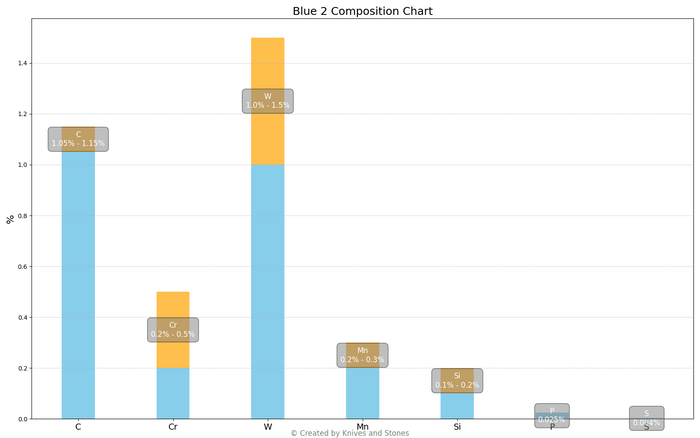
Steel: Blue 2 / Aogami #2
Manufacturer:
Nature: Carbon
Typical hardness: 61 to 63 HRC
<< Slide for more >>
-
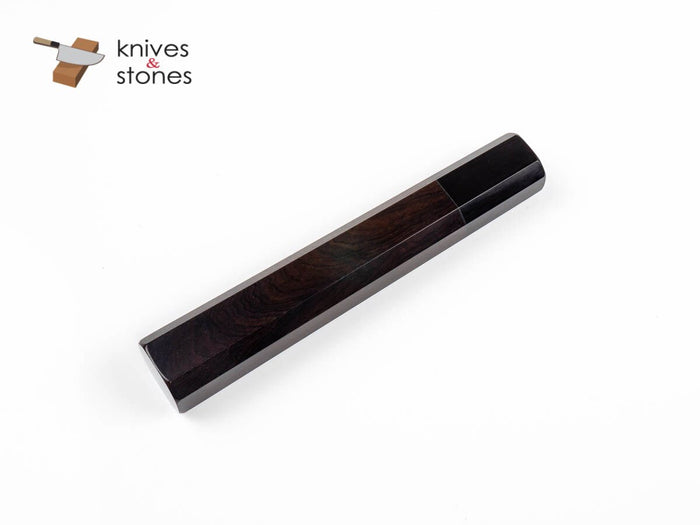
Handle Specs
Profile: Octagonal WA
Material:
<< Slide for more

