Crows Nest store now open from Friday to Tuesday, 10am till 6pm.

Iron Clad  |  SKU: SHIB-SGKT-KGY210

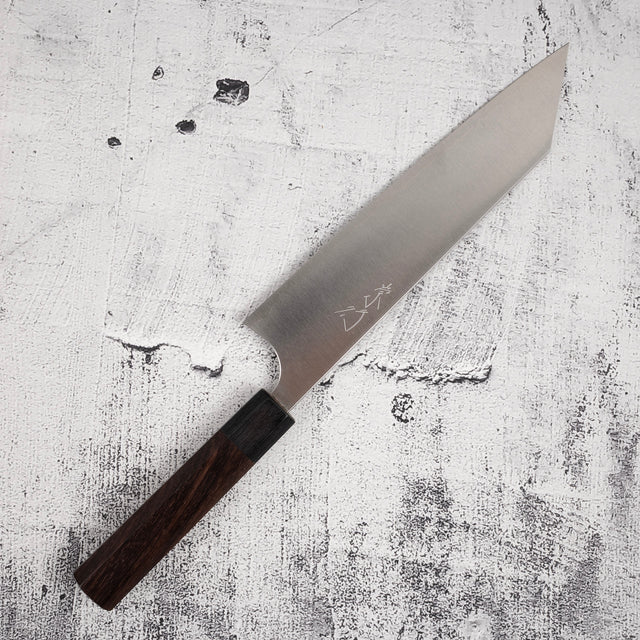
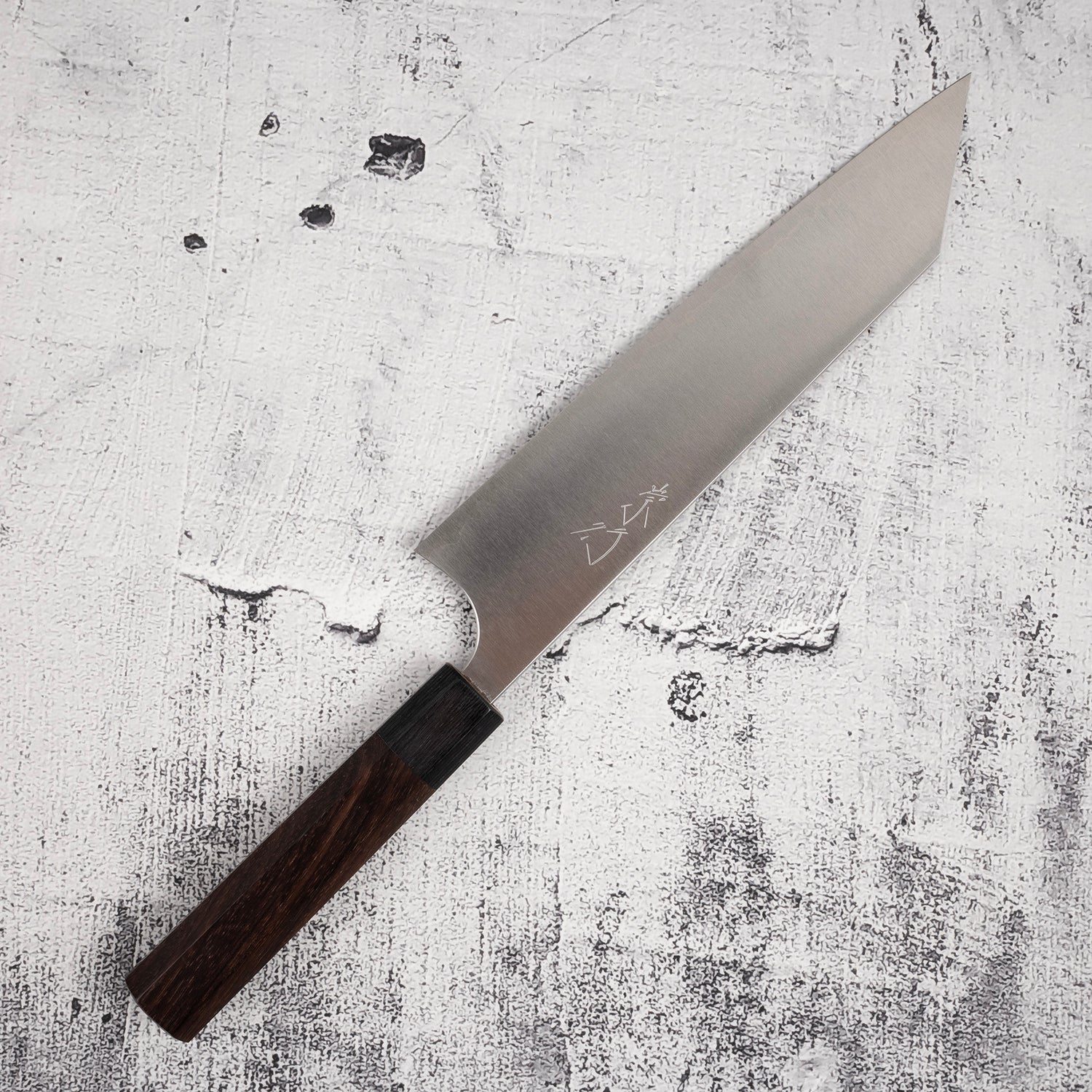
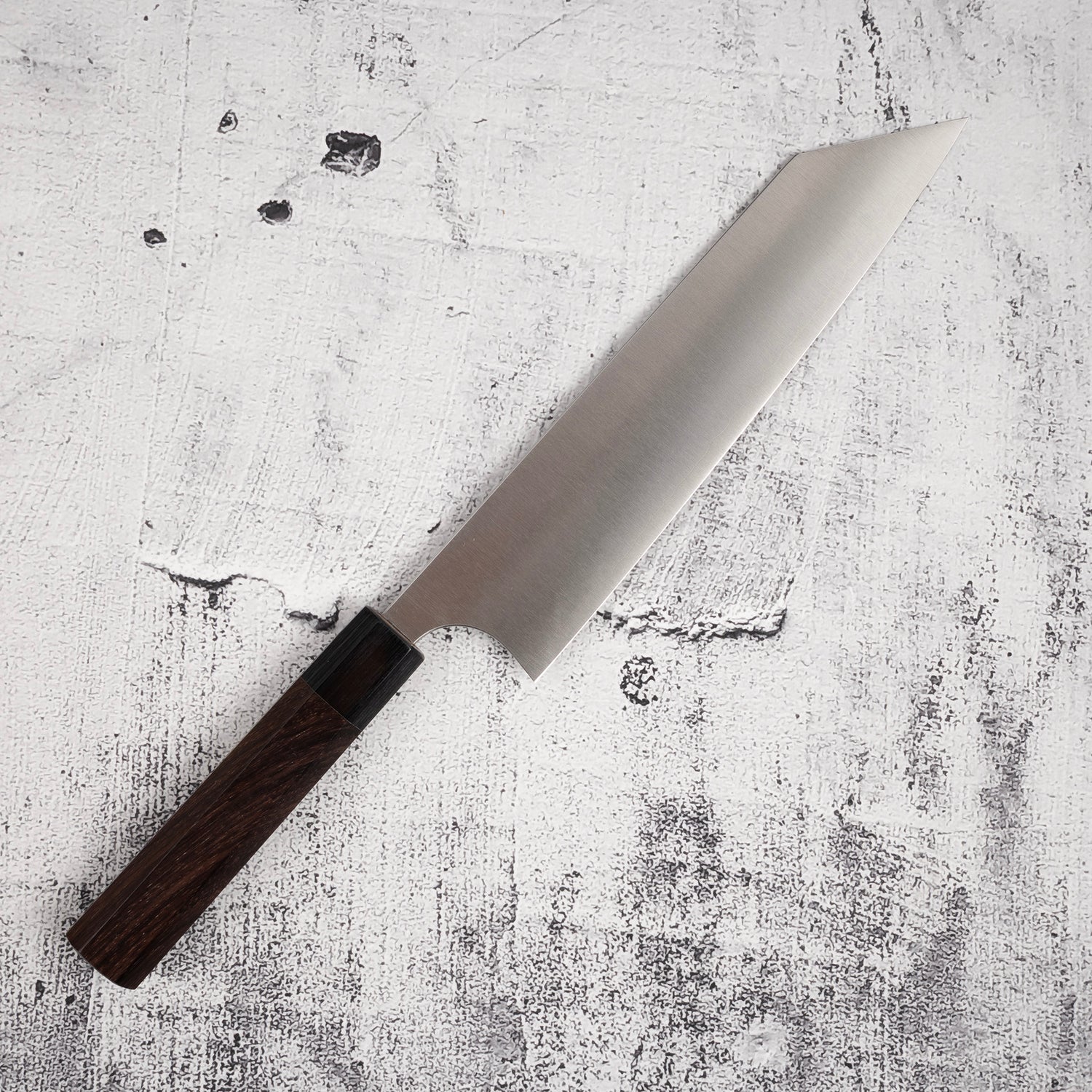
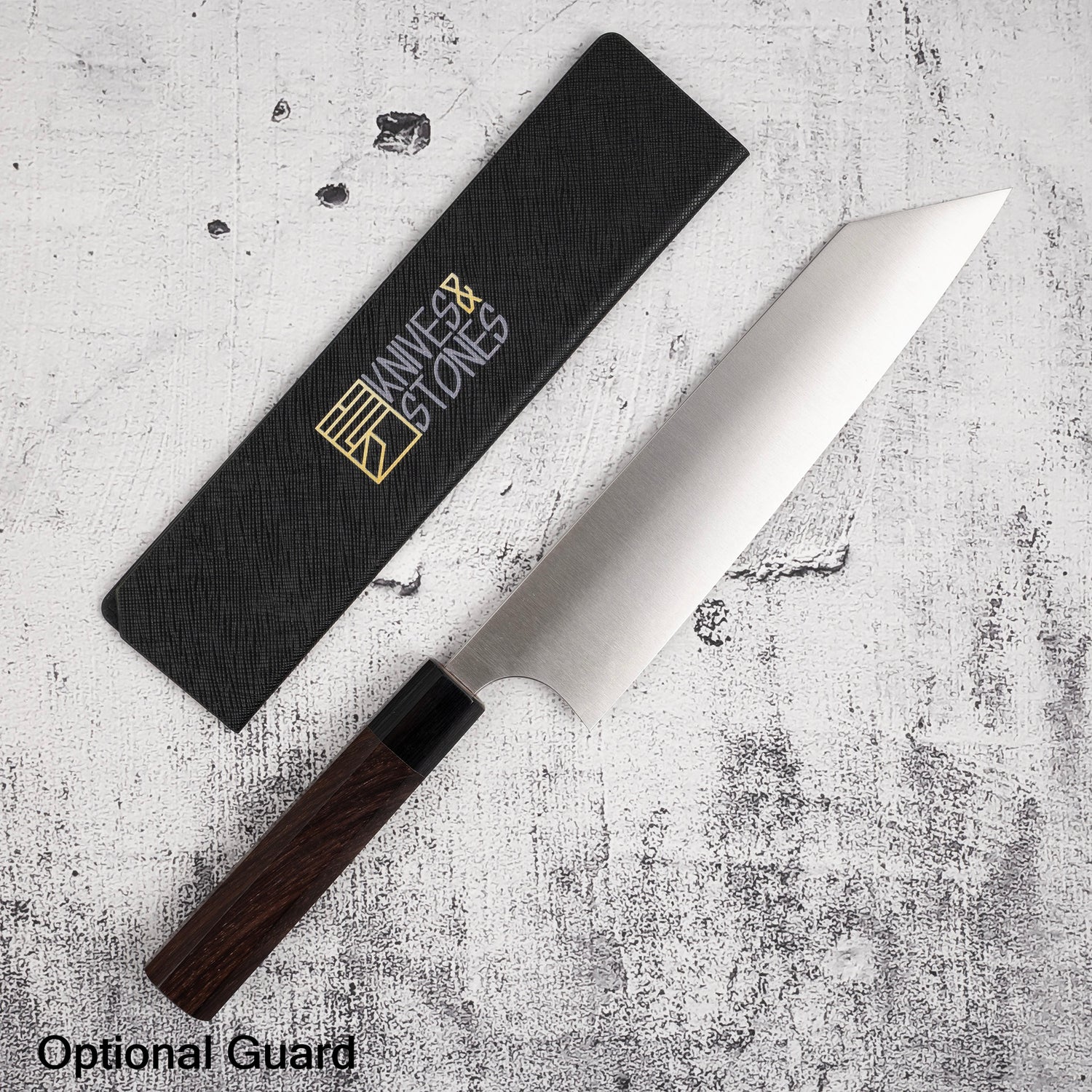
Shibata Koutetsu SG2 K-tip Gyuto 210mm

Regular price $419.95

Availability

  • St Peters
    2 Bishop St Unit 2 St Peters NSW 2044
  • Crows Nest
    107 West St, Crows Nest NSW 2065
    Pickup only

Add a saya or K&S Knife Roll to receive $20 bundle discount!

Detailed Specifications
Line Shibata Koutetsu SG2
Profile Gyuto / Chefs Knife
Bevel Type Double Bevel
Weight 144 g | 5.1 oz
Edge Length 214 mm | 8 27/64″
Heel Height 47 mm | 1 27/32″
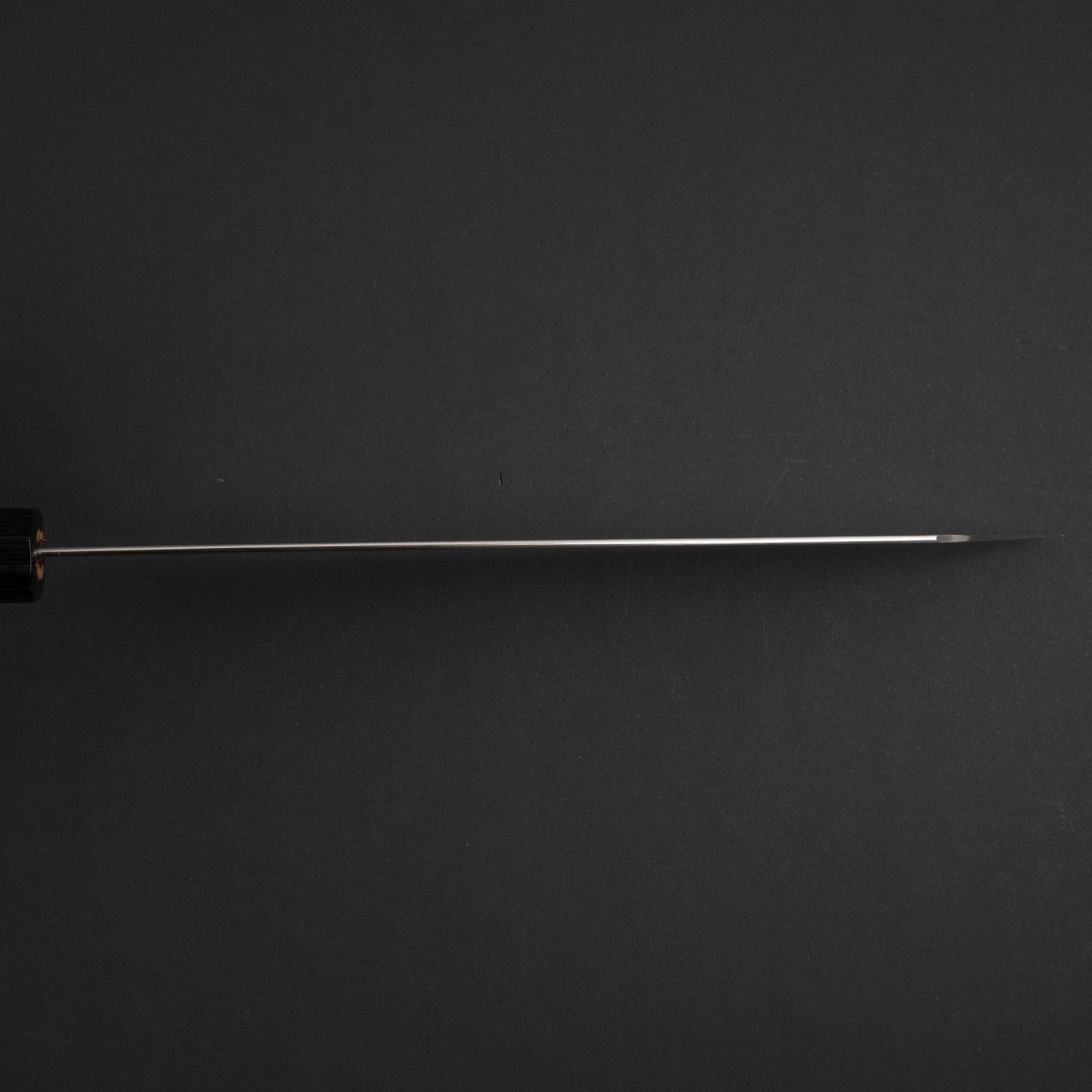
Width @ Heel 1.9 mm | 5/64″
Width @ Mid 1.9 mm | 5/64″
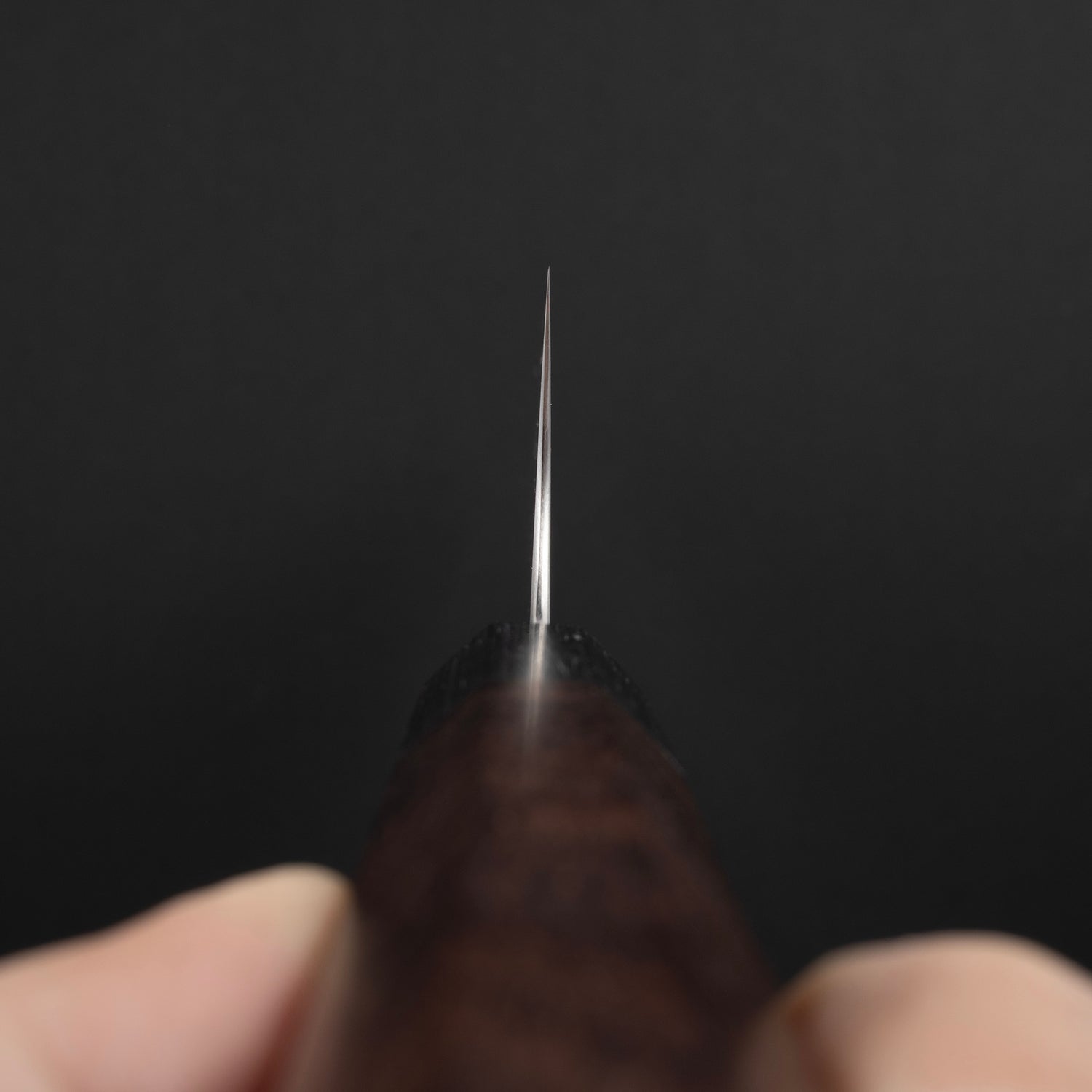
Width @ 1cm from Tip 1.0 mm | 3/64″
Steel SG2 / R2 | Powdered | Stainless
Blade Construction Sanmai - Stainless Clad
Hardness (HRC) 62 - 64
Surface Finish Migaki
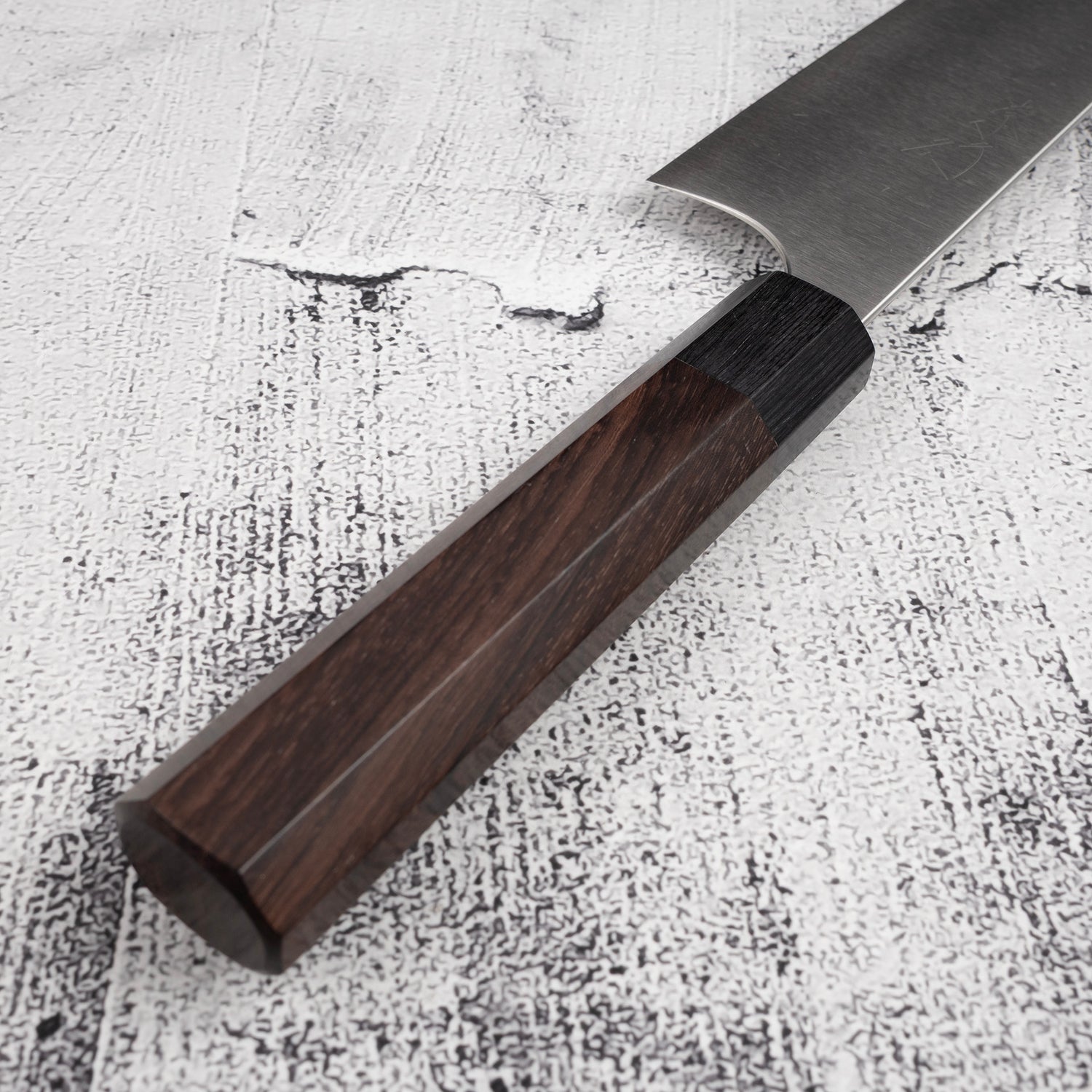
Handle Octagonal Rosewood Handle
Region Fukuyama
Best for
  • Pro chefs
  • Enthusiasts
  • Free shipping for knives over AU$200 Australia wide.
  • World-wide shipping via DHL Express, 3 to 5 days.


Master Shibata Takayuki’s Koutetsu(甲鉄, Ironclad) SG2 line embodies his motto: "Art Over Beauty." These ultra-thin lasers glide effortlessly through food, resisting stickage with their hazy, textured finish and a well tuned geometry. Every blade is hand-ground and sharpened by Shibata himself—ensuring insane sharpness and flawless finish.

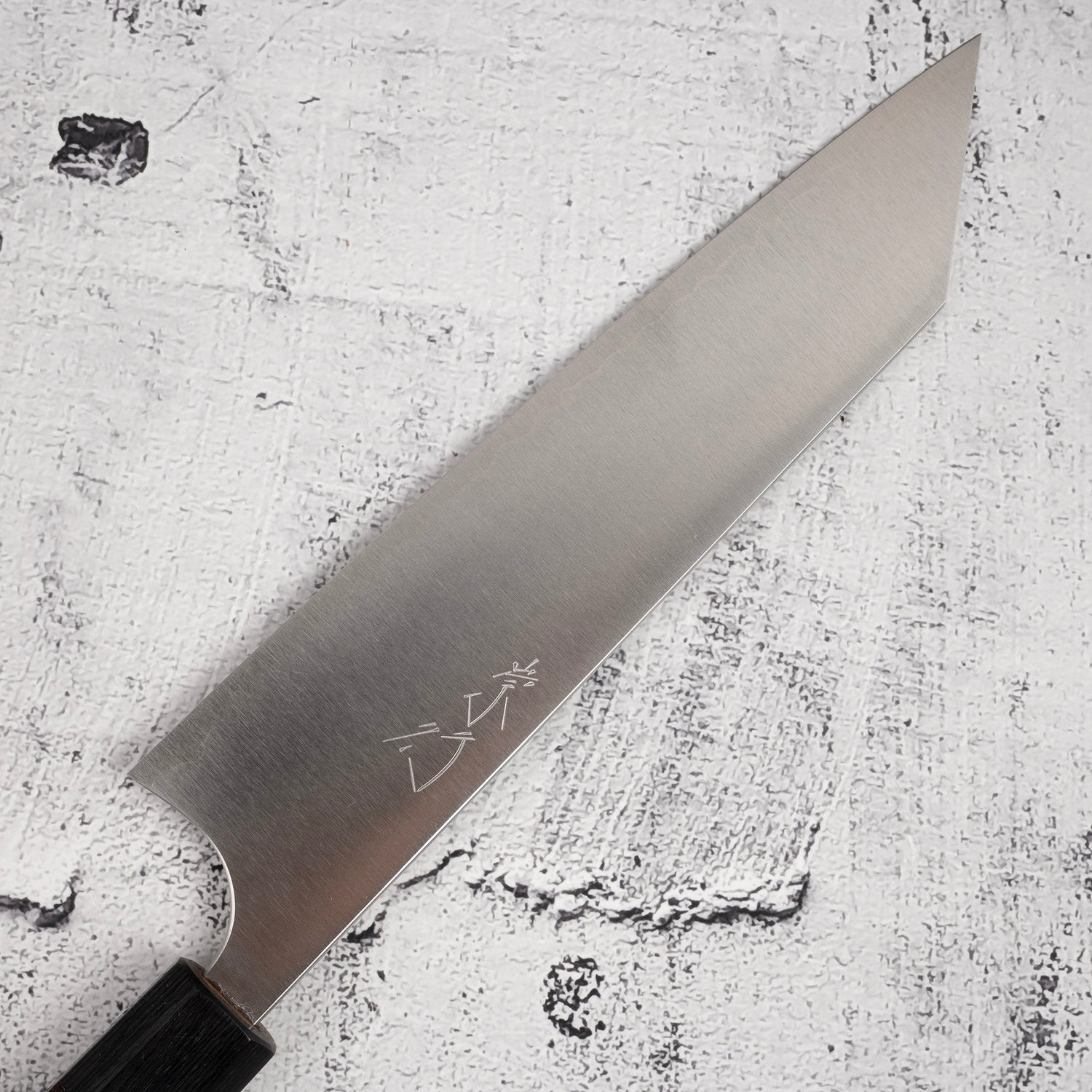
The unique design choice Shibata made about this line is having Kiritsuke-style tip applied to all of the knives in the line, this design pays homage to Japan’s historic Koutetsu(Ironclad) warship—built for armour and power. Yet these knives are featherlight and agile, with a rather thin spine and even thinner bevel. The profile according to Shibata is designed to find the perfect balance in edge curvature between the dead flat Nakiri and curvy Gyuto - two of his favourite profiles that he likes and wants to improve upon. The gently curved edge on these knives you’d find can comfortably rock and slice in pulling motion like a Gyuto, but can also chop through ingredients with much less chance of bits connected like a Nakiri.

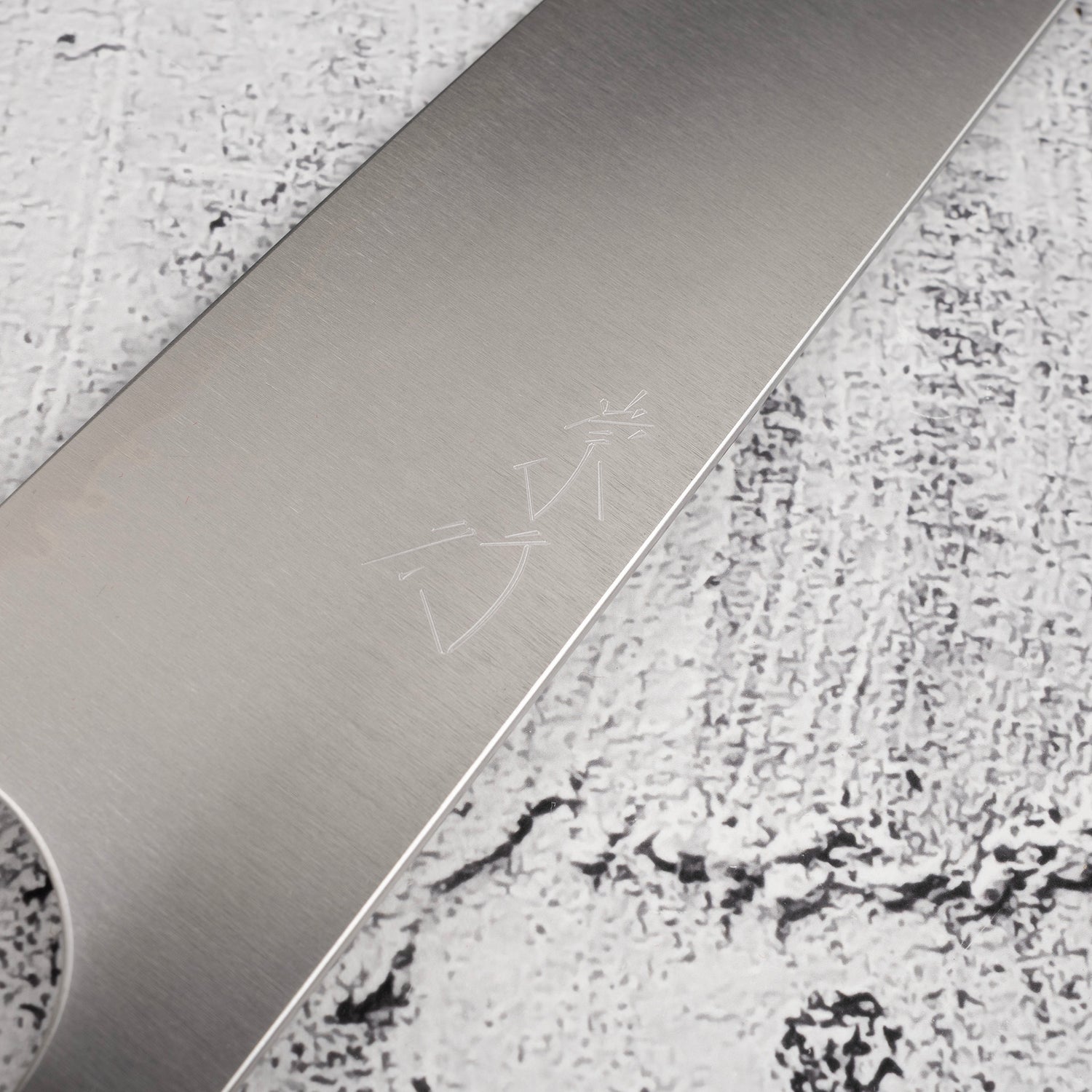
Shibata’s priority in performance shines on this line: almost every detail, from the surface finish to geometry, is aimed to have the lowest cutting resistance possible. The reduced thickness not only leads to a featherlight handling, but also minimises resistance when you wedge the knife into a very dense food. The usual downside for thin blades it, their bevels are generally flat, and there aren’t many steels that allow the maker to create a bulging convex/sudden change in geometry to encourage food release. However, Shibata with his extensive sharpening experience seems to have found an optimal convex shape that can achieve a noticeable level of food release, he also uses a more coarse Migaki(brushed) finish to further reduce the sticking. The Koutetsu line excels in all kinds of cutting tasks, yielding a super smooth cutting feeling in them. This isn’t just a knife—it’s a cutting masterpiece.

Supporting this design is the Takefu Special Metal’s classic formula: SG2 powdered stainless steel, boasting excellent wear resistance and hardness, this is the foundation that allows Koutetsu to be built so thin, and produce a great cutting edge that lasts weeks in a professional setting. This core steel is cladded between two pieces of plain stainless steel, almost blended into them after the brushed finish is applied. With no fancy Damascus cladding or surface treatment like etching or sandblasting, this finish sticks to the core of Shibata’s knifemaking philosophy: Art Over Beauty. But in all honesty, this extremely uniform finish when paired with mirror polished spine and choil, is a beauty by itself.

For those who prioritize performance, the Koutetsu delivers: razor-sharp, comfortable, and engineered to excel, this applies specially for professionals. Due to the thinner blade, Koutetsu would still maintain a low thickness behind the edge after a dozen times of sharpening, which means in intense use, it maintains its cutting performance even better. As this is a very hand made knife, if you happen to see one available in your desired profile, consider grabbing it as it doesn’t appear often.

Pros Cons
  • Excellent performance
  • Thin behind the edge
  • Great OOTB
  • Exceptional profile
  • Relatively hard to sharpen
  • High budget
Care Instruction
  1. Don't cut hard things! Japanese knives are brittle so bone hacking is a NO NO!
  2. Wash with neutral detergent after use, and wipe dry;
  3. Please don't wash knife with dishwasher, it will damage the wood handle;
  4. Be careful not to leave the knife close to a heat source for a long time;
  5. It is a lot more dangerous to cut with a blunt knife than a sharp knife!
  6. It is best to sharpen a Japanese knife regularly on a waterstone.

Iron Clad

Art Over Beauty

Iron Clad/Koutetsu is the made-in-house brand by Shibata Knives, bearing the motto “Art Over Beauty”, it’s a sharpening/grinding focus brand that known for its Hatsuke(刃付け, bevel-making) skill. The sharpener and leader Takayuki Shibata was the founder of Shibata Knives and other sister brands of Iron Clad, including the highly praised Masakage and the value-focused Tsunehisa.

The knife offered by Iron Clad are engraved with 崇行, which is Shibata’s first name Takayuki. Each Iron Clad knife is grinded by hand sharpening on rotary stone to produce the excellent geometry that Shibata-san developed through years of his experience on sharpening. These knives are generally referred as Koutetsu SG2/AS/Chromax, they share a similar profile, finished uniformly with Migaki finish and sharpened with Shibata’s unique differential grit sharpening technique to get a smooth yet bitey edge. The knives under the banner of Koutetsu are elegant and simple while great in performance, building Iron Clad a fame for its professional oriented designs.

“The concretisation of Shibata Knives' motto "Art Over Beauty", produced in-house with top of the line cutting performance and finishing quality.”

Est. 2009 | 平成21年
Known for Highly functional, performance orient knives with very thin blades
Website shibataknives.com Instagram @knife_gallery.jp Read more about Iron Clad
Iron Clad — Fukuyama
Profile: Gyuto
Profile

Gyuto

Chefs Knife

A Japanese chef's knife is known as a gyuto (牛刀 ぎゅうとう) gyūtō), literally meaning 'beef knife'. Its blade resembles a flatter version of a French chef's knife. Japanese cutlery is known for sharpness due to its acute blade geometry, and the hardness of the steel used, sometimes exceeding 60 HRC on the Rockwell Scale A typical western chef's knife may be sharpened to an edge angle of 20-22°, while a Japanese gyuto generally has a sharper edge angle of 15-18° (or even lower), which requires a harder, more brittle grade of steel. In recent years Japanese gyuto have gained in popularity with western chefs.

A modern chef's knife is a multi-purpose knife designed to perform well at many differing kitchen tasks, rather than excelling at any one in particular. It can be used for mincing, slicing, and chopping vegetables, slicing meat, and disjointing large cuts.
Composition

SG2 / R2 Element Composition

Compare with
    SG2 / R2
    14.0% 10.5% 7.0% 3.5% 0
    C Carbon 1.25%
    Primary hardening element. Raises hardness and wear resistance — but too much increases brittleness and corrosion susceptibility. As a reference: German 1.4112 (~0.5%) sits at the low end; VG-10 (~1.0%) is a common mid-range; SG2 (1.25–1.45%) and ZDP-189 (~3.0%) represent high and extreme ends respectively.
    C
    1.25%
    Cr Chromium 14.0%
    Raises corrosion resistance; 13%+ qualifies steel as stainless. Also improves hardenability and wear resistance. In kitchen use, higher chromium levels contribute to a slight drag or sticking sensation when cutting — a trade-off for the rust resistance it provides.
    Cr
    14.0%
    V Vanadium 1.8%
    Forms extremely hard carbides for superior edge retention. Also refines grain structure, improving toughness.
    V
    1.8%
    Mo Molybdenum 2.3%
    Improves hardenability and toughness. Boosts corrosion resistance and helps the steel hold hardness under heat.
    Mo
    2.3%
    Mn Manganese 0.4%
    Aids hardenability and strength. Acts as a deoxidiser during smelting. Excess can reduce toughness.
    Mn
    0.4%
    Si Silicon 0.5%
    Strengthens the steel matrix and acts as a deoxidiser. Improves hardness and resistance to oxidation.
    Si
    0.5%
    P Phosphorus 0.03%
    Impurity from the smelting process. Even small amounts cause brittleness — steelmakers keep this as low as possible.
    P
    0.03%
    S Sulfur 0.03%
    Impurity that reduces toughness and promotes brittleness. Intentionally added only in free-machining steels.
    S
    0.03%
    C — Carbon Cr — Chromium V — Vanadium Mo — Molybdenum Mn — Manganese Si — Silicon P — Phosphorus S — Sulfur
    Hardness 62–64 HRC
    555759616365+
    Steel
    SG2 / R2
    Category
    Stainless
    Process
    Powder Metallurgy (PM)
    Manufacturer
    Takefu Special Steel, Japan 🇯🇵
    Hardness
    62–64 HRC
    Steel

    SG2 / R2

    • Manufacturer
      • Takefu Special Steel, Japan
    • Nature Stainless
    • Hardness62–64 HRC
    SG2, also known as Super Gold 2 or R2 steel, is a high-end powdered tool steel by Takefu Special Steel, known for its excellent edge retention, wear resistance, and ability to achieve a hardness of up to 64 HRC. Identical to Kobelco Steel's R2, it's prized in premium knife making for its fine edge sharpness and durability. The powdered nature ensures uniform carbide distribution, enhancing toughness and reducing chipping risks. SG2/R2 is ideal for those seeking top performance and longevity in their cutting tools.
    Construction: Sanmai - Stainless Clad
    Construction

    Sanmai - Stainless Clad

    Sanmai(Three-Piece) is a common construction for double bevel knives where two pieces of softer cladding steel are forgewelded to each side of a harder core steel. The harder but more brittle core steel will form the hard cutting edge after heat treating, and the softer cladding will support the core to increase the overall strength of the blade.

    The soft cladding enables the thinning process to be a lot easier than a honyaki or monosteel construction. And in the case where the cladding steel are stainless in nature, it can offer protection for the carbon or semi-stainless cores against rusting and discoluoring.

    Finish: Migaki
    Finish

    Migaki

    "Migaki" means "polished" or "shined" in Japanese, The term "Migaki finish" in the context of Japanese kitchen knives indeed does not exclusively refer to a mirror polish but encompasses a broader range of polished finishes that can vary from semi-gloss to a more refined, subtle sheen, rather than a highly reflective surface. The primary goal of a Migaki finish is to enhance the knife's functionality and aesthetic appeal, focusing on a smooth finish that improves resistance to corrosion and minimizes drag during cutting, rather than achieving a purely mirror-like appearance.

    1 / 4

    You May Also Like