PRAHRAN STORE NOW OPEN · THU–MON · 10AM–6PM

Myojin Riki  |  SKU: MYOJ_G3KTM_KGY240EB

Tetsujin Ginsan Kasumi K-tip Gyuto 240mm Ebony Handle

Regular price $689.95

Early access for Koban members

This drop opens early by tier. One per member per drop. Times are Sydney time.

Bought early: earns 5 Koban per A$1, doesn't count toward your tier. After it opens to everyone, it counts like any other purchase.

Tamahagane
from Wed 21 Oct, 8:00 pm
Aogami
from Thu 22 Oct, 8:00 pm
Shirogami
from Fri 23 Oct, 8:00 pm
Everyone (you)
from Sat 24 Oct, 8:00 pm

Opens for you in 2 days 22 hours — Sat 24 Oct, 8:00 pm Sydney time.

Sign in to check your own tier.

How Koban tiers work

Sold out right now

Leave your email and we’ll send one message the moment it’s back in stock.

One email, no marketing. Privacy policy.

Availability

  • St Peters, NSW —
    2 Bishop St, Unit 2, St Peters NSW 2044
  • Crows Nest, NSW —
    107 West St, Shop 1, Crows Nest NSW 2065
    Pickup only
  • Prahran, VIC —
    180 Commercial Road, Shop 1, Prahran VIC 3181
    Pickup only
Detailed Specifications
Line Tetsujin Ginsan Kasumi
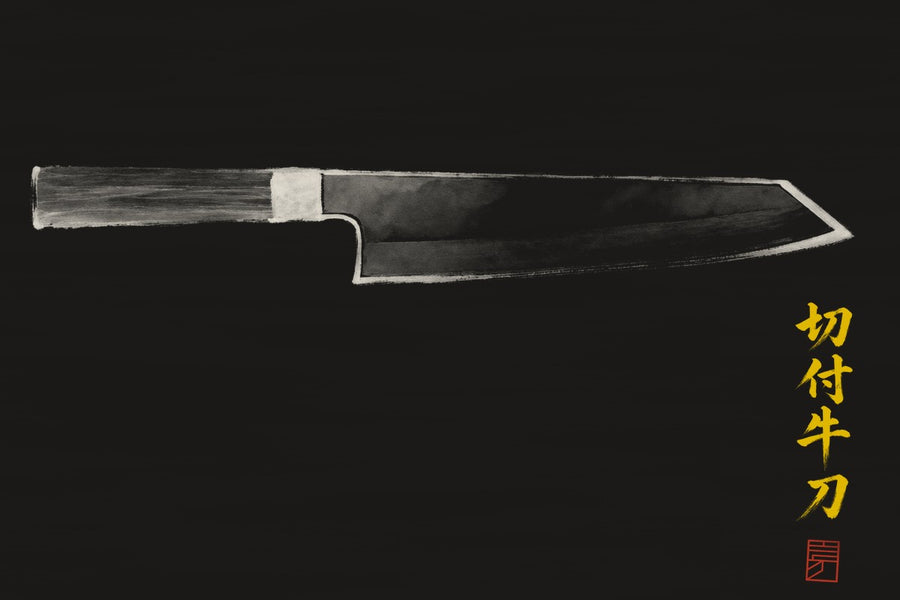
Profile K-tip Gyuto / K-tip chef's knife
Bevel Type Double Bevel
Weight 217 g | 7.7 oz
Edge Length 232 mm | 9 9/64″
Heel Height 50 mm | 1 31/32″
Width @ Heel 2.7 mm | 7/64″
Width @ Mid 2.7 mm | 7/64″
Width @ 1cm from Tip 0.6 mm | 1/32″
Steel Ginsan / Silver #3 | Stainless
Blade Construction Sanmai - Stainless Clad
Hardness (HRC) 60 - 62
Surface Finish Kasumi
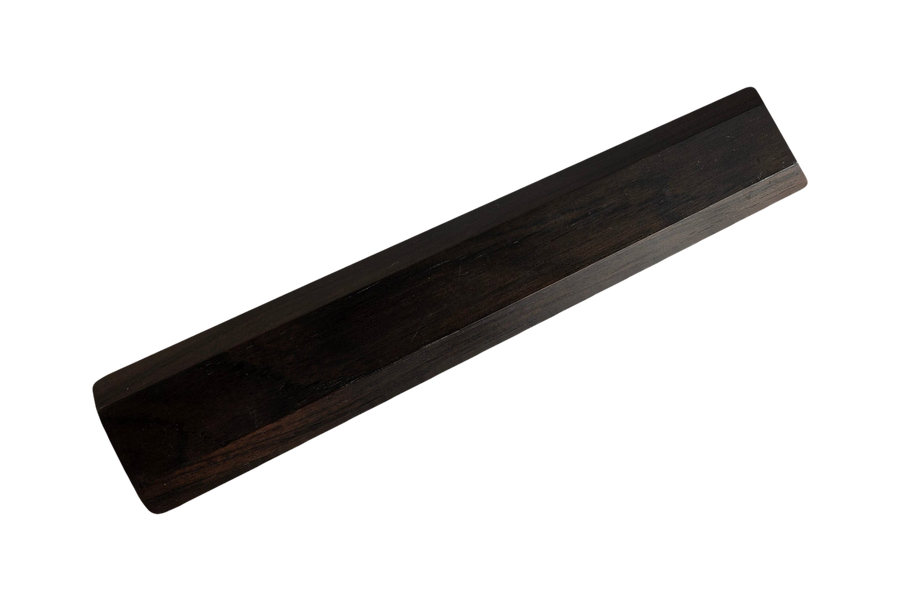
Handle Octagonal Ebony
Region Tosa
Best for
  • Pro chefs
  • Students
  • First-timers
  • Free shipping for knives over AU$200 Australia wide.
  • World-wide shipping via DHL Express, 3 to 5 days.


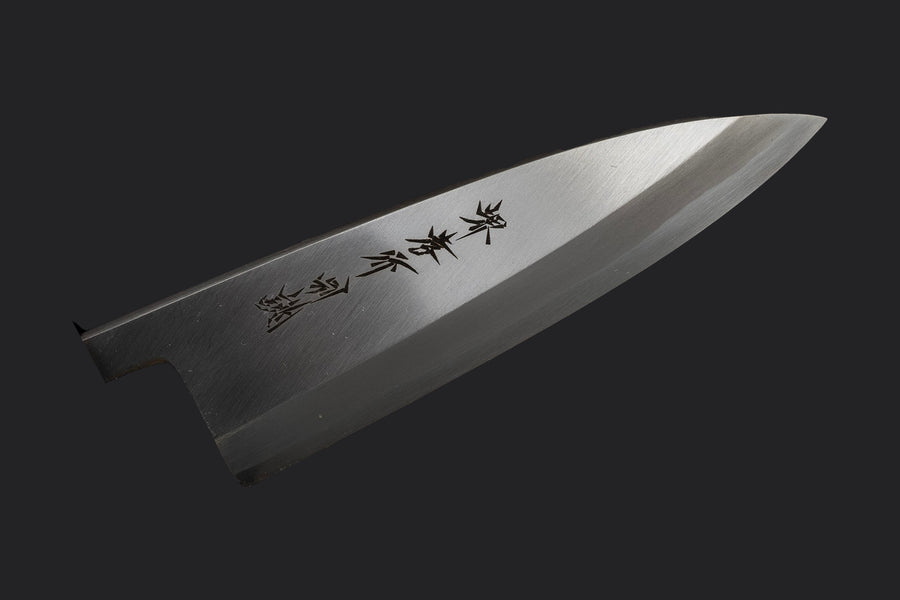
The finish is the first thing that catches your attention with the Tetsujin Ginsan Kasumi. Naohito Myojin’s kasumi work is remarkably even, with a soft, silky surface that contrasts beautifully with the mirror-polished spine. Along the blade, the organic cladding line brings some movement to that otherwise restrained appearance—a lovely detail from Toru Tamura’s forging. There’s plenty to appreciate here without needing a dramatic pattern or a heavily decorated blade.

What makes this line particularly appealing, though, is how that finishing work carries through to the cutting geometry. The blade is very thin behind the edge, with the low resistance you’d expect from a laser. It really shines when moving through dense, firm ingredients, where a thicker blade can take noticeably more effort to push through. The chamfered, polished spine and smoothed choil also help reduce hot spots where your fingers contact the blade, making the attention to detail useful as well as attractive.

The core is Ginsan, also known as Silver #3, in a stainless-clad sanmai construction. Edge retention isn’t its strongest selling point, but the ease of sharpening makes that a trade-off worth considering. Just as importantly, the thin geometry continues to offer low cutting resistance even after the edge has lost some of its initial sharpness. You’re getting a knife whose performance depends on more than a freshly sharpened edge.

Coming out of Tosa, this is a sought-after line with limited availability. It makes sense for cooks who value fine geometry and careful finishing, and who are happy to sharpen a little more often in exchange for a blade that is easy to bring back to form.

Pros Cons
  • Budget friendly
  • Great for professionals
  • Thin behind the edge
  • Non-premium steel
Care Instruction
  1. Don't cut hard things! Japanese knives are brittle so bone hacking is a NO NO!
  2. Wash with neutral detergent after use, and wipe dry;
  3. Please don't wash knife with dishwasher, it will damage the wood handle;
  4. Be careful not to leave the knife close to a heat source for a long time;
  5. It is a lot more dangerous to cut with a blunt knife than a sharp knife!
  6. It is best to sharpen a Japanese knife regularly on a waterstone.

Myojin Riki

Myojin Riki Seisakusho, a Tosa knife workshop

The workshop 明神利器製作所, whose knives we list as Myojin Riki, is in Susaki, Kochi. Kochi City's craft page names its second generation as 明神 直人.

Kochi City's page on Tosa crafts describes the workshop as carrying work from forging to finishing in one continuous process. The page says it sharpens a hamaguri-ba (蛤刃) edge, ground convex, a technique the workshop's second generation learned through several years of training in Fukui, and that it also takes sharpening-only orders from outside Kochi Prefecture.

Among the lines we list, the Hatsukokoro x Myojin Shirasagi single-bevel knives cover Blue 2 kurouchi yanagiba, K-tip yanagiba, sakimaru yanagiba and honesuki, White 2 deba, left-handed mioroshi deba, left-handed yanagiba and honesuki, and a Ginsan yanagiba. We also list Myojin Cobalt Special gyuto, santoku and bunka.

“A Tosa workshop in Susaki, Kochi, described by Kochi City's craft page as working from forging through finishing.”

Known for A convex hamaguri-ba edge, as Kochi City's craft page describes
Instagram @tetsujin_labo Read more about Myojin Riki

Myojin Riki · Tosa

Knife details

Frequently asked questions

Is a K-tip Gyuto the same as a traditional Kiritsuke?

Not quite - and it is the single most common point of confusion when people shop for a kiritsuke. The two knives share the same striking angled, reverse-tanto tip, but underneath that tip they are very different tools.

A K-tip gyuto is normally a double-bevel knife: it is ground on both sides like any Western-style chef's knife, so it is forgiving to use, and sharpened exactly the way you would sharpen a normal gyuto. You get the dramatic kiritsuke look with the everyday usability of an all-purpose chef's knife.

A traditional kiritsuke, including the kiritsuke-yanagiba (slicer), is a single-bevel knife, ground on one side only. It is historically a master chef's knife: it takes real practice to use well, is set up for right-handed users by default, and needs single-bevel sharpening technique to maintain.

So if you want the kiritsuke silhouette with no learning curve, choose a K-tip gyuto. If you specifically want the traditional single-bevel discipline - and the precision it allows on fish and vegetables - choose a true kiritsuke. At Knives and Stones we stock both, and each product page tells you which construction you are looking at.

What is Ginsan steel, and why do some Japanese knives use it?

Ginsan is the name used for GIN 3, a stainless steel from Proterial. Proterial lists the carbon at 0.95 to 1.10% and the chromium at 13.00 to 14.50%.

Proterial describes it as a "Stainless steel which has hardness and sharpness comparable to carbon steel".

We find it suits a cook who wants a stainless knife that sharpens on stones. Dry it after use, like any knife.

Is Ginsan stainless?

Yes. Proterial lists the steel as GIN 3 with 13.00 to 14.50% chromium, above the Japan Stainless Steel Association's 10.5% minimum for stainless steel.

Proterial describes it as a stainless steel with hardness and sharpness comparable to carbon steel, used in various kitchen knives and scissors, and the association notes that stainless, strictly, means it rusts less. Wash the knife and dry it after use.

What is the Tetsujin Ginsan Kasumi knife line, and who is it for?

The Tetsujin Ginsan Kasumi is a budget-friendly knife line forged by blacksmith Toru Tamura and sharpened by Naohito Myojin, designed for professional chefs, students, and first-time buyers who need thin geometry for effortless slicing without the cost of premium steel.

This line prioritizes a sturdy feel and a thin edge that glides through ingredients, making it a practical daily driver for those who cut frequently but want to avoid the high price tag of top-tier Japanese steels. While the steel itself is not classified as premium, the construction delivers reliable performance for the price point, fitting the needs of anyone from a culinary student to a working chef looking for a durable, no-nonsense tool.

What is the hamaguri-ba edge on the knives we list as Myojin Riki?

A hamaguri-ba edge, written 蛤刃, is a convex edge shape, and it is the shape the workshop 明神利器製作所 sharpens its knives to. Kochi City's craft page records that the workshop's second generation, whose name the page gives as 直人, learned it over several years of training in Fukui.

The same page says the workshop also takes sharpening-only orders from outside Kochi.

Does Myojin Riki forge its own knives?

Yes. Kochi City's craft page for his workshop 明神利器製作所 says the work runs from forging through finishing in one continuous process, 鍛造から仕上げまで一貫して行う.

That page lists the workshop in Susaki, Kochi.

You May Also Like