Crows Nest store now open from Friday to Tuesday, in store specials!

Tojiro  |  SKU: TOJI_GY210_F815

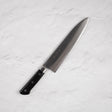
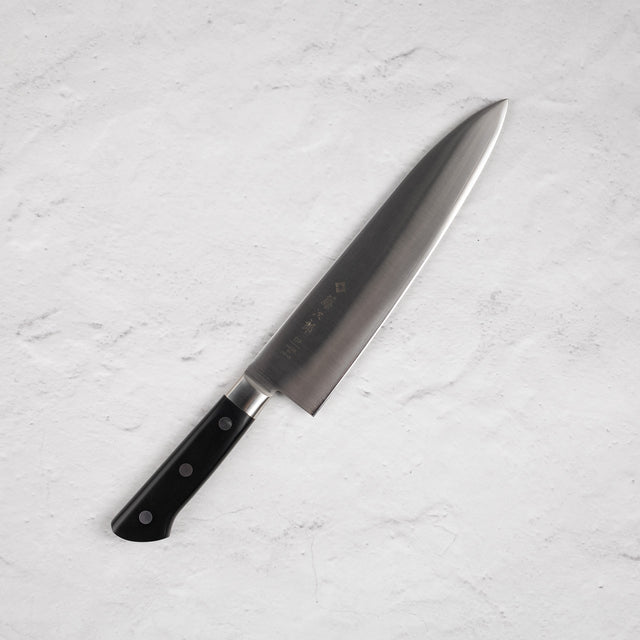
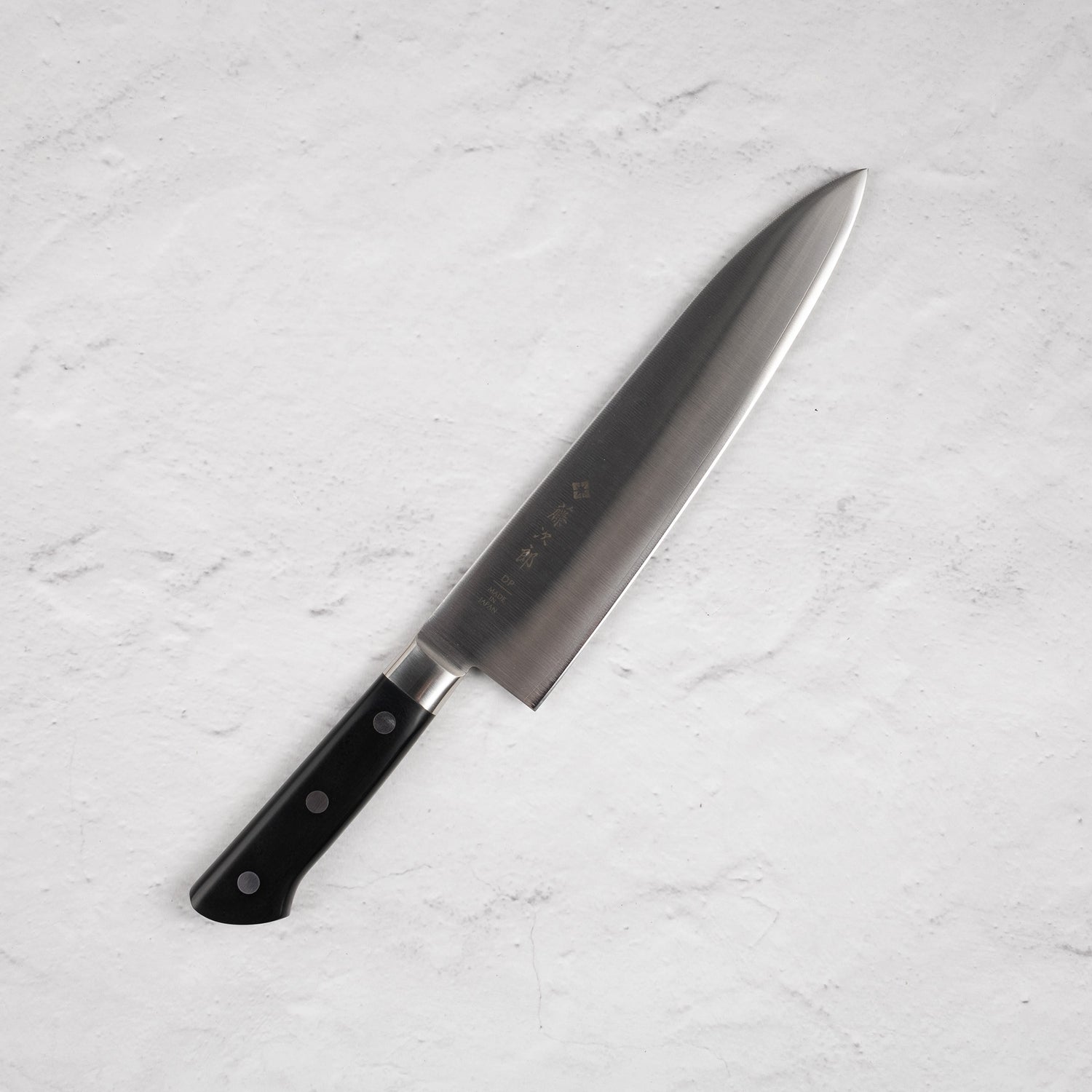
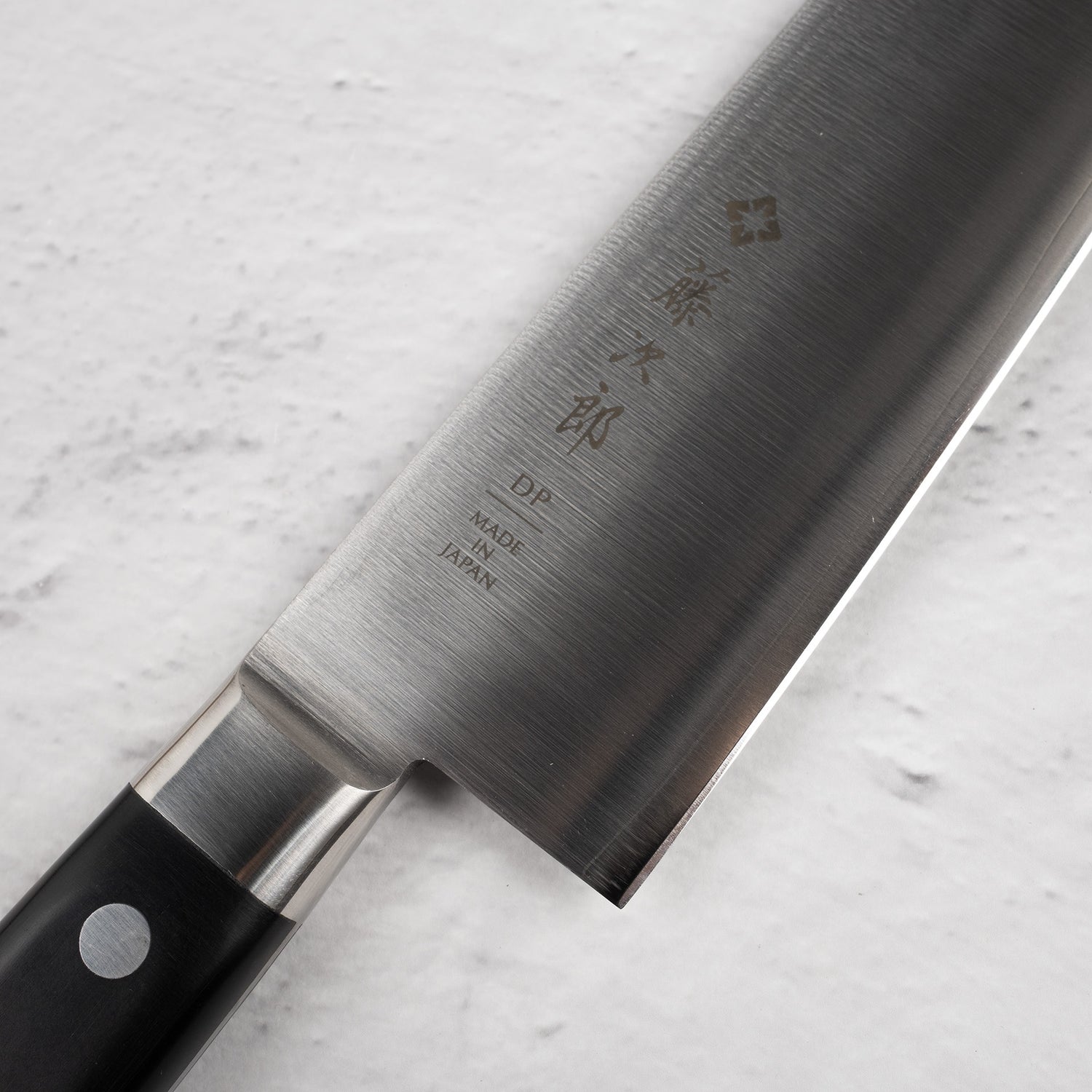
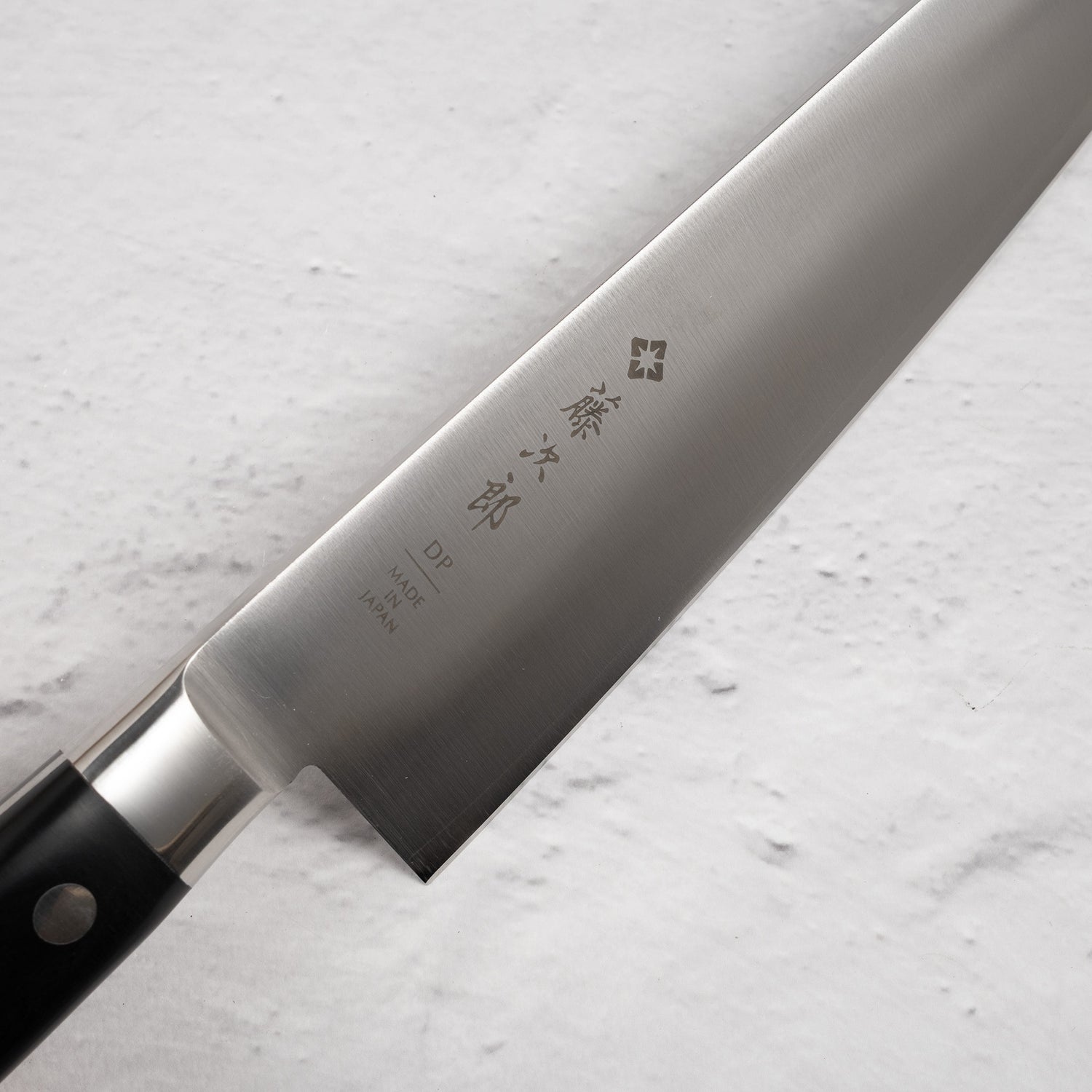
Tojiro DP3 Yo-Deba 240mm F-815

Regular price $289.95

Pickup available at Crows Nest

Usually ready in 24 hours

Add a saya or K&S Knife Roll to receive $20 bundle discount!

Detailed Specifications
Line Tojiro DP
Profile Deba
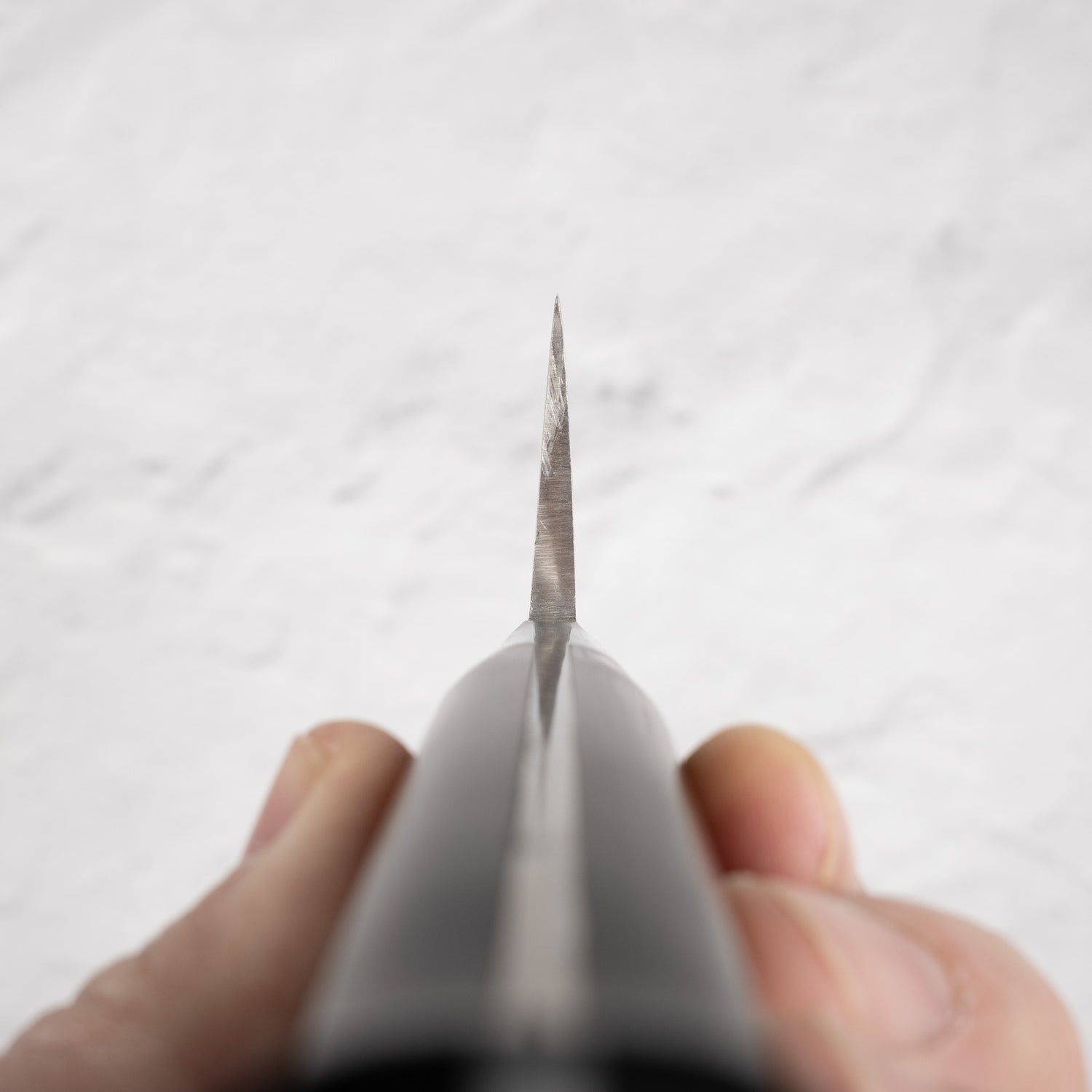
Bevel Type Double Bevel
Weight 423 g | 14.9 oz
Edge Length 271 mm | 10 43/64″
Heel Height 51 mm | 2 1/64″
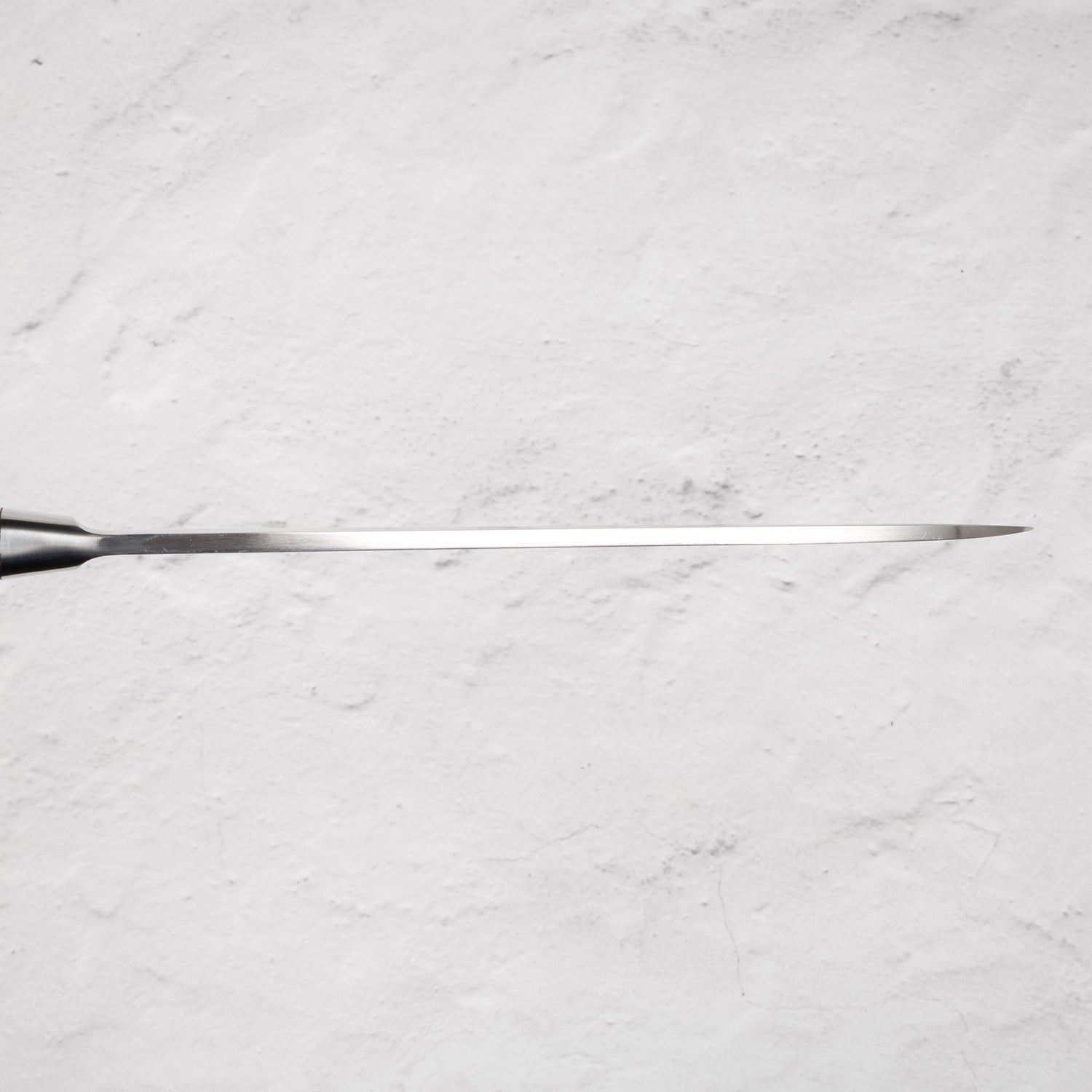
Width @ Heel 4.7 mm | 3/16″
Width @ Mid 4.5 mm | 11/64″
Width @ 1cm from Tip 2.1 mm | 5/64″
Steel VG10 | Stainless
Blade Construction Sanmai - Stainless Clad
Hardness (HRC) 59 - 61
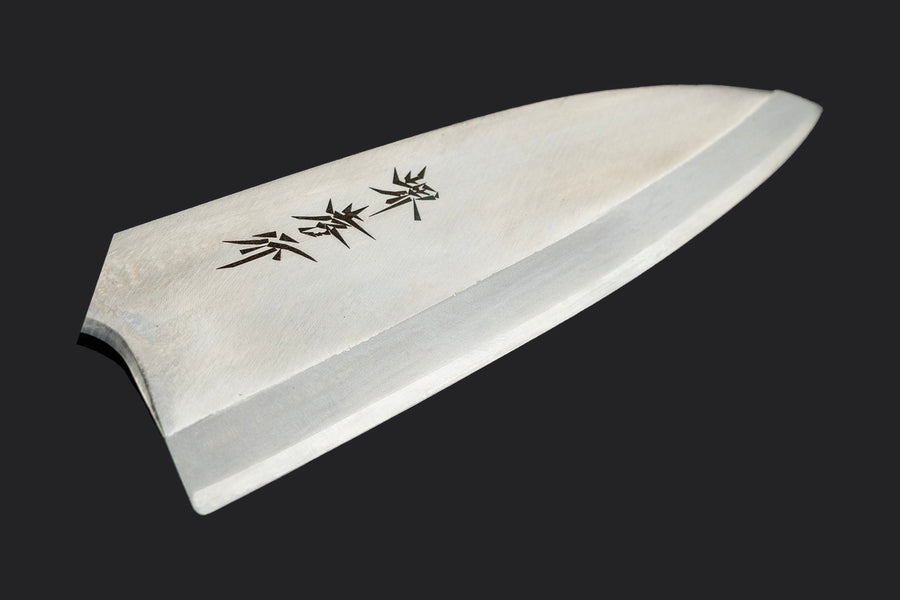
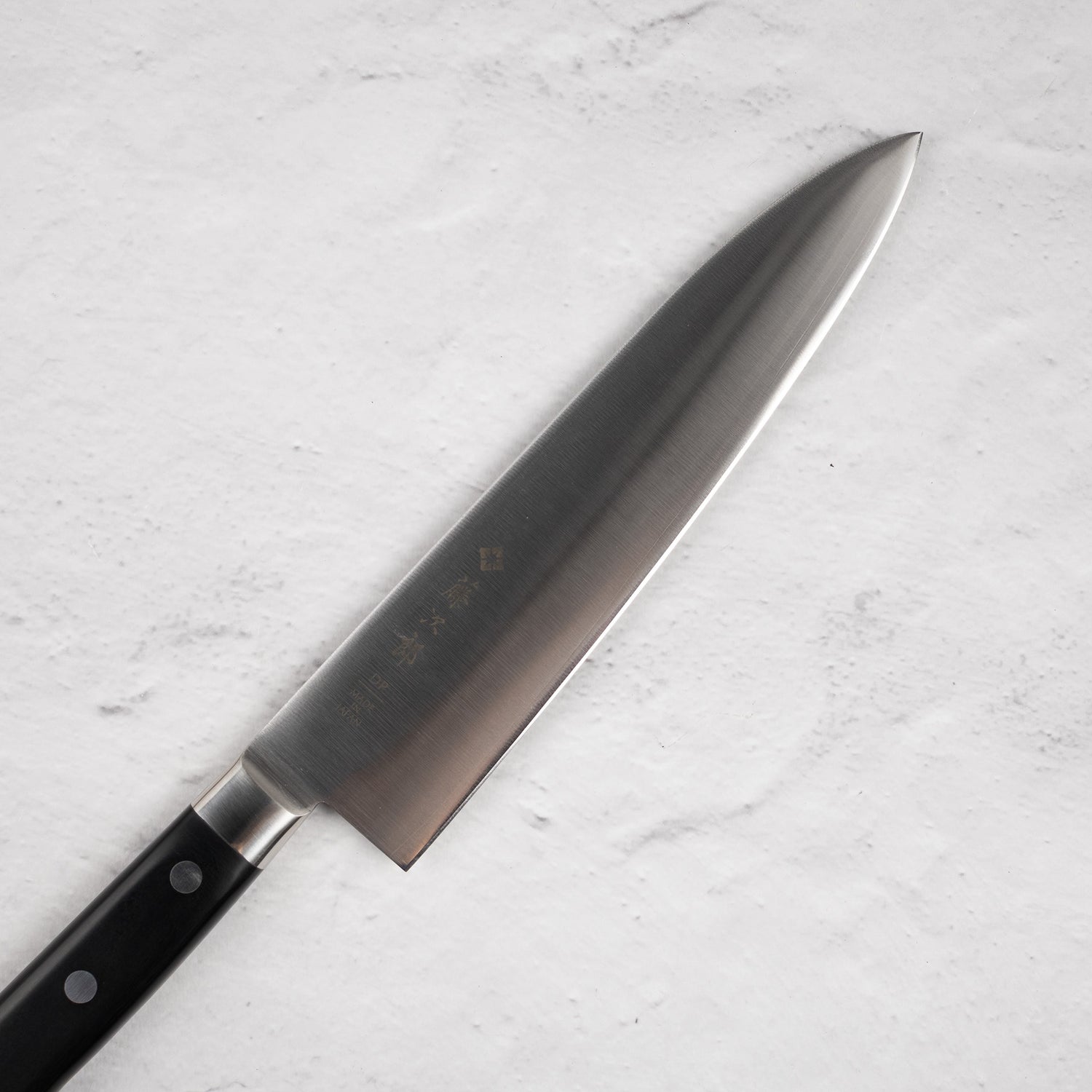
Surface Finish Migaki
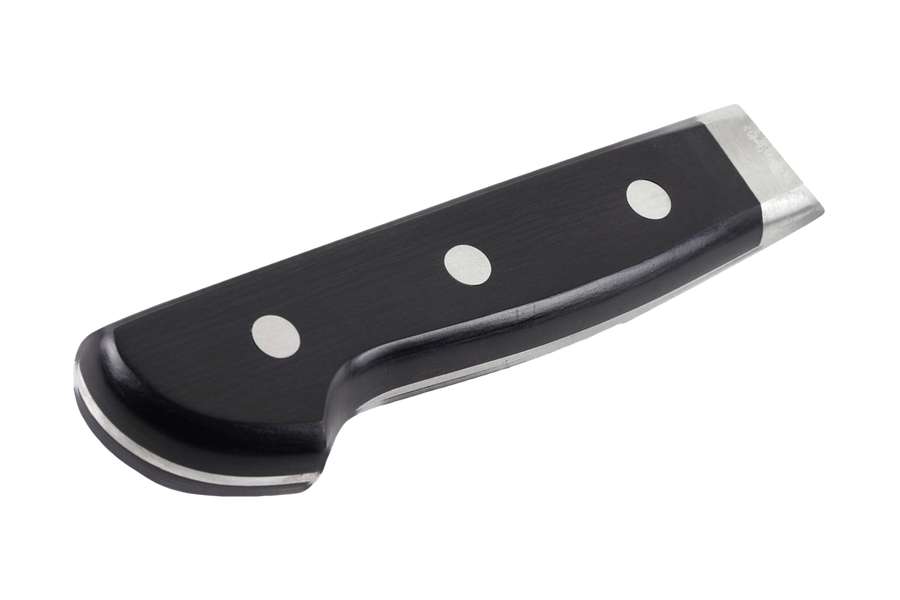
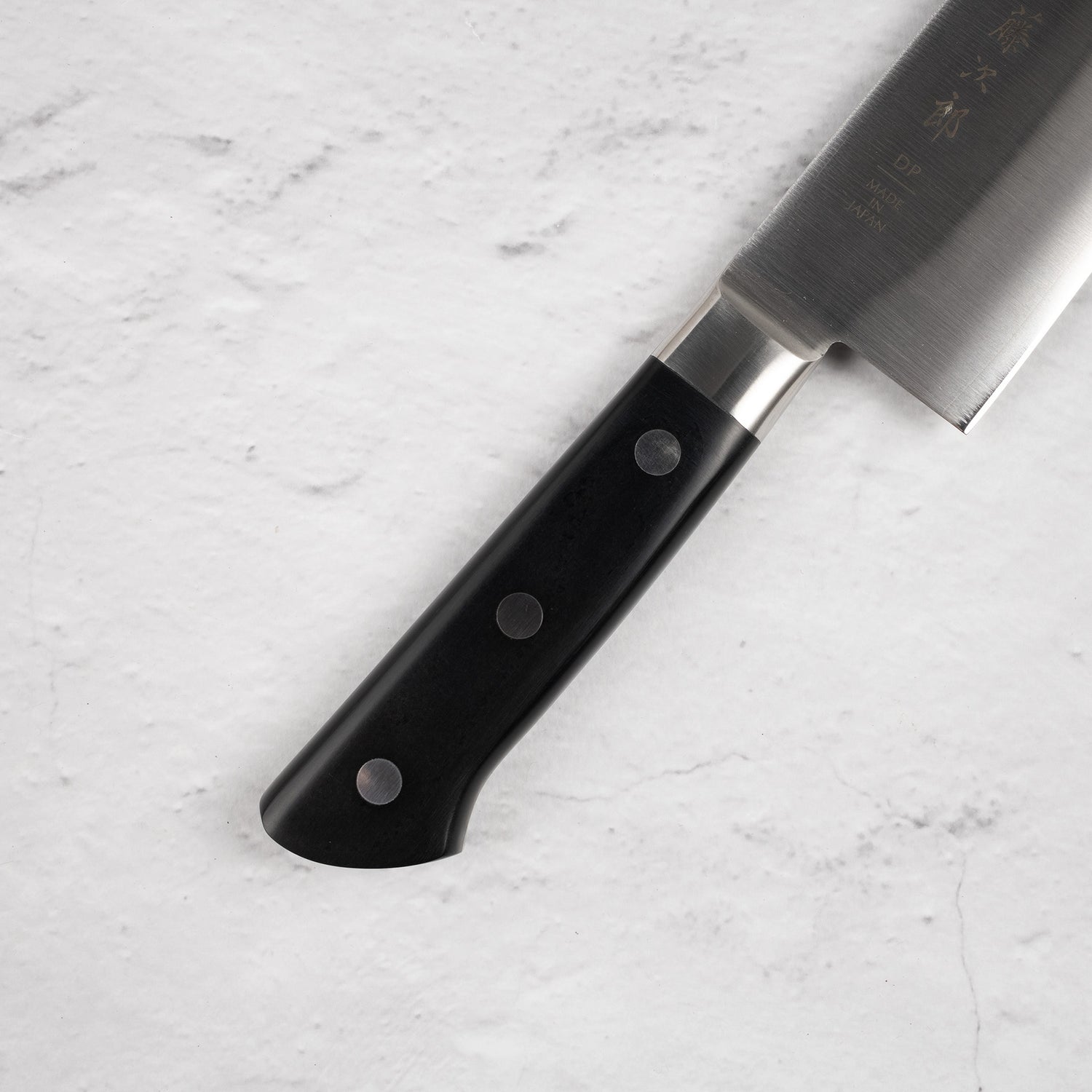
Handle Western Pakka Wood with Bolster
Region Tsubame
Best for
  • First-timers
  • Students
    • Free shipping for knives over AU$200 Australia wide.
    • World-wide shipping via DHL Express, 3 to 5 days.


    Tojiro DP is what I consider as the white Toyota equivalent in the Japanese knife market, it is affordble, massively produced by reputable manufacture with a long track record of being reliable for what you pay.

    The core steel is the Takefu VG10, a middle to high teir stainless stainless steel that is widely adopted by many makers. However, Tojiro managed to get these knives to a very low price, to a price point where you can only find steel like AUS-8. The lowered price isn't achieved by compromising on performance, as the scale of the manufacturing can still ensure the quality of the heat treating and grinding, therefore, you are still getting a blade with sharpness and edge retention on par with some other VG-10 kinves that are quite more expensive.

    The trade-offs are the fit and finish of these knives, they are fine at first glance, but a closer inspection will reveals some small issues. The spine sometimes have scratches, same for joint beteween blade and bolsters, glue can beseen on the edge of handle scales and the choil is not rounded and you can peel potato with it... You can usually find one or two tiny unfinished details like these on a Tojiro DP, but usually they aretn't something that can't be fixed by a set of sandpaper in 20mins.

    At the end of the day, the Tojiro DP will stay sharp and serve you well on chopping board, its low price and relative easy of sharpening can make it a good knife to learn sharpening on, the stainless Migaki finish can hadle some beating and scratches, these features combine into a very good entry level user knife with outstanding affordablity. Just like your first generic white Toyota, it may not have Alcntara interior, twin-turbo V8 and 4WD, but it is reliable, and able to hadle 99% of the task with a very low price.

    Pros Cons
    • Budget friendly
    • Easy to look after
    • Ideal for the household
    • Fit and finish can be improved
    Care Instruction
    1. Don't cut hard things! Japanese knives are brittle so bone hacking is a NO NO!
    2. Wash with neutral detergent after use, and wipe dry;
    3. Please don't wash knife with dishwasher, it will damage the wood handle;
    4. Be careful not to leave the knife close to a heat source for a long time;
    5. It is a lot more dangerous to cut with a blunt knife than a sharp knife!
    6. It is best to sharpen a Japanese knife regularly on a waterstone.

    Tojiro

    Tojiro — Tsubame's Global Kitchen Knife Brand

    Tojiro, a globally recognized Japanese kitchen knife brand, is celebrated for its remarkable quality and value. Rooted in the Niigata Prefecture, an area famous for steel production, Tojiro combines traditional craftsmanship with advanced technology to produce kitchen knives that excel in both form and function. Their blades, typically featuring high-carbon stainless steel, are known for their exceptional sharpness, edge retention, and corrosion resistance. Each knife undergoes meticulous finishing, ensuring ergonomic handles for comfortable grip and a well-balanced feel. Tojiro offers a diverse range of knives, from versatile gyuto and santoku styles to specialized nakiri blades, catering to both professional chefs and home cooks alike. This commitment to high quality and affordability has earned Tojiro a strong reputation worldwide, making their knives the go-to choice for reliable, efficient, and beautifully crafted kitchen tools.

    Read more

    “ICHIGO ICHIE” – ONCE IN A LIFETIME

    Beyond a single knife, while thinking of its user, TOJIRO continues to manufacture knives. Person to person, person to knife, both are “once in a lifetime”. To enrich such encounters, we manufacture knives.

    What TOJIRO can do for knives

    The history of TOJIRO knives started with stainless steel fruit knife that was released in 1955. At that time, it was said that stainless steel blades were not sharp enough compare to carbon steel. Therefore, TOJIRO pursued in earnest “cuttable knives”, realizing continuous improvement and evolution. Today, our corporate message is “More than just sharpness”.

    We wish to deliver not only sharpness, but the feeling that a knife fits comfortably in your hands as you use it, becoming your partner. We are continuing our efforts to carefully manufacture knives so that a single TOJIRO knife can provide the greatest satisfaction to our customers.

    Tradition and innovation

    Both tradition and innovation are being existed in our manufacturing process.

    Clad steel is the material that we use most in our production. It is forged in the same way of forging a traditional Japanese sword “Katana” from Tamahagane.

    On the other hand, our area, Tsubame in Niigata Prefecture, is well-known as a center of manufacturing metal products. Modern technology of metal processing has been therefore improved over the decades in here and we are good at it.

    Here we merge the tradition and the modern technology – pressing out sheet of clad steel by stamping machine. In other words, we are taking advantage of quality of clad steel and high production efficiency of modern machines.

    Although machines have allowed the process to become more efficient, the deciding factor lays, of course, in the skill and instinct of craftsmen. As knives are tools that people directly take into their hands to use, we value the skills of producers, which are the foundation of manufacturing, and keep a close eye on all processes until each craftsman at TOJIRO is completely satisfied. Our knives that are produced by traditional techniques and modern industrial technology are held in the highest regard not only in Japan, but around the world. We, TOJIRO, will continue to strive for a balance between inherited tradition and technical innovation as one of the few full-scale production kitchen knife manufactures in Japan.

    Craftsman

    The craftsman at TOJIRO would like you to feel the “joy” of using a tool with attachment. They hone their skills to manufacture worthy knives daily. As long as we are craftsmen, the road to improving our skills will never end. We are earnest about making knives daily for users. A product born such devotion is a message from maker to customer.

    From Tsubame-Sanjo to the world

    We continue to manufacture the highest quality knives in this region where the spirit and techniques of manufacturing have been handed down since ancient times. Tsubame, where TOJIRO is located, is a metal-processing industrial cluster area known as “Tsubame-Sanjo”.

    Since manufacture of Wakugi (Japanese nail) started in the early 1600s, knives, flies, pipes, copperware, metal-carving, cutlery and other products have been manufactured here, and have increased in export.

    TOJIRO has delivered products from the representative production area of Japan to the world, where professional vendors of each process have developed techniques and spirit together through friendly competition.

    “Tsubame stainless steel pioneers — bringing factory precision and value to kitchens in 50 countries.”

    Est. 1953 | 昭和28年
    Known for Affordable stainless steel knives, full in-house manufacturing, global distribution
    Website tojiro-japan.com Instagram @tojiro_jp Read more about Tojiro
    Tojiro — Tsubame
    Profile: Deba
    Profile

    Deba

    A deba knife is a traditional Japanese kitchen knife specifically designed for butchering fish, though it can also be used for poultry and other meats with smaller bones. Here are some key characteristics and features of a deba knife:

    Blade Material: Deba knives are available in various materials, including traditional carbon steels such as shirogami (white steel) and blue steel, as well as stainless steel variants like molybdenum stainless steel. Carbon steel is preferred for its excellent sharpness and edge retention, while stainless steel variants are less prone to rust.

    Blade Design: Deba knives typically have a single bevel blade, meaning they are sharpened completely on one side. This design is intended for right-handed use, though left-handed versions are available by special order.

    Blade Geometry: The blade of a deba knife is heavy and thick-spined, with a blade length ranging from 5 to 7 inches. This design, along with the weight of the knife, allows it to easily cut through fish bones and joints.

    Primary Purpose: The primary purpose of a deba knife is to break apart full fish, removing heads, fins, and bones, and filleting them. It is also suitable for butchering poultry and other meats with smaller bones.

    Technique Tips: When using a deba knife, it's recommended to allow the weight of the blade to do the work. A sturdy grip is essential, with the middle, ring, and pinkie fingers wrapped firmly around the handle. The pointer finger should be placed on the spine of the knife, while the thumb is positioned close to the heel edge of the blade to steady the strokes. When cutting through bones, downward pressure should be applied with the non-dominant hand to push the knife cleanly through.
    Composition

    VG10 Element Composition

    Compare with
      VG10
      15.0% 11.3% 7.5% 3.8% 0
      C Carbon 1.0%
      Primary hardening element. Raises hardness and wear resistance — but too much increases brittleness and corrosion susceptibility. As a reference: German 1.4112 (~0.5%) sits at the low end; VG-10 (~1.0%) is a common mid-range; SG2 (1.25–1.45%) and ZDP-189 (~3.0%) represent high and extreme ends respectively.
      C
      1.0%
      Cr Chromium 15.0%
      Raises corrosion resistance; 13%+ qualifies steel as stainless. Also improves hardenability and wear resistance. In kitchen use, higher chromium levels contribute to a slight drag or sticking sensation when cutting — a trade-off for the rust resistance it provides.
      Cr
      15.0%
      V Vanadium 0.25%
      Forms extremely hard carbides for superior edge retention. Also refines grain structure, improving toughness.
      V
      0.25%
      Mo Molybdenum 1.0%
      Improves hardenability and toughness. Boosts corrosion resistance and helps the steel hold hardness under heat.
      Mo
      1.0%
      Co Cobalt 1.55%
      Allows higher hardening temperatures, increasing hardness and wear resistance. Slightly reduces toughness at high levels.
      Co
      1.55%
      C — Carbon Cr — Chromium V — Vanadium Mo — Molybdenum Co — Cobalt
      Hardness 59–61 HRC
      555759616365+
      Steel
      VG10
      Category
      Stainless
      Manufacturer
      Takefu Special Steel, Japan 🇯🇵
      Hardness
      59–61 HRC
      Steel

      VG10

      • Manufacturer
        • Takefu Special Steel, Japan
      • Nature Stainless
      • Hardness59–61 HRC
      Takefu VG10, is a high-end stainless steel celebrated for its exceptional edge retention and sharpness. It is a popular choice among Japanese kitchen knife makers and widely used in various types of knives, including kitchen knives, folders, and fixed blades.

      VG10 achieves a hardness of around 60-61 HRC, with some makers pushing it to 62 HRC, ensuring good edge holding and stain resistance. The steel's composition includes 15% chromium (Cr) for corrosion resistance, 1% molybdenum (Mo), and 1.5% cobalt (Co) for matrix strengthening, leading to high hardness and durability. The addition of vanadium (V) refines its microstructure and, along with Cr and Mo, produces hard carbides that enhance wear resistance. VG10 is easy to sharpen, has good machinability, and supports secondary hardening with high-temperature tempering, making it suitable for blades that may undergo surface coating treatments up to about 450℃. Its well-rounded attributes make VG10 steel highly versatile, performing excellently in a range of applications from kitchen and general-purpose knives to machine blades.
      Construction: Sanmai - Stainless Clad
      Construction

      Sanmai - Stainless Clad

      Sanmai(Three-Piece) is a common construction for double bevel knives where two pieces of softer cladding steel are forgewelded to each side of a harder core steel. The harder but more brittle core steel will form the hard cutting edge after heat treating, and the softer cladding will support the core to increase the overall strength of the blade.

      The soft cladding enables the thinning process to be a lot easier than a honyaki or monosteel construction. And in the case where the cladding steel are stainless in nature, it can offer protection for the carbon or semi-stainless cores against rusting and discoluoring.

      Finish: Migaki
      Finish

      Migaki

      "Migaki" means "polished" or "shined" in Japanese, The term "Migaki finish" in the context of Japanese kitchen knives indeed does not exclusively refer to a mirror polish but encompasses a broader range of polished finishes that can vary from semi-gloss to a more refined, subtle sheen, rather than a highly reflective surface. The primary goal of a Migaki finish is to enhance the knife's functionality and aesthetic appeal, focusing on a smooth finish that improves resistance to corrosion and minimizes drag during cutting, rather than achieving a purely mirror-like appearance.

      Handle
      Handle

      Handle Specs

      • Profile Western with bolster
      • Material
        • Pakka Wood

      Western Pakka Wood handle is the common choice for entery level knives, in some cases, they will be made with bolster that is welded to the blade. The Pakka wood created by laminate wood with resin, creating a dense material that can have layers of different color. Compared with natural timber, this engineered wood is harder and absorb less water, in addition, the low cost of production makes it ideal of grip of entry level knife.

      1 / 5