
★★★★★Immaculate
Excellent fit and finish · Razor sharp out of the box · Premium handle · Thin behind the edge Lives up to the hype. Insane cutting performance. Patina is really nice
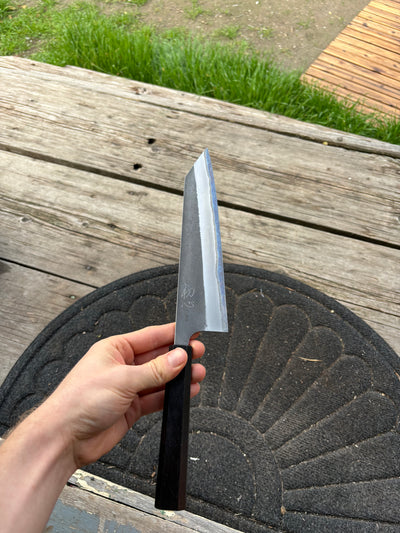



Yoshikane White 2 KU Nashiji K-tip Gyuto 210mm Stainless Clad Ebony by Hatsukokoro is backordered and will ship as soon as it is back in stock.
Sold out right now
Leave your email and we’ll send one message the moment it’s back in stock.
One email, no marketing. Privacy policy.
We match the item price, not shipping, of in-stock products from reputable specialist knife retailers. Clearance and pre-owned items excluded. Each request is checked by our team.
Delivery unavailable for this item. Available for in-store pickup only.
| Line | Hatsukokoro By Yoshikane KU White 2 Nashiji |
| Profile | K-tip Gyuto / K-tip chef's knife |
| Bevel Type | Double Bevel |
| Weight | 185 g | 6.5 oz |
| Edge Length | 212 mm | 8 11/32″ |
| Heel Height | 50 mm | 1 31/32″ |
| Width @ Heel | 3.6 mm | 9/64″ |
| Width @ Mid | 2.1 mm | 5/64″ |
| Width @ 1cm from Tip | 1.0 mm | 3/64″ |
| Steel | White 2 / Shirogami #2 | Carbon |
| Blade Construction | Sanmai - Stainless Clad |
| Typical hardness | 60 to 64 HRC |
| Surface Finish | Nashiji |
| Handle | Octagonal Ebony |
| Region | Sanjo |
| Best for |
|

| Pros | Cons |
|
|
Excellent fit and finish · Razor sharp out of the box · Premium handle · Thin behind the edge Lives up to the hype. Insane cutting performance. Patina is really nice
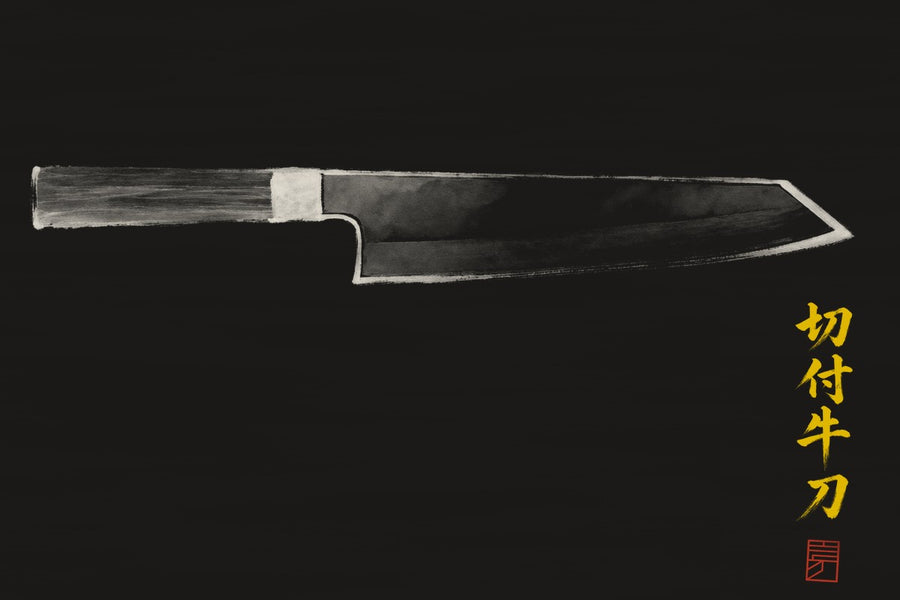
切付牛刀
K-tip chef's knife · Double bevel
Double-bevel chef's knife with an angled tip and flatter edge for push cuts and scoring.
Read moreHow hard the steel is after heat treatment, measured in HRC. Harder steel can take a thinner, sharper edge but is more likely to chip. Typical hardness: 60 to 64 HRC
How long the edge stays sharp in kitchen use before it needs sharpening. Not lab-tested; estimated from 1095 (316 mm of test card cut at 61.8 HRC, Knife Steel Nerds CATRA test, 2020). Hardness used: 61.5 HRC, the usual hardness makers sell it at. Carbon steels score lower on this abrasive test, which is why our grade also counts hardness.
How well the steel resists chipping and cracking from bones, hard boards or twisting.
How slowly the steel rusts or stains when left wet.
How quickly the steel comes back to sharp on a whetstone.
How fine an edge the steel can take and hold. Judged from the hard carbides inside it: smaller and fewer carbides allow a keener edge.
Our edge-retention grade is a kitchen rating. It weighs the hardness each steel is sold at, which keeps a thin edge from rolling, twice as heavily as lab wear tests, and the final grade is our judgment from selling and sharpening these knives for over a decade. Lab card-cutting tests measure abrasive wear only, so they can rank carbon steels lower. Tap ? for the lab figure.
白二鋼
Carbon · Hitachi Metals (now Proterial)
Proterial carbon steel, 1.05 to 1.15% carbon, no chromium or tungsten; not stainless.
Read more三枚
3 layers · stainless clad
Hard core between two stainless layers, bare only at the edge; the cladding resists rust.
Read more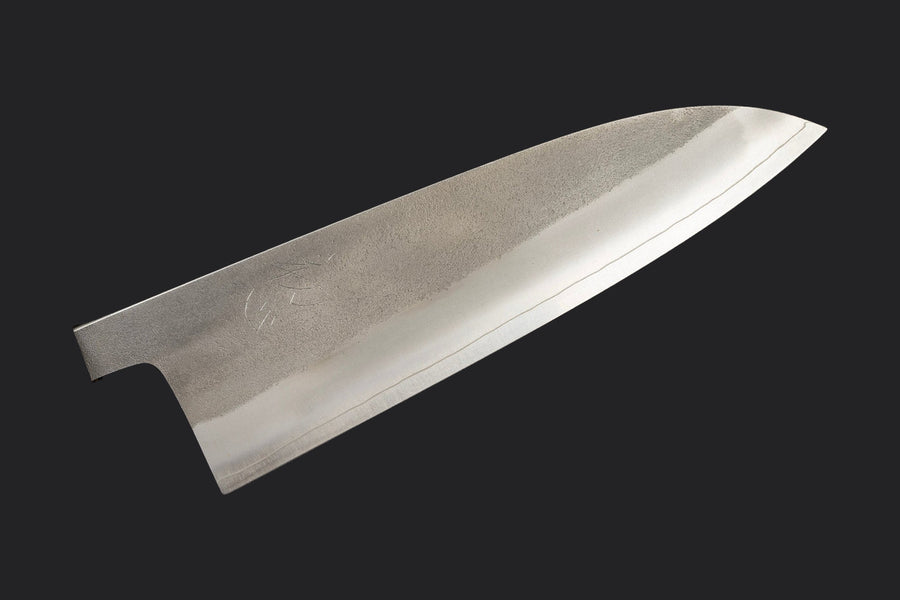
梨地
Pear-skin texture
A fine matte texture like the skin of a nashi pear. It may help food release.
Read more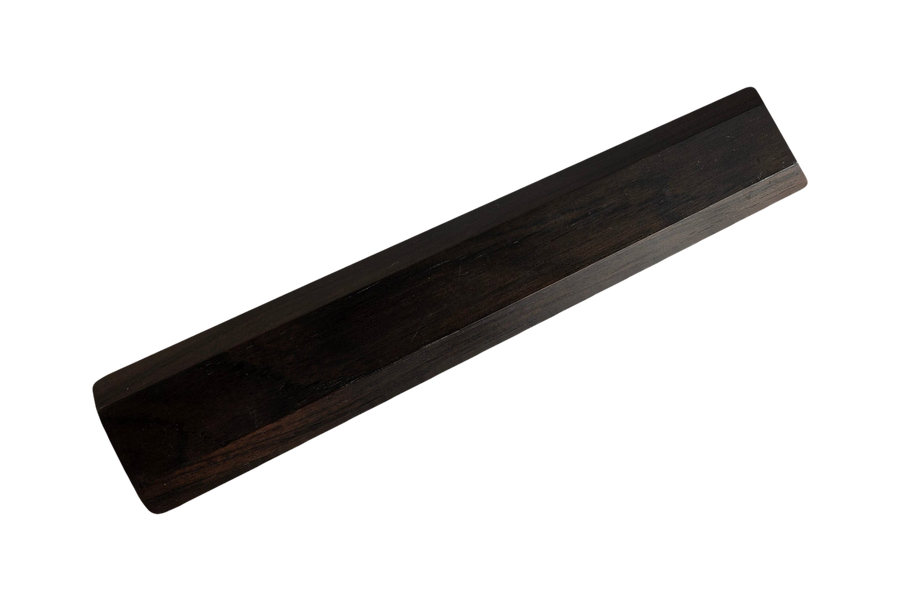
Octagonal WA
Dense, dark ebony in the eight-sided wa shape. The flats give a sure grip for either hand.

This Yoshikane Hamono K-tip Gyuto 210mm features a White 2 carbon steel core with stainless cladding, best fitting professional chefs and enthusiasts who require precise tip control in a general-purpose knife. The double-bevel kiritsuke gyuto profile pairs an angled K-tip point with a flatter edge optimised for push-cutting and long slicing strokes, while the sharply defined tip excels at scoring and detailing work. This Hatsukokoro line has a nashiji surface finish, and this knife measures 212mm in edge length.
The blade is sanmai constructed with stainless cladding over reactive White 2 steel, offering easier care than exposed carbon while retaining the sharpening characteristics of Shirogami #2. It features an ultra-thin Sanjo grind that is thin behind the edge, with spine thickness measuring 3.6mm at the heel, 2.1mm at mid, and 1.0mm at the tip. Weighing 185g with a 50mm heel height, this knife balances precision geometry with practical kitchen weight.
An octagonal ebony handle provides a tapered grip with minimalist geometric styling. It is made by Yoshikane Hamono in Sanjo, Niigata, a workshop founded in 1919, in White 2 steel. The combination of stainless-clad construction and precise K-tip geometry suits users seeking deliberate, tip-led cutting performance in a double-bevel chef's knife.