Crows Nest store now open from Friday to Tuesday, 10am till 6pm.

Kintaro  |  SKU: KATO_VGBDA_KGY210EB

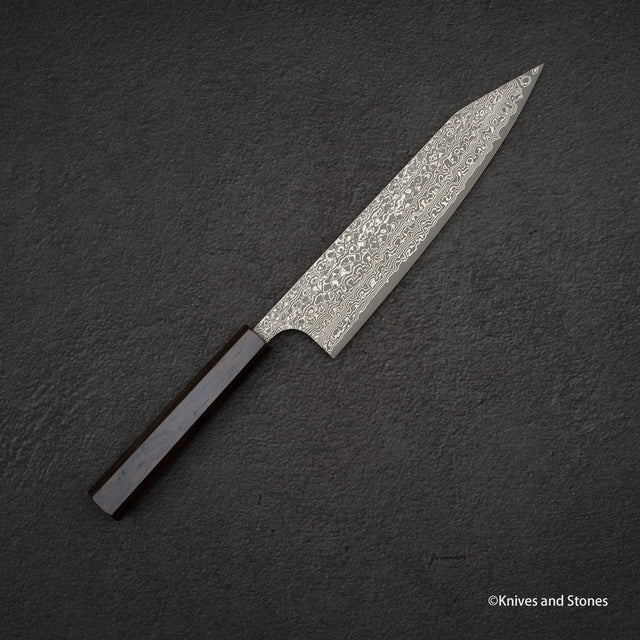
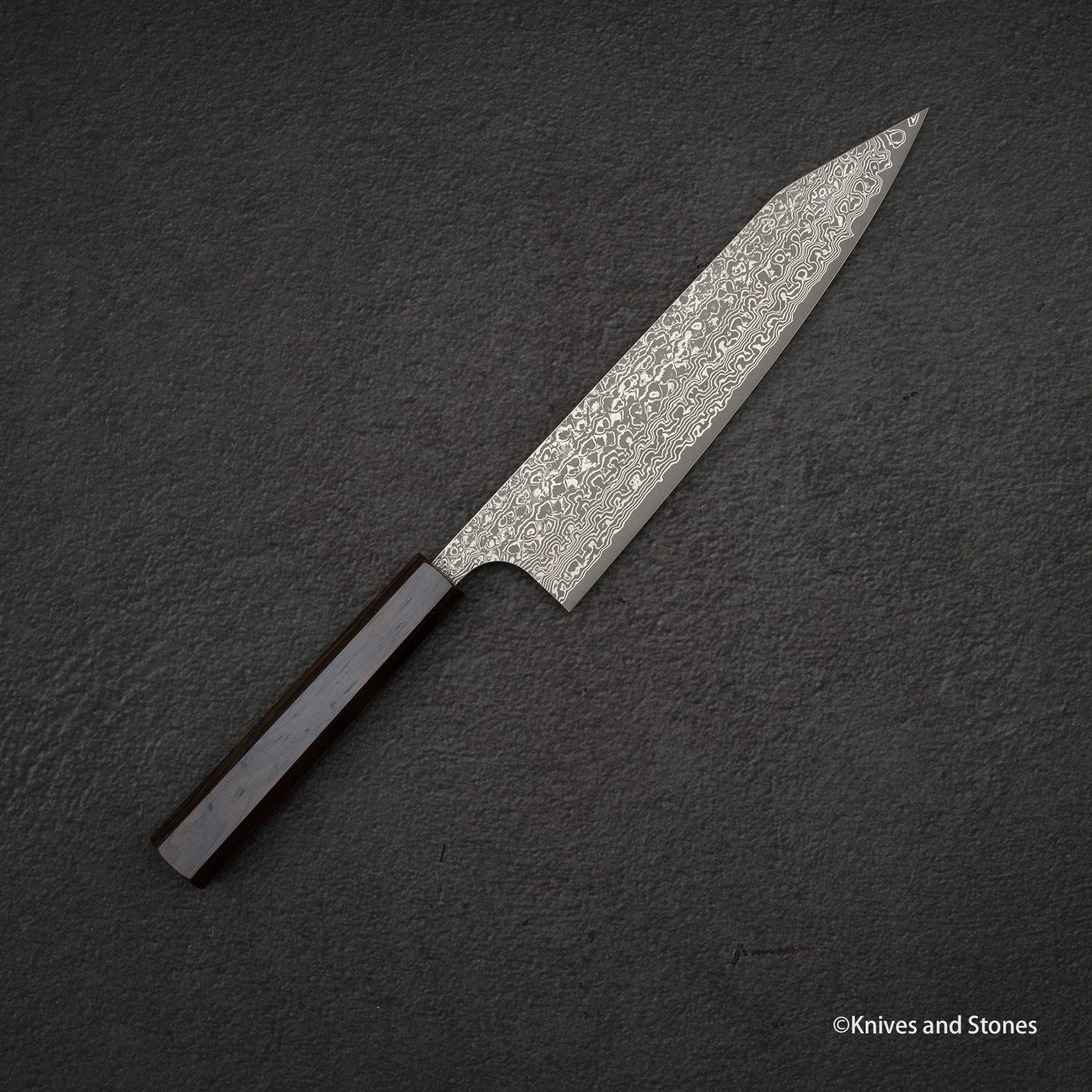
Yoshimi Kato VG10 Etched Damascus K-tip Gyuto 210mm Ebony Handle

Sale price $382.99 Regular price $449.95

Availability

  • St Peters (Online/Showroom)
    2 Bishop St Unit 2 St Peters NSW 2044
  • Crows Nest (Storefront)
    107 West St, Crows Nest NSW 2065
    Pickup only
Detailed Specifications
Line Yoshimi Kato VG10 Kurozome Damascus
Profile K-tip Gyuto / Chefs Knife
Bevel Type Double Bevel
Weight 164 g | 5.8 oz
Edge Length 215 mm | 8 15/32″
Heel Height 47 mm | 1 27/32″
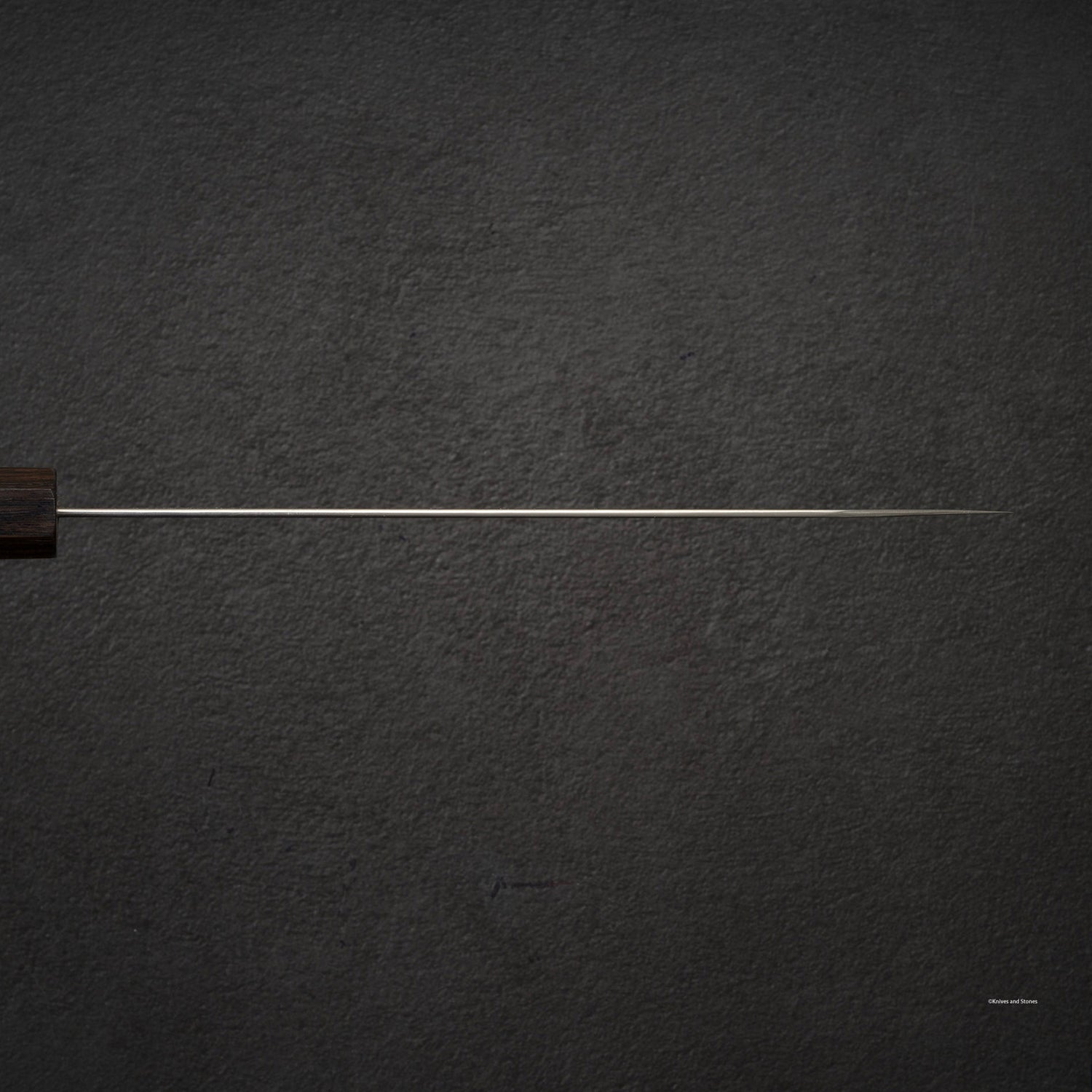
Width @ Heel 1.7 mm | 1/16″
Width @ Mid 2.0 mm | 5/64″
Width @ 1cm from Tip 0.5 mm | 1/64″
Steel VG10 | Stainless
Blade Construction Sanmai - Stainless Damascus Clad
Hardness (HRC) 59 - 61
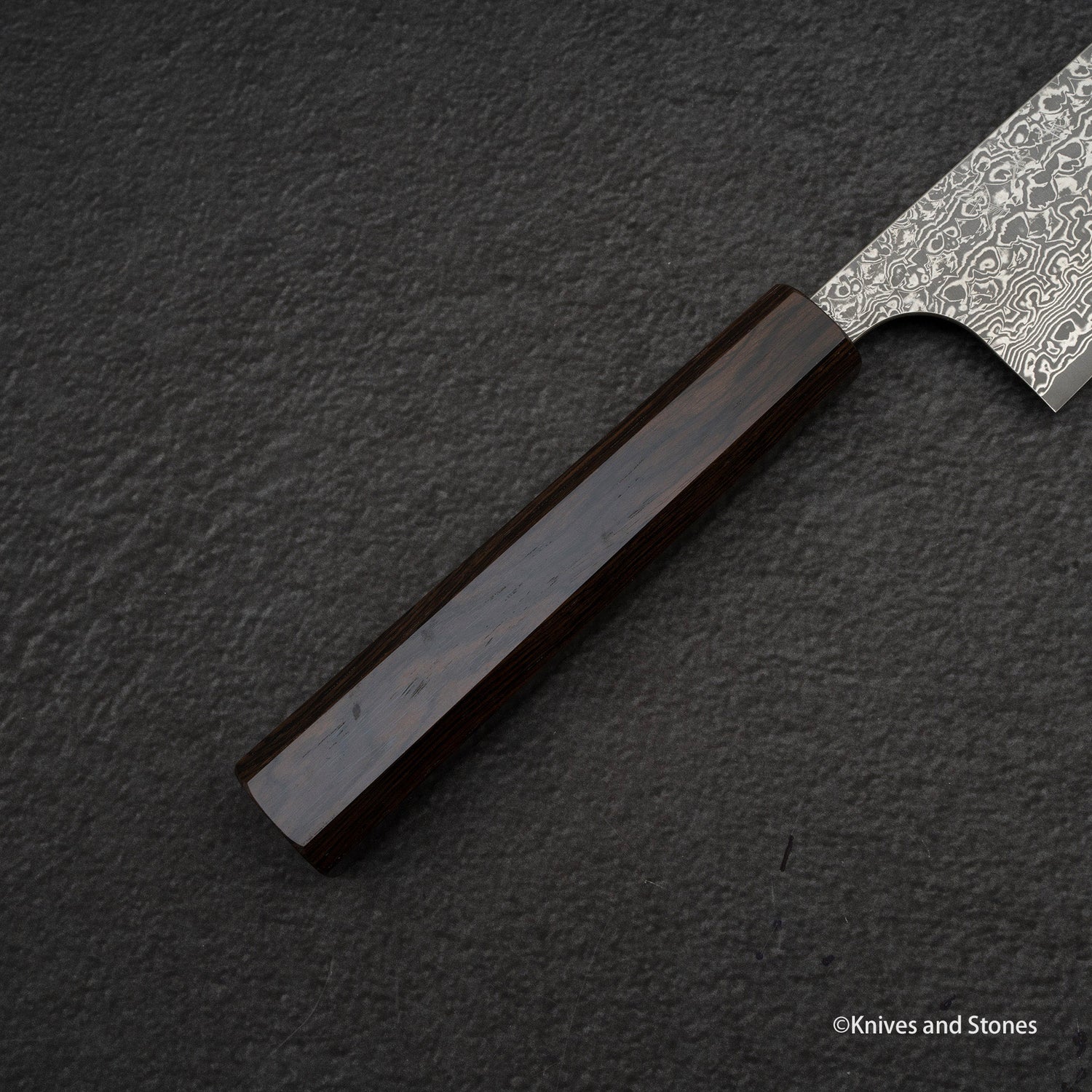
Handle Octagonal Ebony
Region Echizen
Best for
  • Enthusiasts
  • Pro chefs
  • Free shipping for knives over AU$200 Australia wide.
  • World-wide shipping via DHL Express, 3 to 5 days.


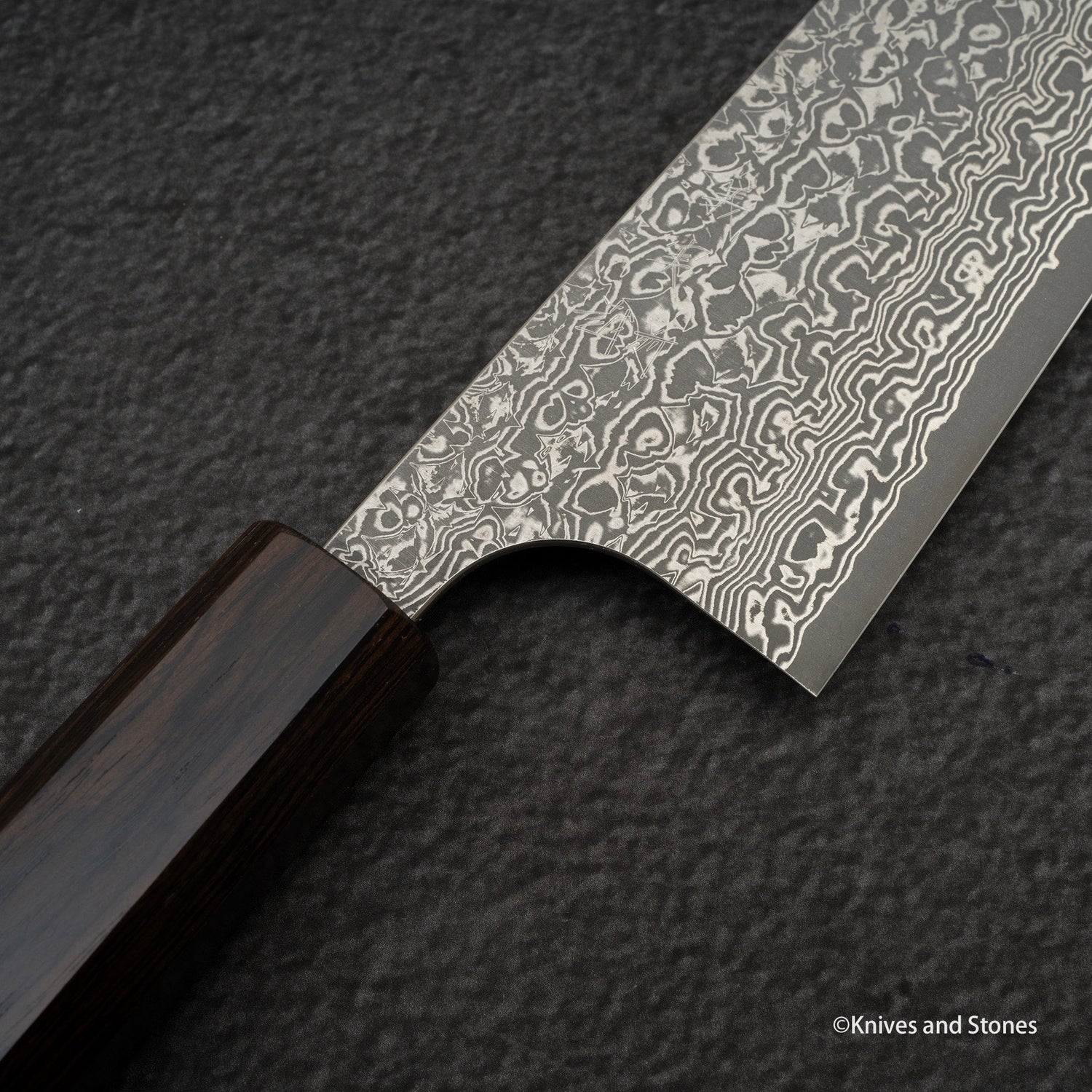
This VG10 line forged by Yoshimi Kato is one of the most elegant knife I've ever seen, the geomety, profile and finish are all dialed in precisely and combined into a package that offers great cutting performance and appearance.

As a managerial member of the Takefu Knife Village, Yoshimi Kato works closely with Yu Kurosaki, the current representative of this leading association in the industry. As a result, their knives shares many similarities like very thin grind, innovative finishing and high level of finish.

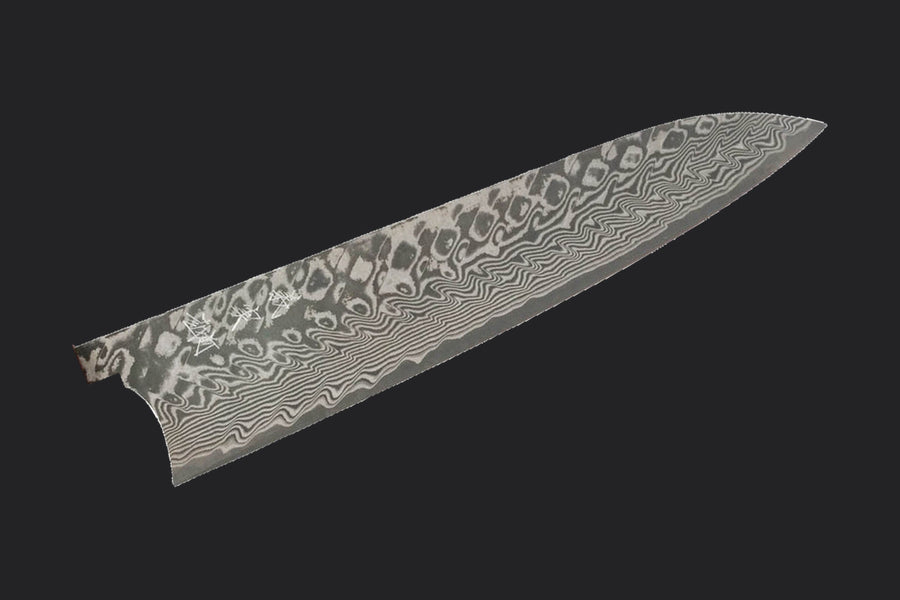
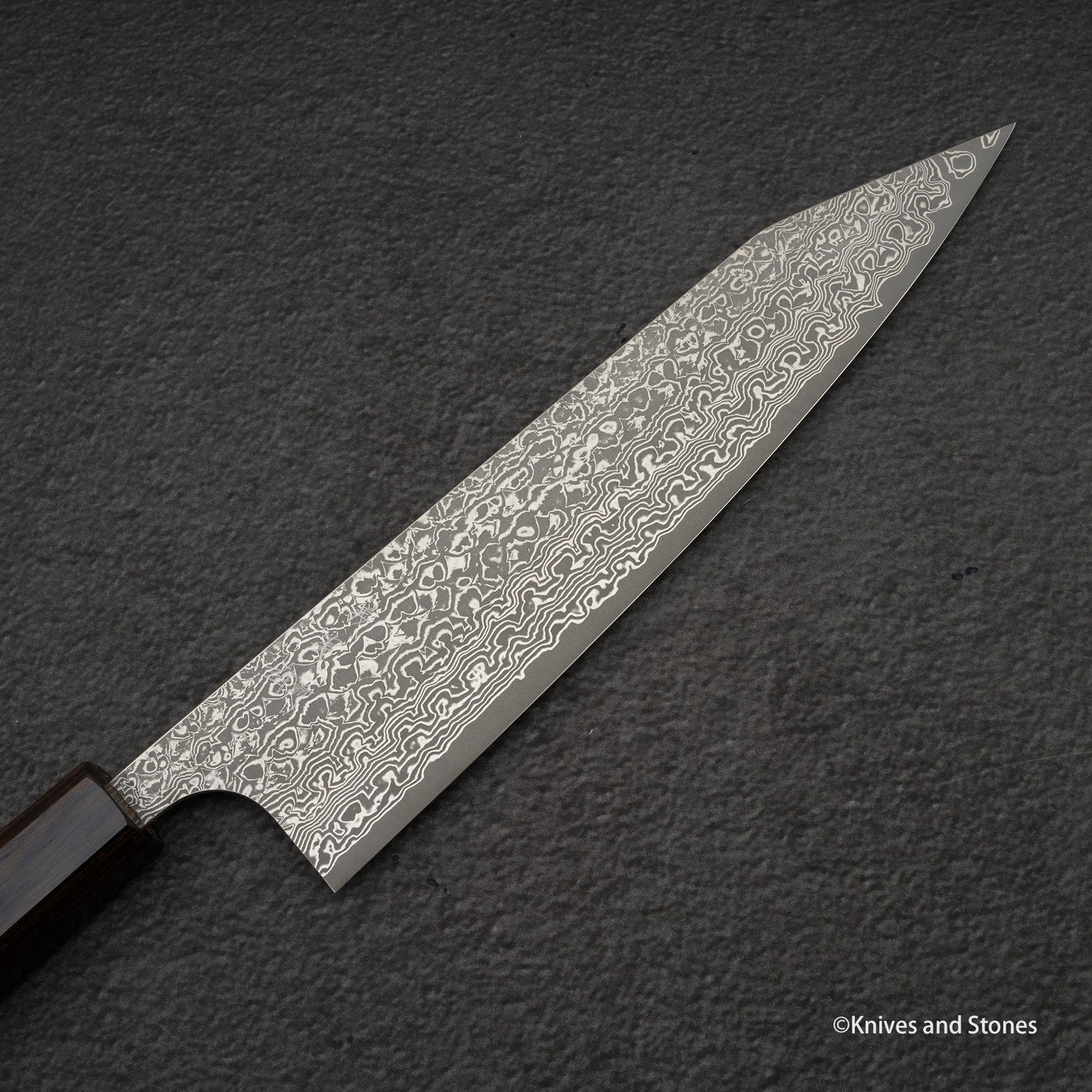
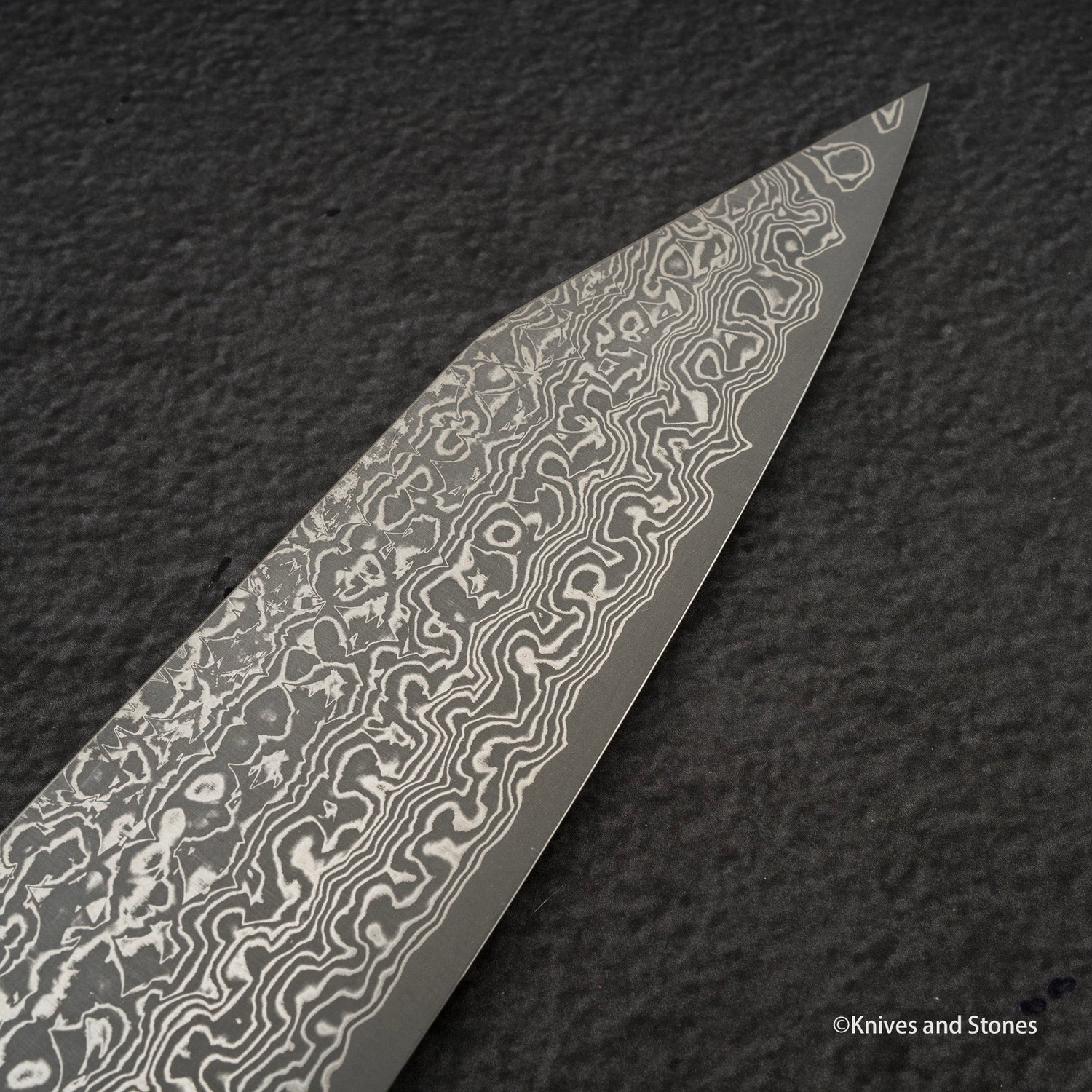
This line is a good representative of those features: the blades takes a slender profile, with a thin neck, the length is measured from the heel, which leads to a long, elegant knife which is good for slicing; the fit and finish is excellent, all the exposed cornes are rounded and polished, with the spine being polished all the way to the tip; damascus pattern is uniform, paired with a Kurozome etching, leads to a dazzling look with quite a high contrast.

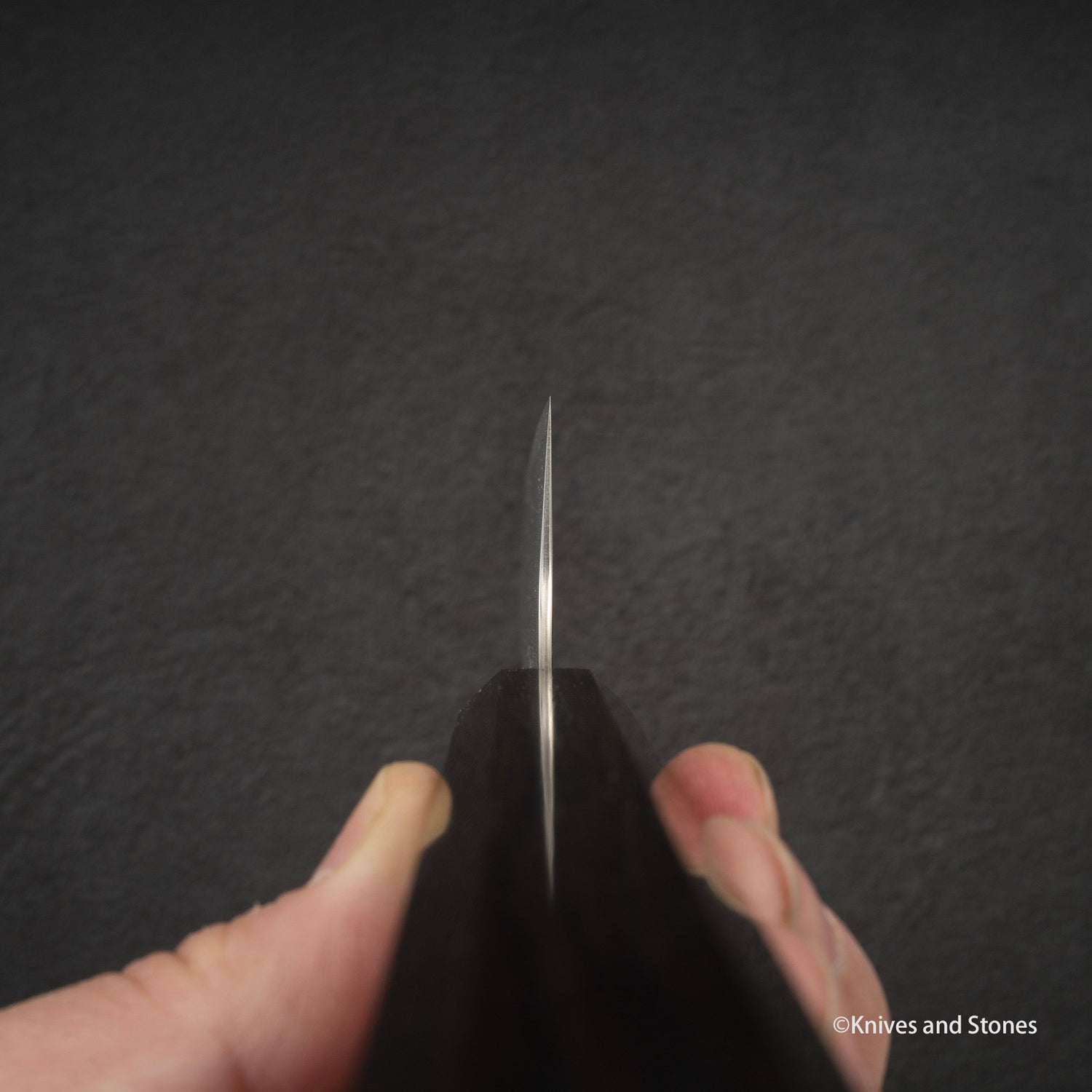
Besides the look, these thin blades cuts extremely well, due to the bevel that starts half way of the blade, there is nearly no sticking compair with other knife with same finish, the potato slice still automatically peel off naturally with a relatively thin slice. Spliting roots and slicing iup oninion is a breeze, as the thin blade offers superb food penetration and minimal resistance throughout the cut.

One downside I can say about this line is the core steel, at its price, you can have a lot more options that use SG2 as core steel, which offers more edge retension and hardness compare to VG10. The etched finish can take a more obvious mark when scratched. However, by going one step down in core steel, you would gain a much higher level of craftsmanship, this knife is definitely ranked at the top for the users seek ultimate level of finish and wouldn't mind a different core steel.

Video Review

Pros Cons
  • Excellent performance
  • Thin behind the edge
  • Great artistic
  • High budget
  • Etched damascus can be hard to maintain
Care Instruction
  1. Don't cut hard things! Japanese knives are brittle so bone hacking is a NO NO!
  2. Wash with neutral detergent after use, and wipe dry;
  3. Please don't wash knife with dishwasher, it will damage the wood handle;
  4. Be careful not to leave the knife close to a heat source for a long time;
  5. It is a lot more dangerous to cut with a blunt knife than a sharp knife!
  6. It is best to sharpen a Japanese knife regularly on a waterstone.

Yoshimi Kato

Yoshimi Kato — The Master of Damascus in Takefu

Kato Knife Manufacturing Inc., spearheaded by Yoshimi Kato, is a renowned entity in the Takefu Knife Village, known for its exquisite craftsmanship in knife-making. Yoshimi Kato, originally a construction project manager, married into the Kato family and apprenticed under his father-in-law Hiroshi Kato — one of the co-founders of Takefu Knife Village. Despite his unconventional start, Yoshimi took over the smithy after just five years and earned his traditional craftsman certification (伝統工芸士) in 2008. The company's focus on hand-forged Damascus and masterful heat treatment of high-end steels has made Kato one of the most sought-after makers in Echizen.

Read more

Kato Knife Manufacturing — or カトウ打刃物製作所 — has its roots in the postwar era of Echizen blade-making. The workshop traces back to 1948, when the Kato family first established themselves in what would eventually become the Takefu Knife Village cooperative. Hiroshi Kato (加藤 弘), the second-generation master, spent over fifty years at the anvil and was instrumental in co-founding the Takefu Knife Village itself — the cooperative that would bring together some of Echizen's finest blacksmiths under one roof.

Yoshimi Kato's path to the forge is one of the more unusual ones in the industry. Before picking up a hammer, he worked as a project manager in construction. It was only after marrying into the Kato family that he began his apprenticeship under Hiroshi. What makes his story remarkable is the speed — Yoshimi took over the smithy after just five years, a timeline that typically takes fifteen or more. He trained alongside Yu Kurosaki and other masters at Takefu Knife Village, absorbing decades of collective knowledge at an extraordinary pace. In 2008, he earned his certification as a traditional craftsman (伝統工芸士), and in 2018 he formally took over the business.

Today, Kato is best known internationally as the “Master of Damascus.” His multi-layer Damascus patterns are among the most striking in the industry, but what sets him apart is the consistency of his heat treatment across a wide range of steels — from SG2 and VG10 to Aogami Super and Ginsan. Every step of production happens in-house, giving him complete control over the final product. The Kintaro and Kanehiro lines, both produced under the Kato workshop, have built a devoted following among enthusiasts who value the combination of visual artistry and genuine cutting performance.

“Echizen's master of Damascus — three generations of forging excellence from Takefu Knife Village.”

Est. 1948 | 昭和23年
Known for Hand-forged Damascus, masterful heat treatment of SG2 and Aogami Super
Website kato-knife-mfg.jp Read more about Yoshimi Kato
Yoshimi Kato — Echizen
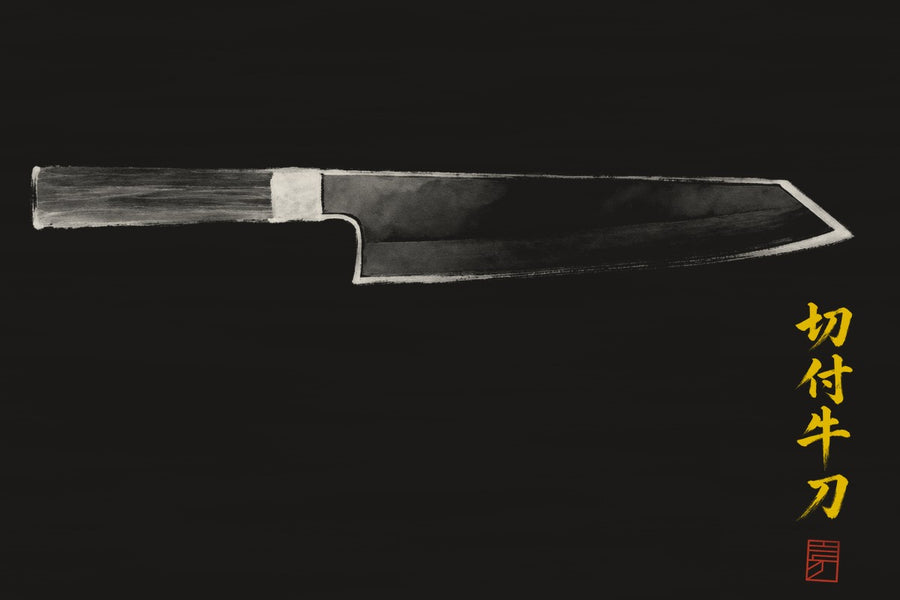
Profile: K-tip Gyuto
Profile

K-tip Gyuto

Chefs Knife

The K-tip Gyuto — known in Japanese as kiritsuke gyuto (切付牛刀) — is a double-bevelled chef's knife that pairs the all-purpose body of a standard gyuto with a kiritsuke-style tip: an angled, clipped "k-tip" point in place of the gyuto's curved belly. Combined with a flatter edge profile, this gives two advantages. The sharply defined tip excels at precise work — scoring, detailing and picking — while the flatter edge is optimised for clean push-cutting and long slicing strokes. It remains a versatile general-purpose knife, but rewards a chef who works with deliberate, tip-led precision.

A note on naming: the K-tip (or "Kiritsuke") Gyuto is a double-bevelled knife and should not be confused with the traditional Kiritsuke (切付け) — a single-bevelled knife that is a genuinely different tool. Many retailers list the two interchangeably; at Knives and Stones we keep them distinct so you know exactly what you're buying.
Composition

VG10 Element Composition

Compare with
    VG10
    15.0% 11.3% 7.5% 3.8% 0
    C Carbon 1.0%
    Primary hardening element. Raises hardness and wear resistance — but too much increases brittleness and corrosion susceptibility. As a reference: German 1.4112 (~0.5%) sits at the low end; VG-10 (~1.0%) is a common mid-range; SG2 (1.25–1.45%) and ZDP-189 (~3.0%) represent high and extreme ends respectively.
    C
    1.0%
    Cr Chromium 15.0%
    Raises corrosion resistance; 13%+ qualifies steel as stainless. Also improves hardenability and wear resistance. In kitchen use, higher chromium levels contribute to a slight drag or sticking sensation when cutting — a trade-off for the rust resistance it provides.
    Cr
    15.0%
    V Vanadium 0.25%
    Forms extremely hard carbides for superior edge retention. Also refines grain structure, improving toughness.
    V
    0.25%
    Mo Molybdenum 1.0%
    Improves hardenability and toughness. Boosts corrosion resistance and helps the steel hold hardness under heat.
    Mo
    1.0%
    Co Cobalt 1.55%
    Allows higher hardening temperatures, increasing hardness and wear resistance. Slightly reduces toughness at high levels.
    Co
    1.55%
    C — Carbon Cr — Chromium V — Vanadium Mo — Molybdenum Co — Cobalt
    Hardness 59–61 HRC
    555759616365+
    Steel
    VG10
    Category
    Stainless
    Manufacturer
    Takefu Special Steel, Japan 🇯🇵
    Hardness
    59–61 HRC
    Steel

    VG10

    • Manufacturer
      • Takefu Special Steel, Japan
    • Nature Stainless
    • Hardness59–61 HRC
    Takefu VG10, is a high-end stainless steel celebrated for its exceptional edge retention and sharpness. It is a popular choice among Japanese kitchen knife makers and widely used in various types of knives, including kitchen knives, folders, and fixed blades.

    VG10 achieves a hardness of around 60-61 HRC, with some makers pushing it to 62 HRC, ensuring good edge holding and stain resistance. The steel's composition includes 15% chromium (Cr) for corrosion resistance, 1% molybdenum (Mo), and 1.5% cobalt (Co) for matrix strengthening, leading to high hardness and durability. The addition of vanadium (V) refines its microstructure and, along with Cr and Mo, produces hard carbides that enhance wear resistance. VG10 is easy to sharpen, has good machinability, and supports secondary hardening with high-temperature tempering, making it suitable for blades that may undergo surface coating treatments up to about 450℃. Its well-rounded attributes make VG10 steel highly versatile, performing excellently in a range of applications from kitchen and general-purpose knives to machine blades.
    Construction: Sanmai - Stainless Damascus Clad
    Construction

    Sanmai - Stainless Damascus Clad

    Sanmai(Three-Piece) is a common construction for double bevel knives where two pieces of softer cladding steel are forgewelded to each side of a harder core steel. The harder but more brittle core steel will form the hard cutting edge after heat treating, and the softer cladding will support the core to increase the overall strength of the blade.

    Damascus Sanmai utilize damascus steel as the cladding material for the Sanmai construction, which adds aesthetic feature to the blade. On the Kitchen knives with stainless core steel, the damascus cladding will be stainless, this means they will also protect the carbon/semi-stainless core from rusting/discolouration.

    The soft cladding enables the thinning process to be a lot easier than a honyaki or monosteel construction. However, when the cladding is made of damascus, whether etched, polished or mirror polished, the thinning process will take a toll on the cladding, meaning the damascus won't look the same as when it was taken out of the box.

    Handle
    Handle

    Octagonal Ebony

    • Profile Octagonal WA
    • Material
      • Ebony

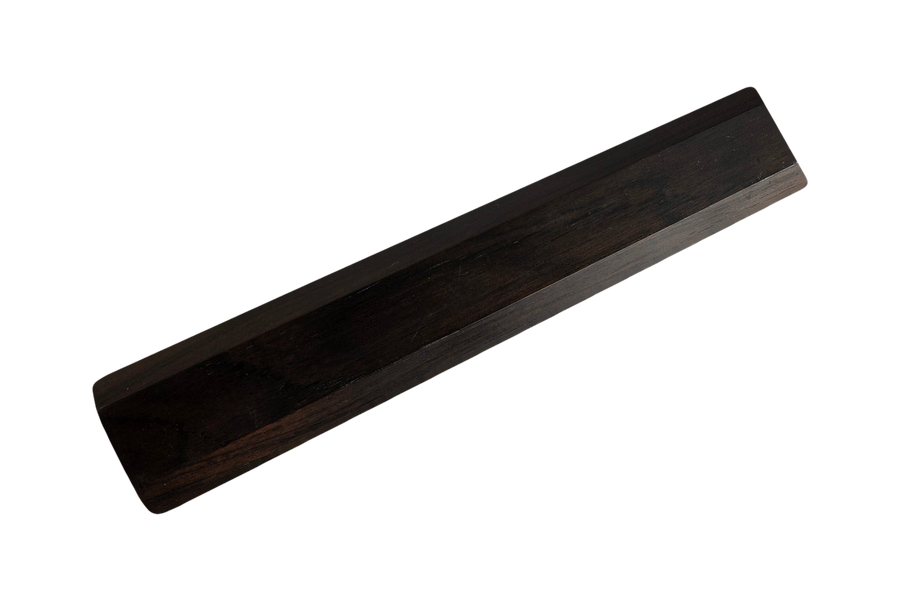
    This handle, crafted from a single piece of ebony, exemplifies minimalist elegance and functional design. Its unique octagonal shape, featuring a subtle taper, offers a comfortable grip and a visually appealing geometric profile. The ebony wood, known for its deep, rich color and durability, has been meticulously milled from a single block, ensuring a seamless construction that highlights the wood's natural beauty and grain. The handle's surface has been highly polished, achieving a glossy finish that not only enhances the ebony's luxurious dark hue but also provides a smooth, tactile experience for the user. This design choice reflects a minimalist approach, focusing on simplicity, quality, and usability. The combination of the octagonal shape with the taper adds a modern twist to the classic material, making it a standout piece that blends traditional craftsmanship with contemporary aesthetics.

    1 / 4

    Frequently asked questions

    Is a K-tip Gyuto the same as a traditional Kiritsuke?

    Not quite - and it is the single most common point of confusion when people shop for a kiritsuke. The two knives share the same striking angled, reverse-tanto tip, but underneath that tip they are very different tools.

    A K-tip gyuto is a double-bevel knife: it is ground on both sides like any Western-style chef's knife, so it is ambidextrous, forgiving to use, and sharpened exactly the way you would sharpen a normal gyuto. You get the dramatic kiritsuke look with the everyday usability of an all-purpose chef's knife.

    A traditional kiritsuke - including the kiritsuke-yanagiba (slicer) and kiritsuke-gyuto shapes - is a single-bevel knife, ground on one side only. It is historically a master chef's knife: it takes real practice to use well, is set up for right-handed users by default, and needs single-bevel sharpening technique to maintain.

    So if you want the kiritsuke silhouette with no learning curve, choose a K-tip gyuto. If you specifically want the traditional single-bevel discipline - and the precision it allows on fish and vegetables - choose a true kiritsuke. At Knives and Stones we stock both, and each product page tells you which construction you are looking at.

    ✓ Verified by Knives and Stones · James Zhang · Reviewed 29 May 2026

    You May Also Like