


Hatsukokoro x Nigara Yorokobi Full Polish SLD K-tip Gyuto 210mm Black Damascus Birch
Hatsukokoro x Nigara Yorokobi Full Polish SLD K-tip Gyuto 210mm Black Damascus Birch is backordered and will ship as soon as it is back in stock.
Availability
Delivery unavailable for this item. Available for pickup at Crows Nest only.
-
St Peters —2 Bishop St Unit 2 St Peters NSW 2044
-
Crows Nest —107 West St, Crows Nest NSW 2065Pickup only
Detailed Specifications
| Line | Hatsukokoro x Nigara SLD Yorokobi Special |
| Profile | K-tip Gyuto / Chefs Knife |
| Bevel Type | Double Bevel |
| Weight | 172 g 6.07 oz |
| Edge Length | 195 mm .7.68 inch |
| Heel Height | 47 mm .1.85 inch |
| Width @ Spine | 2.6 mm 0.1 inch |
| Width @ Mid | 1.9 mm 0.07 inch |
| Width @ 1cm from Tip | 0.9 mm 0.04 inch |
| Steel | SLD | Stainless |
| Blade Construction | Sanmai - Stainless Damascus Clad |
| Hardness (HRC) | 62 - 64 |
| Surface Finish | Kurouchi |
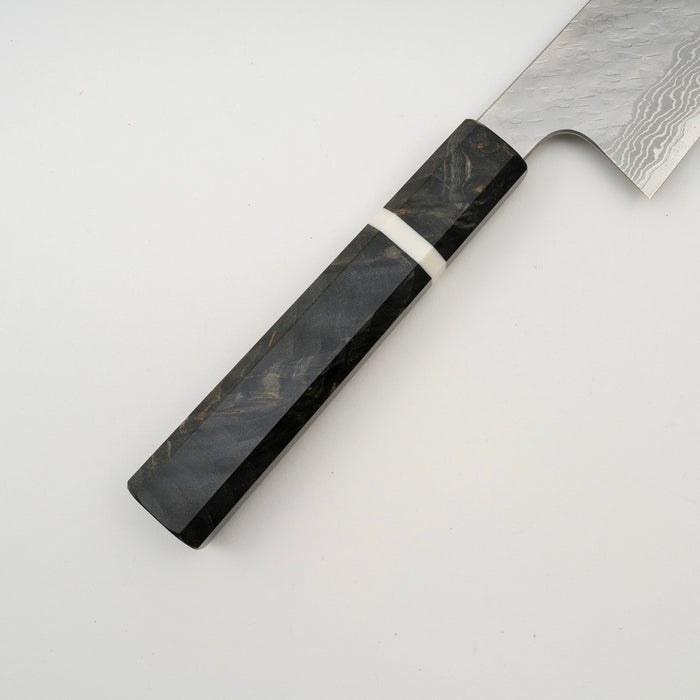
| Handle | Octagonal Birch Burl with Spacer |
| Region | Aomori |
| Best for |
|
This Hatsukokoro x Nigara Yorokobi K-tip Gyuto 210mm features an SLD steel core with Black Damascus cladding and a stabilised birch handle, best fitting chefs who require precise tip control for scoring and detailing alongside general push-cutting tasks. The double-bevelled kiritsuke gyuto profile pairs a standard gyuto body with an angled k-tip point and flatter edge geometry optimised for clean slicing strokes and deliberate precision work.
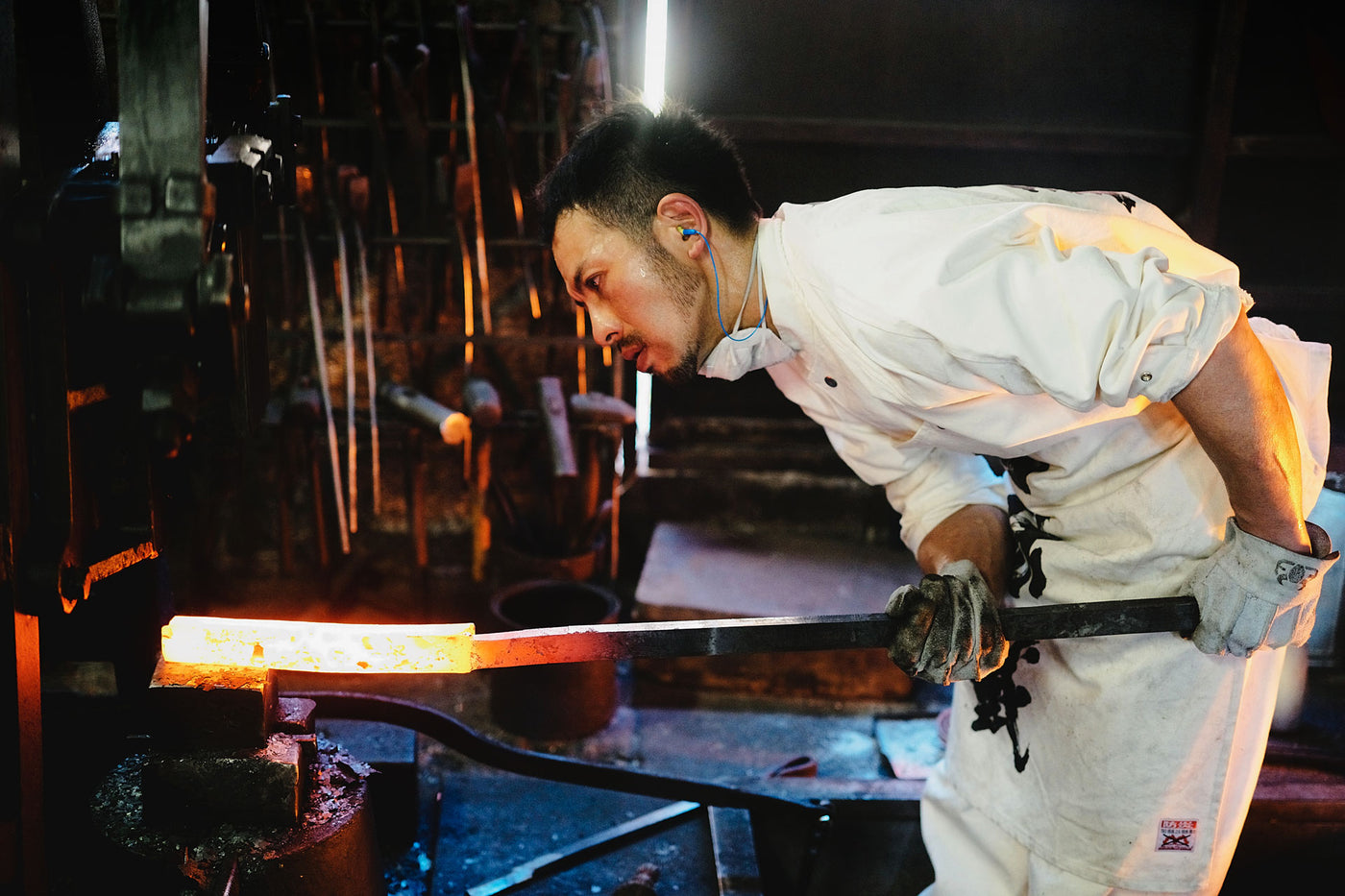
Hitachi SLD steel measures 62-64 HRC and is classified as stainless, offering edge retention through molybdenum and vanadium carbides while requiring less maintenance than reactive carbon steels. The san-mai stainless damascus clad construction displays a kurouchi surface finish on the blade face. Specifications include a 195mm edge length, 47mm heel height, and spine thickness measuring 2.6mm at the heel, 1.9mm at mid, and 0.9mm at the tip. Weighing 172g, this knife features an octagonal stabilised birch handle and is forged by Nigara in Aomori, a maker established in 1949 known for inherited Tsugaru sword smith traditions and modern metalworking technology.
- Don't cut hard things! Japanese knives are brittle so bone hacking is a NO NO!
- Wash with neutral detergent after use, and wipe dry;
- Please don't wash knife with dishwasher, it will damage the wood handle;
- Be careful not to leave the knife close to a heat source for a long time;
- It is a lot more dangerous to cut with a blunt knife than a sharp knife!
- It is best to sharpen a Japanese knife regularly on a waterstone.
-

Profile: K-tip Gyuto
Chefs Knife
Slide for more >>
-

Steel: SLD
Manufacturer:
Nature: Stainless
Hardness: 62- 64
<< Slide for more >>
-
Handle Specs
Profile: Octagonal WA
Material:
<< Slide for more


