

Yu Kurosaki Shizuku SG2 Nakiri 165mm
Yu Kurosaki Shizuku SG2 Nakiri 165mm is backordered and will ship as soon as it is back in stock.
Availability
Delivery unavailable for this item. Available for in-store pickup only.
-
St Peters, NSW —2 Bishop St, Unit 2, St Peters NSW 2044
-
Crows Nest, NSW —107 West St, Shop 1, Crows Nest NSW 2065Pickup only
-
Prahran, VIC —180 Commercial Road, Shop 1, Prahran VIC 3181Pickup only
Detailed Specifications
| Profile | Nakiri / Japanese Vegetable Knife |
| Bevel Type | Double Bevel |
| Weight | 162 g 5.71 oz |
| Edge Length | 160 mm .6.3 inch |
| Heel Height | 50 mm .1.97 inch |
| Width @ Spine | 2.0 mm 0.08 inch |
| Width @ Mid | 1.6 mm 0.06 inch |
| Width @ 1cm from Tip | 1.6 mm 0.06 inch |
| Steel | SG2 / R2 | {{ lbl_powdered }} Stainless |
| Hardness (HRC) | 62 - 64 |
| Handle | Octagonal Ebony |
The Yu Kurosaki Shizuku SG2 Nakiri 165mm is a double-bevel Japanese vegetable knife best fit for users requiring straight push cuts through produce. This 165mm blade features a relatively flat edge profile that maintains full contact with the chopping board during downward motion, ensuring clean separation without rocking. The rounded tip provides operational safety while the thin double bevel geometry allows effective penetration of firm vegetables.
Constructed from stainless SG2 powdered steel by Takefu Special Steel, this knife measures 62-64 HRC and offers high wear resistance with uniform carbide distribution to reduce chipping risks. The blade has a 2.0mm spine thickness at the heel, tapering to 1.6mm at the mid-point and tip, with a 50mm heel height and 162g total weight. These specifications support precise vegetable preparation where edge retention and durability are prioritised, utilising a steel composition containing 1.25% carbon, 14% chromium, 2.3% molybdenum, and 1.8% vanadium for sustained sharpness in repetitive chopping tasks.
- Don't cut hard things! Japanese knives are brittle so bone hacking is a NO NO!
- Wash with neutral detergent after use, and wipe dry;
- Please don't wash knife with dishwasher, it will damage the wood handle;
- Be careful not to leave the knife close to a heat source for a long time;
- It is a lot more dangerous to cut with a blunt knife than a sharp knife!
- It is best to sharpen a Japanese knife regularly on a waterstone.
-
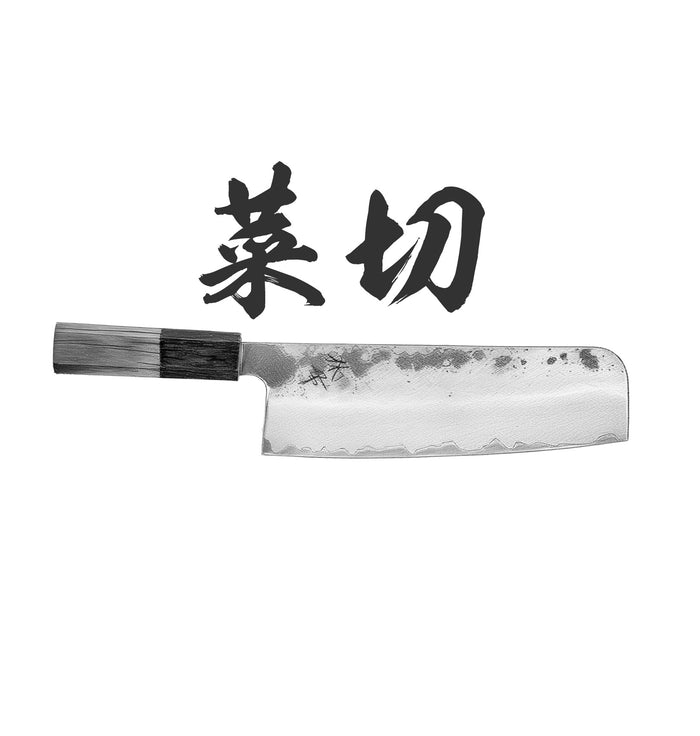
Profile: Nakiri
Japanese Vegetable Knife
Slide for more >>
-
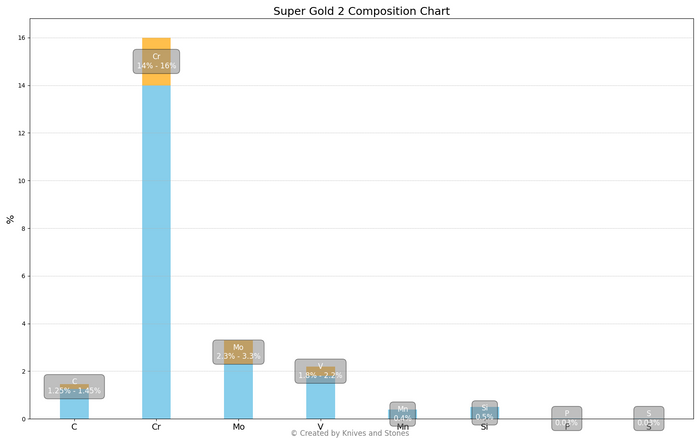
Steel: SG2 / R2
Manufacturer:
Nature: Stainless
Hardness: 62- 64
<< Slide for more >>
-
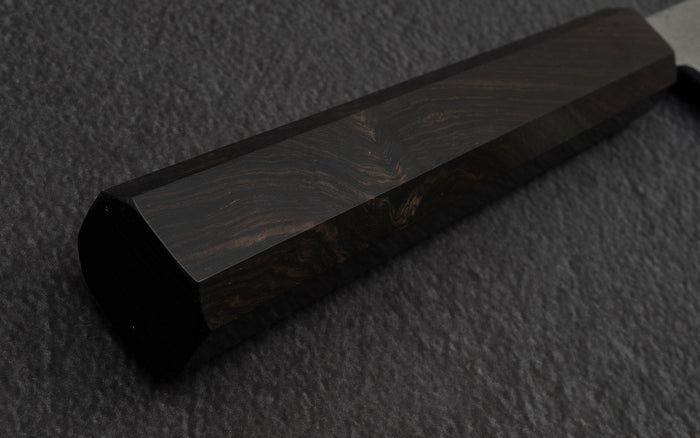
Handle Specs
Profile: Octagonal WA
Material:
<< Slide for more