


Mazaki White 2 Kurouchi Gyuto 210mm
Mazaki White 2 Kurouchi Gyuto 210mm is backordered and will ship as soon as it is back in stock.
Availability
Delivery unavailable for this item. Available for pickup at Crows Nest only.
-
St Peters —2 Bishop St Unit 2 St Peters NSW 2044
-
Crows Nest —107 West St, Crows Nest NSW 2065Pickup only
Detailed Specifications
| Line | Mazaki White 2 Kurouchi |
| Profile | Gyuto / Chefs Knife |
| Bevel Type | Double Bevel |
| Weight | 206 g 7.27 oz |
| Edge Length | 217 mm .8.54 inch |
| Heel Height | 51 mm .2.01 inch |
| Width @ Spine | 5.9 mm 0.23 inch |
| Width @ Mid | 2.1 mm 0.08 inch |
| Width @ 1cm from Tip | 0.9 mm 0.04 inch |
| Steel | White 2 / Shirogami #2 | Carbon |
| Blade Construction | Sanmai - Soft Iron Clad |
| Hardness (HRC) | 60 - 64 |
| Surface Finish | Kurouchi |
| Handle | Octagonal Ebony Blonde Horn |
| Region | Sanjo |
| Best for |
|
The Mazaki White 2 Kurouchi Gyuto 210mm is a double-bevel chef's knife forged entirely by Naoki Mazaki in Sanjo, best fitting users seeking a reactive carbon steel blade with hand-finished geometry. This 217mm edge length gyuto features Shirogami #2 core steel clad in soft iron with a kurouchi surface finish, weighing 206g with a spine measuring 5.9mm at the heel, 2.1mm at mid, and 0.9mm at the tip.
Shirogami #2 steel offers high sharpness and ease of sharpening but contains no chromium, making this san-mai construction reactive and requiring immediate wiping and drying after use to prevent corrosion. The blade is forged, ground, heat treated, and finished entirely by hand by Mazaki alone, ensuring straightness and flatness through stone finishing. With a heel height of 51mm, this general-purpose profile suits mincing, slicing, and chopping vegetables or meat in professional and home kitchens where meticulous care of carbon steel is accepted.
- Don't cut hard things! Japanese knives are brittle so bone hacking is a NO NO!
- Wash with neutral detergent after use, and wipe dry;
- Please don't wash knife with dishwasher, it will damage the wood handle;
- Be careful not to leave the knife close to a heat source for a long time;
- It is a lot more dangerous to cut with a blunt knife than a sharp knife!
- It is best to sharpen a Japanese knife regularly on a waterstone.
- Oil the (carbon) knife if storing for an extended period of time to prevent rust.

-
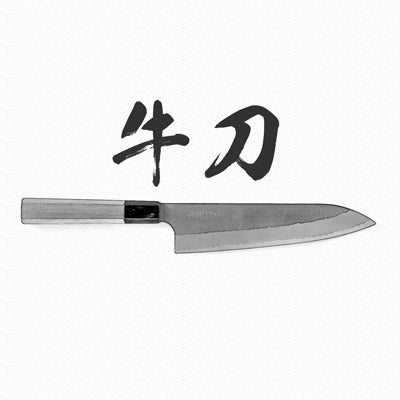
Profile: Gyuto
Chefs Knife
Slide for more >>
-
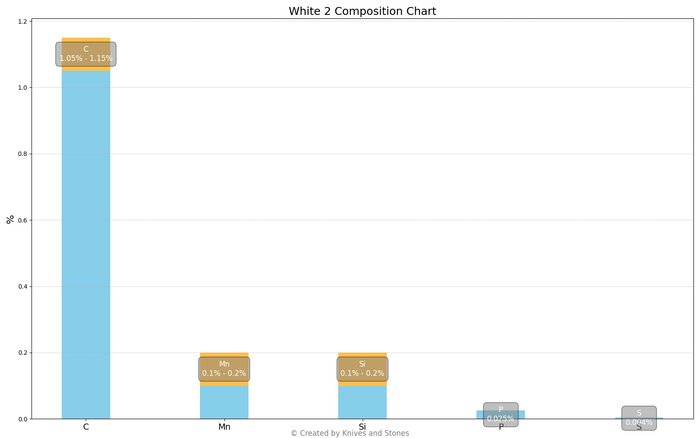
Steel: White 2 / Shirogami #2
Manufacturer:
Nature: Carbon
Hardness: 60- 64
<< Slide for more >>
-

Handle Specs
Profile: Octagonal WA
Material:
<< Slide for more

