Crows Nest store now open from Friday to Tuesday, 10am till 6pm.

Anryu  |  SKU: ANRY_B2TS_ST170EB

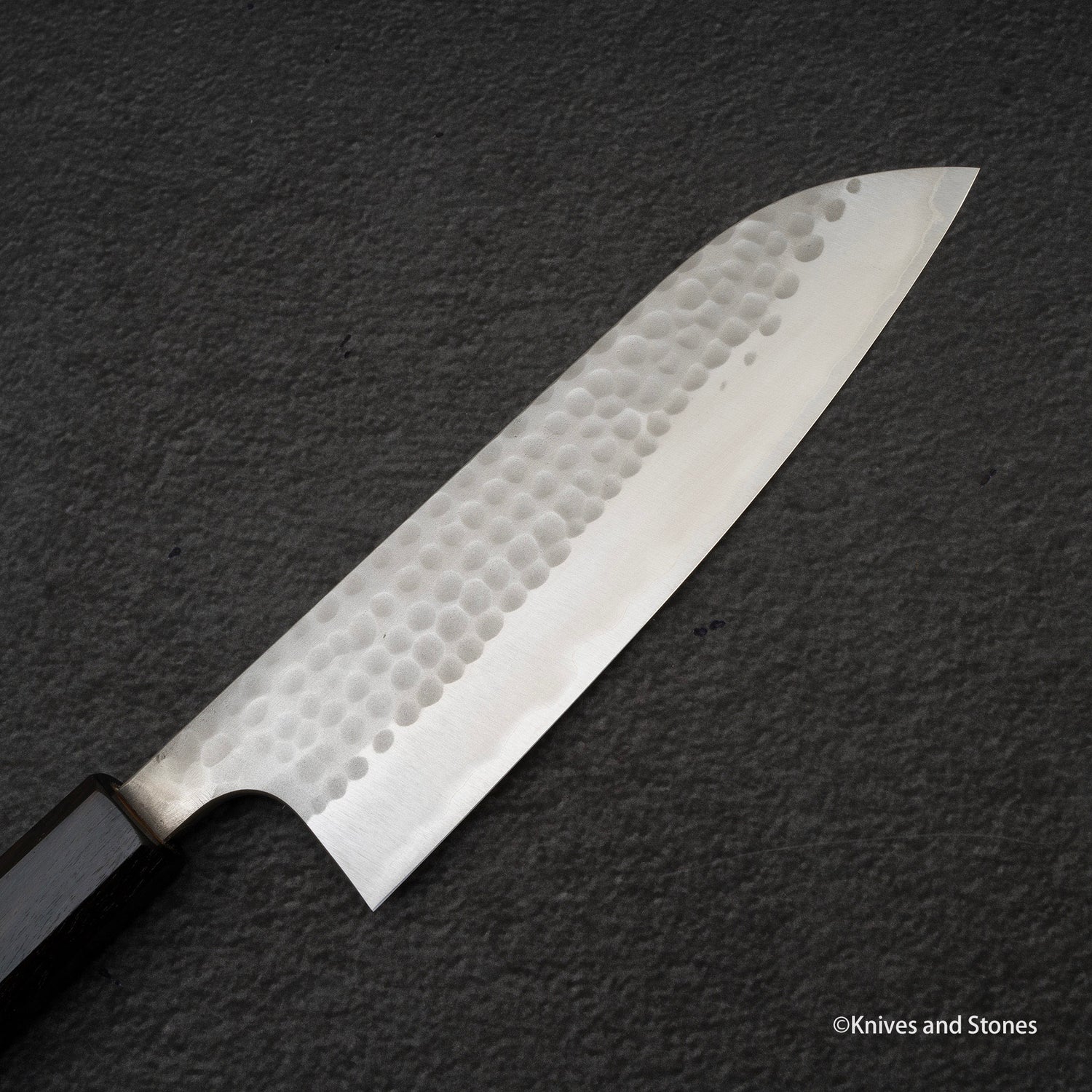
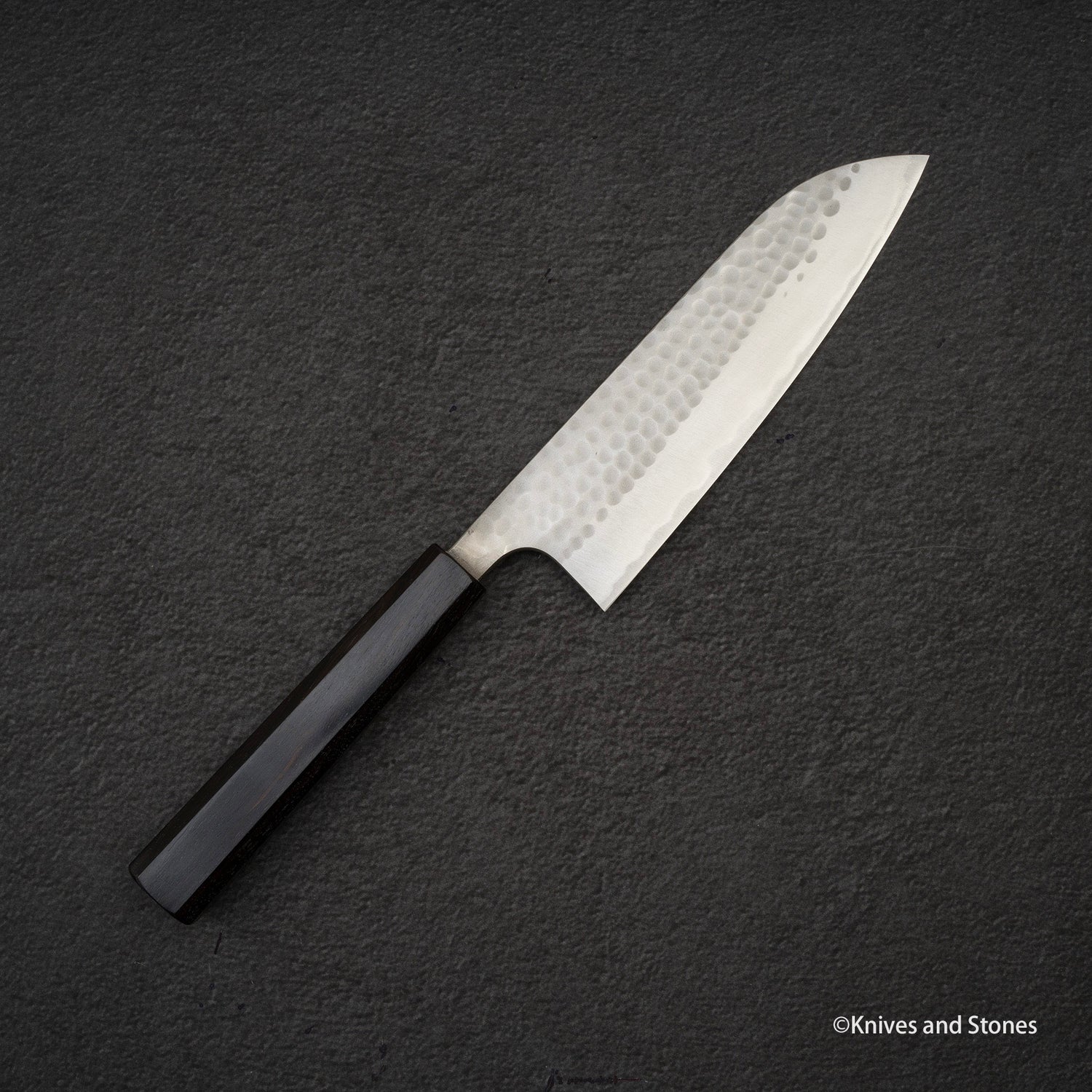
Katsushige Anryu Blue 2 Tsuchime Santoku 170mm Stainless Clad Ebony

Sale price $254.99 Regular price $299.95

IMPORTANT: Carbon steel knives can rust or patina quickly if not cared for properly. They require regular cleaning, drying, and oiling. If you are unfamiliar with carbon steel maintenance, we recommend choosing a stainless steel option instead.

Availability

  • St Peters (Online/Showroom)
    2 Bishop St Unit 2 St Peters NSW 2044
  • Crows Nest (Storefront)
    107 West St, Crows Nest NSW 2065
    Pickup only
Detailed Specifications
Line Anryu Blue 2 Tsuchime Stainless Clad
Profile Santoku / Santoku
Bevel Type Double Bevel
Weight 173 g | 6.1 oz
Edge Length 175 mm | 6 57/64″
Heel Height 48 mm | 1 57/64″
Width @ Heel 4.6 mm | 3/16″
Width @ Mid 2.3 mm | 3/32″
Width @ 1cm from Tip 0.7 mm | 1/32″
Steel Blue 2 / Aogami #2 | Carbon
Blade Construction Sanmai - Stainless Clad
Hardness (HRC) 61 - 63
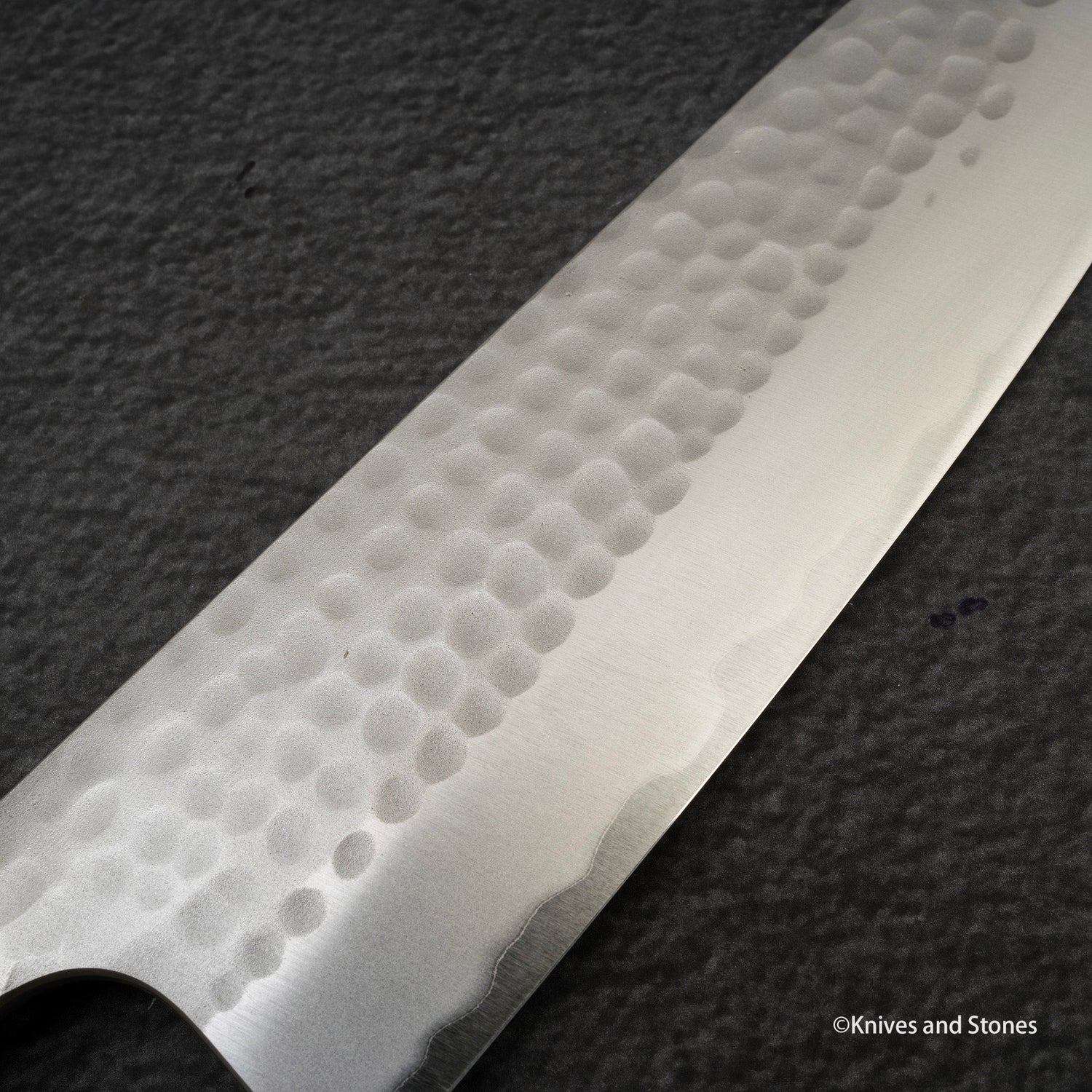
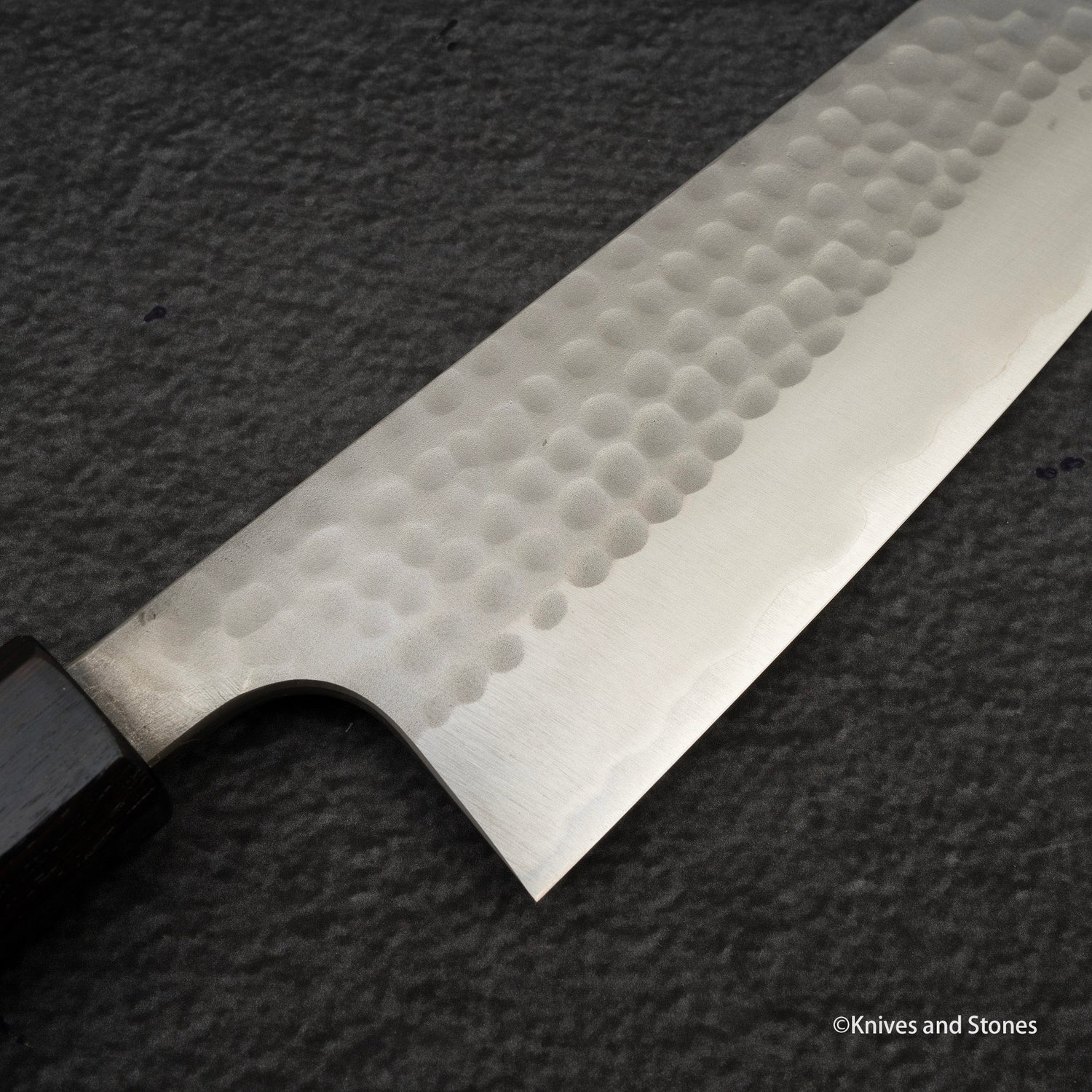
Surface Finish Tsuchime
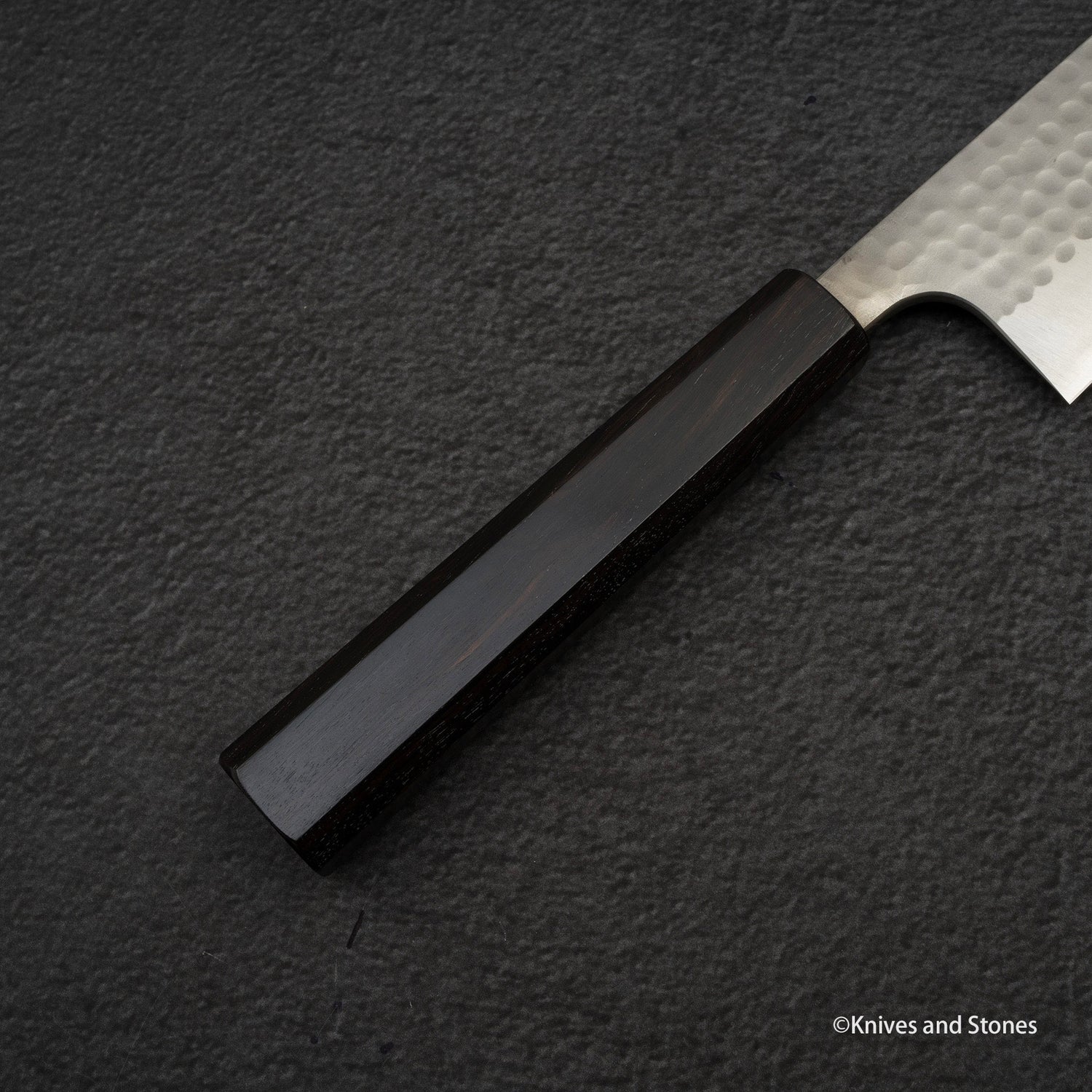
Handle Octagonal Ebony
Region Echizen
Best for
  • Pro chefs
  • Students
  • Enthusiasts
  • Free shipping for knives over AU$200 Australia wide.
  • World-wide shipping via DHL Express, 3 to 5 days.


This line forged by Anryu Hamono really displays what a very experience craftman can bring to you when it comes to knifemaking. It combines the wicked edge that a carbon steel can obtain, the ease of maintenance of the stainless clad and a whole lot of hand forging features that really gives a knife some "soul", all at a very approachable price.

Takumi Ikeda(池田 拓視), the fifth generation blacksmith of Anryu Hamono was trained under the guidance of Katsushige Anryu(安立 勝重). Anryu san has been forging in this industry ever since 1981, and he is still work in the workshop working on some less labour intensive tasks with all of his white hair to this date. That many years of forging have undoubtly given his abundant knowledge that result in knives with amazing performance.

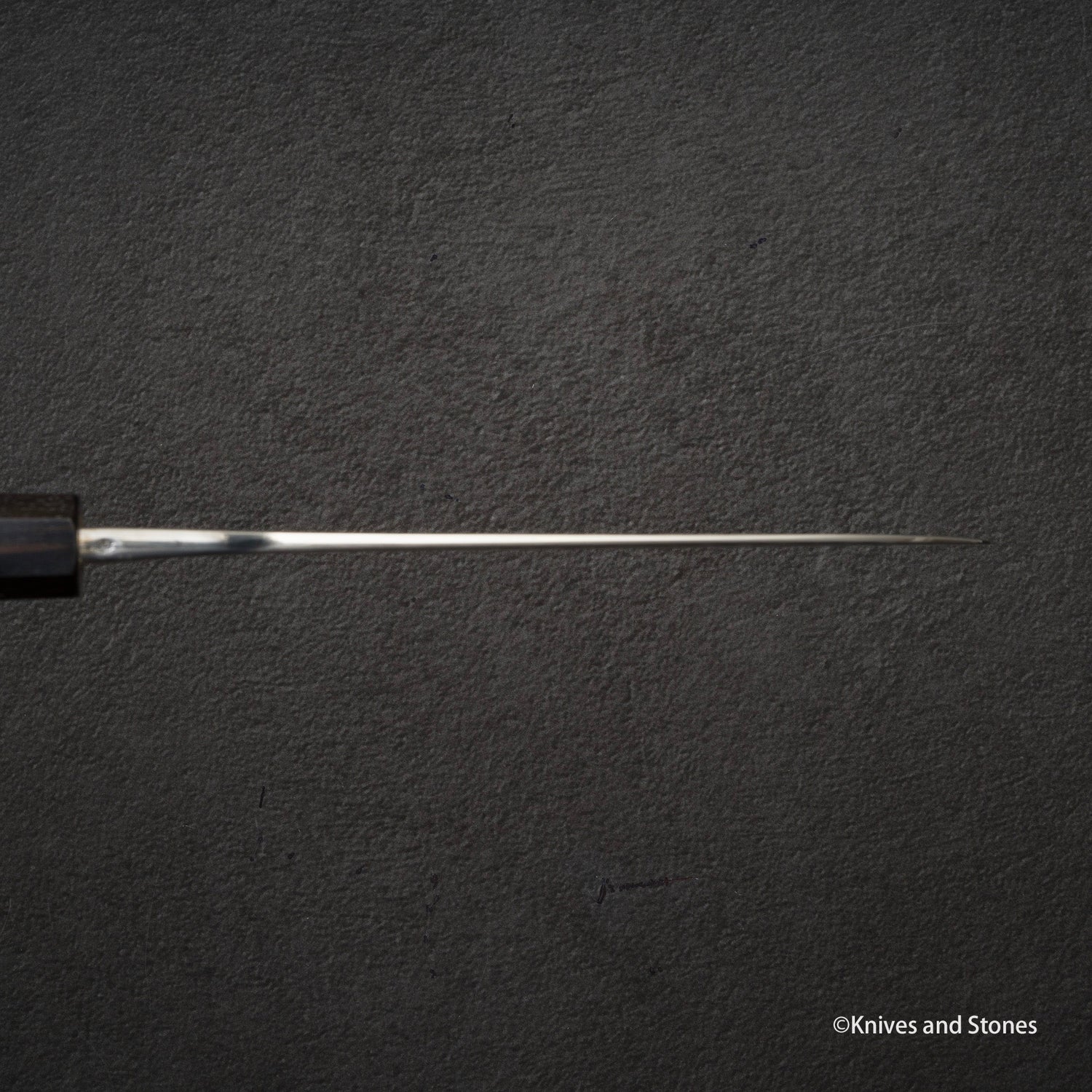
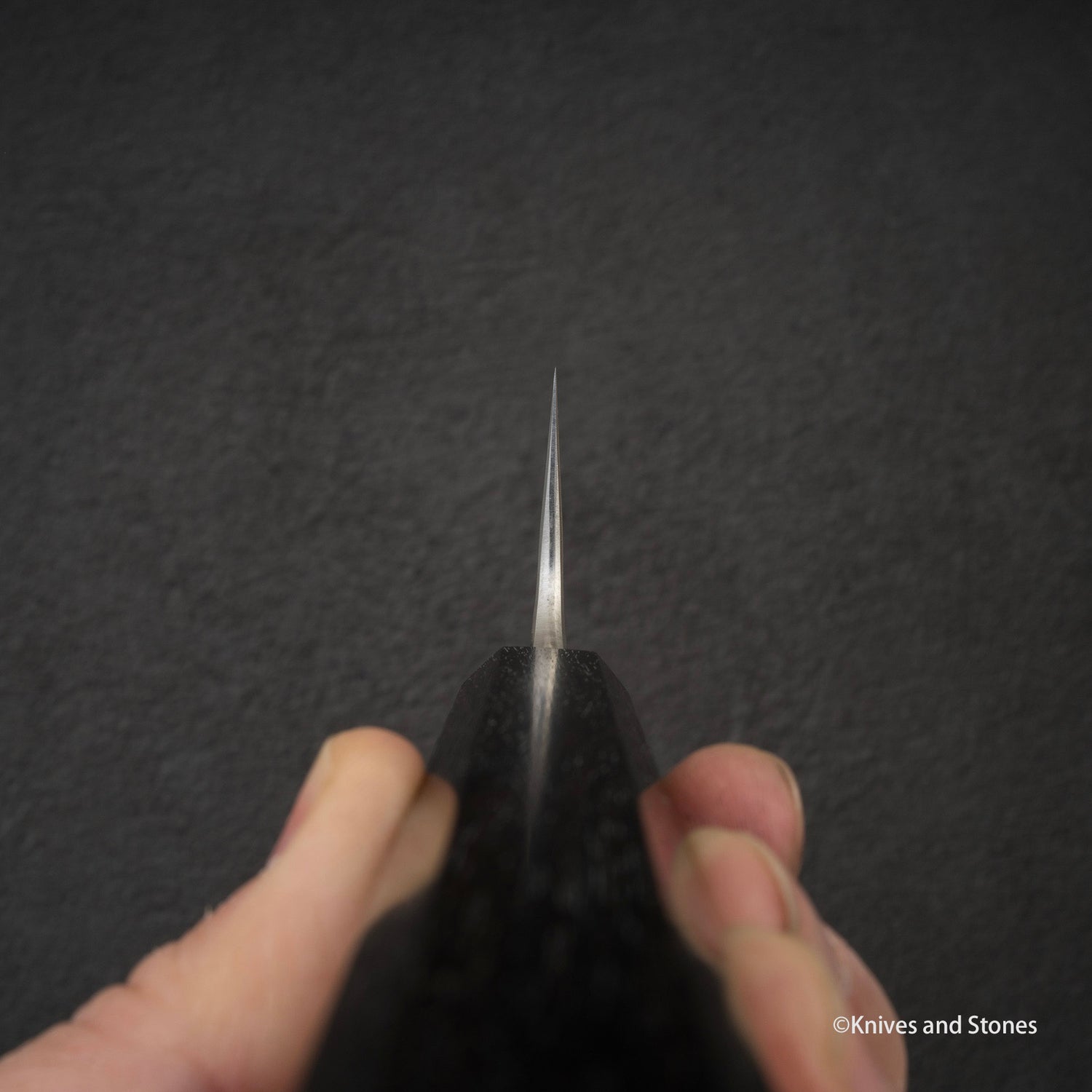
The geometry is something we cannot avoid talking with Anryu's knives, they all have a very thick spine near the handle, thicker than most of the Yanagiba, but this tapers down quickly into a rather thin blade. To obtain this kind of geometry require extensive experience in forging and cannot be done by machine, that means the craftmen at Anryu Hamono put in quite some time to get each of the blade to their desired shape.

The benifit of this intricate geomety and material distribution is better to be felt in hand than told, but to put it in words, a concentrated mass around the pinch grip is that you can move the tip easily will less mass at the end, but at the same time the weight near your hand ensures the blade won't feel like a piece of paper, which increase stability. Long story short, these blades handles like Porsches, nimble but determined and precise.

Matching the mamzing handling is a equally amazing sharpness, the choice of Blue 2 found a good balance in the spectrum of Hitachi Metal carbon steels. It has a superior edge retension compare to the White 2 steel but kept most of the classic carbon steel "Flavour"(edge finess and ease of sharpening) unlike the Blue Super. The Sabre grind and the micro edge allows these blades to penetrate right into the surface and drop through them without much resistance, it is so nice to cut with Anryu knives that I would say the Kireaji(切れ味, Overall feel of cutting) is on par with Yoshikane knives, which are known for their performance.

Anryu Knives are really something that flew under the radars of many people, the amount of time and the level of skill that result them is incredible. This Migaki Tsuchime line offers you a shiny knife with high level of craftmanship, amzing handling and experience and little compromises on maintainability, it is one of the few knives that I would say is being sold for too cheap.

Pros Cons
  • Budget friendly
  • Excellent performance
  • Great OOTB
  • Prone to rust
  • Need extra care
Care Instruction
  1. Don't cut hard things! Japanese knives are brittle so bone hacking is a NO NO!
  2. Wash with neutral detergent after use, and wipe dry;
  3. Please don't wash knife with dishwasher, it will damage the wood handle;
  4. Be careful not to leave the knife close to a heat source for a long time;
  5. It is a lot more dangerous to cut with a blunt knife than a sharp knife!
  6. It is best to sharpen a Japanese knife regularly on a waterstone.
  7. Oil the (carbon) knife if storing for an extended period of time to prevent rust.

Anryu Hamono

Anryu Hamono — Five Generations of Echizen Forging

Katsushige Anryu, the 4th generation artisan at Anryu Hamono in Echizen, Japan, began his journey in traditional knife-making in 1959 under his father, Katsutoshi Anryu. His workshop, founded by his great-grandfather Hansaburo Anryu in 1873, is renowned for its exquisite, hand-forged knives. Known for integrity and craftsmanship, Katsushige-san was elected chairman of the Takefu Knife Village Co-op and awarded a medal for his traditional craft work in 2015. Today, he works alongside his nephew, 5th generation Takumi Ikeda, continuing the legacy of creating beautiful, durable knives with unique designs.

Read more

Katsushige Anryu Hamono is a well-regarded Japanese knife-making workshop located in Takefu, Echizen, a city in Fukui Prefecture, Japan. The workshop is led by Katsushige Anryu, a master blacksmith with decades of experience in crafting traditional Japanese knives. Anryu san, as he is often respectfully referred to, hails from a lineage of blacksmiths that stretches back over four generations, and he himself has been honing his craft for over 50 years.

Echizen, where the workshop is situated, is an area with a rich history of smithing that dates back over 700 years, making it one of Japan's most famous centers for the production of cutlery and forged tools. Katsushige Anryu Hamono embodies this heritage, combining traditional forging techniques with modern innovations to produce knives of exceptional quality and beauty.

The knives made by Anryu san are highly sought after by chefs and knife enthusiasts worldwide. They are known for their unique designs, superior sharpness, and durability. The blades often feature distinctive patterns, such as the hammered (Tsuchime) finish or the beautiful Damascus steel patterns, which are not only aesthetically pleasing but also contribute to the functionality of the knives by reducing friction and preventing food from sticking to the blade.

Katsushige Anryu takes pride in every step of the knife-making process, from selecting the finest steel to shaping, sharpening, and finishing the blades by hand. This meticulous attention to detail ensures that each knife is not only a practical tool for cutting but also a work of art that reflects the skill and passion of its maker.

Anryu's philosophy is deeply rooted in the belief that making knives is not just about creating a cutting tool, but about bringing joy and satisfaction to the people who use them. This philosophy, combined with his exceptional craftsmanship, has earned Katsushige Anryu Hamono a respected place in the world of Japanese knife-making.

“Five generations of Echizen forging — from 1873 to the Takefu Knife Village's beating heart.”

Est. 1873 | 明治6年
Known for Tsuchime (hammered) finish, hand-forged carbon and AS blades, Takefu Knife Village heritage
Website takefu-knifevillage.jp Instagram @takumi_ikeda Read more about Anryu Hamono
Anryu Hamono — Echizen
Profile: Santoku
Profile

Santoku

Santoku

The Santoku(三徳) knife, embodying the meaning "three uses," is a cornerstone in Japanese kitchens, adept at slicing, dicing, and mincing. Esteemed for its versatility, it features a blade length typically between 15cm and 20cm (6 to 8 inches), catering to a wide array of culinary tasks. Distinguished by its less pointy tip compared to the Gyuto, the Santoku boasts a unique profile that contributes to its functionality and popularity. Its design is more controllable in chopping and slicing, and the profile is less aggressive, for those reasons, it has bacame a preferred choice for home cooks.
Composition

Blue 2 / Aogami #2 Element Composition

Compare with
    Blue 2 / Aogami #2
    1.25% 0.9% 0.6% 0.3% 0
    C Carbon 1.1%
    Primary hardening element. Raises hardness and wear resistance — but too much increases brittleness and corrosion susceptibility. As a reference: German 1.4112 (~0.5%) sits at the low end; VG-10 (~1.0%) is a common mid-range; SG2 (1.25–1.45%) and ZDP-189 (~3.0%) represent high and extreme ends respectively.
    C
    1.1%
    Cr Chromium 0.35%
    Raises corrosion resistance; 13%+ qualifies steel as stainless. Also improves hardenability and wear resistance. In kitchen use, higher chromium levels contribute to a slight drag or sticking sensation when cutting — a trade-off for the rust resistance it provides.
    Cr
    0.35%
    W Tungsten 1.25%
    Forms hard carbides for wear resistance and edge retention. Gives the steel hardness even at elevated temperatures.
    W
    1.25%
    Mn Manganese 0.25%
    Aids hardenability and strength. Acts as a deoxidiser during smelting. Excess can reduce toughness.
    Mn
    0.25%
    Si Silicon 0.15%
    Strengthens the steel matrix and acts as a deoxidiser. Improves hardness and resistance to oxidation.
    Si
    0.15%
    P Phosphorus 0.025%
    Impurity from the smelting process. Even small amounts cause brittleness — steelmakers keep this as low as possible.
    P
    0.025%
    S Sulfur 0.004%
    Impurity that reduces toughness and promotes brittleness. Intentionally added only in free-machining steels.
    S
    0.004%
    C — Carbon Cr — Chromium W — Tungsten Mn — Manganese Si — Silicon P — Phosphorus S — Sulfur
    Hardness 61–63 HRC
    555759616365+
    Steel
    Blue 2 / Aogami #2
    Category
    Carbon
    Manufacturer
    Hitachi Special Steel, Japan 🇯🇵
    Hardness
    61–63 HRC
    Steel

    Blue 2 / Aogami #2

    • Manufacturer
      • Hitachi Special Steel, Japan
    • Nature Carbon
    • Hardness61–63 HRC
    Blue Steel No.2, also recognized as Aogami No.2, is a distinguished high carbon steel produced by Hitachi Metals Ltd, enhanced by the addition of chromium and tungsten to the base of White Steel No.2. This modification brings about an improvement in toughness and the creation of hard carbide molecules, which significantly boost edge retention. Although its sharpness is comparable to that of White Steel No.2, Blue Steel No.2 offers a slight advantage in maintaining its edge.

    Widely favored for its versatility, Aogami No.2 is celebrated for its ease of sharpening and robust resistance to chipping, making it an ideal choice for those new to Aogami steel knives. Containing 1.0–1.2% carbon and achieving a typical hardness of 62–63 HRC on the Rockwell scale, it stands as the benchmark in evaluating Aogami steel cutlery.
    Construction: Sanmai - Stainless Clad
    Construction

    Sanmai - Stainless Clad

    Sanmai(Three-Piece) is a common construction for double bevel knives where two pieces of softer cladding steel are forgewelded to each side of a harder core steel. The harder but more brittle core steel will form the hard cutting edge after heat treating, and the softer cladding will support the core to increase the overall strength of the blade.

    The soft cladding enables the thinning process to be a lot easier than a honyaki or monosteel construction. And in the case where the cladding steel are stainless in nature, it can offer protection for the carbon or semi-stainless cores against rusting and discoluoring.

    Finish: Tsuchime
    Finish

    Tsuchime

    The "Tsuchime" finish in Japanese kitchen knives refers to a distinctive hammered texture on the blade's surface. This traditional technique not only adds a unique aesthetic appeal but also provides practical benefits, such as reducing drag and preventing food from sticking to the blade during slicing. It's a hallmark of craftsmanship that blends functionality with artistry, making each knife not only a tool but a piece of art.

    Handle
    Handle

    Octagonal Ebony

    • Profile Octagonal WA
    • Material
      • Ebony

    This handle, crafted from a single piece of ebony, exemplifies minimalist elegance and functional design. Its unique octagonal shape, featuring a subtle taper, offers a comfortable grip and a visually appealing geometric profile. The ebony wood, known for its deep, rich color and durability, has been meticulously milled from a single block, ensuring a seamless construction that highlights the wood's natural beauty and grain. The handle's surface has been highly polished, achieving a glossy finish that not only enhances the ebony's luxurious dark hue but also provides a smooth, tactile experience for the user. This design choice reflects a minimalist approach, focusing on simplicity, quality, and usability. The combination of the octagonal shape with the taper adds a modern twist to the classic material, making it a standout piece that blends traditional craftsmanship with contemporary aesthetics.

    1 / 5

    Frequently asked questions

    Gyuto or santoku - which should I choose?

    Both are all-purpose Japanese knives, and for most home cooks either will handle the bulk of daily prep. The choice comes down to length, blade shape, and how you like to cut.

    A gyuto is the Japanese chef's knife - typically 210 to 240mm with a gently curved edge that lets you rock and slide through cuts as well as chop. The extra length and pointed tip give you reach and versatility, from proteins to large produce.

    A santoku is shorter, usually 165 to 180mm, with a flatter profile and a rounded sheep's-foot tip. It rewards a straight up-and-down push cut, feels nimble in smaller hands or tight kitchens, and is the classic Japanese household knife.

    Rule of thumb: choose a gyuto if you want one do-everything knife with more reach, or a santoku if you prefer a compact, easy-to-control blade. Plenty of our customers end up owning both.

    ✓ Verified by Knives and Stones · James Zhang · Reviewed 29 May 2026

    Will a carbon steel knife rust, and how do I look after it?

    Yes - carbon steels such as Aogami (Blue) and Shirogami (White) react with food, moisture, and acids. Left wet they can spot or rust, and with normal use they develop a grey-blue patina. That patina is expected and is part of owning a carbon-steel knife; it is not damage.

    Care is simple once it becomes habit: hand-wash in warm water, never leave the knife soaking or sitting in a wet sink, and dry it thoroughly the moment you finish. Avoid the dishwasher entirely, and wipe the blade between tasks when you are cutting acidic foods like citrus, tomato, or onion.

    If the knife will sit unused for a while, wipe a very thin film of food-safe camellia oil (or a neutral mineral oil) onto the blade before storing it. A light surface rust spot lifts easily with a rust eraser or a little Bar Keepers Friend; sustained neglect is the only thing to really avoid.

    Carbon steel rewards this small amount of attention with a keener edge and easier sharpening than most stainless. If you would rather not think about maintenance at all, ask us about stainless or stainless-clad options instead.

    ✓ Verified by Knives and Stones · James Zhang · Reviewed 29 May 2026

    You May Also Like