Crows Nest store now open from Friday to Tuesday, in store specials!

Yoshikane  |  SKU: YOSH_SKNA_SJ240EB

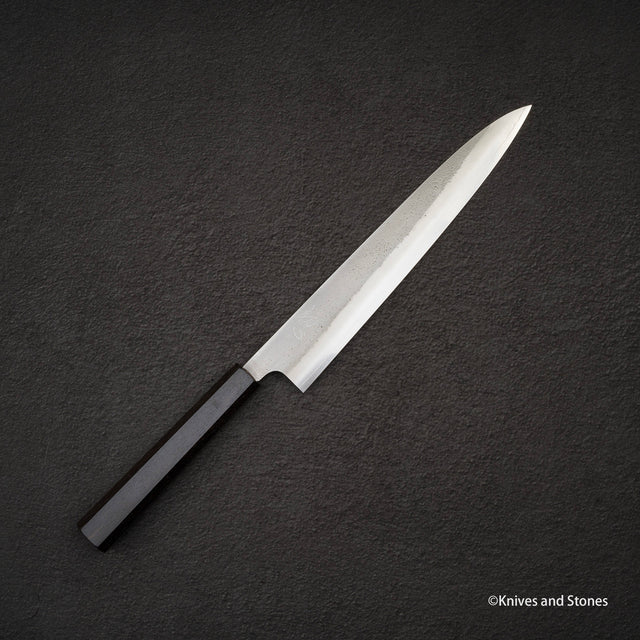
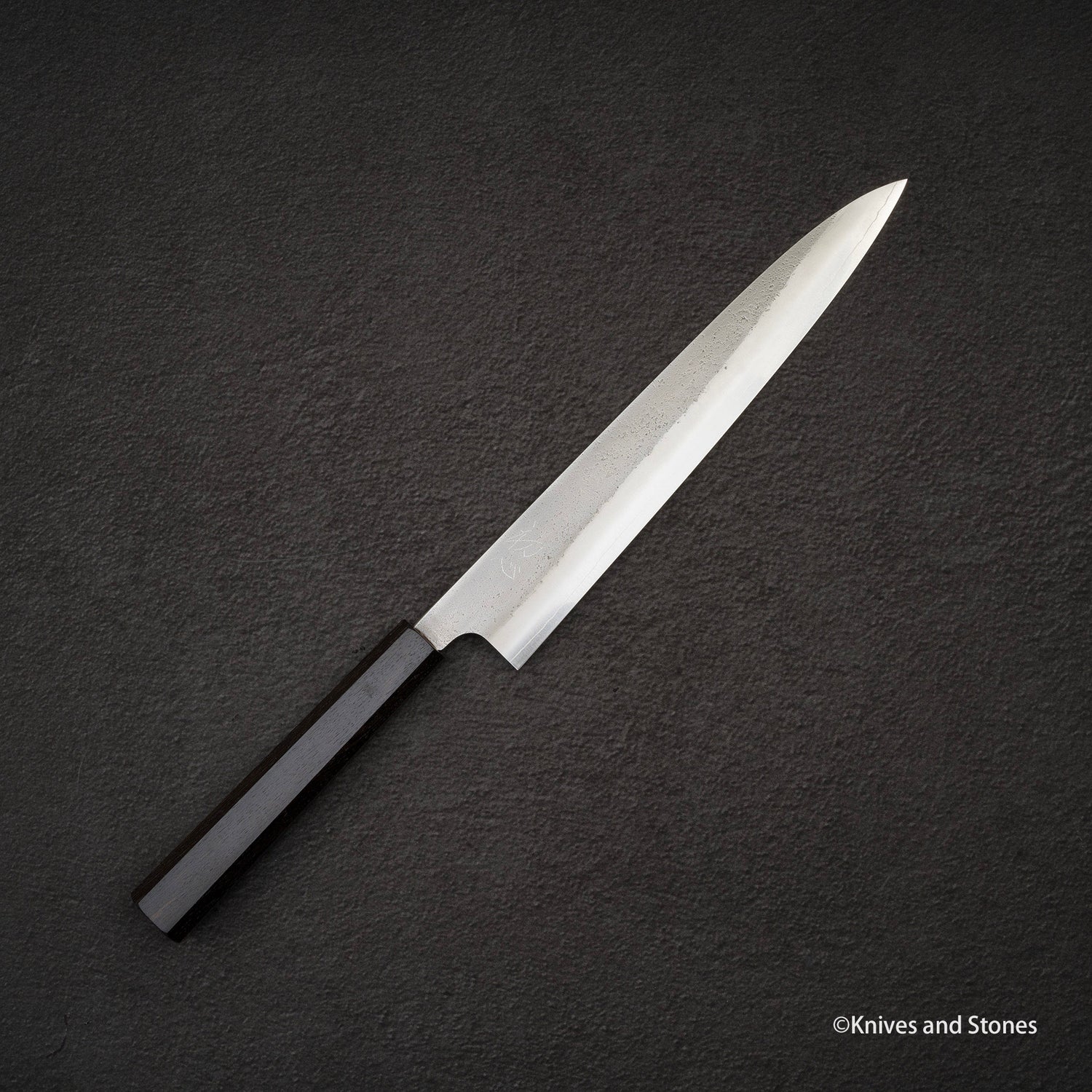
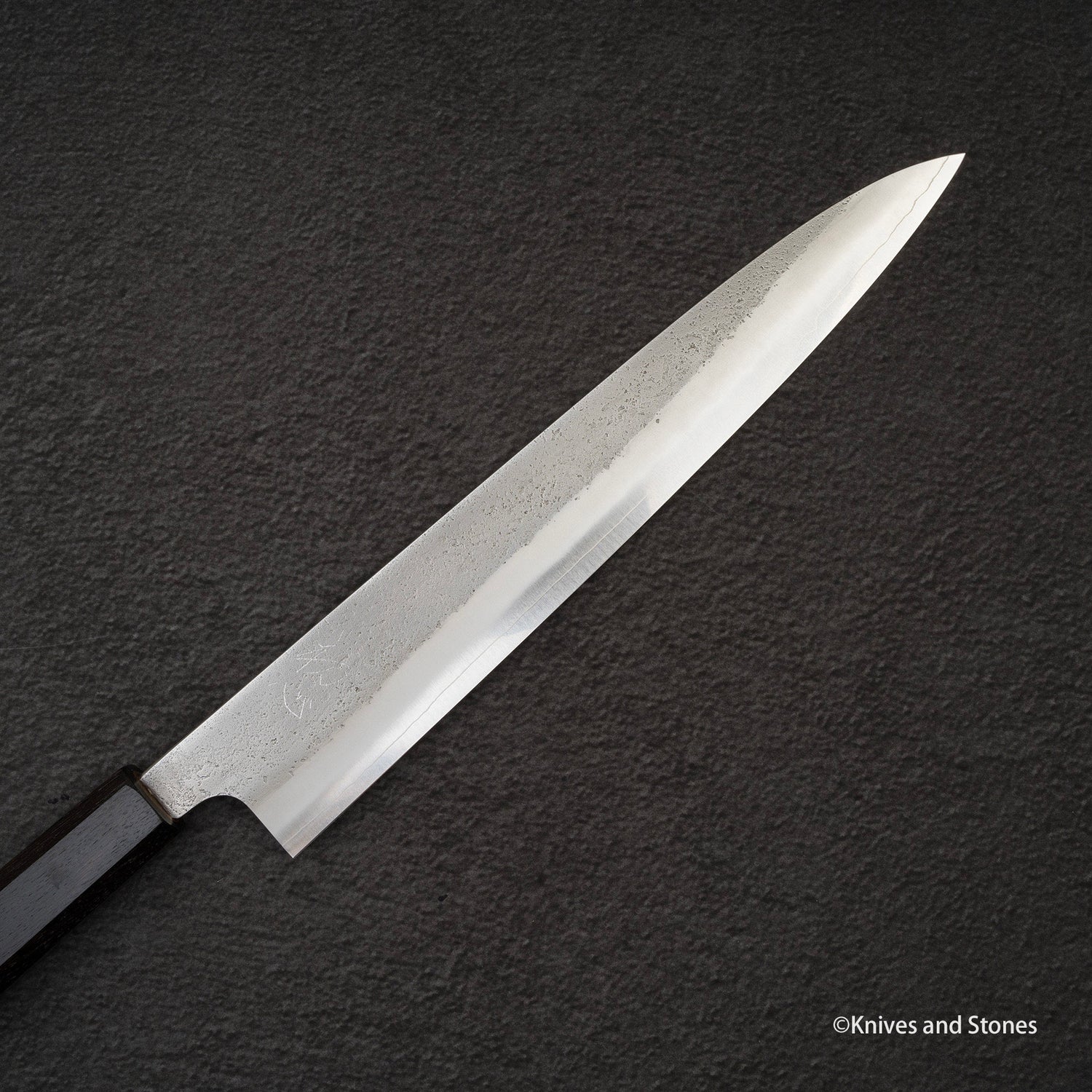
Hatsuokokoro x Yoshikane SKD Nashiji Sujihiki 240mm Ebony Handle

Regular price $569.95

Pickup available at Crows Nest

Usually ready in 24 hours

Add a saya or K&S Knife Roll to receive $20 bundle discount!

Set currency to AUD to view correct price matching.
K&S Price: AU$569.95*inc. tax,vs:
Store SC AU $719.31 -26.42%
Store SS AU $584.0 -2.64%
Store MC AU $612.09 -7.57%

*For overseas buyers you pay no GST (10%) and low shipping rate.
Last Update:2026-04-24T17:07:18Z

Hatsukokoro By Yoshikane SKD Nashiji
Sujihiki / Slicer
Double Bevel
Weight 194 g | 6.8 oz
Edge Length 237 mm | 9 21/64″
Heel Height 40 mm | 1 37/64″
Width @ Heel 3.4 mm | 9/64″
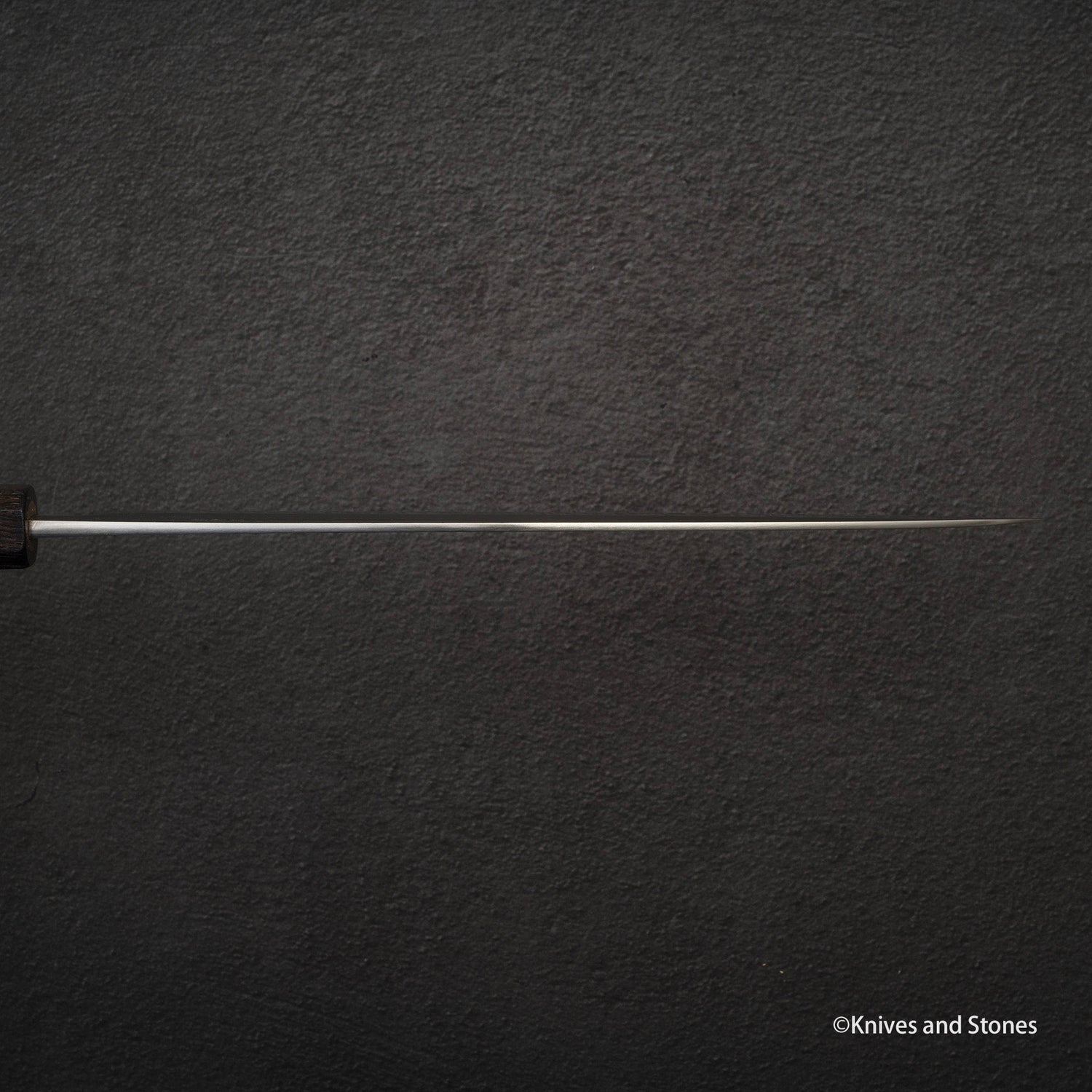
Width @ Mid 2.4 mm | 3/32″
Width @ 1cm from Tip 1.0 mm | 3/64″
Steel SKD | Semi-stainless
Blade Construction Sanmai - Stainless Clad
Hardness (HRC) 62 - 64
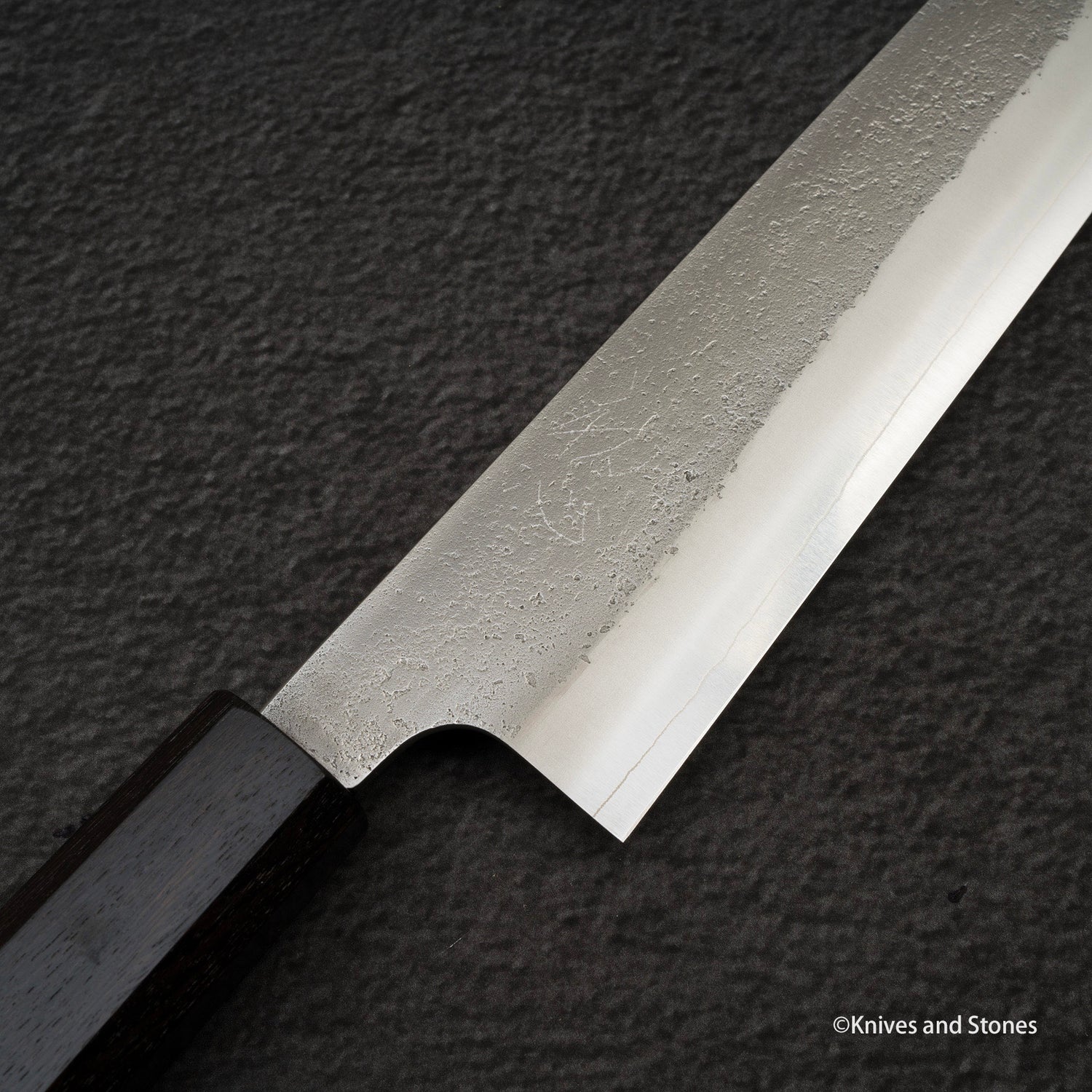
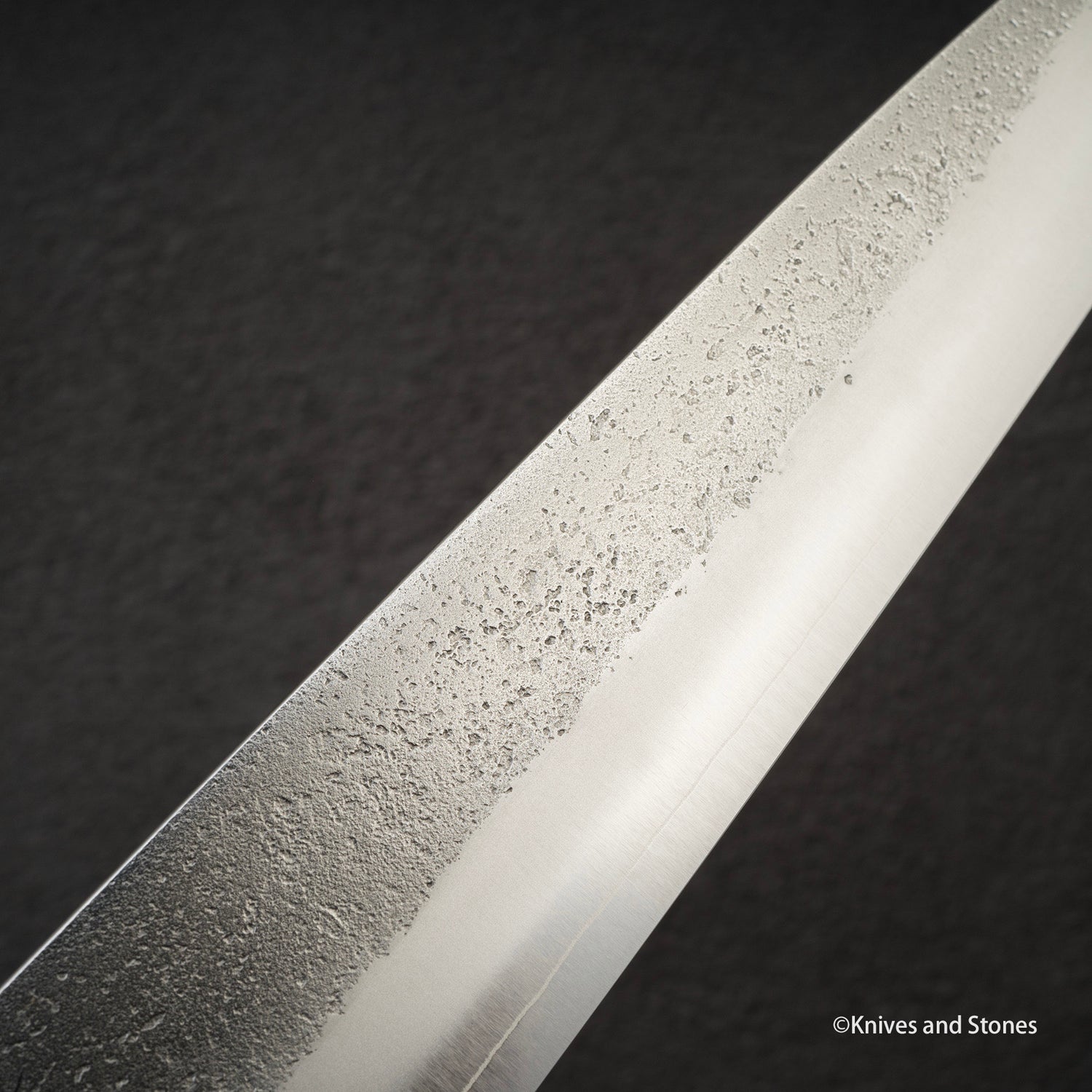
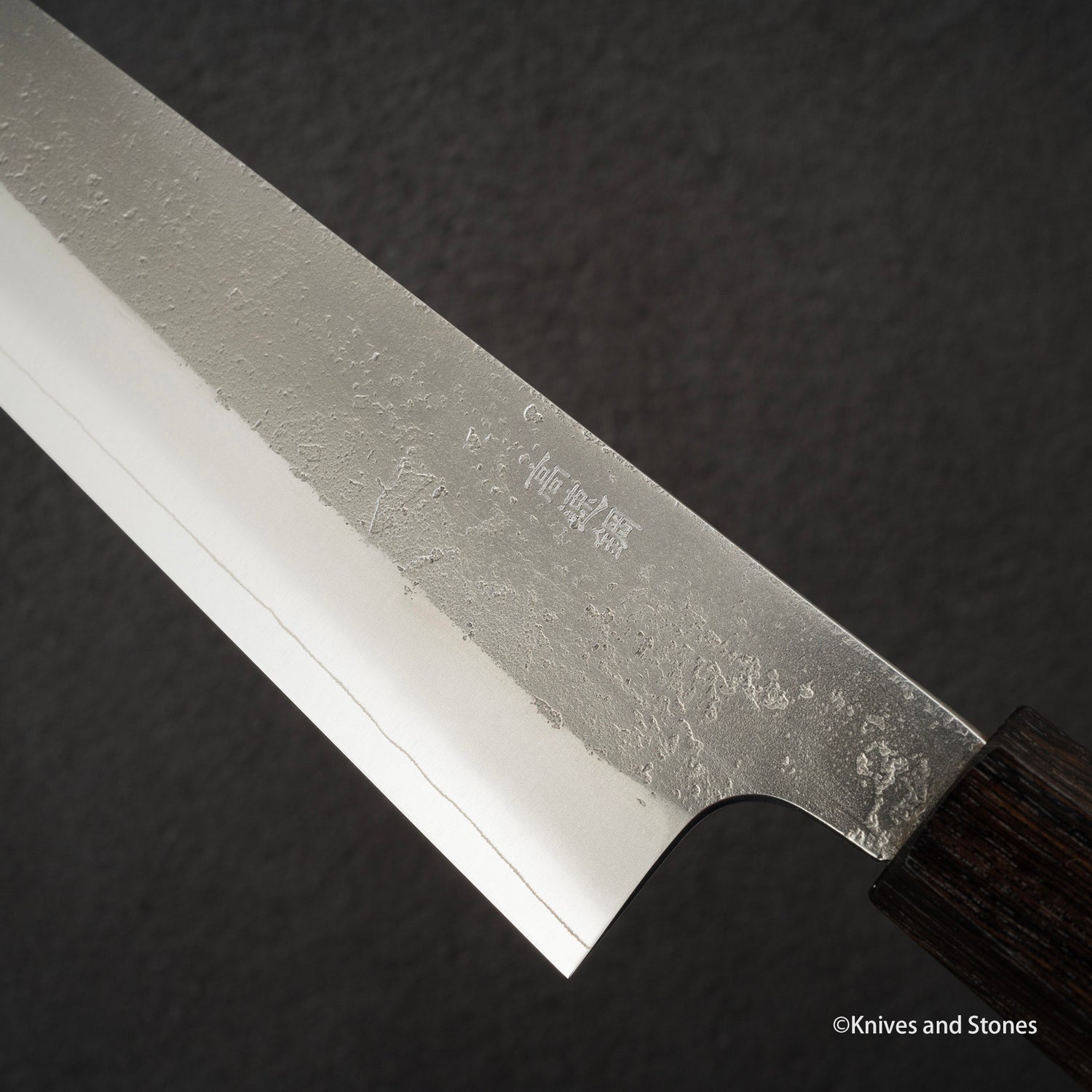
Surface Finish Nashiji
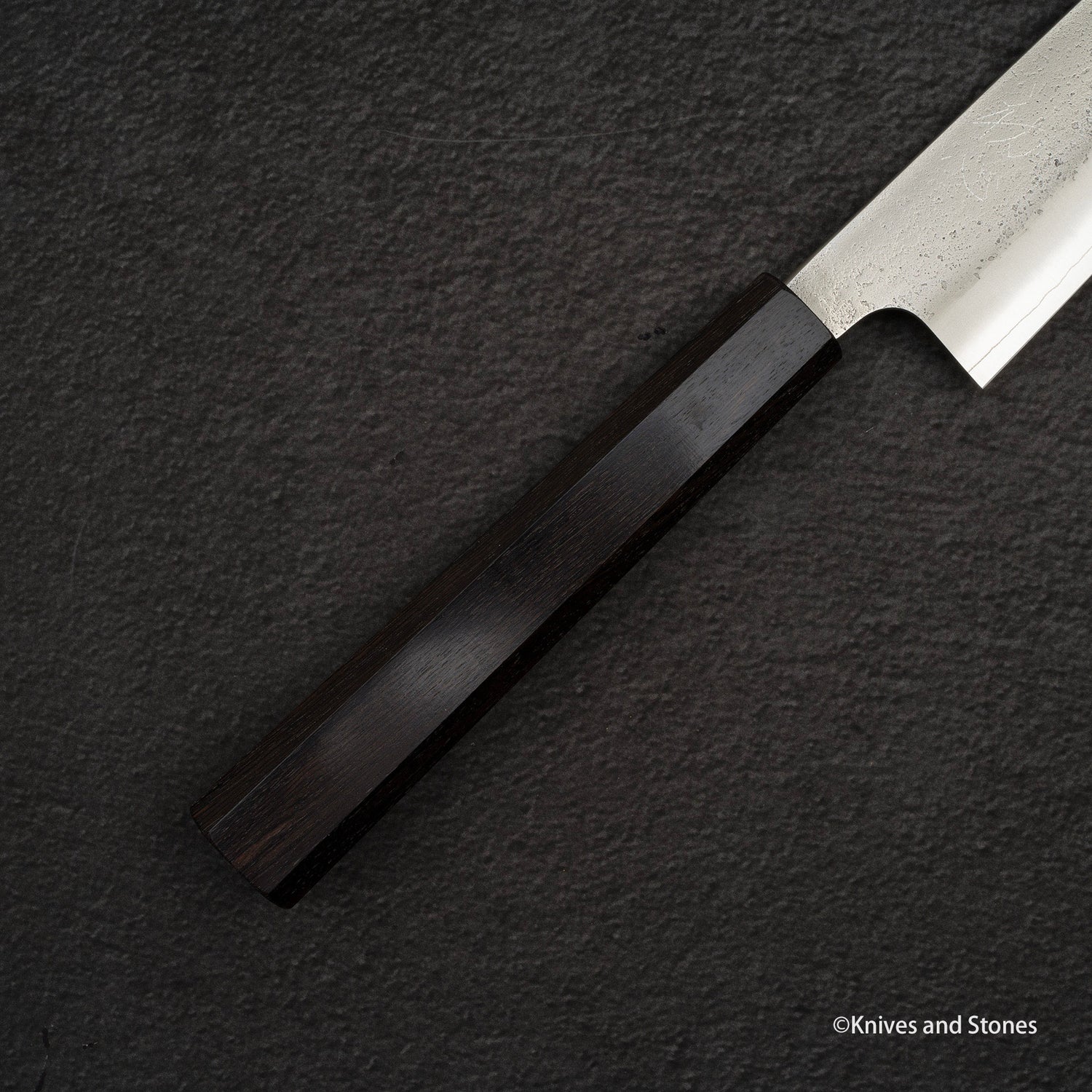
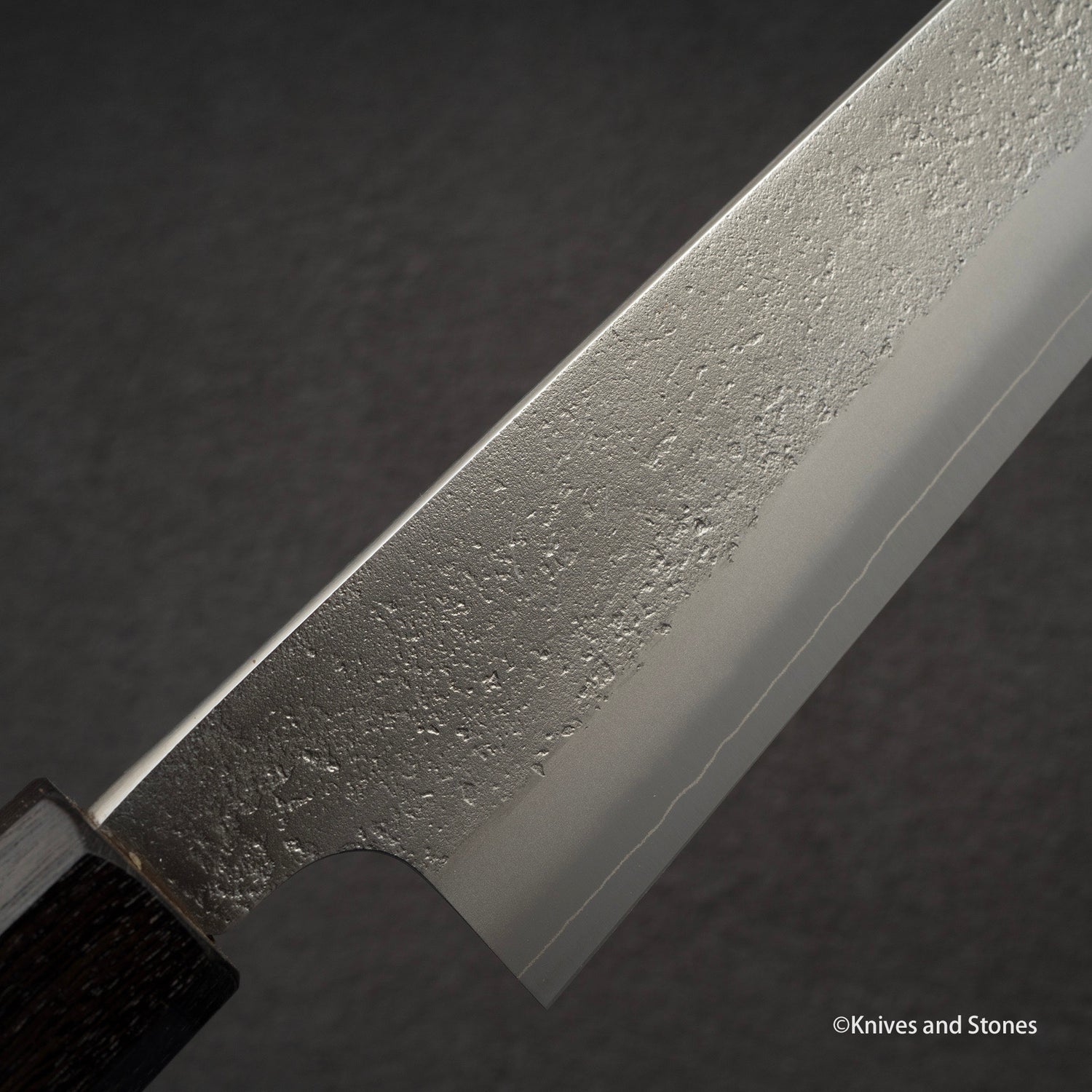
Handle Octagonal Ebony
Region Sanjo
Best for
  • Pro chefs
  • Students
  • Enthusiasts
  • Free shipping for knives over AU$200 Australia wide.
  • World-wide shipping via DHL Express, 3 to 5 days.


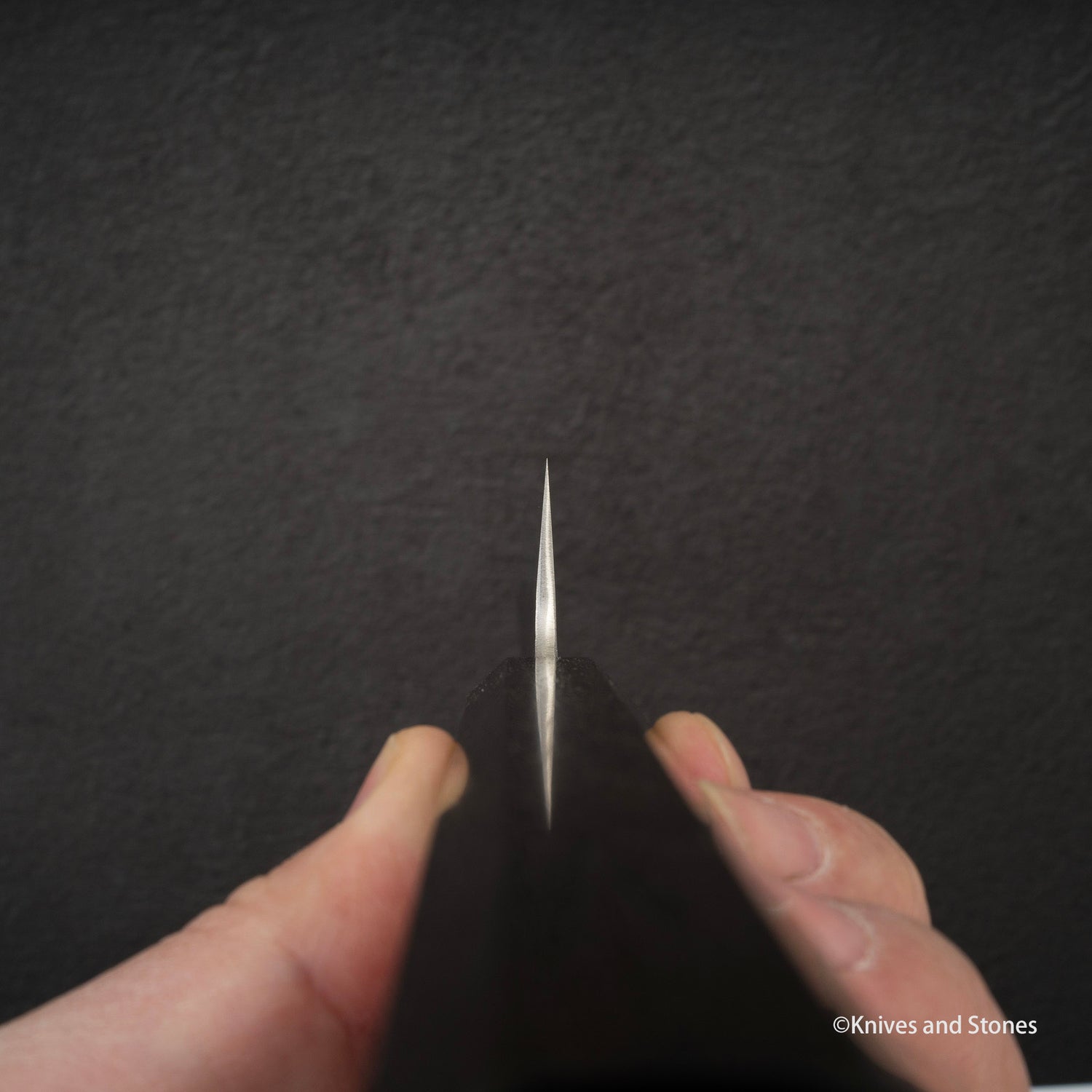
The Yoshikane SKD Nashji line is probably one of the best cutting offerings from the entire K&S offerings. I often use this knife in the store to demonstrate "how a knife should cut". The primary bevels are done in a convex grind which splits food and reduces sticking, and the low chromium content of the SKD steel provides the ability to get an extremely fine and bitey edge, these two features works together with the tapered Sanjo profile results the ultimate Kireaji-the "Cutting Taste" of this line. Landing the edge on the skin of a potato and use two fingers to pull the handle backwards, these blades won't hesitate much when dropping through the entire potato.

For those not familiar with SKD, it is SKD12 also known as A2 tool steel, with about 1% of Carbon content, and only 4.5% of Chromium. Heat treated perfectly by Yoshikane to HRC 63, the SKD very much behaves like carbon steel in terms of taking a very keen edge, the food release and also super easy to sharpen; yet without the need of high maintenance.

With a rustic Nashiji finish coupled with a highly praised Sanjo region F&F, this knife has a very nice profile, large sweet spot, and feels very nimble in hand. SKD Semi-stainless core with stainless cladding ensure the highest cutting performance yet the stainless cladding means you will have little worry about the rust.

Pros Cons
  • Excellent performance
  • Thin behind the edge
  • Great OOTB
  • Semi-stainless can rust
Care Instruction
  1. Don't cut hard things! Japanese knives are brittle so bone hacking is a NO NO!
  2. Wash with neutral detergent after use, and wipe dry;
  3. Please don't wash knife with dishwasher, it will damage the wood handle;
  4. Be careful not to leave the knife close to a heat source for a long time;
  5. It is a lot more dangerous to cut with a blunt knife than a sharp knife!
  6. It is best to sharpen a Japanese knife regularly on a waterstone.
  7. Semi-stainless steel won't rust easily but may still patina

Yoshikane Hamono

Traditional Sanjo Knife Maker.

Yoshikane is a boutique knife maker based in Sanjo, Niigata. Founded in 1919 (大正8年),it is one of the most established top quality kitchen knife manufacturers in the region. Many new generation blacksmith in Sanjo took has apprenticeship experience at this knife workshop. 

Headmaster Yamamoto-san believes, “while many things change rapidly nowadays, there are ideas and believes that never change. Everyday I make sure the meaning of these words are forged into knife making”. And indeed because of this firm believe, this workshop produces some of the highest quality kitchen knives with superb fit and finish. The workshop is also very famous for its heat treatment of White 2 and the use of semi-stainless SKD steel. 

“Top performance Japanese kitchen knives from Sanjo, Niigata, renowned for exceptional grind quality and masterful heat treatment of White #2 and SKD semi-stainless steels.”

Est. 1919 | 大正8年
Known for Ultra thin Sanjo grinds, master of Sanjo blacksmith.
Website yoshikanehamono.com Read more about Yoshikane Hamono
Yoshikane Hamono — Sanjo
Profile: Sujihiki
Profile

Sujihiki

Slicer

The Sujihiki, also known as Sujibiki, stands out as a Japanese slicing knife, characterized by a thinner and sharper edge than those found in Western kitchens. Its long blade is ideally crafted for the artful, thin carving of proteins and for slicing terrines and patés with finesse. Blade lengths span from 210mm to 300mm (8.3 to 12 inches), with 240mm and 270mm being particularly favored for their balanced cutting length and agility. When used for their intended purpose Sujihiki has a significant advantage: the slimmer blade will have less surface contact with the soft protein, and lead to reduced frictions during the cut compare to Gyuto as this type of food would "grip" the blade from pushing forward. In addition, the generally flat profile of Sujihiki is a perfect match for slicing tasks, when paired with a carbon steel core, they are some of the best tools for portioning large piece of meat, they can also act as the perfect melon cutter occationaly.
Composition

SKD Element Composition

Compare with
    SKD
    5.0% 3.8% 2.5% 1.3% 0
    C Carbon 1.0%
    Primary hardening element. Raises hardness and wear resistance — but too much increases brittleness and corrosion susceptibility. As a reference: German 1.4112 (~0.5%) sits at the low end; VG-10 (~1.0%) is a common mid-range; SG2 (1.25–1.45%) and ZDP-189 (~3.0%) represent high and extreme ends respectively.
    C
    1.0%
    Cr Chromium 5.0%
    Raises corrosion resistance; 13%+ qualifies steel as stainless. Also improves hardenability and wear resistance. In kitchen use, higher chromium levels contribute to a slight drag or sticking sensation when cutting — a trade-off for the rust resistance it provides.
    Cr
    5.0%
    V Vanadium 0.35%
    Forms extremely hard carbides for superior edge retention. Also refines grain structure, improving toughness.
    V
    0.35%
    Mo Molybdenum 1.0%
    Improves hardenability and toughness. Boosts corrosion resistance and helps the steel hold hardness under heat.
    Mo
    1.0%
    Mn Manganese 0.7%
    Aids hardenability and strength. Acts as a deoxidiser during smelting. Excess can reduce toughness.
    Mn
    0.7%
    Si Silicon 0.4%
    Strengthens the steel matrix and acts as a deoxidiser. Improves hardness and resistance to oxidation.
    Si
    0.4%
    P Phosphorus 0.03%
    Impurity from the smelting process. Even small amounts cause brittleness — steelmakers keep this as low as possible.
    P
    0.03%
    S Sulfur 0.03%
    Impurity that reduces toughness and promotes brittleness. Intentionally added only in free-machining steels.
    S
    0.03%
    Cu Copper 0.25%
    Incidental impurity in most knife steels. Slight boost to corrosion resistance; kept low to avoid hot-shortness.
    Cu
    0.25%
    Ni Nickel 0.5%
    Improves toughness and ductility without sacrificing hardness. Adds a small boost to corrosion resistance.
    Ni
    0.5%
    C — Carbon Cr — Chromium V — Vanadium Mo — Molybdenum Mn — Manganese Si — Silicon P — Phosphorus S — Sulfur Cu — Copper Ni — Nickel
    Hardness 62–64 HRC
    555759616365+
    Steel
    SKD
    Category
    Semi-stainless
    Manufacturer
    Hitachi Special Steel, Japan 🇯🇵
    Hardness
    62–64 HRC
    Steel

    SKD

    • Manufacturer
      • Hitachi Special Steel, Japan
    • Nature Semi-stainless
    • Hardness62–64 HRC
    SKD short for SKD12 also known as A2 tool steel, with about 1% of Carbon content, and only 4.5% of Chromium. It can be treated to about 63 to 64.

    The SKD very much behaves like carbon steel in terms of taking a very keen edge, the food release and also super easy to sharpen; yet without the need of high maintenance. As a result it is very popular amongst professional chefs.

    Yoshikane is the noteable compnay that loves the SKD.
    Construction: Sanmai - Stainless Clad
    Construction

    Sanmai - Stainless Clad

    Sanmai(Three-Piece) is a common construction for double bevel knives where two pieces of softer cladding steel are forgewelded to each side of a harder core steel. The harder but more brittle core steel will form the hard cutting edge after heat treating, and the softer cladding will support the core to increase the overall strength of the blade.

    The soft cladding enables the thinning process to be a lot easier than a honyaki or monosteel construction. And in the case where the cladding steel are stainless in nature, it can offer protection for the carbon or semi-stainless cores against rusting and discoluoring.

    Finish: Nashiji
    Finish

    Nashiji

    The "nashiji finish" on Japanese kitchen knives refers to a unique, textured surface finish that resembles the skin of an Asian pear, which is known as "nashi" in Japanese. This finish is achieved through a specific hammering and polishing technique, giving the knife blade a distinct, matte appearance with a slightly uneven, tactile surface. Beyond its aesthetic appeal, the nashiji finish also provides practical benefits. It helps to reduce food sticking to the blade by creating tiny air pockets between the food and the steel. This finish is commonly found on traditional Japanese knives, such as santokus and nakiris, and is highly valued for both its functional and visual characteristics, enhancing the overall culinary experience.

    Handle
    Handle

    Handle Specs

    • Profile Octagonal WA
    • Material
      • Ebony

    This handle, crafted from a single piece of ebony, exemplifies minimalist elegance and functional design. Its unique octagonal shape, featuring a subtle taper, offers a comfortable grip and a visually appealing geometric profile. The ebony wood, known for its deep, rich color and durability, has been meticulously milled from a single block, ensuring a seamless construction that highlights the wood's natural beauty and grain. The handle's surface has been highly polished, achieving a glossy finish that not only enhances the ebony's luxurious dark hue but also provides a smooth, tactile experience for the user. This design choice reflects a minimalist approach, focusing on simplicity, quality, and usability. The combination of the octagonal shape with the taper adds a modern twist to the classic material, making it a standout piece that blends traditional craftsmanship with contemporary aesthetics.

    1 / 5

    You May Also Like