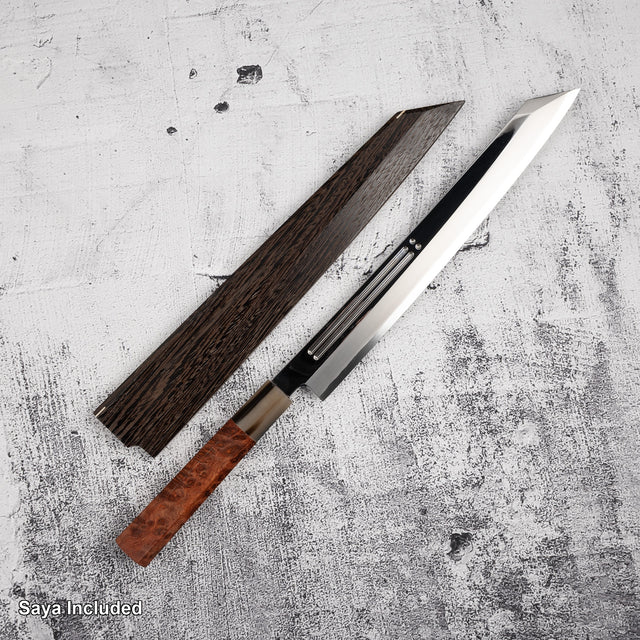
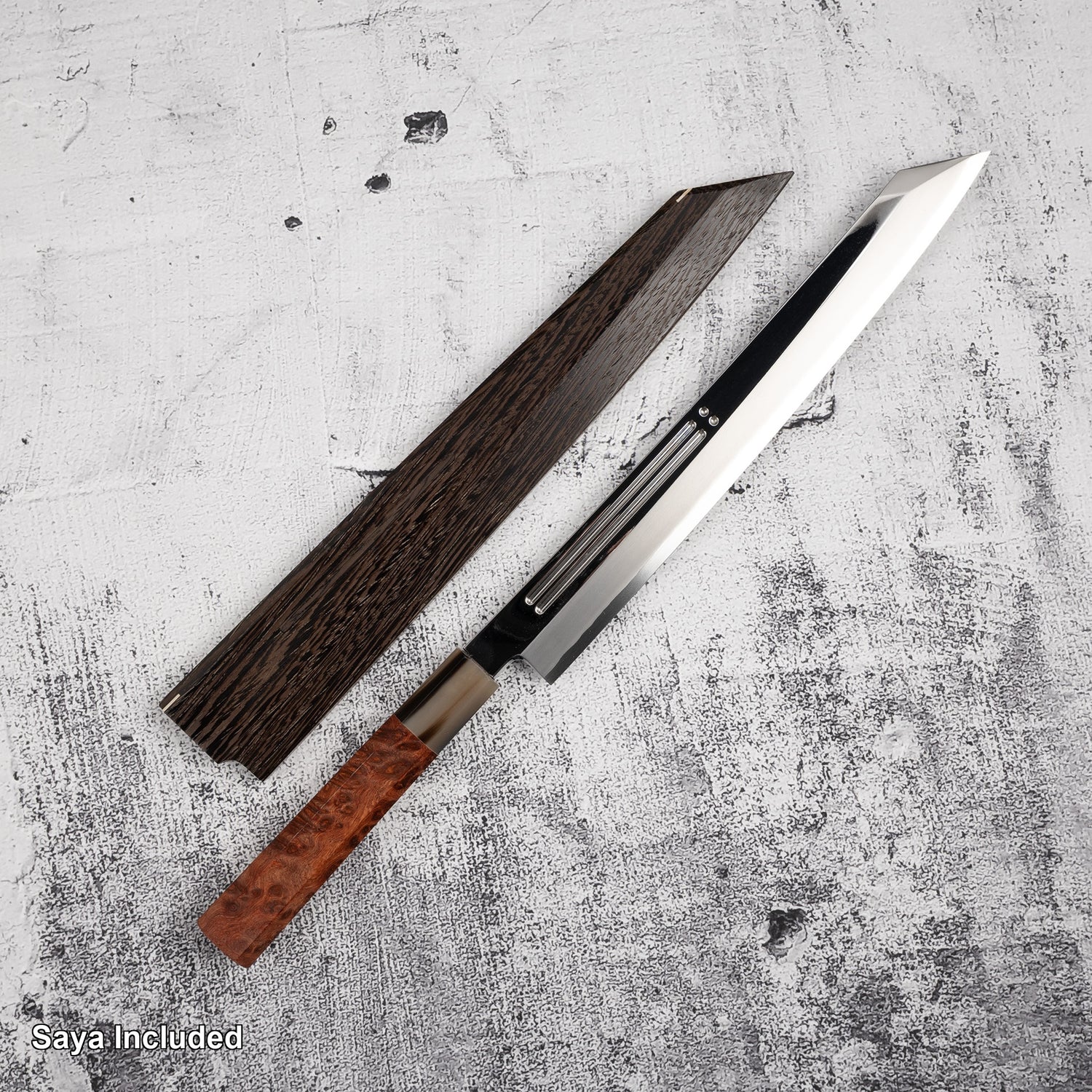
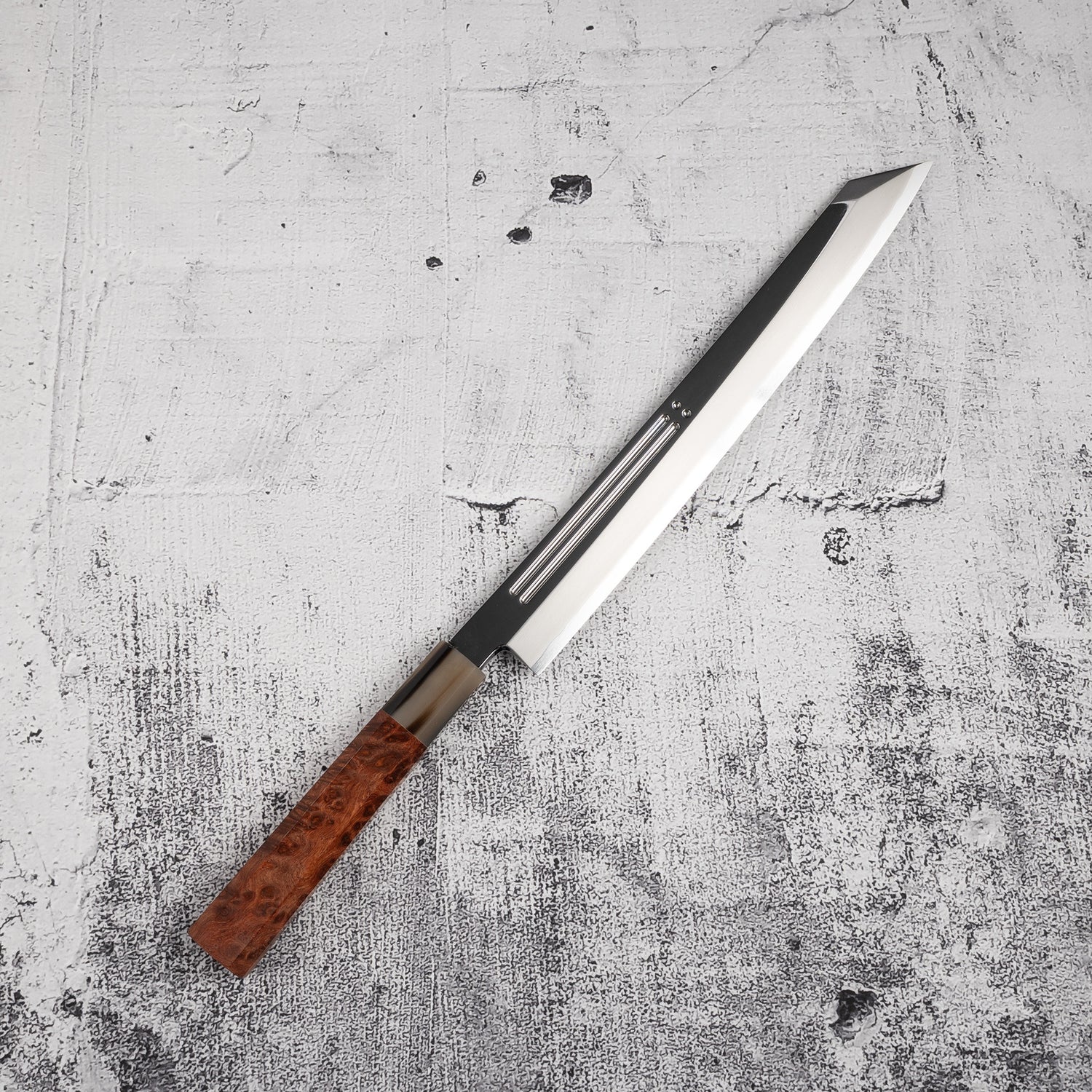
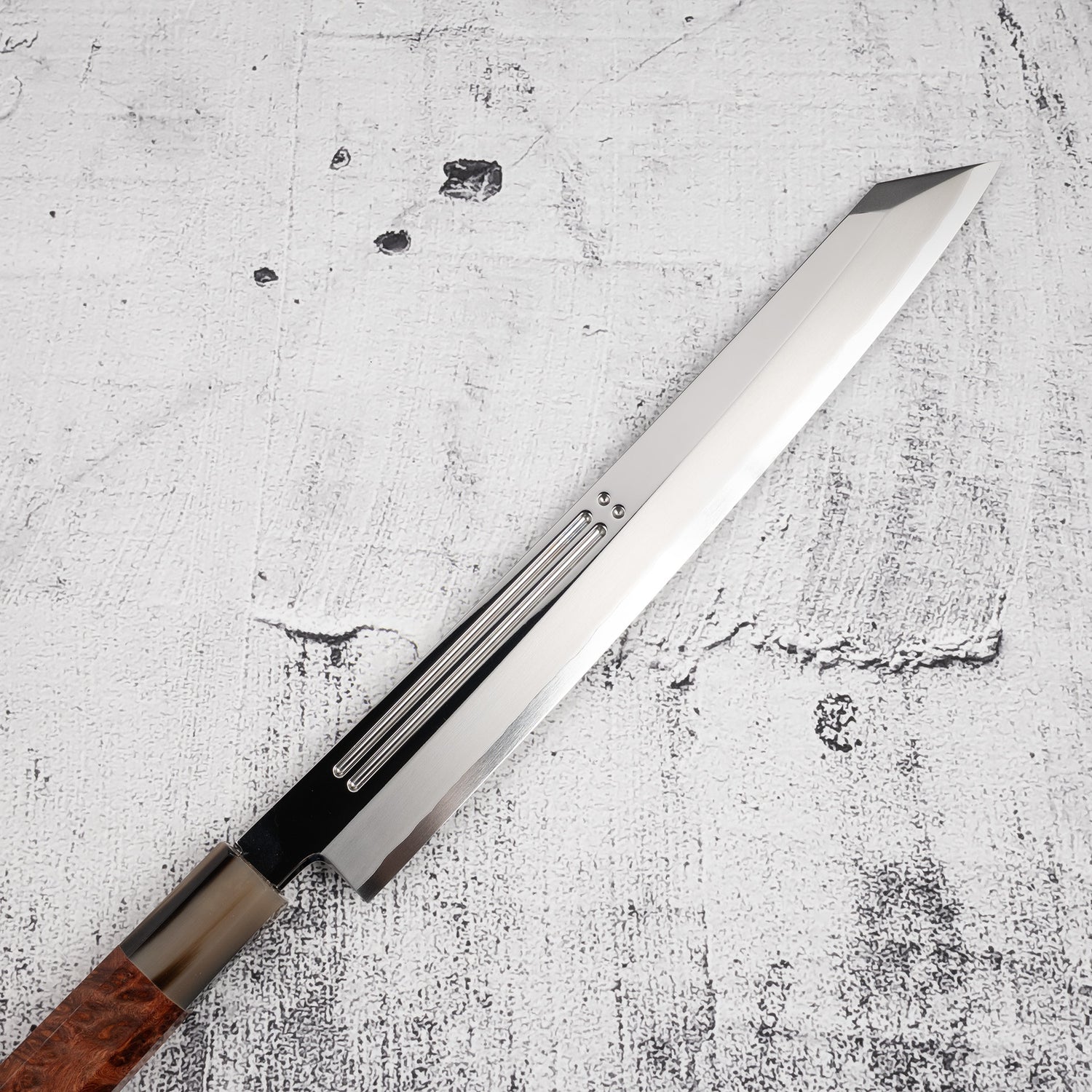
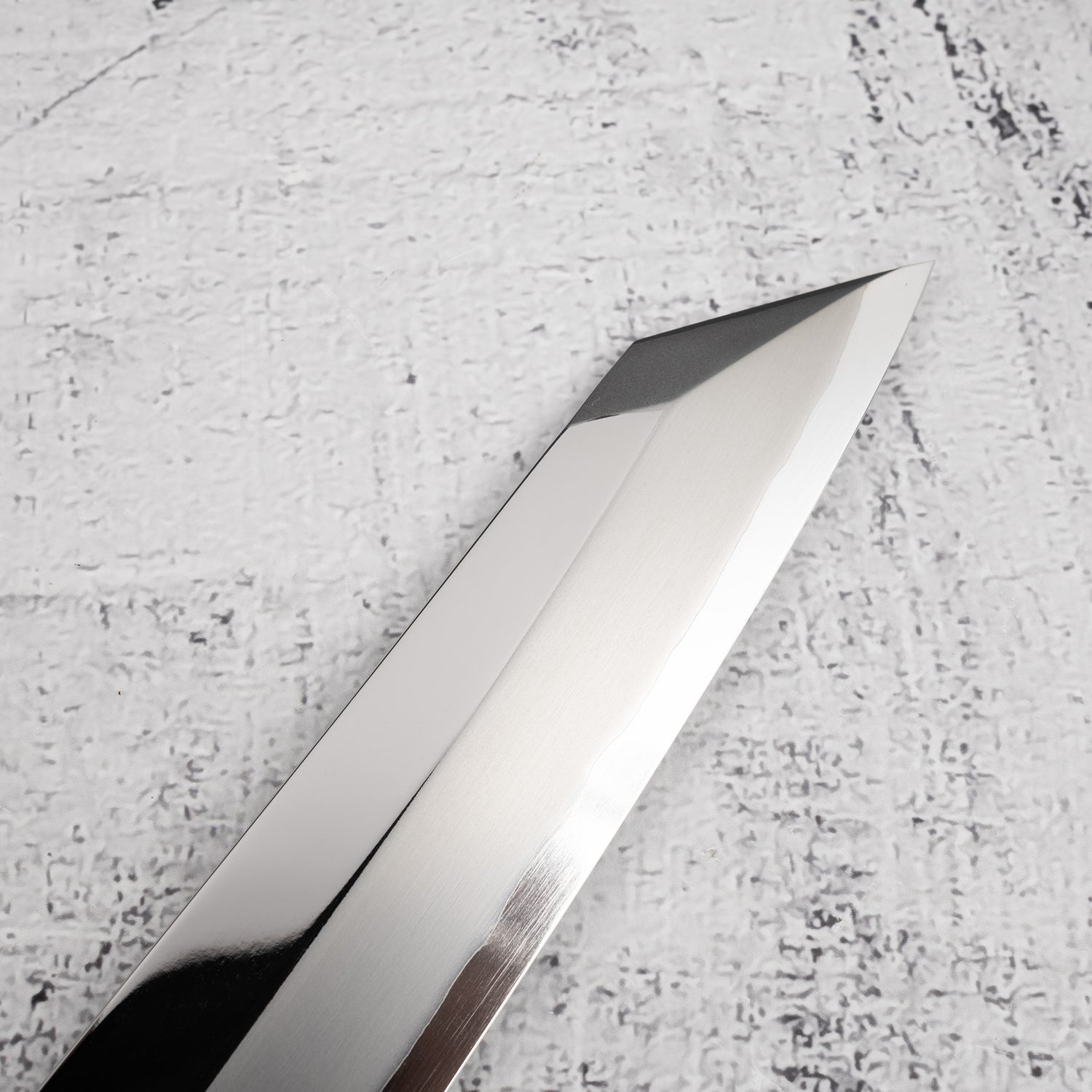
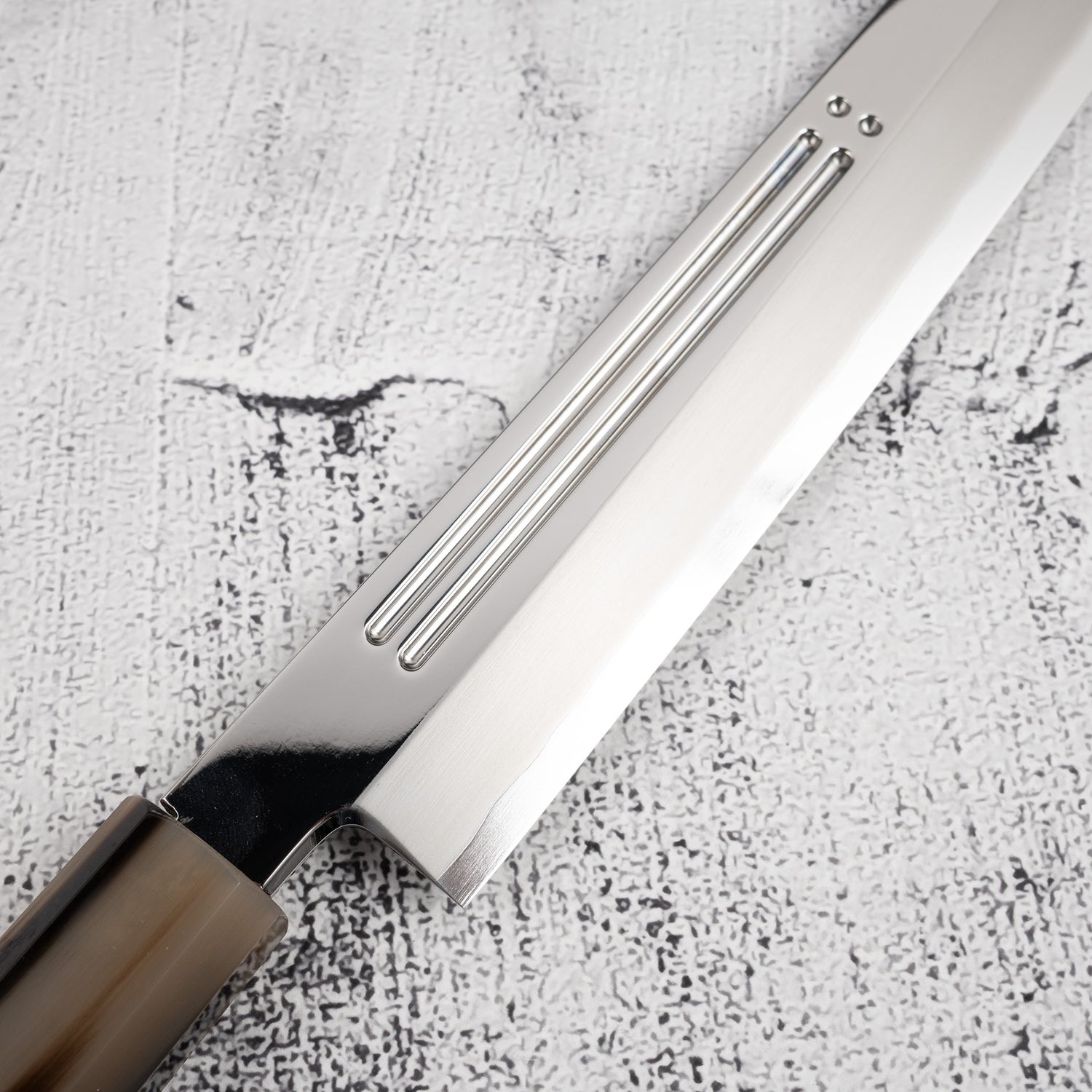
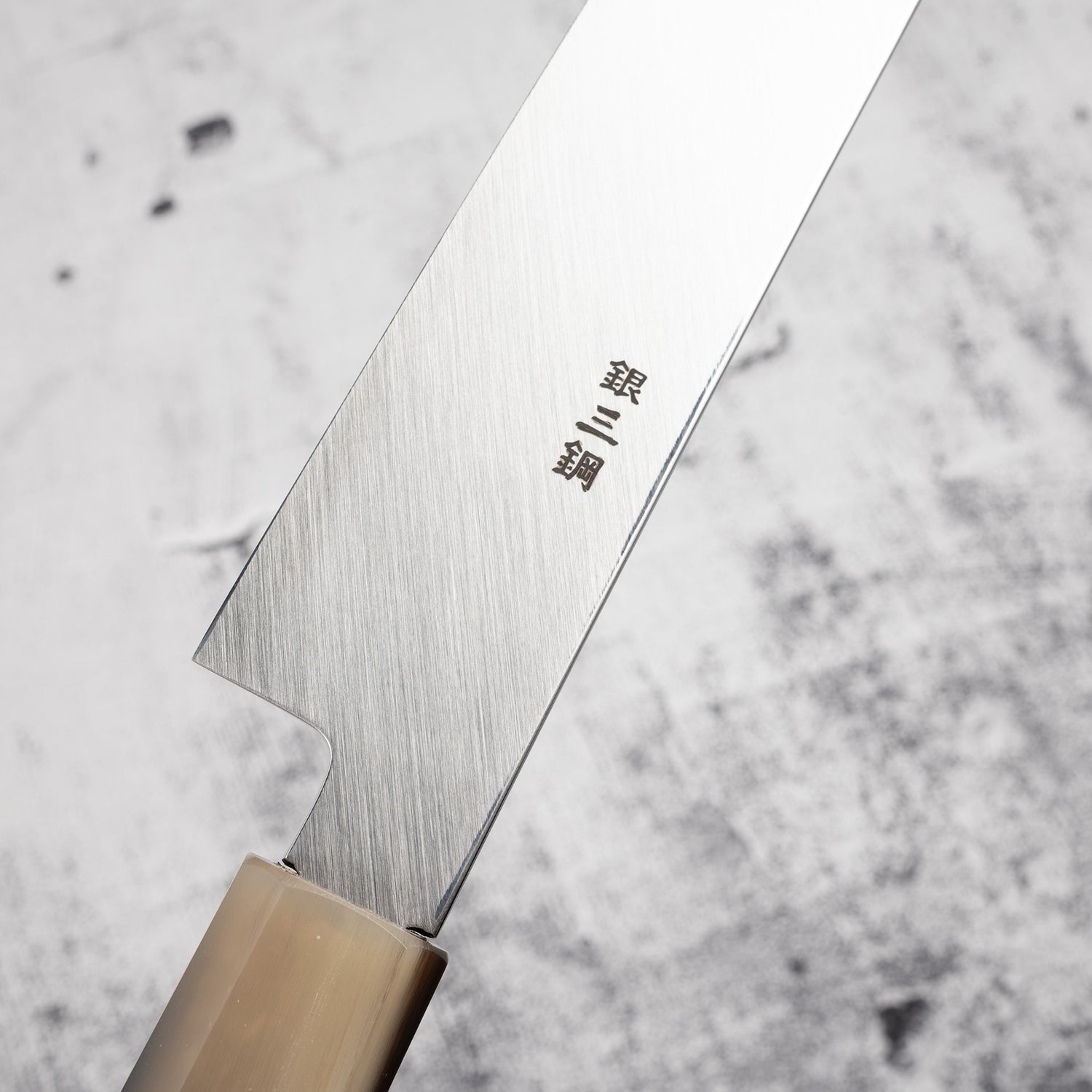
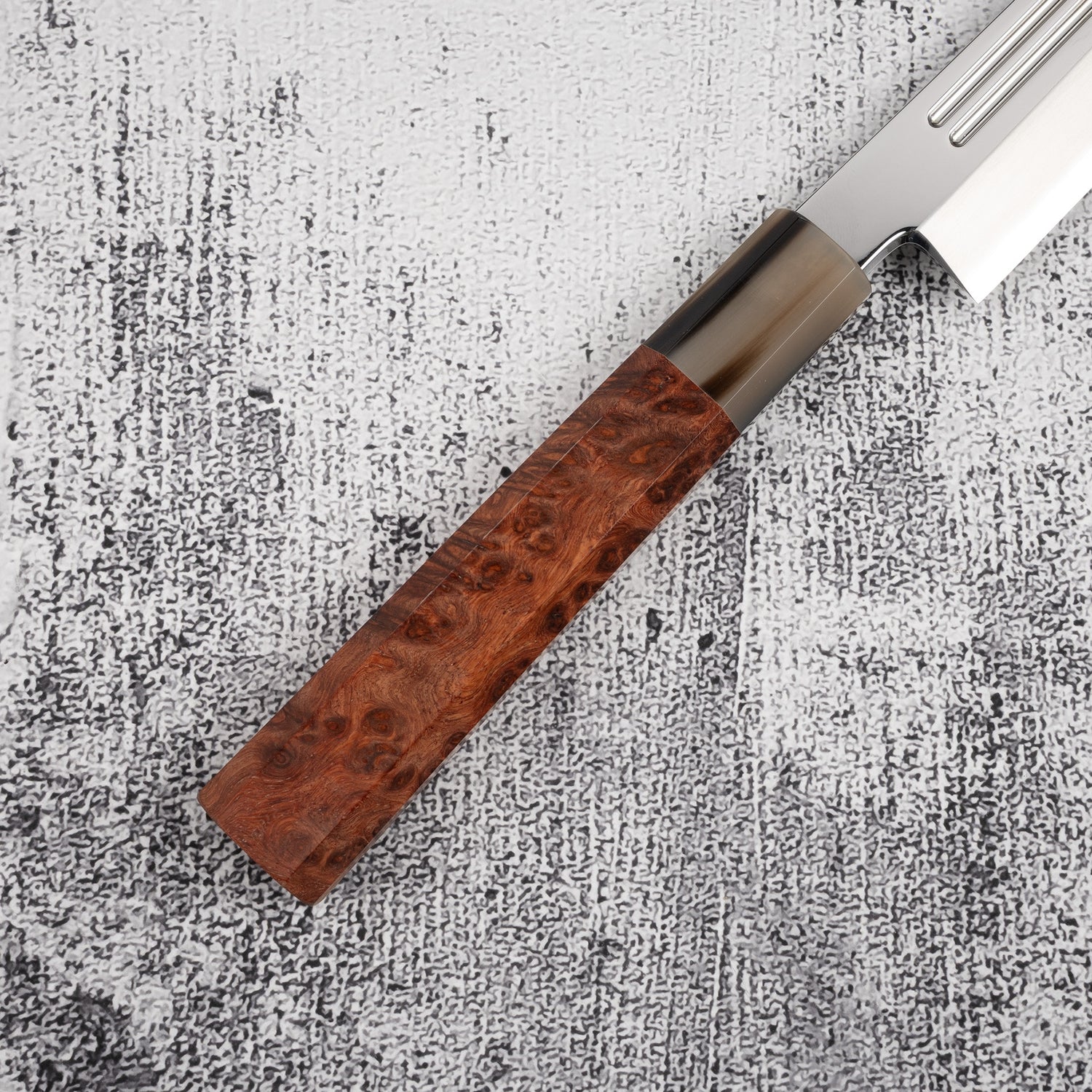
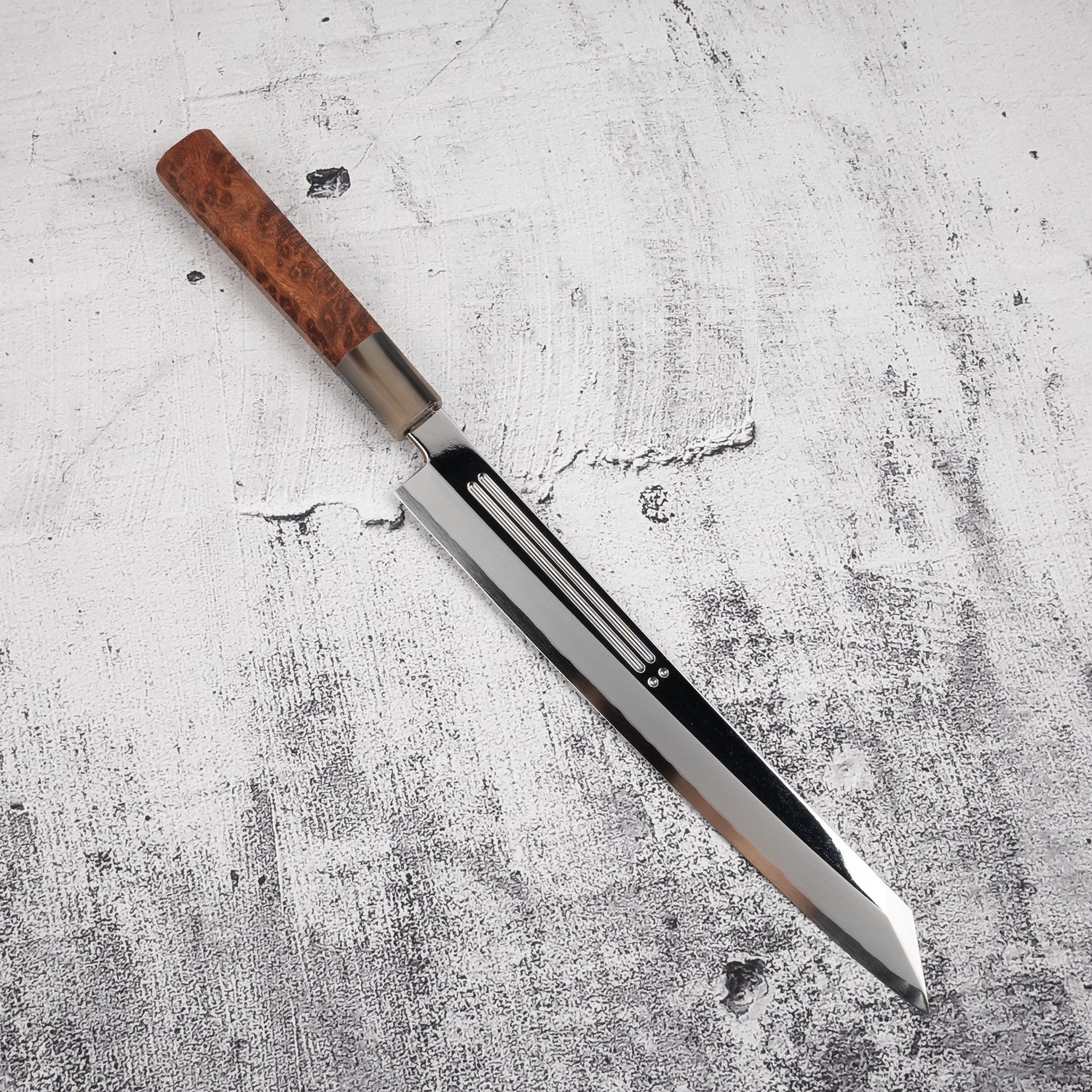
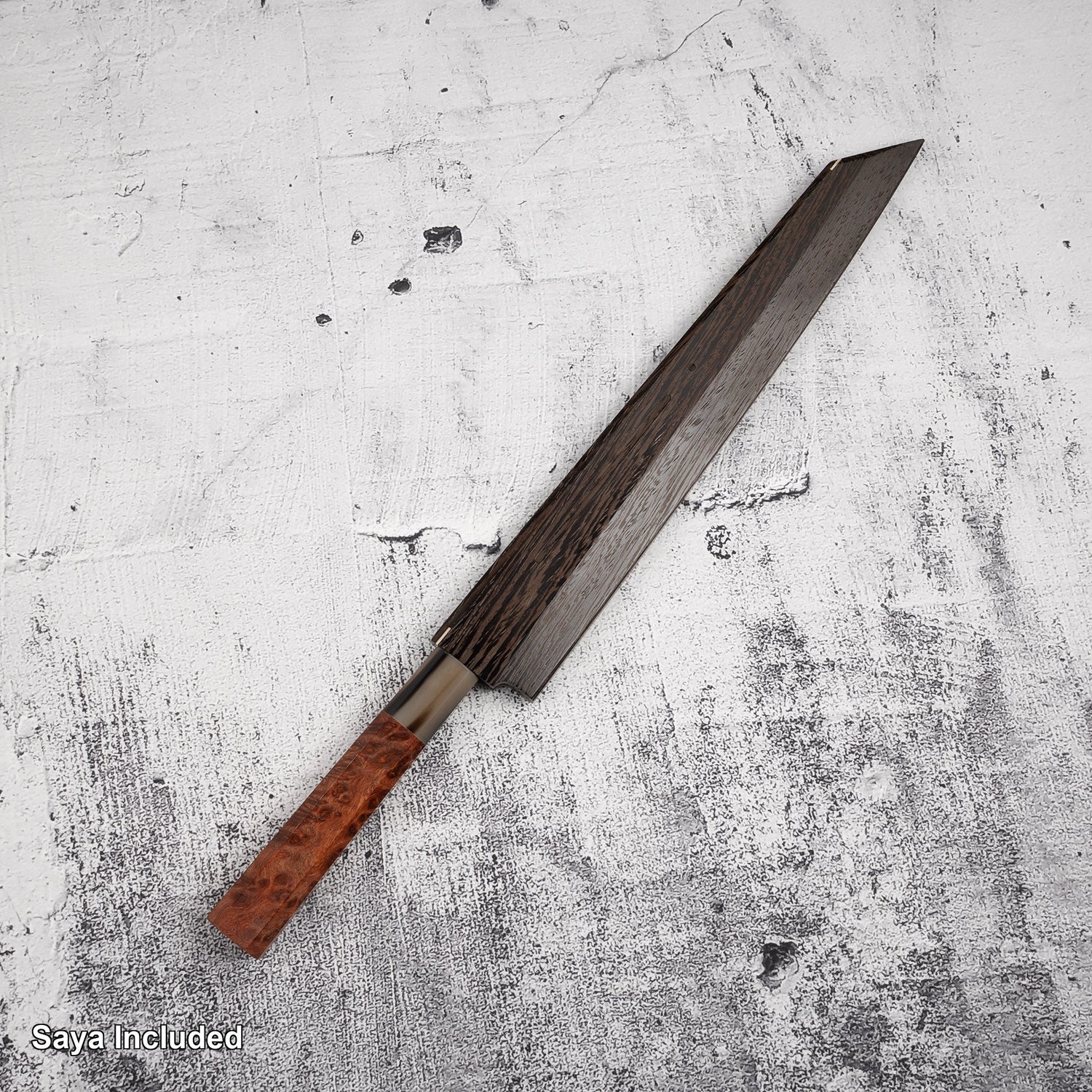
Yoshihiro Ginsan Double Fuller K-tip Yanagiba 270mm Amboyna with Saya
Yoshihiro Ginsan Double Fuller K-tip Yanagiba 270mm Amboyna with Saya is backordered and will ship as soon as it is back in stock.
Availability
Delivery unavailable for this item. Available for in-store pickup only.
-
St Peters, NSW —2 Bishop St, Unit 2, St Peters NSW 2044
-
Crows Nest, NSW —107 West St, Shop 1, Crows Nest NSW 2065Pickup only
-
Prahran, VIC —180 Commercial Road, Shop 1, Prahran VIC 3181Pickup only
Detailed Specifications
| Line | Yoshihiro No Line |
| Profile | K-tip Yanagiba / Sashimi Knife |
| Bevel Type | Single Bevel |
| Weight | 216 g 7.62 oz |
| Edge Length | 34 mm .1.34 inch |
| Heel Height | 263 mm .10.35 inch |
| Width @ Spine | 4.1 mm 0.16 inch |
| Width @ Mid | 3.9 mm 0.15 inch |
| Width @ 1cm from Tip | 0.7 mm 0.03 inch |
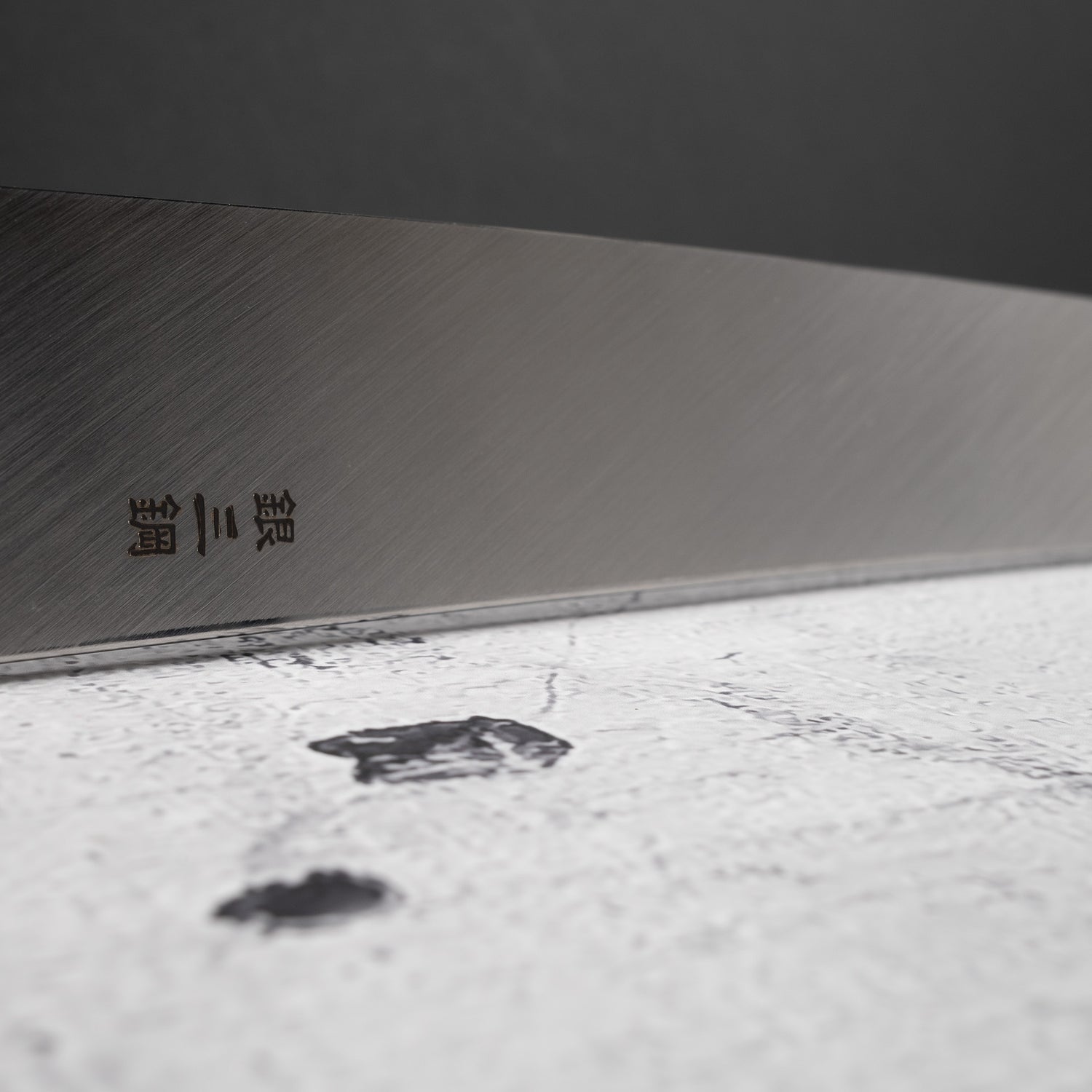
| Steel | Ginsan / Silver #3 | Stainless |
| Blade Construction | Sanmai - Soft Iron Damascus Clad |
| Hardness (HRC) | 60 - 62 |
| Handle | Amboyna Octagonal Horn |
| Region | Sakai |
| Best for |
|
This Yoshihiro 270mm K-tip Yanagiba is a single-bevel sashimi knife featuring Ginsan stainless steel and an Amboyna handle, best fit for users preparing raw fish who require corrosion resistance in a traditional profile. Forged in Sakai by Yamawaki Hamono, this blade carries Sakai Wazashu certification and represents the maker's established production standards since 1927. The K-tip variant provides a defined tip section that facilitates fine cutting tasks alongside standard long-draw slicing motions for sashimi and seafood preparation.
The Ginsan steel core measures 60-62 HRC and offers stainless properties with a fine grain structure suitable for achieving sharp edges. This san-mai construction features soft iron Damascus cladding and includes double fullers along the blade face. The knife weighs 216g with a spine thickness of 4.1mm at the heel, tapering to 0.7mm at the tip. An Amboyna wood handle is fitted to the tang, and the knife is supplied with a protective saya for storage.
- Don't cut hard things! Japanese knives are brittle so bone hacking is a NO NO!
- Wash with neutral detergent after use, and wipe dry;
- Please don't wash knife with dishwasher, it will damage the wood handle;
- Be careful not to leave the knife close to a heat source for a long time;
- It is a lot more dangerous to cut with a blunt knife than a sharp knife!
- It is best to sharpen a Japanese knife regularly on a waterstone.
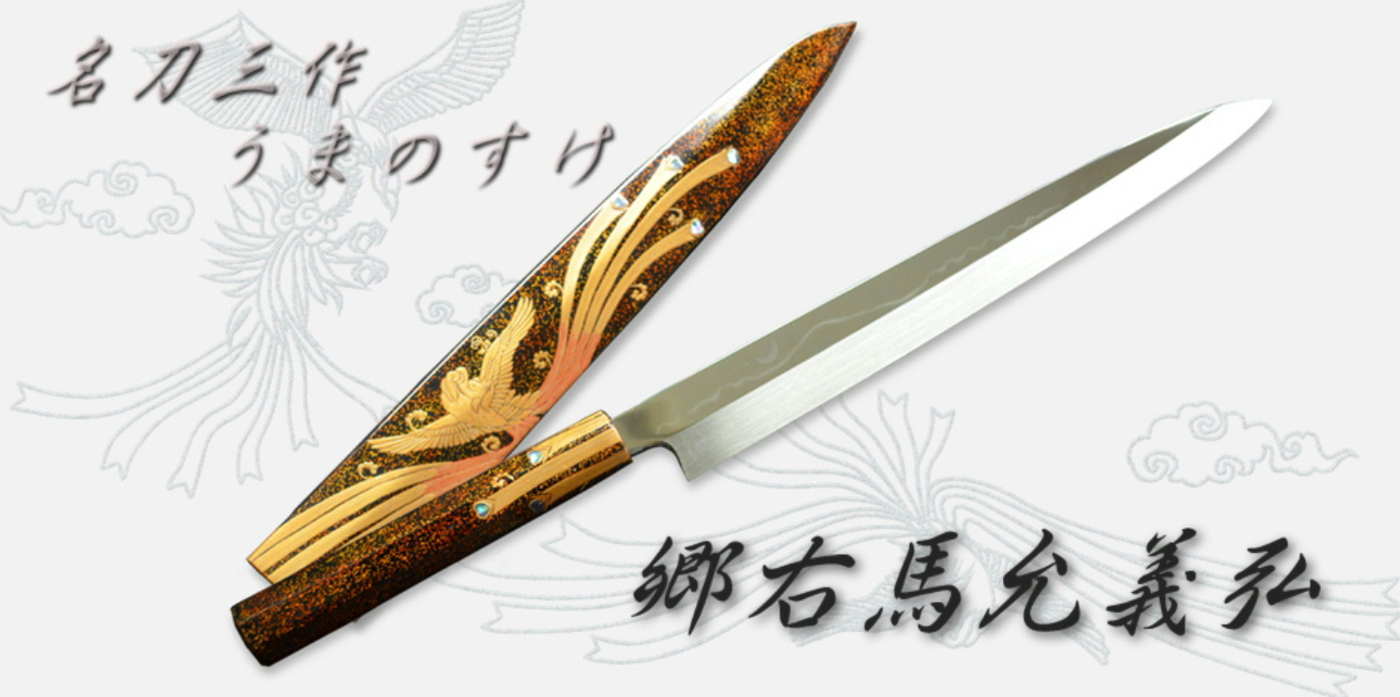
-

Profile: K-tip Yanagiba
Sashimi Knife
Slide for more >>
-
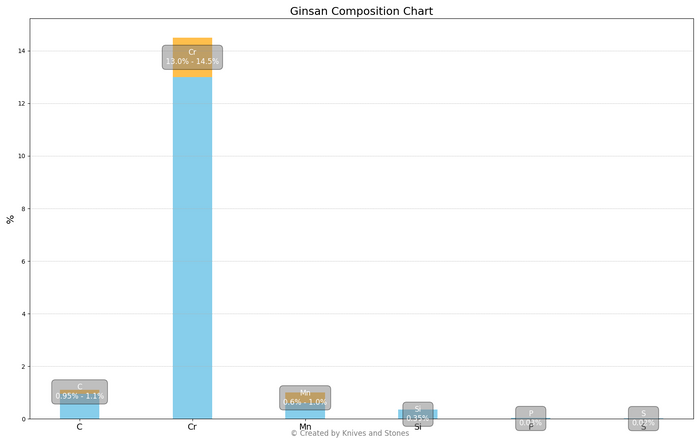
Steel: Ginsan / Silver #3
Manufacturer:
Nature: Stainless
Hardness: 60- 62
<< Slide for more >>
-
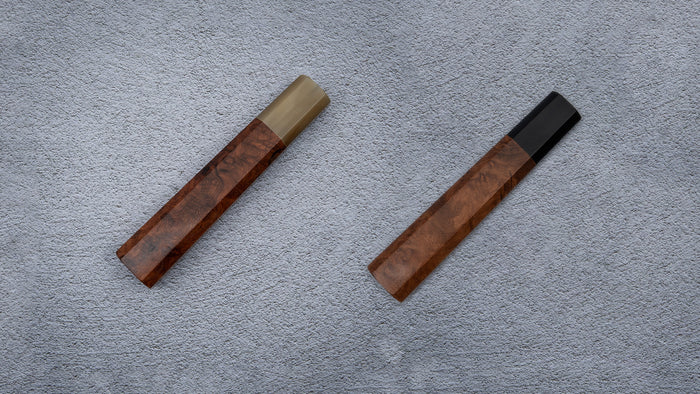
Handle Specs
Profile: Octagonal WA
Material:
<< Slide for more