Crows Nest store now open from Friday to Tuesday, in store specials!

KAI  |  SKU: KAI-SEKIMR-PT120

Kai Seki Magoroku Imayo MV Tsuchime Petty Knife 120mm

Regular price $69.95

Pickup currently unavailable at Crows Nest

Add a saya or K&S Knife Roll to receive $20 bundle discount!

Kai Seki Magoroku Imayo
Petty / Utility, Paring
Double Bevel
Weight 70 g | 2.5 oz
Edge Length 120 mm | 4 23/32″
Heel Height 27 mm | 1 1/16″
Width @ Heel 1.4 mm | 1/16″
Width @ Mid 1.4 mm | 1/16″
Width @ 1cm from Tip 0.8 mm | 1/32″
Steel MV (Molybdenum Vanadium) | Stainless
Blade Construction Monosteel
Hardness (HRC) 54 - 60
Surface Finish Nashiji
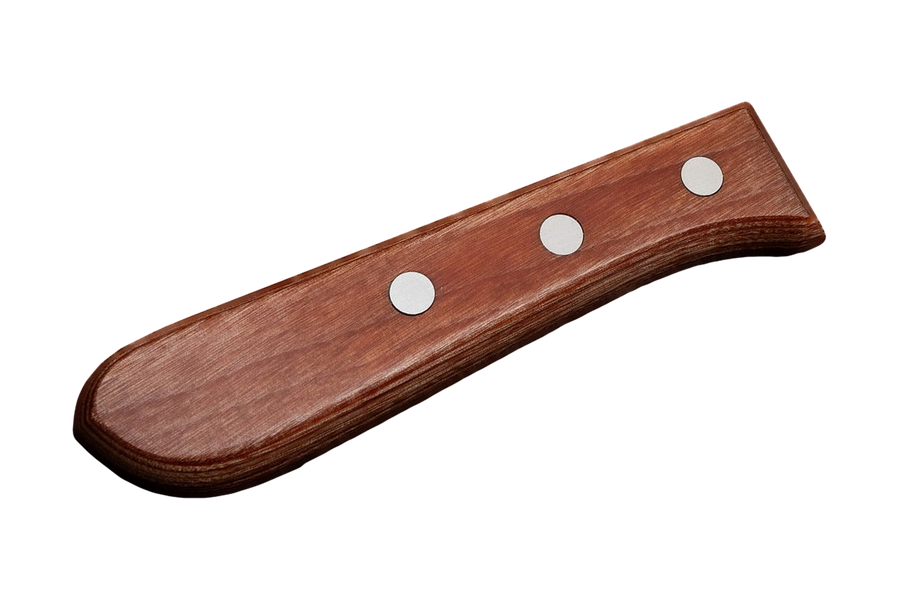
Handle Western Pakka Wood no Bolster
Region Seki
Best for
  • First-timers
  • Students
  • Enthusiasts
  • Free shipping for knives over AU$200 Australia wide.
  • World-wide shipping via DHL Express, 3 to 5 days.


The Kai Seki Magoroku Imayo line brings the heritage of Seki's legendary swordsmith Magoroku into your modern kitchen with a practical twist. Part of KAI's extensive Seki Magoroku family, the Imayo series combines traditional tsuchime (hammered) aesthetics with contemporary performance, making it an excellent entry point for those discovering Japanese knife culture.

Built from 1K6 molybdenum vanadium stainless steel hardened to 56±1 HRC, these knives offer the sweet spot between durability and sharpness retention. The 1K6 steel, with its 0.6% carbon content and 13.5% chromium, delivers reliable edge holding while remaining completely stainless — perfect for busy kitchens where maintenance time is limited. It's not the hardest steel you'll encounter, but that's actually a feature: it makes the knives easy to sharpen and forgiving to use.

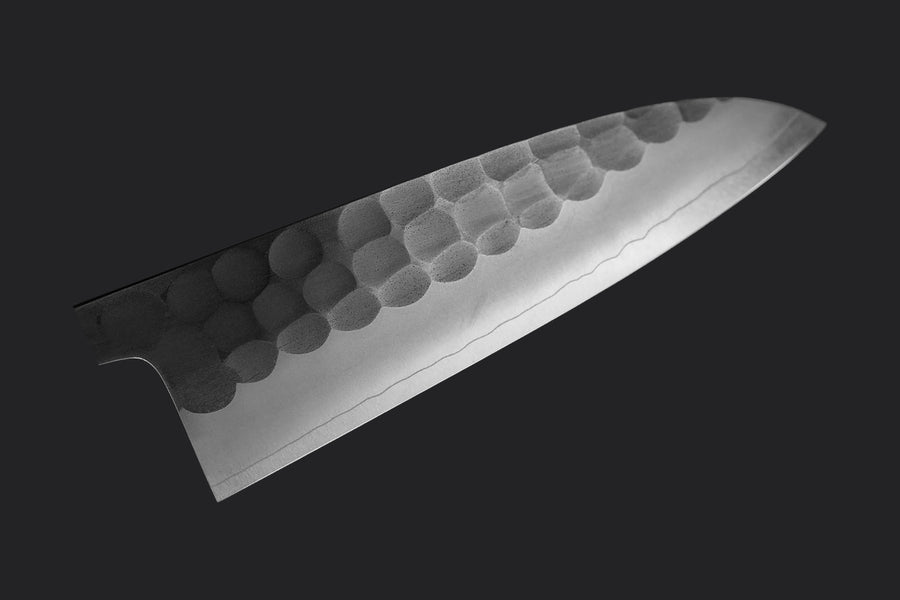
The signature tsuchime (hammered) finish isn't just for show. Those deliberate dimples across the blade surface create tiny air pockets that help food release cleanly, reducing that annoying sticking you get with mirror-polished knives. Combined with KAI's precision factory grinding and Western-style pakkawood handles, the Imayo line offers a comfortable, practical introduction to Japanese knife geometry without the intimidation factor of more traditional designs.

At this price point, the Imayo represents excellent value. You're getting genuine Japanese craftsmanship from Seki City's most established manufacturer, solid stainless steel performance, and that distinctive hammered aesthetic that makes these knives stand out in any kitchen. They're built for daily use, dishwasher-safe (though hand washing is always better), and backed by KAI's century-plus reputation for reliable cutlery.

Pros Cons
  • Budget friendly
  • Easy to look after
  • Ideal for the household
  • Great OOTB
  • Non-premium steel
  • On the thicker side
Care Instruction
  1. Don't cut hard things! Japanese knives are brittle so bone hacking is a NO NO!
  2. Wash with neutral detergent after use, and wipe dry;
  3. Please don't wash knife with dishwasher, it will damage the wood handle;
  4. Be careful not to leave the knife close to a heat source for a long time;
  5. It is a lot more dangerous to cut with a blunt knife than a sharp knife!
  6. It is best to sharpen a Japanese knife regularly on a waterstone.

KAI

KAI — A Century of Seki Blade-Making, Worldwide

KAI Corporation (貝印), founded in Seki in 1908, is the world's largest Japanese knife manufacturer and the company behind Shun (旬) and Seki Magoroku. For many knife users around the world, a Shun or a Seki Magoroku was their very first real Japanese knife — a gateway that opened the door to an entire world of Japanese blade craft. Now in its fourth generation under Hiroaki Endo, KAI operates globally from Seki City, combining over a century of blade-making heritage with modern manufacturing at scale.

Read more

貝印 — the kanji literally means "shell mark," a reference to the company's original trademark. What started in 1908 as a pocket knife workshop by Saijiro Endo (遠藤斉治郎) in Seki City has grown into one of the world's largest blade manufacturers, with over 10,000 products spanning kitchen knives, razors, medical instruments, and industrial blades. But for the knife community, KAI matters because of one thing: they brought Japanese knives to the world.

The Endo family has led KAI through four generations. The second-generation Saijiro expanded into razors after the war, creating Japan's first disposable razor. By the 1970s, the company had entered kitchen knife production and begun exporting internationally. The real game-changer came in 2000 with the launch of Shun (旬) — a premium line that combined traditional Japanese blade geometry with Western handle ergonomics and striking Damascus patterns. Shun became a global phenomenon, selling over 10 million units, and for millions of home cooks and professional chefs outside Japan, it was their first encounter with what a Japanese knife could do.

KAI's Seki Magoroku (関孫六) line carries the name of a legendary Muromachi-era swordsmith from Seki, connecting the brand directly to the city's 800-year blade-making heritage. While these are factory-produced knives rather than artisan-forged, the engineering and quality control behind them is serious — KAI's Seki factory is one of the most advanced knife production facilities in Japan, blending robotics and IoT systems with traditional heat treatment knowledge.

Today, under fourth-generation president Hiroaki Endo (遠藤浩彰), KAI operates subsidiaries in the USA, Germany, China, and India. They've won numerous design awards and continue to push boundaries — from the VG-MAX steel developed specifically for Shun to eco-friendly paper razors. Love them or debate them, KAI's role in globalising Japanese knife culture is undeniable. They opened the door that many of us walked through.

“The world's gateway to Japanese knives — Shun, Seki Magoroku, and a century of Seki blade-making at global scale.”

Est. 1908 | 明治41年
Known for Shun premium knives, Seki Magoroku line, world's largest Japanese knife manufacturer
Website kai-group.com Read more about KAI
KAI — Seki
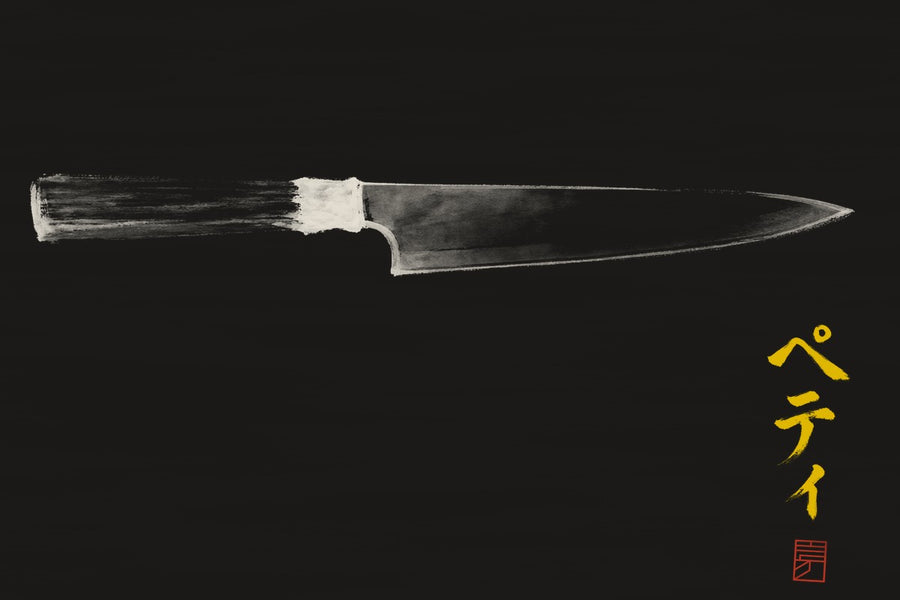
Profile: Petty
Profile

Petty

Utility, Paring

The Petty knife, a smaller Japanese utility knife, serves as an ideal tool for precision tasks such as peeling, trimming, and slicing fruits and vegetables. With a blade length ranging from 120mm to 180mm (4.7 to 7 inches), it stands out for its ability to handle detailed work like deveining shrimp or cutting garnishes. Its slightly longer and slimmer profile compared to the Western paring knife enhances its functionality for intricate tasks, making it a valuable addition to any kitchen toolkit.
Steel
MV (Molybdenum Vanadium)
Category
Stainless
Manufacturer
Unknown
Hardness
54–60 HRC
Steel

MV (Molybdenum Vanadium)

  • Manufacturer
    • Unknown
  • Nature Stainless
  • Hardness54–60 HRC
The MV steel is a generic term that used for steel with molybdenum and vanadium added to it, the carbide formed by these two elements have very high hardness but relative small in their particle sizes, which is good for increase the wear resistance of the steel without sacrifice too much toughness. MV steel is commonly stamped on lower end and entry level Japanese blades but it doesn't refer to a specific chemical composition, but rather indicate that M and V are added to the steel. MV steels are usually fully stainless with a hardness not greater than 60 HRD due to lower carbon content.
Construction: Monosteel
Construction

Monosteel

A "monosteel" construction in the context of Japanese kitchen knives refers to knives that are made from a single type of steel. Unlike traditional Japanese knives that might use a layered steel construction (like "san mai," which sandwiches a hard core steel between softer steel layers), monosteel knives are crafted from a single piece of steel throughout the blade. This type of construction can offer a balance of durability, ease of sharpening, and maintenance.

Monosteel knives are appreciated for their uniformity in material properties across the blade, providing a consistent cutting experience. This also means the characteristics of the steel will be applied to the whole blade, if a monosteel blade is made of carbon steel, the entire surface of the blade will require maintenance to prevent rust and discolouration. This too, applies to the hardness, an uniformly hardened blade can be difficult to manufacture, and can be quite difficult for uers to perform thinning.

It should be noted that monosteel knives are usually not forged, as the forged knives, along with differential heat treatment line is called Honyaki.

Finish: Nashiji
Finish

Nashiji

The "nashiji finish" on Japanese kitchen knives refers to a unique, textured surface finish that resembles the skin of an Asian pear, which is known as "nashi" in Japanese. This finish is achieved through a specific hammering and polishing technique, giving the knife blade a distinct, matte appearance with a slightly uneven, tactile surface. Beyond its aesthetic appeal, the nashiji finish also provides practical benefits. It helps to reduce food sticking to the blade by creating tiny air pockets between the food and the steel. This finish is commonly found on traditional Japanese knives, such as santokus and nakiris, and is highly valued for both its functional and visual characteristics, enhancing the overall culinary experience.

Handle
Handle

Handle Specs

  • Profile Western without bolster
  • Material
    • Pakka Wood

The most basic handle designed for mass production knives. Affordable and lightweight but still have decent durability thanks to the very stable resin infused wood firbre

1 / 5

You May Also Like