Crows Nest store now open from Friday to Tuesday, in store specials!

ONO  |  SKU: ONO-SUZUSG-NA165

Ono Suzukaze SG2 Damascus Nakiri 165mm Tsuchime

Regular price $399.95

Pickup available at Crows Nest

Usually ready in 24 hours

Add a saya or K&S Knife Roll to receive $20 bundle discount!

Ono SG2 69-layer Damascus
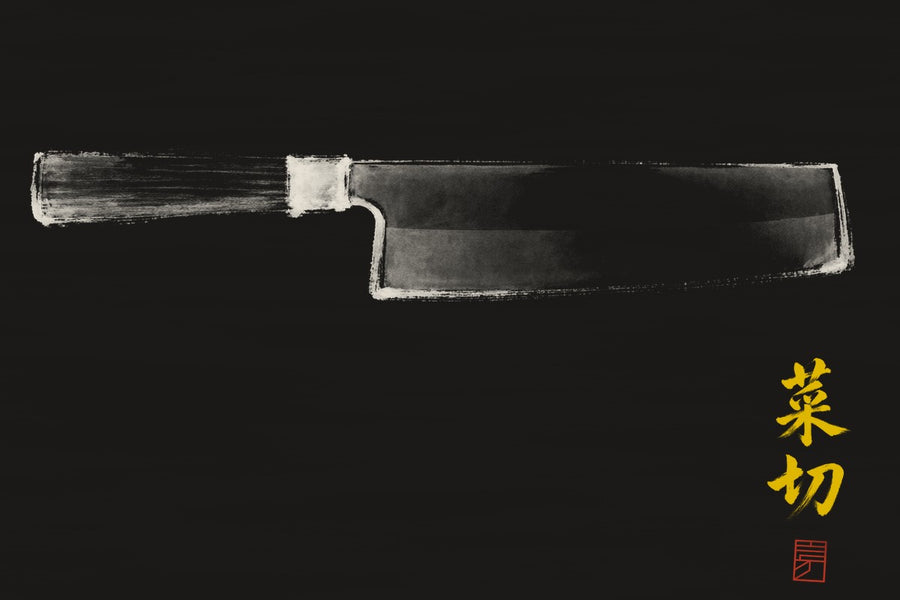
Nakiri
Double Bevel
Weight 285 g | 10.1 oz
Edge Length 166 mm | 6 17/32″
Heel Height 52 mm | 2 3/64″
Width @ Heel 2.5 mm | 3/32″
Width @ Mid 2.4 mm | 3/32″
Width @ 1cm from Tip 2.3 mm | 3/32″
Steel SG2 / R2 | Powdered | Stainless
Blade Construction Sanmai - Stainless Damascus Clad
Hardness (HRC) 62 - 64
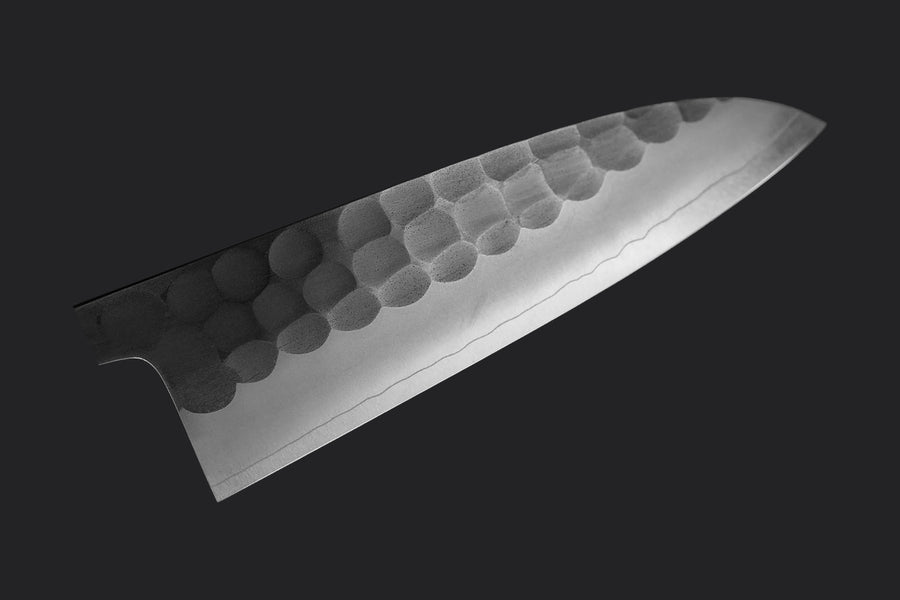
Surface Finish Tsuchime
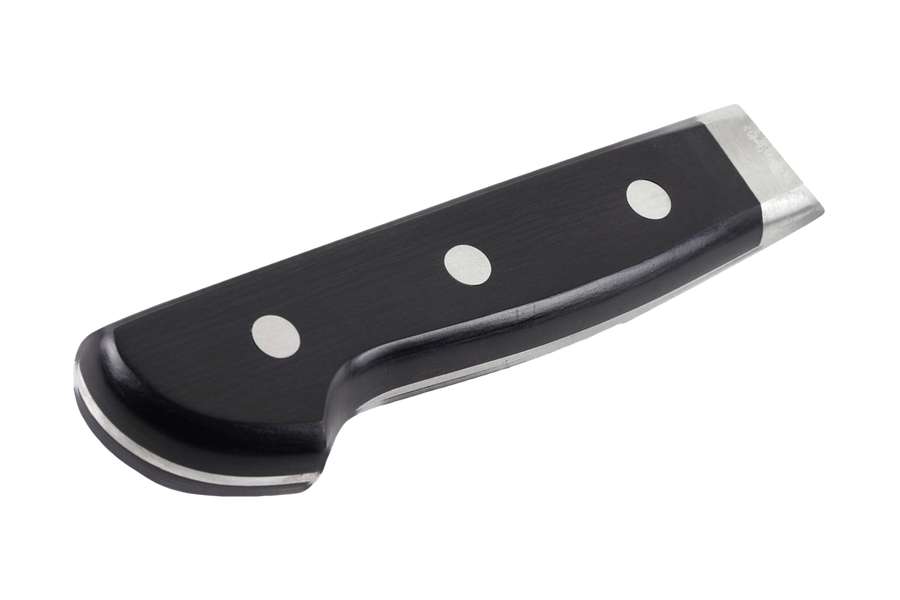
Handle Western Pakka Wood with Bolster
Region Seki
Best for
  • Pro chefs
  • First-timers
  • Free shipping for knives over AU$200 Australia wide.
  • World-wide shipping via DHL Express, 3 to 5 days.


This series is essentially Ono's own iteration of the Shun Fuji sereis.

Forged in Seki City, a name synonymous with legendary Japanese cutlery, the Ono Suzukaze series is built for cooks who aren’t afraid to make a statement. This is a knife defined by its confident, tall profile, offering a smooth, commanding rock through herbs and vegetables without worrying about knuckle clearance.

At its core lies SG2 powdered steel, renowned for its exceptional sharpness and steadfast edge retention. It’s cloaked in 69 layers of contrasting Damascus, polished to highlight the pattern but finished with a practical tsuchime (hammered) texture along the edge to combat food sticking.

The unique triangular Western WA handle is its masterpiece. It merges the balance of a Wa handle with the ergonomic confidence of a Western one, crafted from handsome Pakkawood for a secure, comfortable grip that feels like a natural extension of your hand.

The Suzukaze doesn’t whisper; it performs. It’s Seki craftsmanship at its most bold—a blend of striking looks, innovative design, and serious cutting power.

Pros Cons
  • Ideal for the household
  • Great artistic
  • Excellent fit and finish
  • Relatively hard to sharpen
  • High budget
Care Instruction
  1. Don't cut hard things! Japanese knives are brittle so bone hacking is a NO NO!
  2. Wash with neutral detergent after use, and wipe dry;
  3. Please don't wash knife with dishwasher, it will damage the wood handle;
  4. Be careful not to leave the knife close to a heat source for a long time;
  5. It is a lot more dangerous to cut with a blunt knife than a sharp knife!
  6. It is best to sharpen a Japanese knife regularly on a waterstone.

Ono Knife

Ono Knife — Seki's Best-Kept Secret

Behind many of the world's most acclaimed Japanese knives stands Ono Knife from Seki City. For decades, this master cutler has been the secret OEM powerhouse, crafting blades for elite international brands (most notably the global phenomenon, Shun). This is a testament to their peerless technical mastery and quality control.

While their OEM work is legendary, the Ono brand itself represents their pure, unadulterated craftsmanship. They specialize in advanced powdered steel technology like SG2/R2 and VG10, creating blades of exceptional hardness, razor-sharpness, and stunning durability. Their proprietary "Ice Hardening" and "DynaSUS" processes push the limits of metallurgy.

Free from the constraints of designing for others, Ono Knives are where their engineers' passion truly shines—offering serious chefs and connoisseurs direct access to Seki's finest production innovation, incredible sharpness, and flawless fit and finish from the source itself.

Read more

In the cutlery world, some names are marketed globally, while others build empires behind the scenes. Ono Knife is the latter. For over half a century, this Seki City-based manufacturer has been the engineering and production mastermind, operating as the original equipment manufacturer (OEM) for some of the most prestigious and recognizable knife brands on the international stage. If you've owned a top-tier Japanese-style knife, there's a strong chance it was born in Ono's state-of-the-art facility.

This role as a premier OEM is not a hidden secret; it's a badge of honor. It signifies an unparalleled command of every aspect of knife-making: from mastering the complex sintering of high-end powdered steels (SG2/R2, VG10) to perfecting advanced manufacturing techniques like their proprietary "Ice Hardening" and "DynaSUS" treatment for ultimate corrosion resistance. Their quality control is legendary, ensuring every blade that leaves their factory is flawless.

But the Ono brand itself is where this expertise is unleashed without compromise. Liberated from the specific design briefs of client brands, Ono knives are a pure expression of their technical prowess. They represent direct access to Seki's cutting edge—literally and figuratively. You experience the result of decades of R&D focused on one goal: creating tools of phenomenal performance.

This means blades with devastating, long-lasting sharpness, impeccable balance, and ergonomic handles designed for professional use. Choosing an Ono-branded knife means bypassing the marketing to acquire a instrument from the very source that sets the global standard. It’s a choice for those who value the substance of metallurgical innovation and impeccable execution over brand recognition, connecting you directly to the Seki craftsmen who have been quietly shaping the world of cutlery for generations.

“Seki's OEM powerhouse — the factory behind the world's biggest knife brands, now forging under their own name.”

Est. 1916 | 大正5年
Known for OEM manufacturing for global brands (incl. Shun), Ice Hardening treatment, powdered steel mastery
Website onoknife.com Read more about Ono Knife
Ono Knife — Seki
Profile: Nakiri
Profile

Nakiri

The Nakiri knife is a distinctive tool in the Japanese kitchen, resembling a slender, shorter variant of a Chinese cleaver and serving as the household counterpart to the professional-grade Usuba. It is characterized by its relatively flat edge profile, designed specifically for a chopping motion ideal for vegetable preparation. Unlike knives intended for slicing or sawing motions, the Nakiri's design emphasizes straight, clean cuts through vegetables without the need for pushing or rocking. Its blade is notably thin, underscoring its specialization for tasks that do not involve contact with bones, even small ones. This specialization makes the Nakiri an indispensable tool for those seeking precision and ease in vegetable preparation.
Composition

SG2 / R2 Element Composition

Compare with
    SG2 / R2
    14.0% 10.5% 7.0% 3.5% 0
    C Carbon 1.25%
    Primary hardening element. Raises hardness and wear resistance — but too much increases brittleness and corrosion susceptibility. As a reference: German 1.4112 (~0.5%) sits at the low end; VG-10 (~1.0%) is a common mid-range; SG2 (1.25–1.45%) and ZDP-189 (~3.0%) represent high and extreme ends respectively.
    C
    1.25%
    Cr Chromium 14.0%
    Raises corrosion resistance; 13%+ qualifies steel as stainless. Also improves hardenability and wear resistance. In kitchen use, higher chromium levels contribute to a slight drag or sticking sensation when cutting — a trade-off for the rust resistance it provides.
    Cr
    14.0%
    V Vanadium 1.8%
    Forms extremely hard carbides for superior edge retention. Also refines grain structure, improving toughness.
    V
    1.8%
    Mo Molybdenum 2.3%
    Improves hardenability and toughness. Boosts corrosion resistance and helps the steel hold hardness under heat.
    Mo
    2.3%
    Mn Manganese 0.4%
    Aids hardenability and strength. Acts as a deoxidiser during smelting. Excess can reduce toughness.
    Mn
    0.4%
    Si Silicon 0.5%
    Strengthens the steel matrix and acts as a deoxidiser. Improves hardness and resistance to oxidation.
    Si
    0.5%
    P Phosphorus 0.03%
    Impurity from the smelting process. Even small amounts cause brittleness — steelmakers keep this as low as possible.
    P
    0.03%
    S Sulfur 0.03%
    Impurity that reduces toughness and promotes brittleness. Intentionally added only in free-machining steels.
    S
    0.03%
    C — Carbon Cr — Chromium V — Vanadium Mo — Molybdenum Mn — Manganese Si — Silicon P — Phosphorus S — Sulfur
    Hardness 62–64 HRC
    555759616365+
    Steel
    SG2 / R2
    Category
    Stainless
    Process
    Powder Metallurgy (PM)
    Manufacturer
    Takefu Special Steel, Japan 🇯🇵
    Hardness
    62–64 HRC
    Steel

    SG2 / R2

    • Manufacturer
      • Takefu Special Steel, Japan
    • Nature Stainless
    • Hardness62–64 HRC
    SG2, also known as Super Gold 2 or R2 steel, is a high-end powdered tool steel by Takefu Special Steel, known for its excellent edge retention, wear resistance, and ability to achieve a hardness of up to 64 HRC. Identical to Kobelco Steel's R2, it's prized in premium knife making for its fine edge sharpness and durability. The powdered nature ensures uniform carbide distribution, enhancing toughness and reducing chipping risks. SG2/R2 is ideal for those seeking top performance and longevity in their cutting tools.
    Construction: Sanmai - Stainless Damascus Clad
    Construction

    Sanmai - Stainless Damascus Clad

    Sanmai(Three-Piece) is a common construction for double bevel knives where two pieces of softer cladding steel are forgewelded to each side of a harder core steel. The harder but more brittle core steel will form the hard cutting edge after heat treating, and the softer cladding will support the core to increase the overall strength of the blade.

    Damascus Sanmai utilize damascus steel as the cladding material for the Sanmai construction, which adds aesthetic feature to the blade. On the Kitchen knives with stainless core steel, the damascus cladding will be stainless, this means they will also protect the carbon/semi-stainless core from rusting/discolouration.

    The soft cladding enables the thinning process to be a lot easier than a honyaki or monosteel construction. However, when the cladding is made of damascus, whether etched, polished or mirror polished, the thinning process will take a toll on the cladding, meaning the damascus won't look the same as when it was taken out of the box.

    Finish: Tsuchime
    Finish

    Tsuchime

    The "Tsuchime" finish in Japanese kitchen knives refers to a distinctive hammered texture on the blade's surface. This traditional technique not only adds a unique aesthetic appeal but also provides practical benefits, such as reducing drag and preventing food from sticking to the blade during slicing. It's a hallmark of craftsmanship that blends functionality with artistry, making each knife not only a tool but a piece of art.

    Handle
    Handle

    Handle Specs

    • Profile Western with bolster
    • Material
      • Pakka Wood

    Western Pakka Wood handle is the common choice for entery level knives, in some cases, they will be made with bolster that is welded to the blade. The Pakka wood created by laminate wood with resin, creating a dense material that can have layers of different color. Compared with natural timber, this engineered wood is harder and absorb less water, in addition, the low cost of production makes it ideal of grip of entry level knife.

    1 / 5

    You May Also Like