PRAHRAN STORE NOW OPEN · THU–MON · 10AM–6PM

Sakai Takayuki  |  SKU: ST_KUROKAGE_PT150

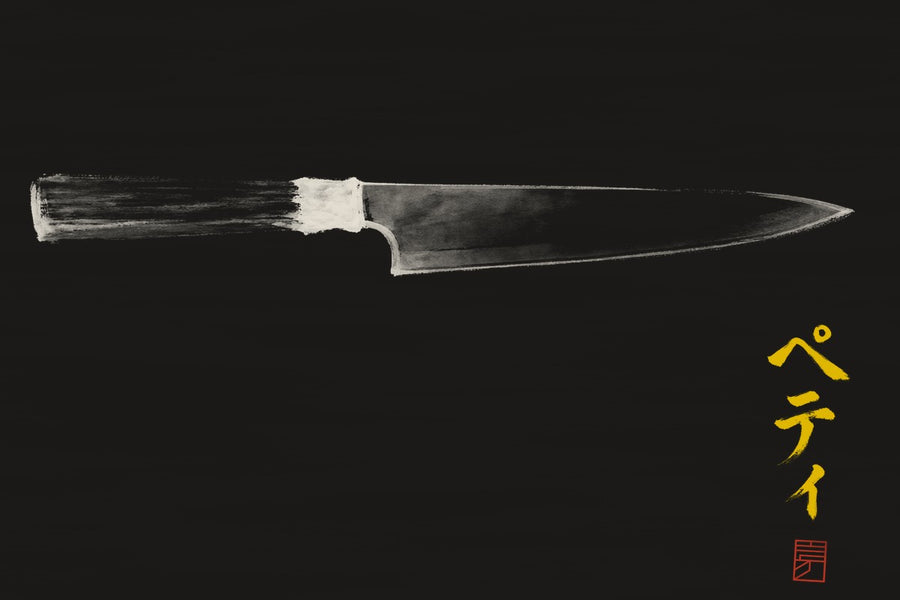
Sakai Takayuki Kurokage VG10 Petty 150mm

Regular price $228.00

Sold out right now

Leave your email and we’ll send one message the moment it’s back in stock.

One email, no marketing. Privacy policy.

Availability

  • St Peters, NSW —
    2 Bishop St, Unit 2, St Peters NSW 2044
  • Crows Nest, NSW —
    107 West St, Shop 1, Crows Nest NSW 2065
    Pickup only
  • Prahran, VIC —
    180 Commercial Road, Shop 1, Prahran VIC 3181
    Pickup only
Detailed Specifications
Line Sakai Takayuki Kurokage VG10
Profile Petty / Utility knife
Steel VG10 | Stainless
Blade Construction Sanmai - Stainless Clad
Hardness (HRC) 59 - 61
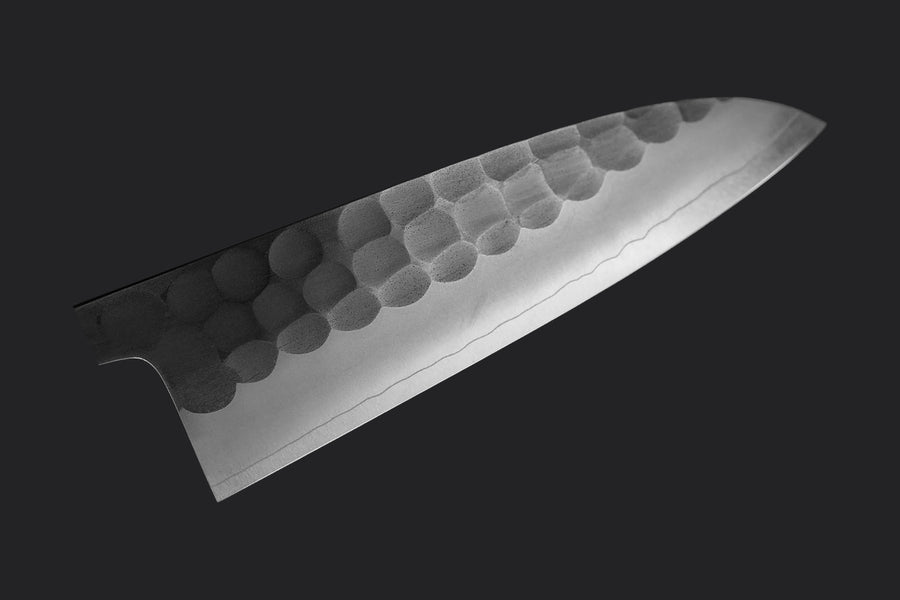
Surface Finish Tsuchime
Handle
Region Sakai
Best for
  • First-timers
  • Household
  • Gift buyers
  • Free shipping for knives over AU$200 Australia wide.
  • World-wide shipping via DHL Express, 3 to 5 days.


Kurokage VG10 is Sakai Takayuki's stainless workhorse line for everyday use. Each blade pairs a Takefu VG10 stainless core with a hammered finish and a Teflon coating the maker says gives superb food release.

VG10 is a well balanced stainless steel, easy to sharpen and able to hold a working edge through extended use. The profiles are a touch thicker behind the edge than our finer Japanese lines, but that is a sensible trade here, since it gives the edge some forgiveness while a new user settles into waterstone sharpening.

Every knife in the line comes on an octagonal wa handle, with the santoku, gyuto and petty in wenge joined by a K-tip (kengata) santoku and gyuto for those who prefer a straighter edge and a sharper point for tip-led work. A good first step into Japanese knives that stays low maintenance.

Pros Cons
  • Budget friendly
  • Easy to look after
  • Ideal for the household
  • Not the thinnest geometry
Care Instruction
  1. Don't cut hard things! Japanese knives are brittle so bone hacking is a NO NO!
  2. Wash with neutral detergent after use, and wipe dry;
  3. Please don't wash knife with dishwasher, it will damage the wood handle;
  4. Be careful not to leave the knife close to a heat source for a long time;
  5. It is a lot more dangerous to cut with a blunt knife than a sharp knife!
  6. It is best to sharpen a Japanese knife regularly on a waterstone.

Sakai Takayuki

Aoki Hamono, the owner of Takayuki brand, is the largest maker of Sakai.

Sakai is the largest knife making region of professional single bevel knives, with over 600 years of knife making history. Sakai Takayuki stands out as the largest brand in the region. These knives are built for precision slicing and a keen edge, and cater to professional chefs and culinary enthusiasts. At the heart of Sakai Takayuki's operations is the Sanbo Factory, a dedicated hand forge knife plant. Contrary to the notion of it being a place of innovation, the Sanbo Factory is focused on the traditional art of knife-making, where skilled artisans employ time-honored techniques to create knives that are both functional and beautiful.

The brand also collaborates with Sakai craftsmen like Itsuo Doi, who works exclusively for Sakai Takayuki.

“The undisputed leader of Sakai makers. ”

Est. 1947 | 昭和22年
Known for Classic Sakai knives, unique engraving.
Website aoki-hamono.co.jp Instagram @sakaitakayuki_knife_gallery Read more about Sakai Takayuki

Sakai Takayuki · Sakai

Knife details

Frequently asked questions

What is a petty knife and when do I need one?

A petty knife is a small Japanese utility knife, typically with a blade between 120mm and 180mm, designed for precision tasks like peeling, trimming, and slicing fruits and vegetables. You need one when your main chef’s knife feels too large for detail work, think deveining shrimp, cutting garnishes, or any in-hand peeling where a bigger blade gets in the way. Its slightly longer and slimmer profile than a Western paring knife gives you more control for intricate cuts without sacrificing the nimble feel you want for small jobs. If you regularly find yourself reaching for a smaller blade for finishing work, a petty fills that gap cleanly.

A petty is not a replacement for a gyuto or santoku. It lacks the blade length and belly for efficient chopping, rocking, or breaking down larger proteins. If your work is mostly bulk prep, like dicing onions or slicing roasts, a petty will feel slow and underpowered. It also won’t handle heavy tasks like splitting bones or prying, so treat it as a precision tool, not an all-rounder.

The petty’s role in a Japanese kitchen is as the smaller counterpart to the gyuto, built for tasks where a full-size blade is clumsy. At Knives and Stones, the petty category covers a range of steels including VG10, White#2, Swedish Steel, VG5, SG2, and MV, from makers like Sakai Takayuki, Masamoto Sohonten, Ryusen, Nigara, Hatsukokoro, and Sentan. Most are double-beveled, and the blade length runs from 120mm to 180mm, which is what gives it that balance of reach and precision. For more on how this fits into your knife kit, see the Knives and Stones Education Centre.

You May Also Like