PRAHRAN STORE NOW OPEN · THU–MON · 10AM–6PM

Yu Kurosaki  |  SKU: KURO-SGSZK-PT150

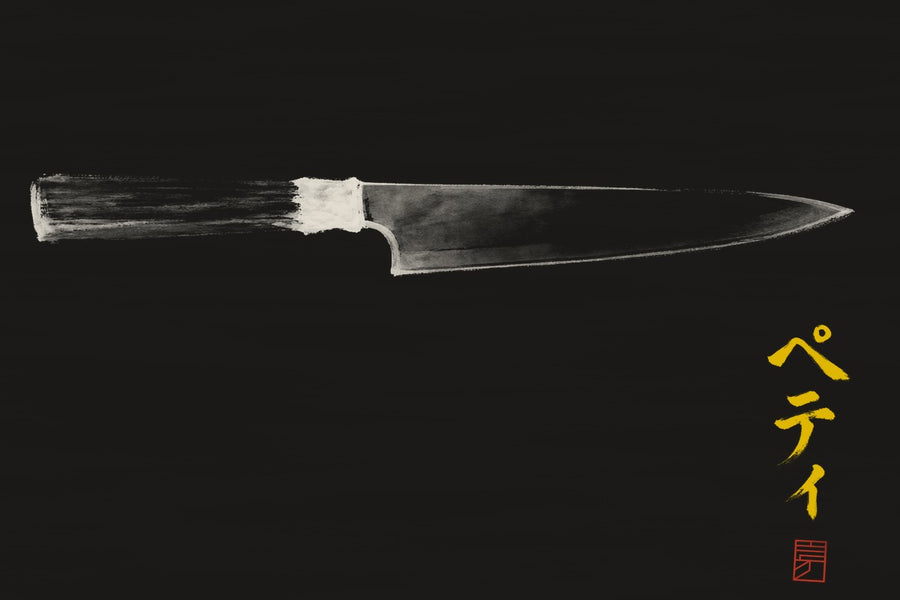
Yu Kurosaki Shizuku SG2 Petty 150mm

Regular price $220.00

Sold out right now

Leave your email and we’ll send one message the moment it’s back in stock.

One email, no marketing. Privacy policy.

Availability

  • St Peters, NSW —
    2 Bishop St, Unit 2, St Peters NSW 2044
  • Crows Nest, NSW —
    107 West St, Shop 1, Crows Nest NSW 2065
    Pickup only
  • Prahran, VIC —
    180 Commercial Road, Shop 1, Prahran VIC 3181
    Pickup only
Detailed Specifications
Line Kurosaki Shizuku
Profile Petty / Utility knife
Bevel Type Double Bevel
Weight 77 g | 2.7 oz
Edge Length 150 mm | 5 29/32″
Heel Height 30 mm | 1 3/16″
Width @ Heel 1.7 mm | 1/16″
Width @ Mid 1.5 mm | 1/16″
Width @ 1cm from Tip 1.1 mm | 3/64″
Steel SG2 / R2 | Powdered | Stainless
Blade Construction Sanmai - Stainless Clad
Hardness (HRC) 62 - 64
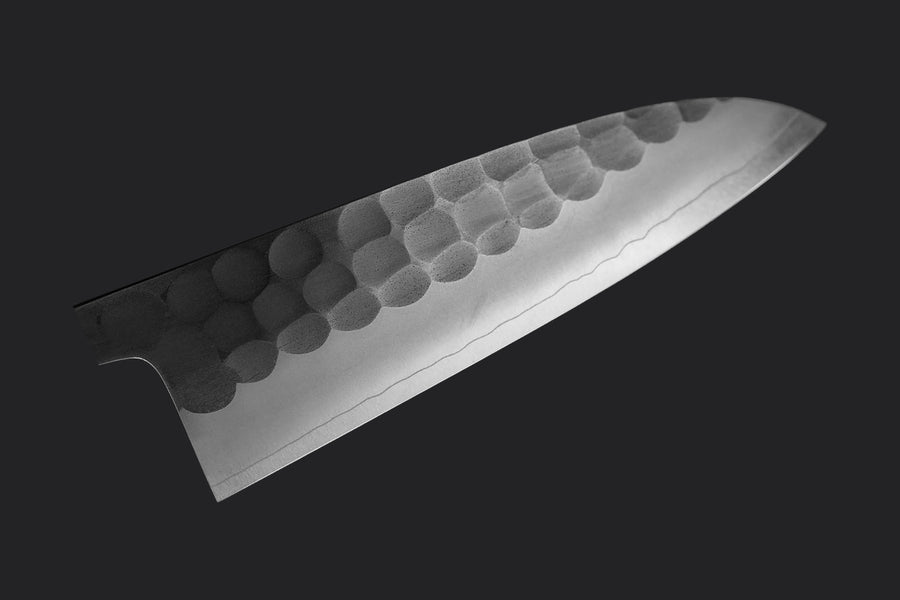
Surface Finish Tsuchime
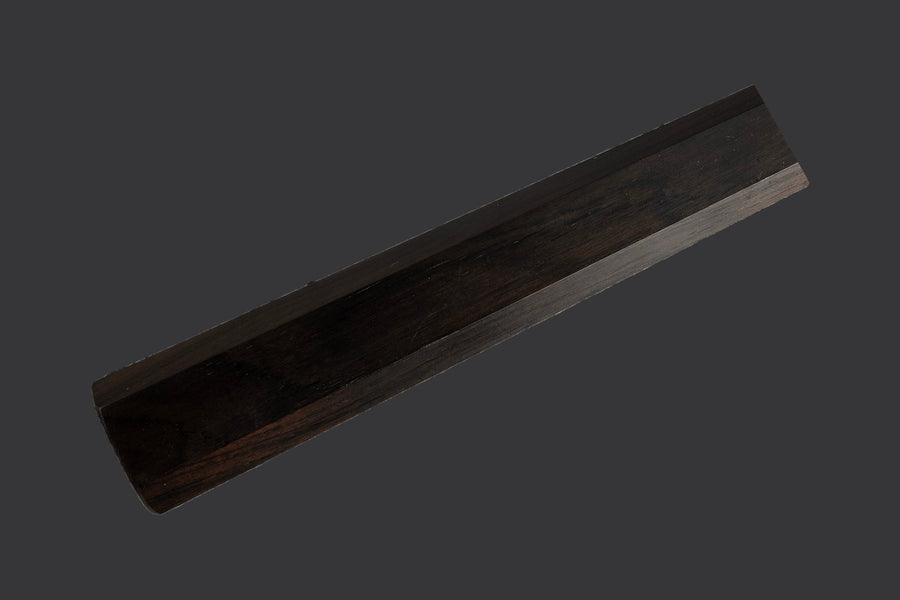
Handle Octagonal Ebony
Region Takefu
Best for
  • Pro chefs
  • Free shipping for knives over AU$200 Australia wide.
  • World-wide shipping via DHL Express, 3 to 5 days.


Just like the legendary Fujin and Raijin, Shizuku(雫, droplet) is one of the original forged lineups produced by Yu Kurosaki that got widely recognized and praised by customers across the world. With years of refinement and adjustment, the Shizuku nowadays have become a balanced lineup with excellent handling and performance.

The Shizuku back in 2017 was quite a different knife: strong hammer marks, lightly polished surface with some brown colouring left from heat treating, and a very strong concave grind that creates a very thin edge when paired with the thinly forged blade. Although that version of Shizuku is amazing to cut with, the very brittle edges have made it almost unusable for most users.


The current version of the Shizuku has a more refined look and stronger grind, the beautifully polished surface retains the signature hammer texture, transitions smoothly into the polished and lightly sandblasted bevel, giving the knife a Ukiba-style finish on the bevel. The geometry now comes in a convex shape, which is often considered the best way of creating bevels. When done right, the edge can submerge into most food with its own weight, then the gradually bulging bevel can then encourage the slice of food to peel off from the surface, leading to overall very smooth cut with low resistance and little sticking issues. Without doubt, the expertise built over years by Kurosaki san and his team allow them to have a full control on the geometry of the bevel, and achieve this excellent cutting experience consistently throughout the entire Shizuku range. 

Another highlight of this line is the forged feature on these blades, which have been another signature characteristic of the Echizen knifemaking. Due to the higher alloy content, stainless steels are generally much harder to hand forge and require much more precise temperature control to not “overcook” the steel, for this reason, most blacksmith would choose to work with carbon steel that is more tolerant. However, Echizen blacksmiths are experts in hand forging stainless steel, their unique technique allows them to forge two billets together to retain heat, leaving a longer time window for them to shape the knife under the spring hammer. Shizuku, and many other Kurosaki knives, are forged this way, and you can tell by the distinct taper in the spine of the knife, which is thicker near the handle and thinner near the tip. Knives made like this feel rigid, precise and easy to handle, they have a tip that follows your command and some weigh near the pinch grip that dampens them, the thin blades are incredible to cut while remaining strong while cutting hard items. These knives are some of the most confident instilling tools to use on the chopping board.

As a lineup that has been sold for more than a decade, the popularity of the Shizuku remains high, and it's simply because there is hardly an alternative that can offer similar specs: high edge retention steel, hand forged blade, top notch sharpening and characterful design. If you happen to find one available within your budget, Shizuku is definitely a classic piece that you want to give it a shot at, as they are not the easiest knives to come by most of the time.

Pros Cons
  • Excellent performance
  • Thin behind the edge
  • Easy to look after
  • Relatively hard to sharpen
  • A little bit brittle
Care Instruction
  1. Don't cut hard things! Japanese knives are brittle so bone hacking is a NO NO!
  2. Wash with neutral detergent after use, and wipe dry;
  3. Please don't wash knife with dishwasher, it will damage the wood handle;
  4. Be careful not to leave the knife close to a heat source for a long time;
  5. It is a lot more dangerous to cut with a blunt knife than a sharp knife!
  6. It is best to sharpen a Japanese knife regularly on a waterstone.

Yu Kurosaki

Yu Kurosaki -- the leading knife maker from Takefu.

Yu Kurosaki, a master artisan in his forties, is renowned in Japanese knife making for his hand-forged blades, earning him awards and global recognition. His journey began in his teenage years, and after a twelve-year apprenticeship under Hiroshi Kato, he established his own workshop in 2014. Kurosaki excels not only in craftsmanship but also in innovative finishing techniques, notably seen in his Tsuchime and Suminagashi finishes. Recognized by the Japanese government as a “master blacksmith,” he is the youngest to receive this title. Highly esteemed for his unconventional blade designs, Kurosaki consistently surprises observers with each new creation. By blending modern metallurgical technologies with traditional forging methods, his knives boast unmatched quality, sharpness, and performance, cementing his status as a leading figure in the industry.

Read more

Yu Kurosaki, a master artisan in his forties, stands at the forefront of Japanese knife making, celebrated for his hand-forged blades that have garnered prestigious awards and global recognition. His journey began in his teenage years, and after a twelve-year apprenticeship under Hiroshi Kato, he established his own workshop in 2014. Kurosaki excels not only in craftsmanship but also in innovative finishing techniques, notably seen in his Tsuchime and Suminagashi finishes. Recognized by the Japanese government as a “master blacksmith,” he is the youngest to receive this title. Highly esteemed for his unconventional blade designs, Kurosaki consistently surprises observers with each new creation. By blending modern metallurgical technologies with traditional forging methods, his knives boast unmatched quality, sharpness, and performance, cementing his status as a leading figure in the industry.

Drawing from over 700 years of Echizen artisans' tradition, Kurosaki infuses his knives with unforgettable impressions and unparalleled cutting pleasures. His creations, meticulously crafted in small batches, have gained widespread popularity overseas, often becoming coveted collectibles. Presently situated at the esteemed Takefu Knife Village in Echizen, Fukui Prefecture, alongside other talented artisans, Yu Kurosaki continues to push the boundaries of knife making, surprising and delighting enthusiasts with each new creation.

“the leading figure of the young Japanese blacksmith, sharp knives with artistic design. ”

Est. 2014 | 平成26年
Known for Extreme performance, unique hammered pattern.
Website kurosakiknives.jp Instagram @kurosakiknives Read more about Yu Kurosaki
Yu Kurosaki — Takefu

Knife details

Frequently asked questions

What is a petty knife and when do I need one?

A petty knife is a small Japanese utility knife, typically with a blade between 120mm and 180mm, designed for precision tasks like peeling, trimming, and slicing fruits and vegetables. You need one when your main chef’s knife feels too large for detail work, think deveining shrimp, cutting garnishes, or any in-hand peeling where a bigger blade gets in the way. Its slightly longer and slimmer profile than a Western paring knife gives you more control for intricate cuts without sacrificing the nimble feel you want for small jobs. If you regularly find yourself reaching for a smaller blade for finishing work, a petty fills that gap cleanly.

A petty is not a replacement for a gyuto or santoku. It lacks the blade length and belly for efficient chopping, rocking, or breaking down larger proteins. If your work is mostly bulk prep, like dicing onions or slicing roasts, a petty will feel slow and underpowered. It also won’t handle heavy tasks like splitting bones or prying, so treat it as a precision tool, not an all-rounder.

The petty’s role in a Japanese kitchen is as the smaller counterpart to the gyuto, built for tasks where a full-size blade is clumsy. At Knives and Stones, the petty category covers a range of steels including VG10, White#2, Swedish Steel, VG5, SG2, and MV, from makers like Sakai Takayuki, Masamoto Sohonten, Ryusen, Nigara, Hatsukokoro, and Sentan. Most are double-beveled, and the blade length runs from 120mm to 180mm, which is what gives it that balance of reach and precision. For more on how this fits into your knife kit, see the Knives and Stones Education Centre.

SG2 steel knives at Knives and Stones

SG2 is my go-to recommendation for anyone who wants a stainless knife that performs like carbon steel without the fuss. At 1.25% carbon and HRC 62-64, it takes a screaming edge and holds it far longer than VG-10 or AEB-L, all while being fully rust-resistant. You get the best of both worlds: no patina worry, but real cutting performance.

SG2 vs AS steel for kitchen knives — which is better?

Neither is objectively better, it just depends on whether you value stainless convenience or a laser-sharp carbon edge. Go with SG2 if you want a knife that holds a screaming edge without any babysitting. Choose AS if you are chasing the thinnest possible edge and don't mind wiping the blade down after every use.

SG2 is a powdered stainless steel from Takefu, usually sitting around 62-64 HRC. It is tough and resists corrosion, which is why I reach for it when working with acidic foods. Aogami Super is high carbon and typically harder at 64-66 HRC. It sharpens to a hair-whittling edge that lasts slightly longer than SG2, but it will rust if you neglect it.

R2 steel vs SG2 — are they the same?

Yes, R2 and SG2 are the same steel — R2 is the name used by Kobelco Steel, and SG2 (Super Gold 2) is the name used by Takefu Special Steel for the identical powdered metallurgy formula. SG2 / R2 is a powder (PM) steel from Takefu Special Steel, Japan, with a composition of 1.25% carbon, 14.0% chromium, 1.8% vanadium, 2.3% molybdenum, and a hardness range of 62–64 HRC. So if you see a knife labeled R2 or SG2, you are getting the exact same material.

Is Yu Kurosaki a good Japanese knife maker?

Yes, Yu Kurosaki is widely regarded as one of the leading Japanese knife makers of his generation, known for combining exceptional cutting performance with artistic, hand-forged designs. Based in Takefu, he established his own workshop in 2014 after a twelve-year apprenticeship under Hiroshi Kato, and he has since earned recognition from the Japanese government as a “master blacksmith”, notably the youngest to receive that title. His knives are built around thin geometry and advanced steels like SG2 and Blue Super, which contribute to strong edge retention and precise cutting. He is also celebrated for innovative finishes such as Tsuchime and Suminagashi, which set his work apart visually while maintaining traditional craftsmanship.

That said, "good" depends on what you're after. Kurosaki's blades are designed for extreme performance and artistic flair, not for heavy-duty or rough everyday use. The thin geometry that makes them cut so well also means they require careful handling and a proper cutting board, they are not the right choice if you're looking for a workhorse knife to abuse in a busy commercial kitchen. If you prioritise durability and forgiving edge stability over razor-sharp precision and visual uniqueness, a more robust, thicker-ground knife would serve you better.

Kurosaki's reputation is built on a clear philosophy: aiming for the ultimate knife. His journey from teenage apprentice to master blacksmith reflects a deep commitment to both function and form. He is known for his use of SG2 and Blue Super steels, paired with distinctive hammered and layered finishes, which together deliver a balance of strength, edge retention, and aesthetic originality. For a closer look at his work and approach, you can explore the Yu Kurosaki maker page on the Knives and Stones site.

You May Also Like