Crows Nest store now open from Friday to Tuesday, 10am till 6pm.

Nakagawa Hamono  |  SKU: NAKA_G31M_KDE185

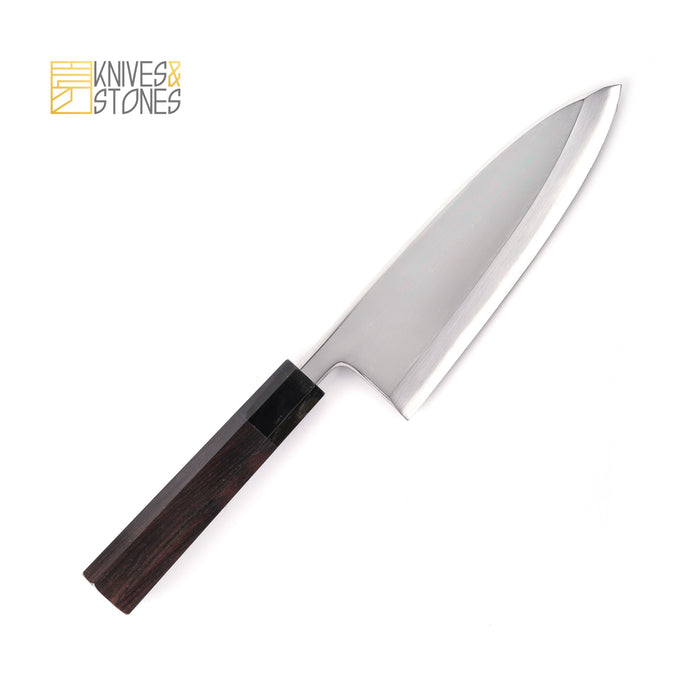
Nakagawa Ginsan K-tip Deba 180mm Mirror Polished Finish

Sale price $424.99 Regular price $499.95
Tax included Shipping calculated at checkout.

Availability

  • St Peters
    2 Bishop St Unit 2 St Peters NSW 2044
  • Crows Nest
    107 West St, Crows Nest NSW 2065
    Pickup only
Detailed Specifications
Line Hatsukokoro by Nakagawa Ginsan Single bevel Mirror Polish
Profile K-tip Deba / Japanese Fish Knife
Weight 272 g | 9.6 oz
Edge Length 185 mm | 7 9/32″
Heel Height 46 mm | 1 13/16″
Width @ Heel 5.6 mm | 7/32″
Width @ Mid 4.6 mm | 3/16″
Width @ 1cm from Tip 3.8 mm | 5/32″
Steel Ginsan / Silver #3 | Stainless
Blade Construction Nimai - Stainless Clad
Hardness (HRC) 60 - 62
Surface Finish Mirror Polish
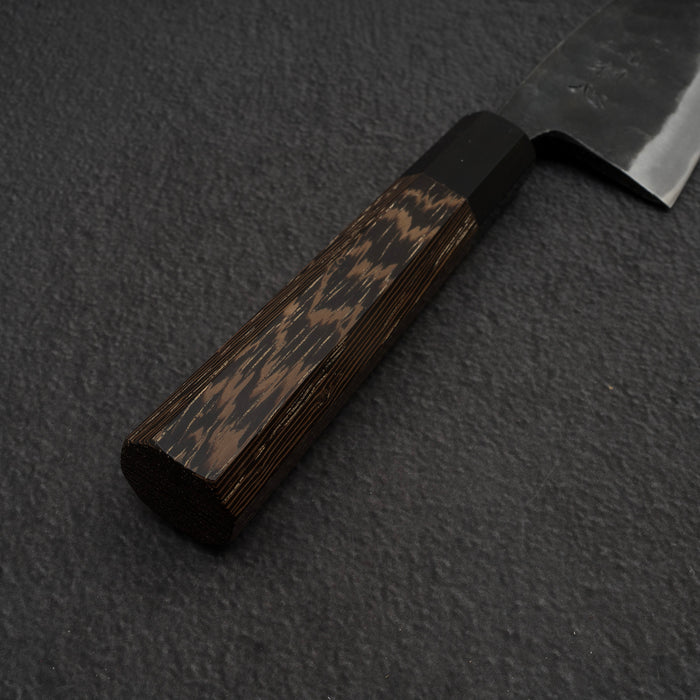
Handle Octagonal Wenge Handle Black Ferrule
Region Sakai
Best for
  • Pro chefs
  • Enthusiasts
  • Free shipping for knives over AU$200 Australia wide.
  • World-wide shipping via DHL Express, 3 to 5 days.


This Ginsan line forged by Satoshi Nakagawa is another commissioned line by Hatsukokoro, having the Hira(平, the flate zone above the bevel) finished with a mirror polish, this line offers some easy-to-look-after Yanagiba and Deba that comes with a bit of shininess, altenatively, you can checkout the Kasumi finished line with same construction and steel.

The entire blade is finished reasonably well, the mirror polishing is very refined and the grinding mark on the bevel and back side are uniform throughout the blade. Rounded choil and spine are there as expected and the only thing I can really say about the finish is the Kissaki of Sakimaru is not sharply defined. Oveall, quite a well done knife at this price.

The use of Ginsan steel makes the Knife even more versatile. While having a slightly better performance than VG10, the less alloy content in it will makes sharpening a whole lot easier, which is a huge plus for single bevel knife in professional setting. Meanwhile, being resistant to rust will save a lot of effort as there is no need to constantly wipe the blade while cutting, that's why I would also recommend this line to sushi students and homecook who have a bit more budget.

Satoshi Nakagawa, the maker who forged this line was the student under the legend bladesmith Kenichi Shiraki for over 20 years, he is very familiar with the behavior of steels especially the Hitachi Metal Paper Steels. This experience have garantees the great heat treatment on his knives so if you are looking for a stainless single bevel knife, this line will the more premium offering in terms of the quality.

Care Instruction
  1. Don't cut hard things! Japanese knives are brittle so bone hacking is a NO NO!
  2. Wash with neutral detergent after use, and wipe dry;
  3. Please don't wash knife with dishwasher, it will damage the wood handle;
  4. Be careful not to leave the knife close to a heat source for a long time;
  5. It is a lot more dangerous to cut with a blunt knife than a sharp knife!
  6. It is best to sharpen a Japanese knife regularly on a waterstone.
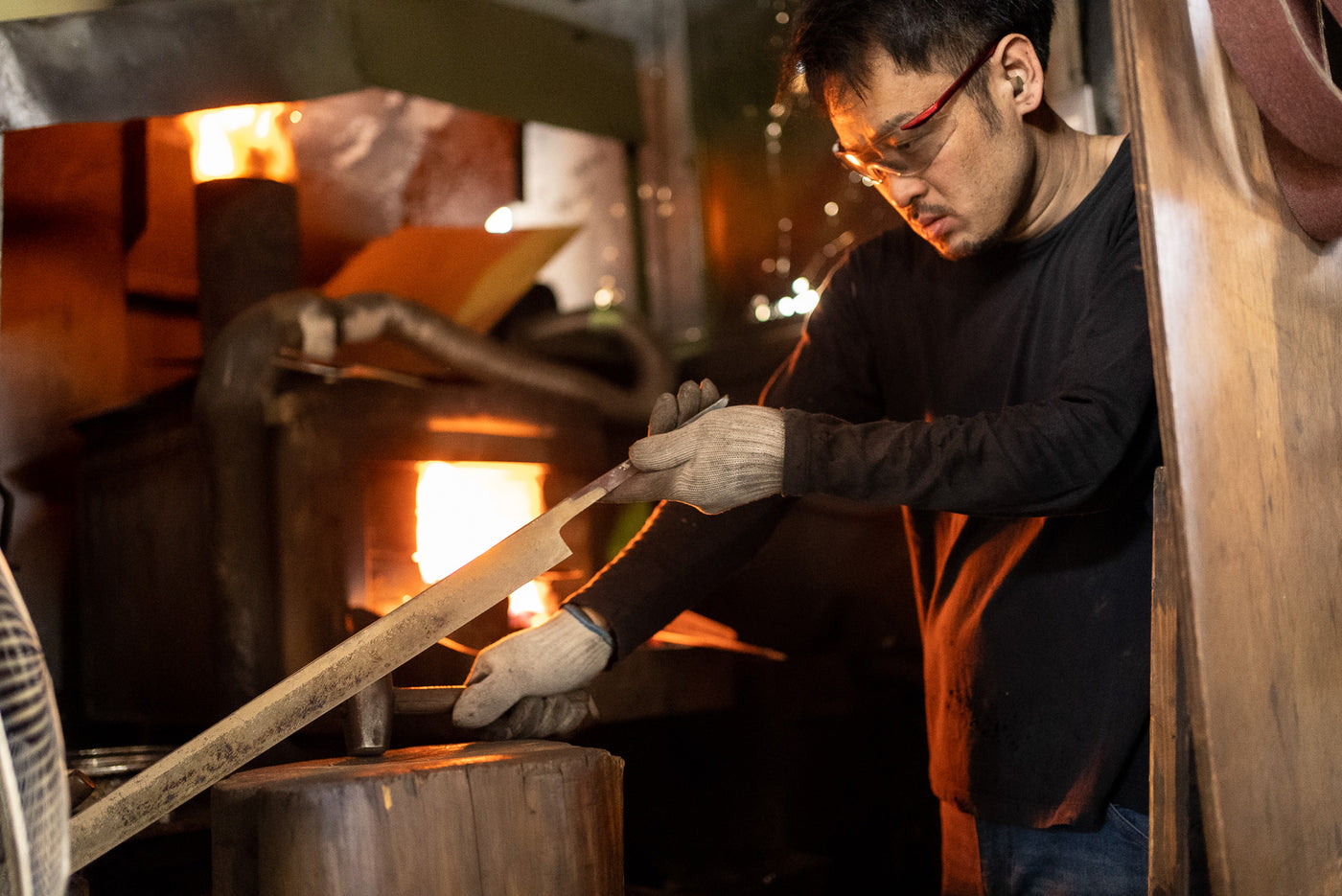
Satoshi Nakagawa

Nakagawa Hamono, established by Satoshi Nakagawa (中川悟志) in April 2021, carries on the legacy of the renowned Shiraki Hamono under the guidance of Nakagawa-san, a dedicated disciple of the legendary craftsman Kenichi Shiraki. With nearly two decades of experience, primarily under Shiraki-san, Nakagawa-san has been instrumental in creating some of the finest honyaki blades in the last five years of Shiraki-san's work.

His expertise is not limited to Shiraki Hamono’s offerings but extends to forging top-tier knives for Sakai’s esteemed brands such as Sakai Takayuki, Kikumori to name a few. Based in Sakai City, Osaka, Nakagawa Hamono specializes in Ginsan and blue steel knives with wide bevels.

  • Profile: K-tip Deba

    Japanese Fish Knife

    A Deba(出刃) knife is a traditional Japanese kitchen knife specifically designed for butchering fish, though it can also be used for poultry and other meats with smaller bones. Deba typically have a single bevel blade, meaning there is a bevel on one side and Ura or concavity on the other. This design is intended for right-handed use, though left-handed versions are available by special order. Commonly, Deba are made in sizes ranging from 150mm to 210mm, length longer than that is available, but those would be extremely unwieldy due to the weight. This weight comes from the thick blade of the Deba, and the thickness gives these knives the necessary strength and weight needed for beak apart the whole fish. The K-tip Deba is a rather uncommon variant of the standard Deba, it utilises the advantage of the k-tip design to create a Deba that can do find cutting and precise dissecting with a sharply defined tip. This is very useful when you reach down into the belly of the fish and want to pick out specific parts like the blood near the spine.

    Slide for more >>

  • Steel: Ginsan / Silver #3

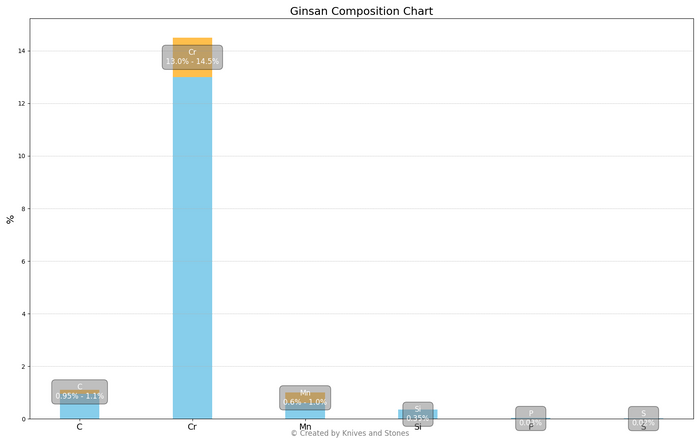
    Ginsan steel, also known as Silver 3 or G3 steel, is a type of stainless steel used in high-quality kitchen knives. It is appreciated for its ability to offer the traditional feel and sharpness of carbon steel while providing the corrosion resistance of stainless steel. Ginsan steel contains a moderate amount of carbon, chromium, and other alloying elements that ensure a good balance between edge retention and ease of sharpening. This steel is particularly favored for its fine grain structure, which allows for a very sharp edge, and its resistance to rust makes it a popular choice among professional chefs and home cooks who seek the performance of carbon steel without the maintenance challenges. Ginsan steel knives are known for their durability, ease of care, and excellent cutting performance, making them a preferred option for those looking for high-quality stainless steel cutlery.

    Manufacturer:

    • Hitachi Special Steel, Japan

    Nature: Stainless

    Hardness: 60- 62

    << Slide for more >>

  • Construction: Nimai - Stainless Clad

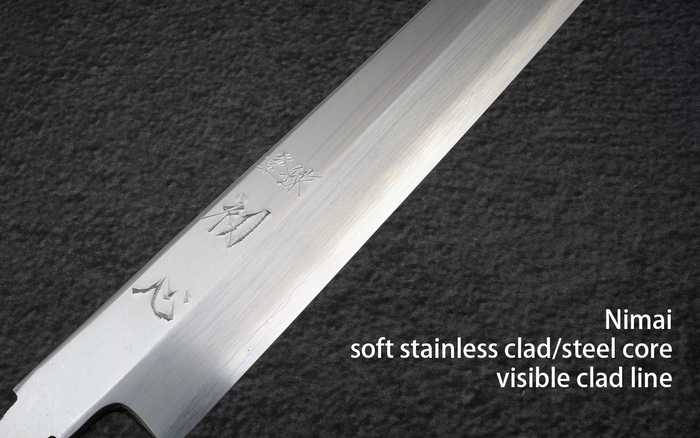
    Nimai(Two Piece) is the Japan's traditional approach to the kitchen knife making, this construction method is typically found on knives with native Japanese origins like Yanagiba, Deba and Usuba. When constructing a Nimai knife, a piece of soft cladding metal will be placed onto a core steel, the two pieces of metal are then forgewelded and shaped into the knife.

    The Nimai knives are usually sharpened in single-bevel fashion, with hardened core steel exposed on the flat/hollow-ground side and soft cladding warping over the other side and over the spin. The soft cladding offers support for the harder yet more brittle core steel so the knive can have a thin, sharp edge while have some overall strength. Since the single bevel Japanese knives usually don't have a secondary bevel, the combination of soft cladding and hollow-grind have made the sharpening process easier than Monosteel and Honyaki knives.

    In recent years, knifemaker have been trying to utilize stainless claddings on the traditional Nimai knives, which were typically forged withcarbon steel. But unlike the Sanmai construction, the core steel will still be exposed on the hollow-ground side even the stainless cladding can protect the other side. The Stainless Clad Nimai knives seen on the market now would typically use a stainless core to pair with the stainless cladding, making the Nimai and traditional single bevel knives much more approachable for users who are interested in them.

    << Slide for more >>

  • Finish: Mirror Polish

    Mirror Polish is a simplistic yet hightly demanding process, where the roughness of the metal surface is gradually removed with higher and higher grit abrasives, leading to a extremly smooth surface with only specular reflection, just like a mirror.

    The Mirror Polish can be applied to various constructions, ranging from Damascus to Honyaki. It can reveal the beautiful Hamon on the Honyaki blade, and form textural contrast on damascus. The perfect surface is highly appreciated, but it also means a lot of care must be give to avoid it being scratched.

    << Slide for more >>

  • Handle Specs

    Profile: Octagonal WA

    Material:

    • Wenge

    Octagonal wenge wood handles on kitchen knives offer a combination of functionality and aesthetics tailored specifically for culinary tasks. Crafted from durable wenge wood, these handles ensure longevity and resilience to the rigors of kitchen use, standing up to moisture, heat, and frequent handling. The octagonal shape isn't just about style; it's designed to fit comfortably in the hand, providing a secure grip and optimal control, enhancing the user's culinary precision.

    In the kitchen, where attention to detail is paramount, the ergonomic design of the wenge wood handle becomes particularly advantageous. Whether slicing, chopping, or mincing ingredients, the handle's comfortable grip minimizes hand fatigue and enables the chef to maintain a steady hand for consistent and precise cuts.

    Visually, the dark hue and distinct grain pattern of wenge wood add a touch of elegance to any kitchen knife. The natural beauty of the wood complements the blade, creating a striking contrast that elevates the overall aesthetic appeal of the knife.

    Furthermore, the balance achieved by the octagonal shape of the handle enhances the knife's maneuverability, allowing for smooth and controlled cutting motions. This balance is essential for achieving uniform slices and enhancing the overall user experience in the kitchen.

    In summary, a wenge wood handle on a kitchen knife combines durability, comfort, and style, making it a practical and visually appealing choice for home cooks and professional chefs alike.

    << Slide for more

Liquid error (sections/product-recommendations line 9): Could not find asset snippets/kns-product-recs.liquid