Crows Nest store now open from Friday to Tuesday, 10am till 6pm.

Myojin Riki  |  SKU: MYOJ_B2KTM_GY240EB

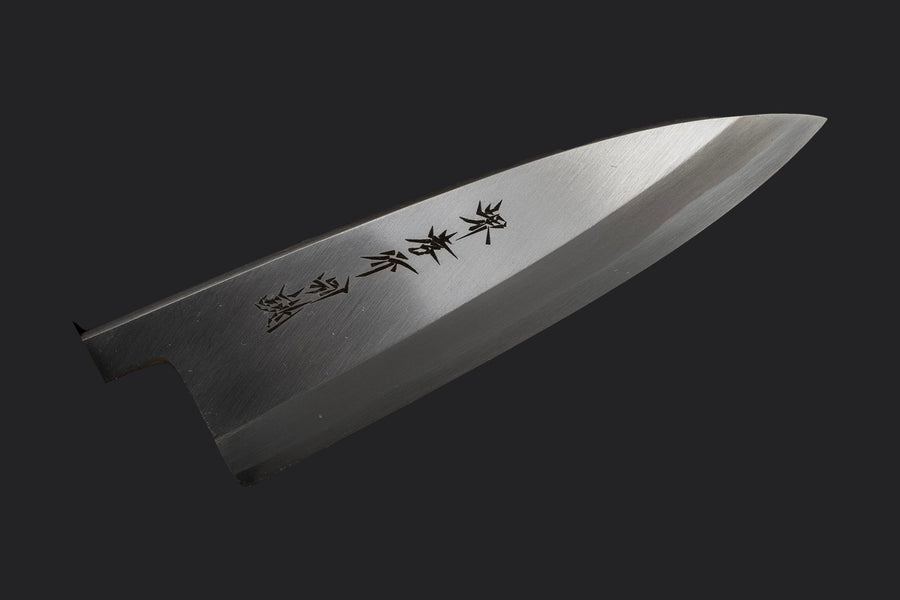
Tetsujin Blue 2 Kasumi Gyuto 240mm Ebony

Sale price $509.99 Regular price $599.95

IMPORTANT: Carbon steel knives can rust or patina quickly if not cared for properly. They require regular cleaning, drying, and oiling. If you are unfamiliar with carbon steel maintenance, we recommend choosing a stainless steel option instead.

Availability

  • St Peters (Online/Showroom)
    2 Bishop St Unit 2 St Peters NSW 2044
  • Crows Nest (Storefront)
    107 West St, Crows Nest NSW 2065
    Pickup only
Detailed Specifications
Line Tetsujin Blue 2 Kasumi
Profile Gyuto / Chefs Knife
Bevel Type Double Bevel
Weight 204 g | 7.2 oz
Edge Length 230 mm | 9 1/16″
Heel Height 49 mm | 1 59/64″
Width @ Heel 3.1 mm | 1/8″
Width @ Mid 2.8 mm | 7/64″
Width @ 1cm from Tip 1.2 mm | 3/64″
Steel Blue 2 / Aogami #2 | Carbon
Blade Construction Sanmai - Soft Iron Clad
Hardness (HRC) 61 - 63
Surface Finish Kasumi
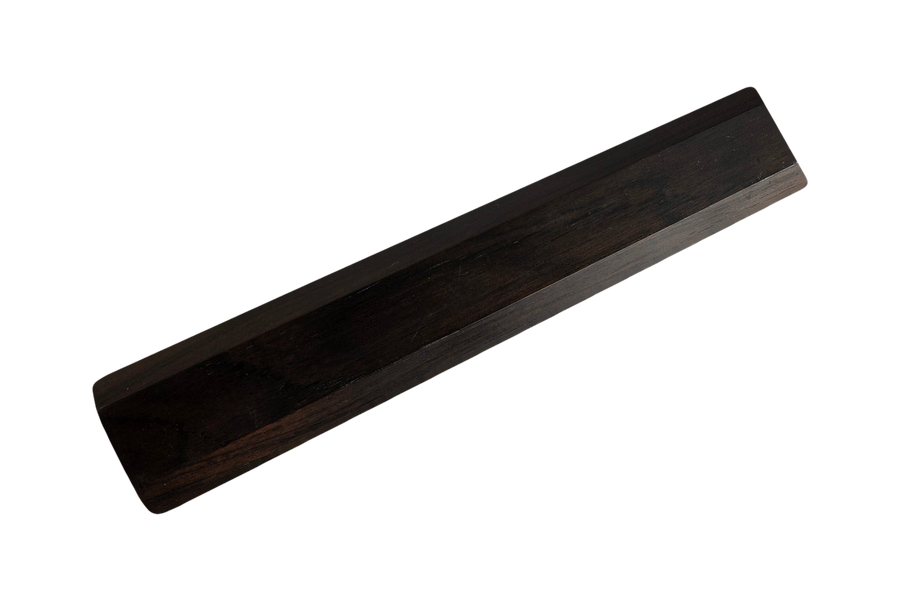
Handle Octagonal Teak Black Ferrule
Region Tosa
Best for
  • Enthusiasts
  • Pro chefs
  • Free shipping for knives over AU$200 Australia wide.
  • World-wide shipping via DHL Express, 3 to 5 days.


Tetsujin Kasumi is the "budget" version of the well-known Tanryusen line. Utlizing the excellent Hitachi Blue 2 Steel, matched with a less exotic yet equally elegant Kasumi finish.

Same as Tanryusen, this Blue 2 Kasumi line is forged by Toru Tamura (田村 徹) and sharpened by Naohito Myojin (明神 直人).

Pros Cons
  • Excellent performance
  • Thin behind the edge
  • Excellent fit and finish
  • High budget
  • Need extra care
Care Instruction
  1. Don't cut hard things! Japanese knives are brittle so bone hacking is a NO NO!
  2. Wash with neutral detergent after use, and wipe dry;
  3. Please don't wash knife with dishwasher, it will damage the wood handle;
  4. Be careful not to leave the knife close to a heat source for a long time;
  5. It is a lot more dangerous to cut with a blunt knife than a sharp knife!
  6. It is best to sharpen a Japanese knife regularly on a waterstone.
  7. Oil the (carbon) knife if storing for an extended period of time to prevent rust.

Myojin Riki

Myojin Riki Seisakusho — Tosa's Sharpening Prodigy

The Myojin Riki Manufacturing, established by a founder who mastered his skills in Osaka, the heartland of blade-making, has been operational for over 80 years. Specializing in knives made from steel and iron, they've recently focused on stainless steel knives, valued for their light weight, resistance to rust, and exceptional sharpness. These knives are popular among both professionals and general consumers, partly due to their application of the "stacked steel pattern" traditionally found in swords. The second generation continues to innovate, customizing products to meet users' needs, while also contributing to cultural preservation through their involvement with local traditional performances and blade repairs.

Naohito Myojin, the second generation craftsman of Myojin Riki, has dedicated himself to continuing the legacy of his predecessor's craftsmanship in knife making. Focused on innovation while preserving traditional techniques, Naohito has made a significant mark in the field by customizing knives that not only meet the practical needs of users but also contribute to the cultural heritage through his involvement in local traditions and blade restoration efforts. His work reflects a deep commitment to quality, functionality, and the preservation of the artistry involved in Japanese knife making.

“From Sakai-trained roots in Tosa — a father-son forge where the grind is everything.”

Est. 1950 | 昭和25年
Known for Exceptional grinding and sharpening, tanryusen (metal flow) finish
Instagram @tetsujin_labo Read more about Myojin Riki
Myojin Riki — Tosa
Profile: Gyuto
Profile

Gyuto

Chefs Knife

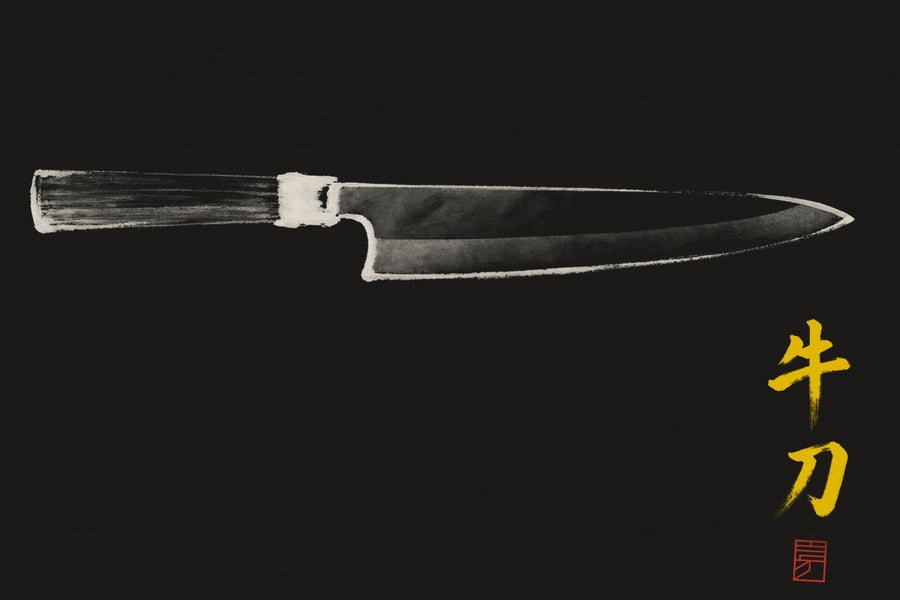
A Japanese chef's knife is known as a gyuto (牛刀 ぎゅうとう) gyūtō), literally meaning 'beef knife'. Its blade resembles a flatter version of a French chef's knife. Japanese cutlery is known for sharpness due to its acute blade geometry, and the hardness of the steel used, sometimes exceeding 60 HRC on the Rockwell Scale A typical western chef's knife may be sharpened to an edge angle of 20-22°, while a Japanese gyuto generally has a sharper edge angle of 15-18° (or even lower), which requires a harder, more brittle grade of steel. In recent years Japanese gyuto have gained in popularity with western chefs.

A modern chef's knife is a multi-purpose knife designed to perform well at many differing kitchen tasks, rather than excelling at any one in particular. It can be used for mincing, slicing, and chopping vegetables, slicing meat, and disjointing large cuts.
Composition

Blue 2 / Aogami #2 Element Composition

Compare with
    Blue 2 / Aogami #2
    1.25% 0.9% 0.6% 0.3% 0
    C Carbon 1.1%
    Primary hardening element. Raises hardness and wear resistance — but too much increases brittleness and corrosion susceptibility. As a reference: German 1.4112 (~0.5%) sits at the low end; VG-10 (~1.0%) is a common mid-range; SG2 (1.25–1.45%) and ZDP-189 (~3.0%) represent high and extreme ends respectively.
    C
    1.1%
    Cr Chromium 0.35%
    Raises corrosion resistance; 13%+ qualifies steel as stainless. Also improves hardenability and wear resistance. In kitchen use, higher chromium levels contribute to a slight drag or sticking sensation when cutting — a trade-off for the rust resistance it provides.
    Cr
    0.35%
    W Tungsten 1.25%
    Forms hard carbides for wear resistance and edge retention. Gives the steel hardness even at elevated temperatures.
    W
    1.25%
    Mn Manganese 0.25%
    Aids hardenability and strength. Acts as a deoxidiser during smelting. Excess can reduce toughness.
    Mn
    0.25%
    Si Silicon 0.15%
    Strengthens the steel matrix and acts as a deoxidiser. Improves hardness and resistance to oxidation.
    Si
    0.15%
    P Phosphorus 0.025%
    Impurity from the smelting process. Even small amounts cause brittleness — steelmakers keep this as low as possible.
    P
    0.025%
    S Sulfur 0.004%
    Impurity that reduces toughness and promotes brittleness. Intentionally added only in free-machining steels.
    S
    0.004%
    C — Carbon Cr — Chromium W — Tungsten Mn — Manganese Si — Silicon P — Phosphorus S — Sulfur
    Hardness 61–63 HRC
    555759616365+
    Steel
    Blue 2 / Aogami #2
    Category
    Carbon
    Manufacturer
    Hitachi Special Steel, Japan 🇯🇵
    Hardness
    61–63 HRC
    Steel

    Blue 2 / Aogami #2

    • Manufacturer
      • Hitachi Special Steel, Japan
    • Nature Carbon
    • Hardness61–63 HRC
    Blue Steel No.2, also recognized as Aogami No.2, is a distinguished high carbon steel produced by Hitachi Metals Ltd, enhanced by the addition of chromium and tungsten to the base of White Steel No.2. This modification brings about an improvement in toughness and the creation of hard carbide molecules, which significantly boost edge retention. Although its sharpness is comparable to that of White Steel No.2, Blue Steel No.2 offers a slight advantage in maintaining its edge.

    Widely favored for its versatility, Aogami No.2 is celebrated for its ease of sharpening and robust resistance to chipping, making it an ideal choice for those new to Aogami steel knives. Containing 1.0–1.2% carbon and achieving a typical hardness of 62–63 HRC on the Rockwell scale, it stands as the benchmark in evaluating Aogami steel cutlery.
    Construction: Sanmai - Soft Iron Clad
    Construction

    Sanmai - Soft Iron Clad

    Sanmai iron cladding is a traditional Japanese knife construction technique where a hard steel core is sandwiched between two layers of softer iron or steel. This method combines the superior edge retention and sharpness of high-carbon steel with the durability and ease of maintenance provided by the softer outer layers. The sanmai structure offers a balanced knife that is both flexible and resistant to breaking, ideal for precision cutting tasks. The softer outer layers also facilitate easier sharpening and contribute to the aesthetic appeal of the knife through the development of a unique patina over time. While sanmai-clad knives require careful maintenance to prevent rust, their exceptional performance and distinctive appearance make them often a desirable feature of Japanese knives.

    Finish: Kasumi
    Finish

    Kasumi

    A Kasumi finish refers to a traditional Japanese blade-finishing technique used on knives, particularly those made from a combination of soft iron and harder steel. The term "Kasumi" means "mist" in Japanese, aptly describing the hazy, matte appearance achieved on the blade's bevel where the two metals meet. This effect is not only aesthetic but also showcases the craftsmanship involved in blending these materials, highlighting the skill in creating a knife that is both beautiful and functional.

    Handle
    Handle

    Octagonal Teak Black Ferrule

    • Profile Octagonal WA
    • Material
      • Teak
      • Black Buffalo Horn

    The teak wood, known for its durability and rich grain patterns, provides a sturdy yet comfortable grip for precise handling during culinary tasks. Complemented by the sleek black horn ferrule, the handle boasts a striking contrast that adds sophistication to the overall design.

    Fashioned in an octagonal shape, the handle offers ergonomic benefits, allowing for a secure and comfortable grip from various angles. Its tapered design from bottom to top ensures a balanced feel and optimal control, promoting effortless maneuverability while slicing, chopping, or dicing ingredients.

    1 / 5

    Frequently asked questions

    Gyuto or santoku - which should I choose?

    Both are all-purpose Japanese knives, and for most home cooks either will handle the bulk of daily prep. The choice comes down to length, blade shape, and how you like to cut.

    A gyuto is the Japanese chef's knife - typically 210 to 240mm with a gently curved edge that lets you rock and slide through cuts as well as chop. The extra length and pointed tip give you reach and versatility, from proteins to large produce.

    A santoku is shorter, usually 165 to 180mm, with a flatter profile and a rounded sheep's-foot tip. It rewards a straight up-and-down push cut, feels nimble in smaller hands or tight kitchens, and is the classic Japanese household knife.

    Rule of thumb: choose a gyuto if you want one do-everything knife with more reach, or a santoku if you prefer a compact, easy-to-control blade. Plenty of our customers end up owning both.

    ✓ Verified by Knives and Stones · James Zhang · Reviewed 29 May 2026

    Will a carbon steel knife rust, and how do I look after it?

    Yes - carbon steels such as Aogami (Blue) and Shirogami (White) react with food, moisture, and acids. Left wet they can spot or rust, and with normal use they develop a grey-blue patina. That patina is expected and is part of owning a carbon-steel knife; it is not damage.

    Care is simple once it becomes habit: hand-wash in warm water, never leave the knife soaking or sitting in a wet sink, and dry it thoroughly the moment you finish. Avoid the dishwasher entirely, and wipe the blade between tasks when you are cutting acidic foods like citrus, tomato, or onion.

    If the knife will sit unused for a while, wipe a very thin film of food-safe camellia oil (or a neutral mineral oil) onto the blade before storing it. A light surface rust spot lifts easily with a rust eraser or a little Bar Keepers Friend; sustained neglect is the only thing to really avoid.

    Carbon steel rewards this small amount of attention with a keener edge and easier sharpening than most stainless. If you would rather not think about maintenance at all, ask us about stainless or stainless-clad options instead.

    ✓ Verified by Knives and Stones · James Zhang · Reviewed 29 May 2026

    You May Also Like