Crows Nest store now open from Friday to Tuesday, in store specials!

Myojin Riki  |  SKU: MYOJ_G3UKB_PE150

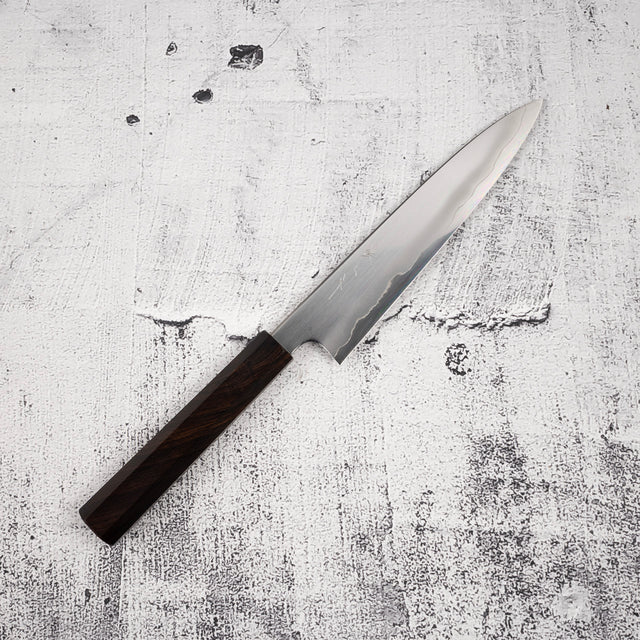
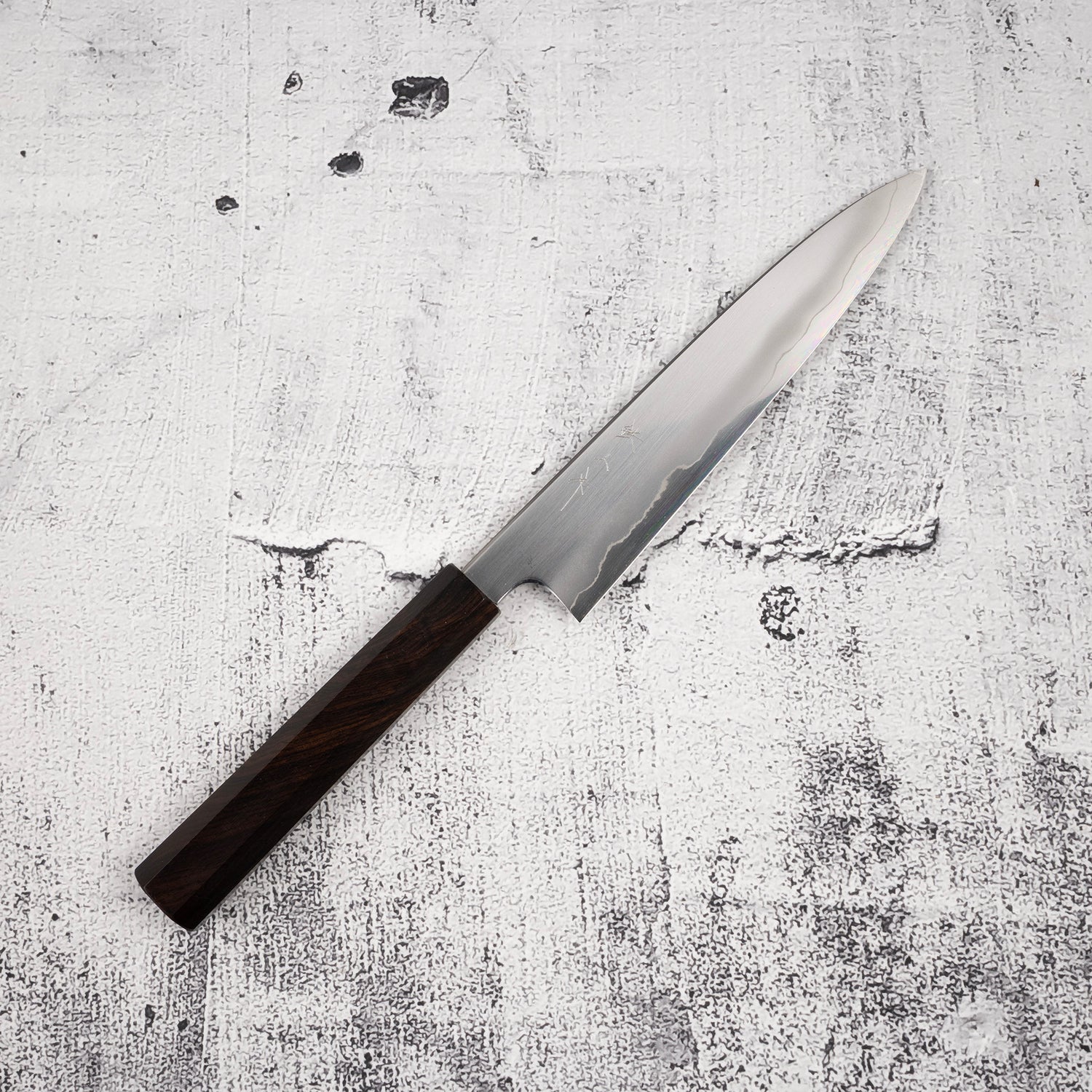
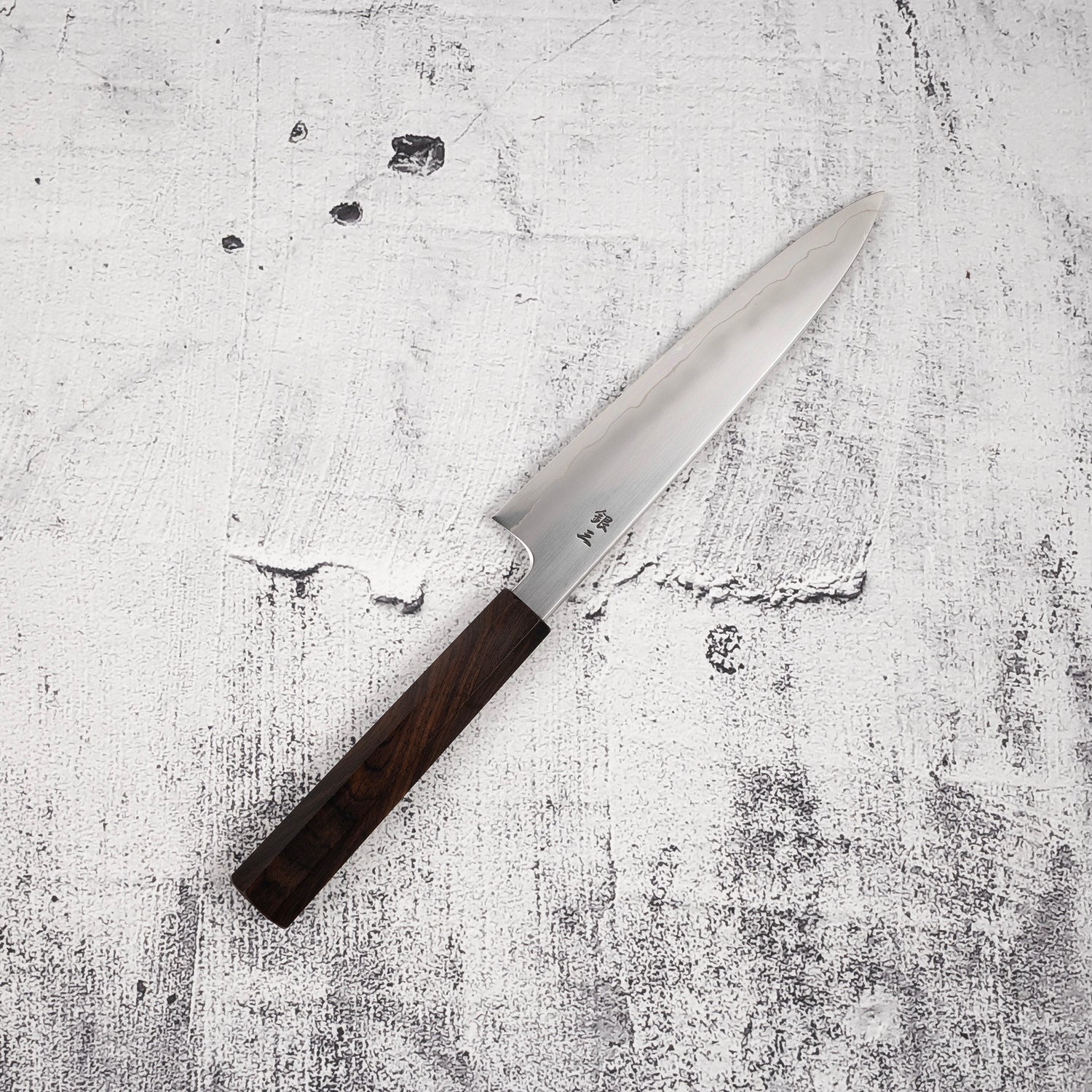
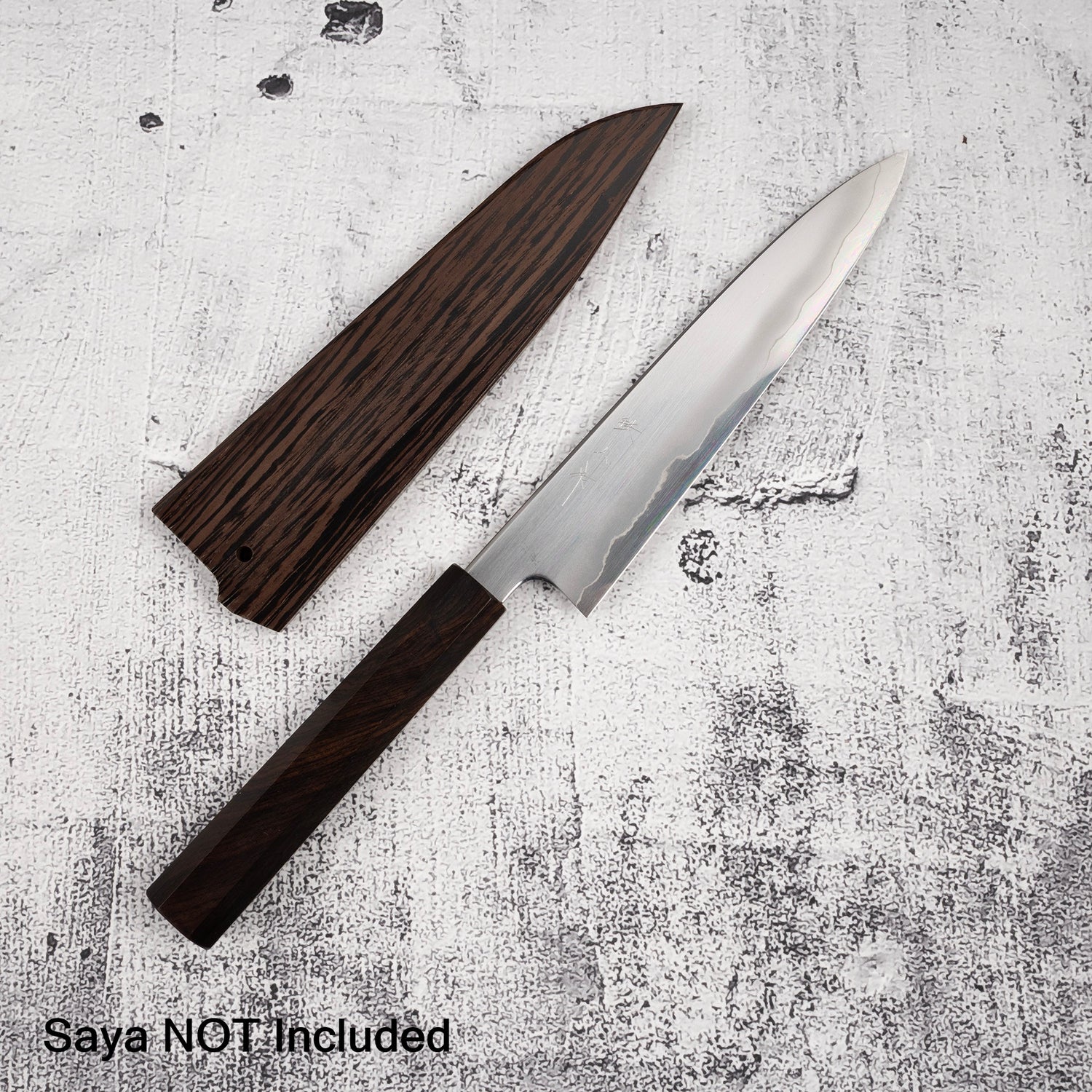
Tetsujin Ginsan Ukiba Petty 165mm Ebony Handle - Easter Egg Hunt

Regular price $399.95

Add a saya or K&S Knife Roll to receive $20 bundle discount!

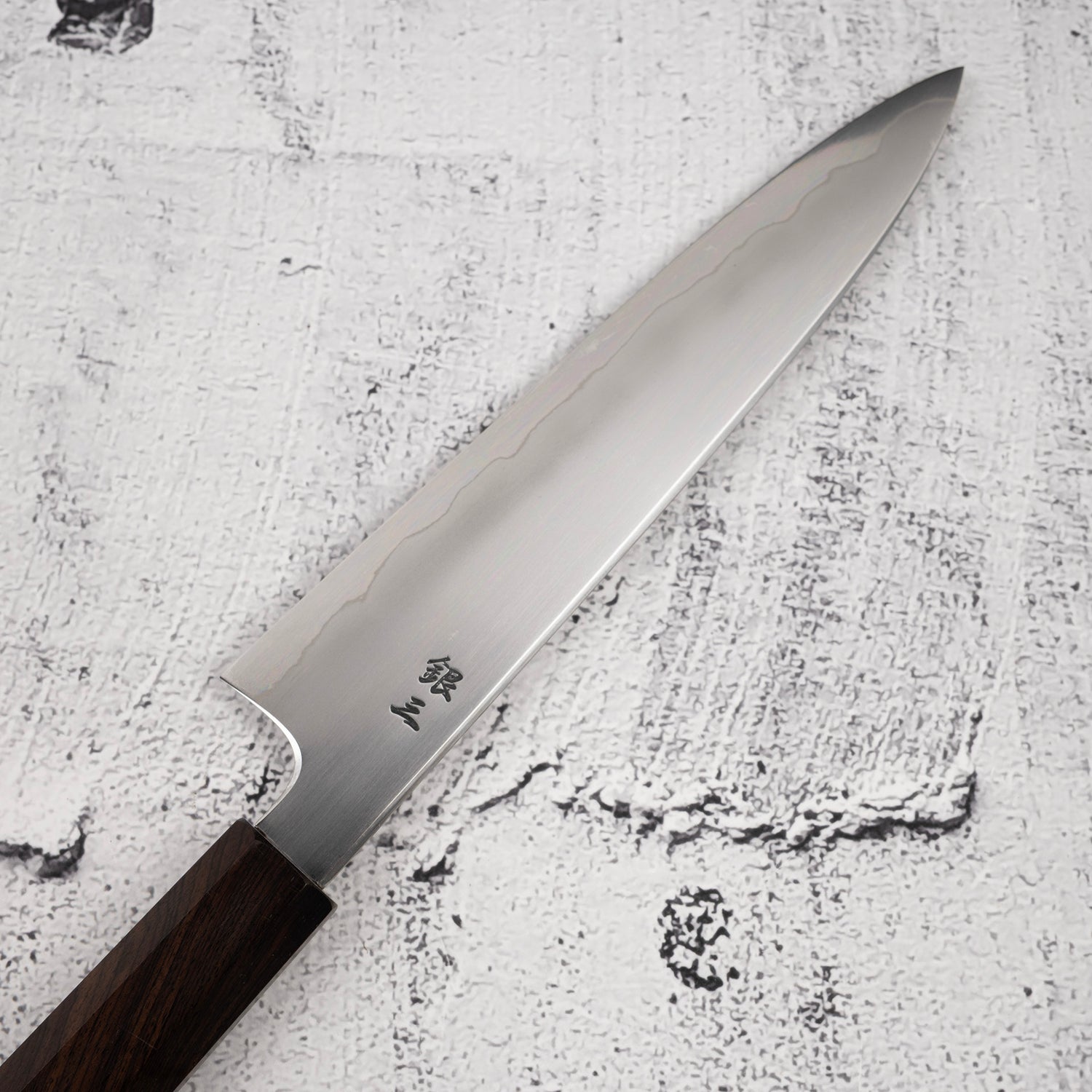
Tetsujin Ginsan Kasumi
Petty / Utility, Paring
Double Bevel
Weight 89 g | 3.1 oz
Edge Length 158 mm | 6 7/32″
Heel Height 33 mm | 1 19/64″
Width @ Heel 2.7 mm | 7/64″
Width @ Mid 2.0 mm | 5/64″
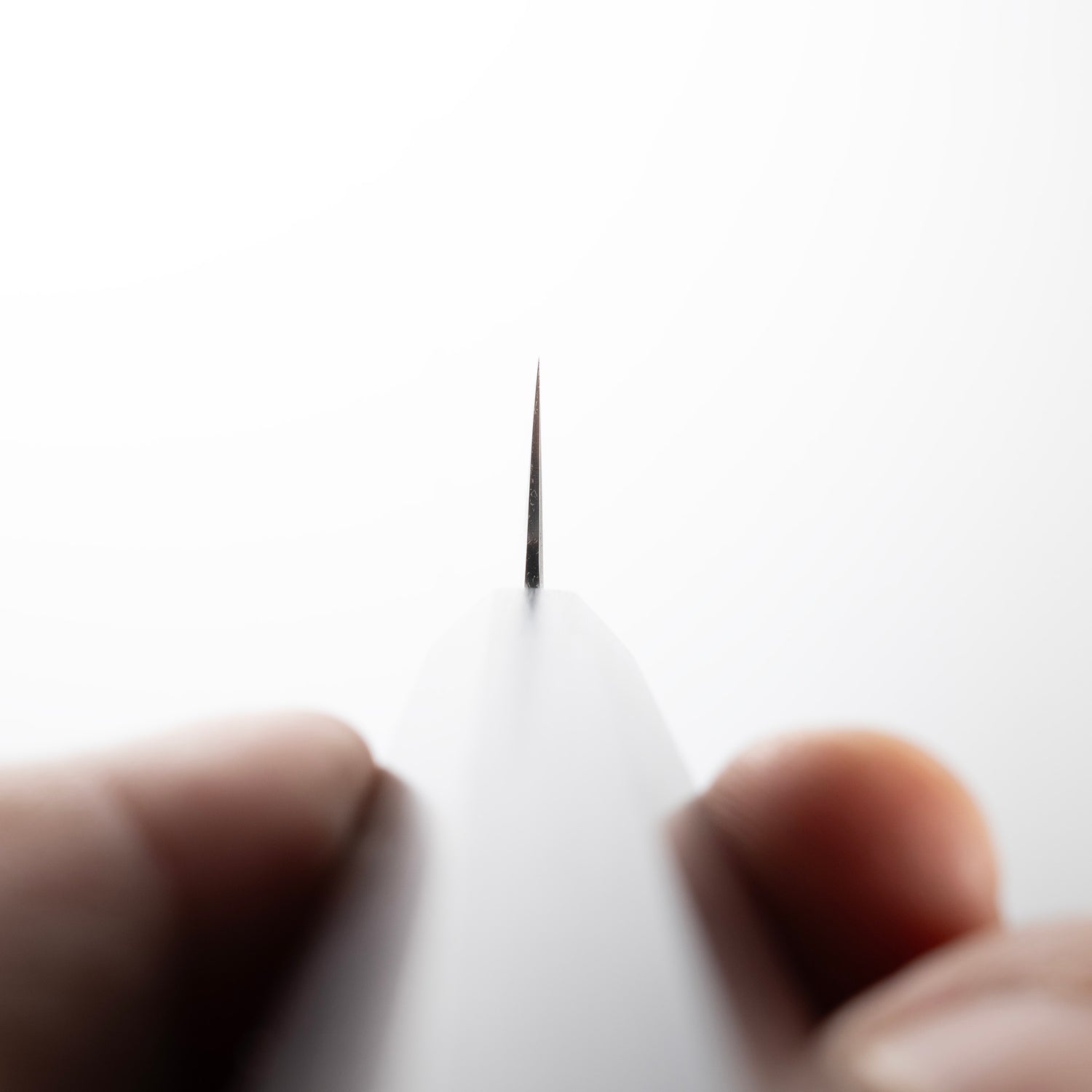
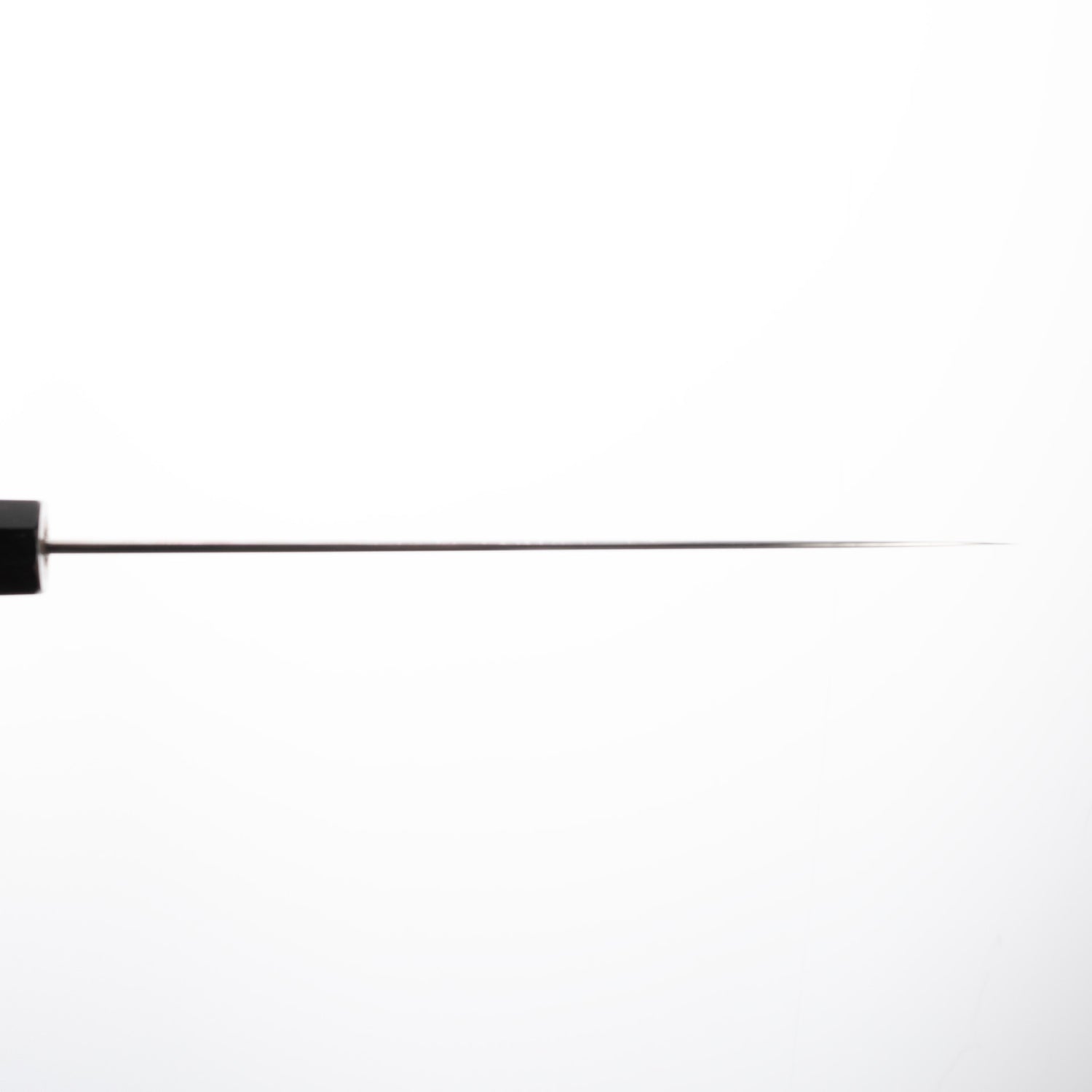
Width @ 1cm from Tip 0.8 mm | 1/32″
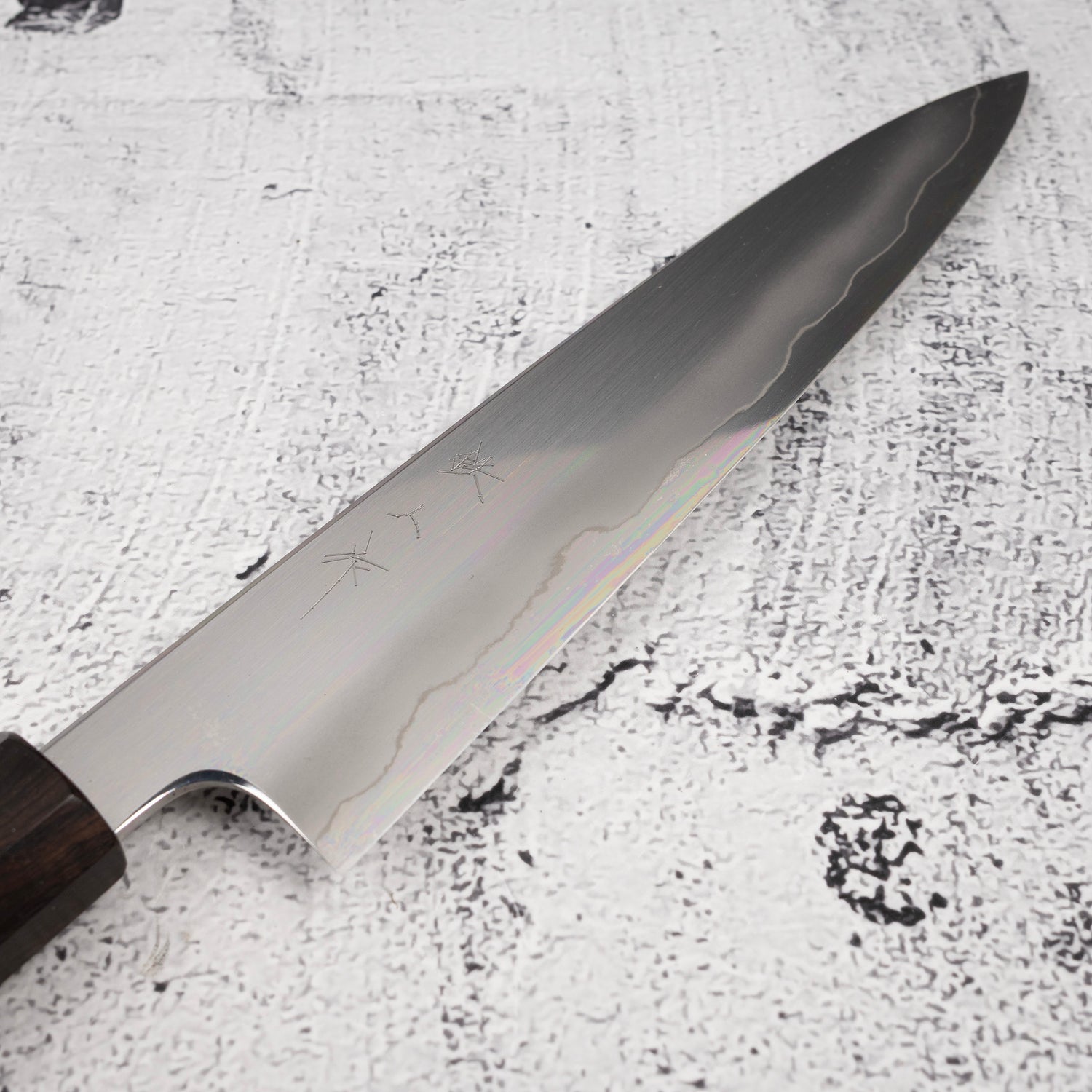
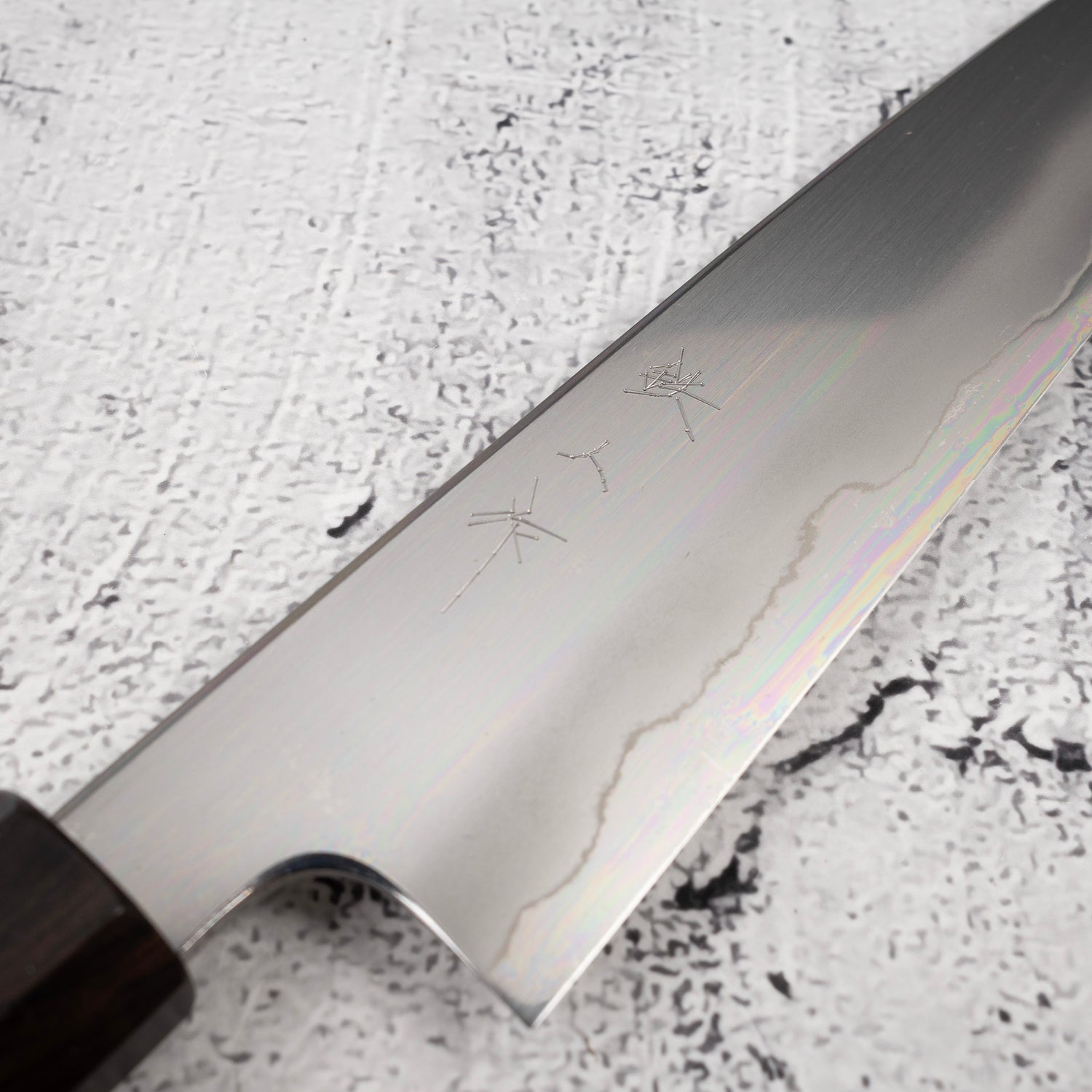
Steel Ginsan / Silver #3 | Stainless
Blade Construction Sanmai - Stainless Clad
Hardness (HRC) 60 - 62
Surface Finish Kasumi
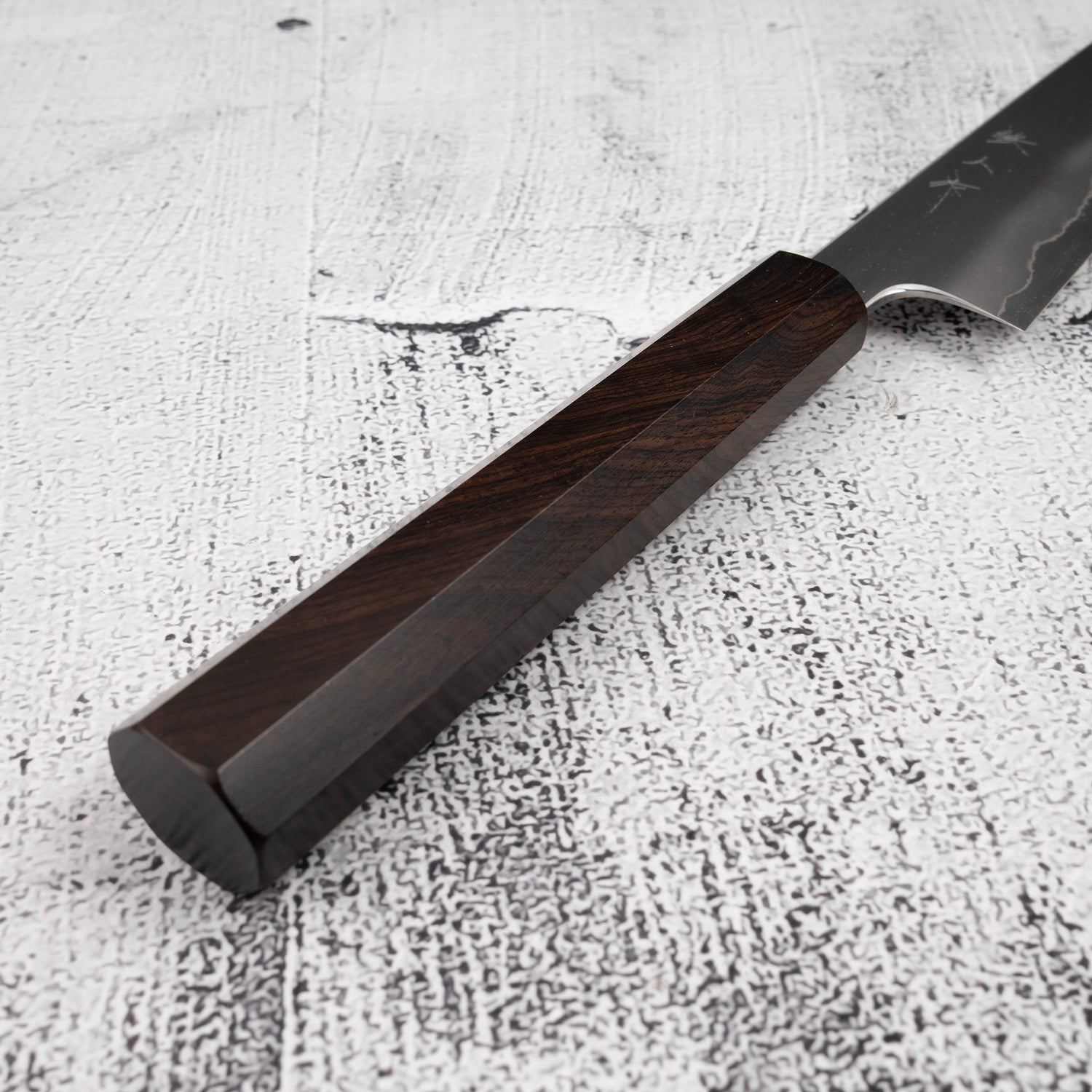
Handle Octagonal Ebony
Region Tosa
Best for
  • Pro chefs
  • Students
  • First-timers
  • Free shipping for knives over AU$200 Australia wide.
  • World-wide shipping via DHL Express, 3 to 5 days.


The Tetsujin Ginsan shares the same quality of all the other Tetsujin lines: excellent cutting performance with a sturdy in hand feel yet glides through ingridents effortlessly.

In case you are not familar with the Tetsujin brand, it is a collaboration between two friends and colleagues: Toru Tamura and Naohito Myojin of Myojin Riki. 

Blacksmith: Toru Tamura (田村 徹)

Sharpener: Naohito Myojin (明神 直人)

Pros Cons
  • Budget friendly
  • Great for professionals
  • Thin behind the edge
  • Non-premium steel
Care Instruction
  1. {{ care_1 }}
  2. {{ care_2 }}
  3. {{ care_3 }}
  4. {{ care_4 }}
  5. {{ care_5 }}
  6. {{ care_6 }}

Myojin Riki

Myojin Riki Seisakusho — Tosa's Sharpening Prodigy

The Myojin Riki Manufacturing, established by a founder who mastered his skills in Osaka, the heartland of blade-making, has been operational for over 80 years. Specializing in knives made from steel and iron, they've recently focused on stainless steel knives, valued for their light weight, resistance to rust, and exceptional sharpness. These knives are popular among both professionals and general consumers, partly due to their application of the "stacked steel pattern" traditionally found in swords. The second generation continues to innovate, customizing products to meet users' needs, while also contributing to cultural preservation through their involvement with local traditional performances and blade repairs.

Naohito Myojin, the second generation craftsman of Myojin Riki, has dedicated himself to continuing the legacy of his predecessor's craftsmanship in knife making. Focused on innovation while preserving traditional techniques, Naohito has made a significant mark in the field by customizing knives that not only meet the practical needs of users but also contribute to the cultural heritage through his involvement in local traditions and blade restoration efforts. His work reflects a deep commitment to quality, functionality, and the preservation of the artistry involved in Japanese knife making.

“From Sakai-trained roots in Tosa — a father-son forge where the grind is everything.”

Est. 1950 | 昭和25年
Known for Exceptional grinding and sharpening, tanryusen (metal flow) finish
Instagram @tetsujin_labo Read more about Myojin Riki
Myojin Riki — Tosa
Profile

Petty

Utility, Paring

The Petty knife, a smaller Japanese utility knife, serves as an ideal tool for precision tasks such as peeling, trimming, and slicing fruits and vegetables. With a blade length ranging from 120mm to 180mm (4.7 to 7 inches), it stands out for its ability to handle detailed work like deveining shrimp or cutting garnishes. Its slightly longer and slimmer profile compared to the Western paring knife enhances its functionality for intricate tasks, making it a valuable addition to any kitchen toolkit.
Composition

Ginsan / Silver #3 Element Composition

Compare with
    Ginsan / Silver #3
    13.0% 9.8% 6.5% 3.3% 0
    C Carbon 1.0%
    Primary hardening element. Raises hardness and wear resistance — but too much increases brittleness and corrosion susceptibility. As a reference: German 1.4112 (~0.5%) sits at the low end; VG-10 (~1.0%) is a common mid-range; SG2 (1.25–1.45%) and ZDP-189 (~3.0%) represent high and extreme ends respectively.
    C
    1.0%
    Cr Chromium 13.0%
    Raises corrosion resistance; 13%+ qualifies steel as stainless. Also improves hardenability and wear resistance. In kitchen use, higher chromium levels contribute to a slight drag or sticking sensation when cutting — a trade-off for the rust resistance it provides.
    Cr
    13.0%
    Mn Manganese 0.7%
    Aids hardenability and strength. Acts as a deoxidiser during smelting. Excess can reduce toughness.
    Mn
    0.7%
    Si Silicon 0.35%
    Strengthens the steel matrix and acts as a deoxidiser. Improves hardness and resistance to oxidation.
    Si
    0.35%
    P Phosphorus 0.03%
    Impurity from the smelting process. Even small amounts cause brittleness — steelmakers keep this as low as possible.
    P
    0.03%
    S Sulfur 0.02%
    Impurity that reduces toughness and promotes brittleness. Intentionally added only in free-machining steels.
    S
    0.02%
    C — Carbon Cr — Chromium Mn — Manganese Si — Silicon P — Phosphorus S — Sulfur
    Hardness 60–62 HRC
    555759616365+
    Steel
    Ginsan / Silver #3
    Category
    Stainless
    Manufacturer
    Hitachi Special Steel, Japan 🇯🇵
    Hardness
    60–62 HRC
    Steel

    Ginsan / Silver #3

    • Manufacturer
      • Hitachi Special Steel, Japan
    • Nature Stainless
    • Hardness60–62 HRC
    Ginsan steel, also known as Silver 3 or G3 steel, is a type of stainless steel used in high-quality kitchen knives. It is appreciated for its ability to offer the traditional feel and sharpness of carbon steel while providing the corrosion resistance of stainless steel. Ginsan steel contains a moderate amount of carbon, chromium, and other alloying elements that ensure a good balance between edge retention and ease of sharpening. This steel is particularly favored for its fine grain structure, which allows for a very sharp edge, and its resistance to rust makes it a popular choice among professional chefs and home cooks who seek the performance of carbon steel without the maintenance challenges. Ginsan steel knives are known for their durability, ease of care, and excellent cutting performance, making them a preferred option for those looking for high-quality stainless steel cutlery.
    Construction: Sanmai - Stainless Clad
    Construction

    Sanmai - Stainless Clad

    Sanmai(Three-Piece) is a common construction for double bevel knives where two pieces of softer cladding steel are forgewelded to each side of a harder core steel. The harder but more brittle core steel will form the hard cutting edge after heat treating, and the softer cladding will support the core to increase the overall strength of the blade.

    The soft cladding enables the thinning process to be a lot easier than a honyaki or monosteel construction. And in the case where the cladding steel are stainless in nature, it can offer protection for the carbon or semi-stainless cores against rusting and discoluoring.

    Finish: Kasumi
    Finish

    Kasumi

    A Kasumi finish refers to a traditional Japanese blade-finishing technique used on knives, particularly those made from a combination of soft iron and harder steel. The term "Kasumi" means "mist" in Japanese, aptly describing the hazy, matte appearance achieved on the blade's bevel where the two metals meet. This effect is not only aesthetic but also showcases the craftsmanship involved in blending these materials, highlighting the skill in creating a knife that is both beautiful and functional.

    Handle
    Handle

    Handle Specs

    • Profile Octagonal WA
    • Material
      • Ebony

    This handle, crafted from a single piece of ebony, exemplifies minimalist elegance and functional design. Its unique octagonal shape, featuring a subtle taper, offers a comfortable grip and a visually appealing geometric profile. The ebony wood, known for its deep, rich color and durability, has been meticulously milled from a single block, ensuring a seamless construction that highlights the wood's natural beauty and grain. The handle's surface has been highly polished, achieving a glossy finish that not only enhances the ebony's luxurious dark hue but also provides a smooth, tactile experience for the user. This design choice reflects a minimalist approach, focusing on simplicity, quality, and usability. The combination of the octagonal shape with the taper adds a modern twist to the classic material, making it a standout piece that blends traditional craftsmanship with contemporary aesthetics.

    1 / 5

    You May Also Like