Crows Nest store now open from Friday to Tuesday, in store specials!

Myojin Riki  |  SKU: MYOJ_G3UKB_GY240EB

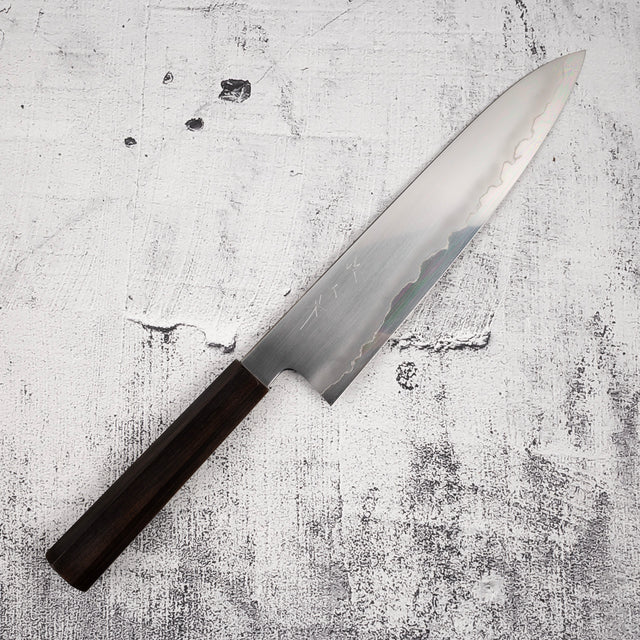
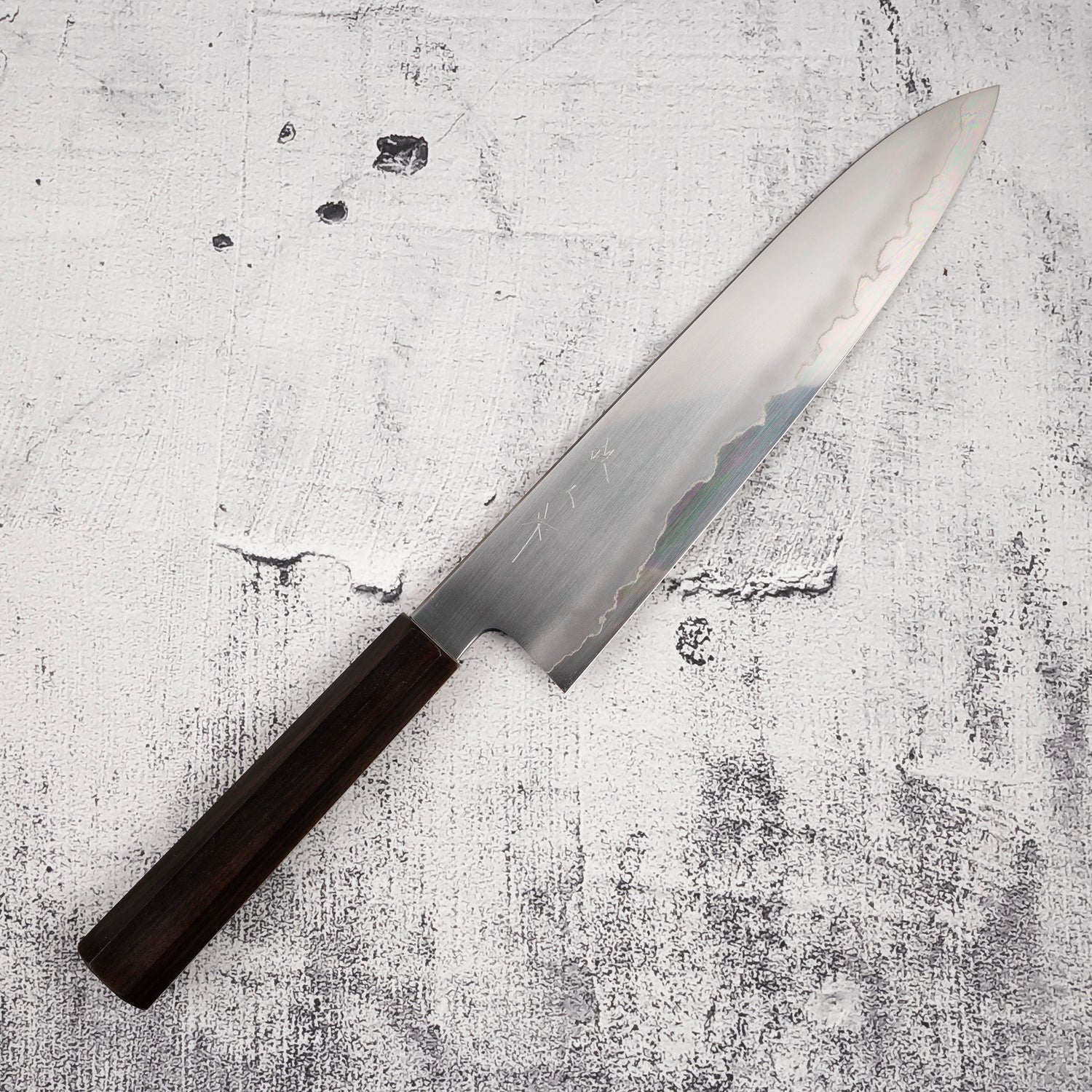
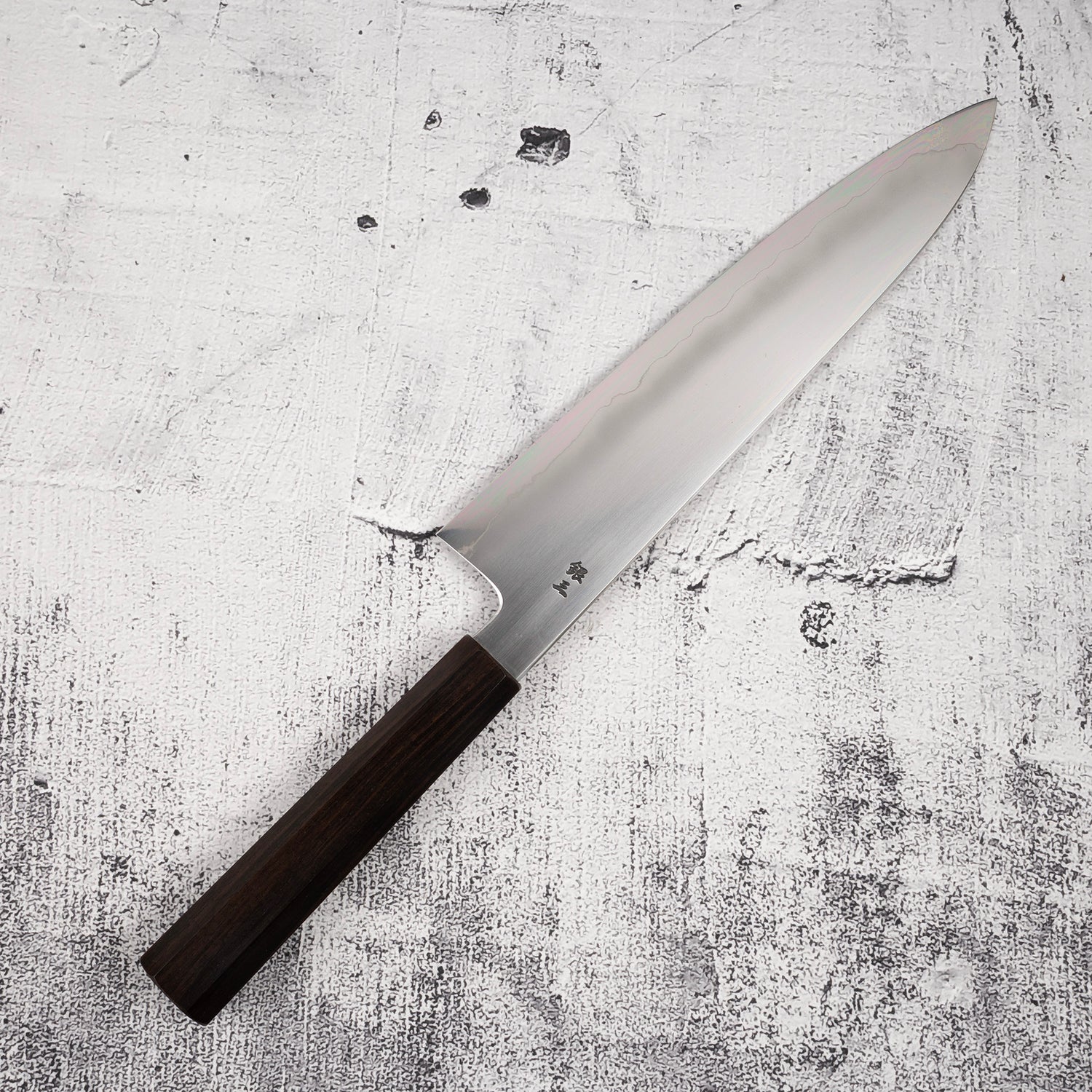
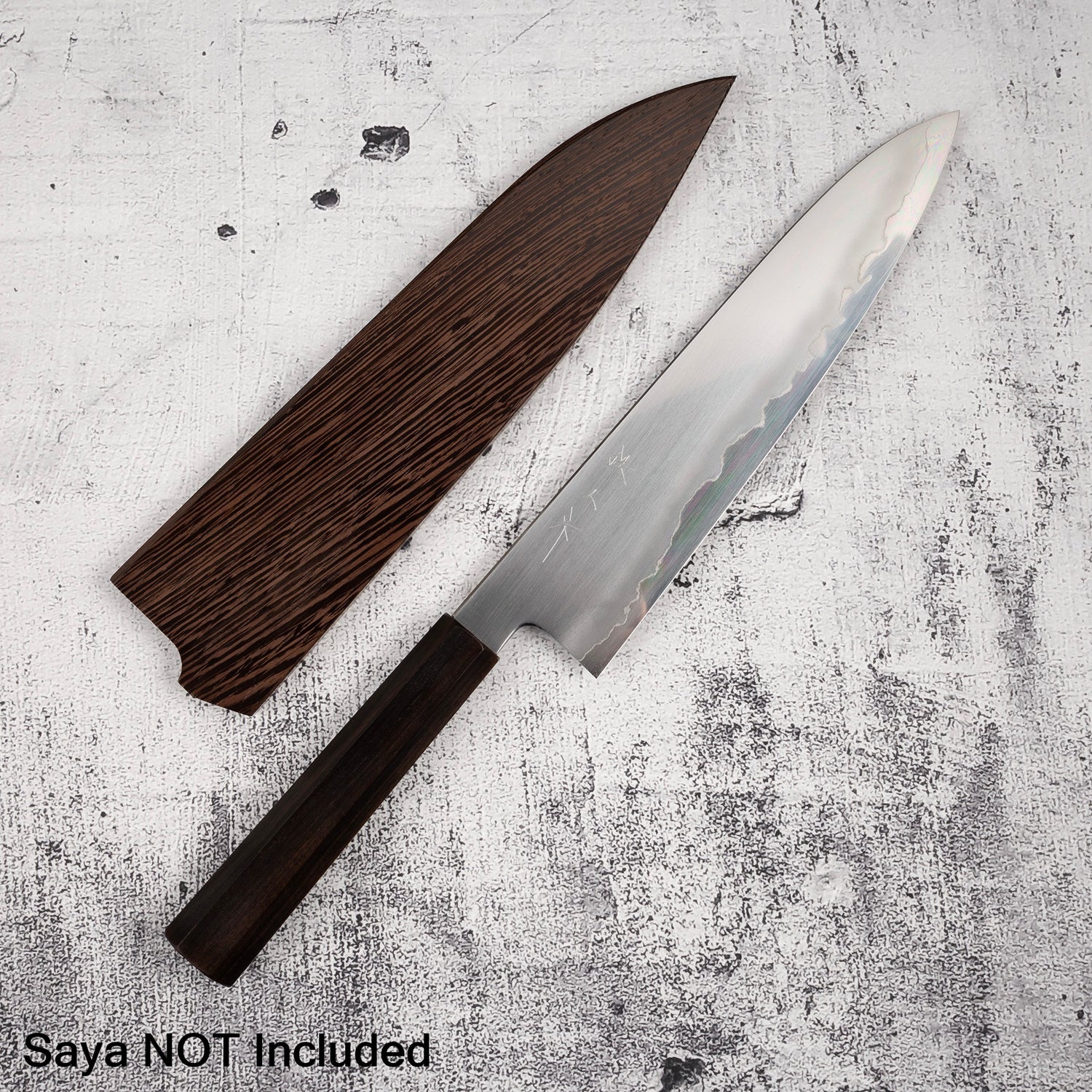
Tetsujin Ginsan Ukiba Gyuto 240mm Ebony Handle

Regular price $599.95

Add a saya or K&S Knife Roll to receive $20 bundle discount!

Set currency to AUD to view correct price matching.
K&S Price: AU $599.95* inc. tax , vs:
Hitohira JP AU $548.0 --8.51%

* For overseas buyers you pay no GST (10%) and low shipping rate.
Last Update: 2026-03-15T17:10:02Z

Detailed Specifications
Profile
Gyuto / Chefs Knife
Bevel Type
Double Bevel
Weight
200 g | 7.1 oz
Edge Length
233 mm | 9 11/64″
Heel Height
51 mm | 2 1/64″
Width @ Heel
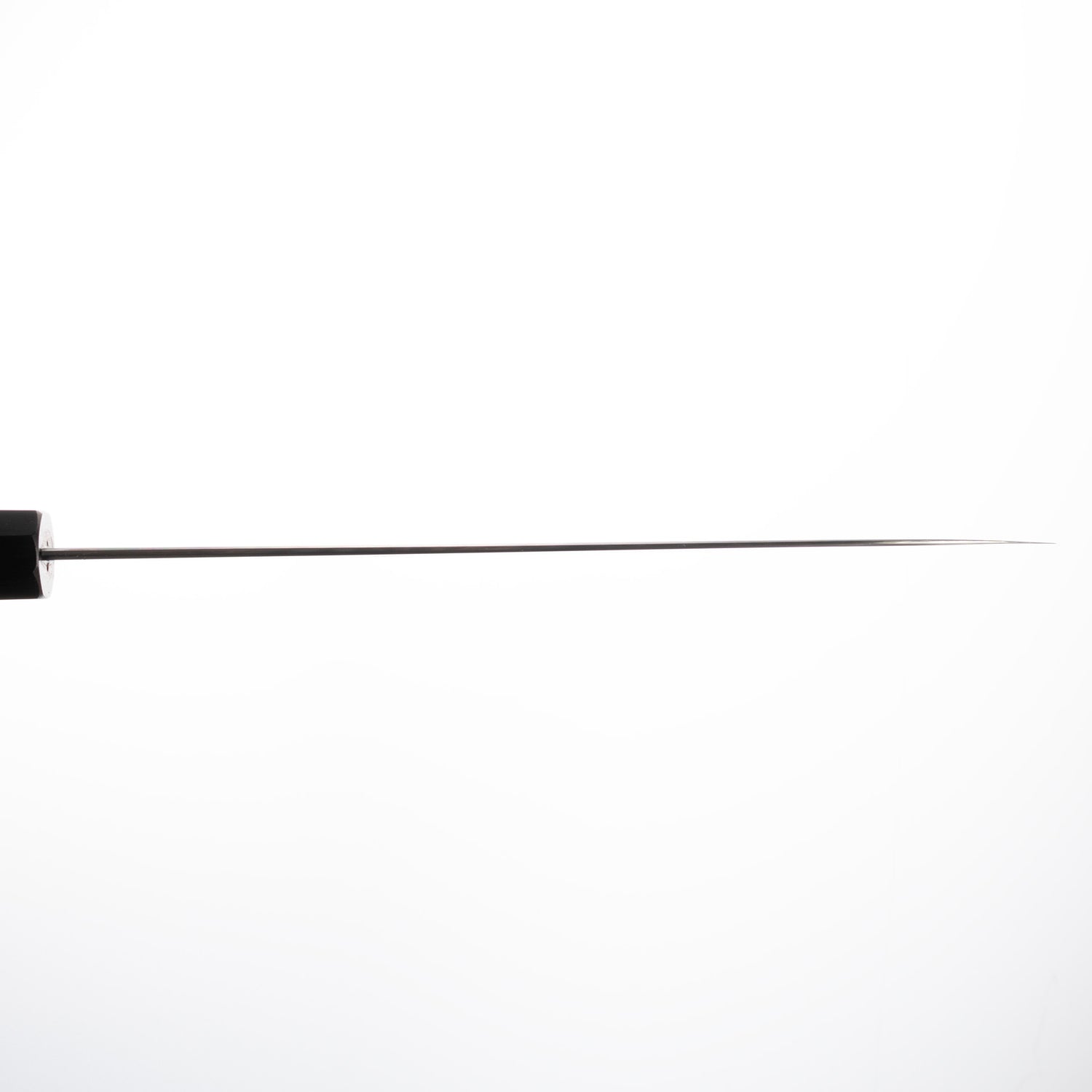
2.5 mm | 3/32″
Width @ Mid
2.2 mm | 3/32″
Width @ 1cm from Tip
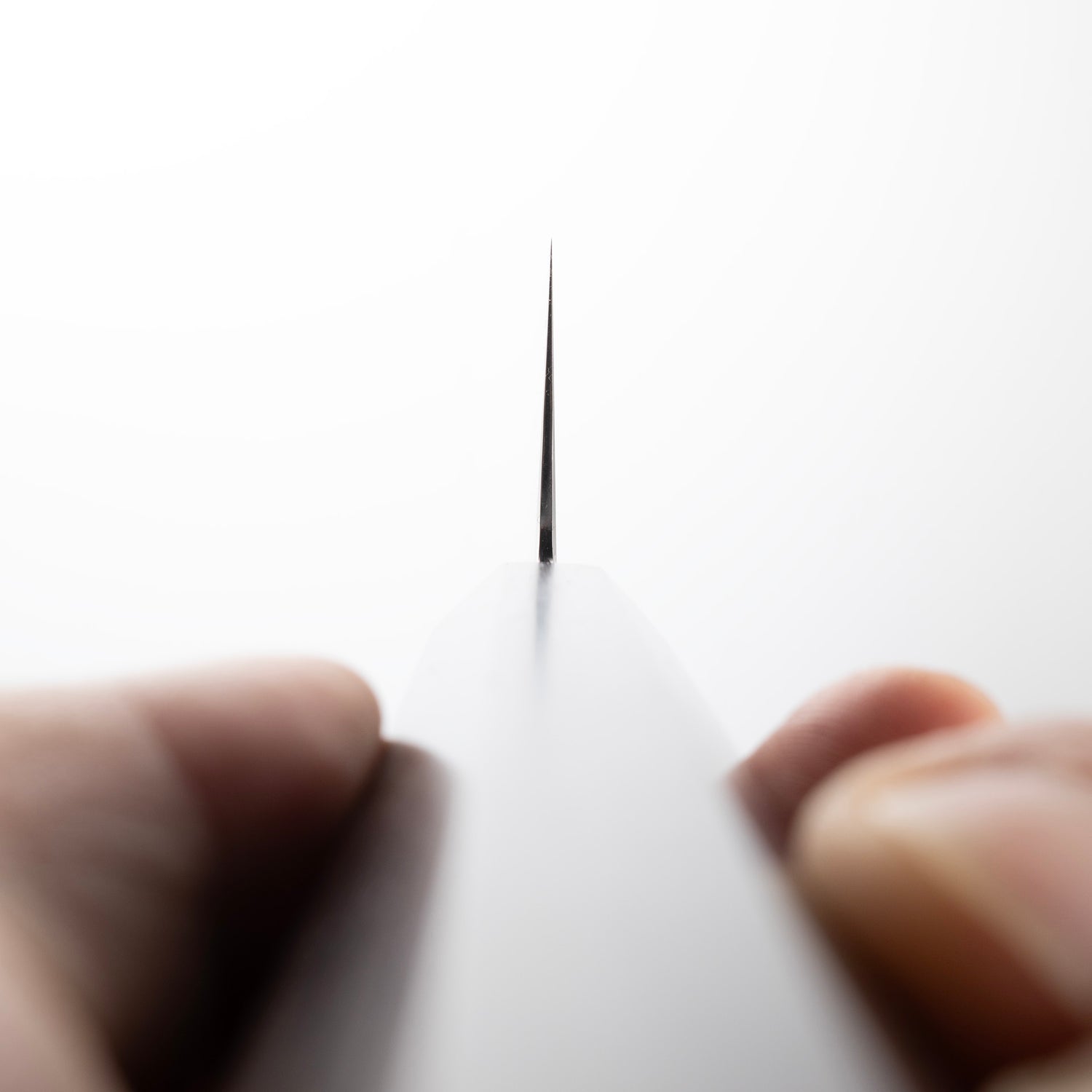
0.9 mm | 1/32″
Steel
Ginsan / Silver #3 Stainless
Blade Construction
Sanmai - Stainless Clad
Hardness (HRC)
60– 62 HRC
Surface Finish
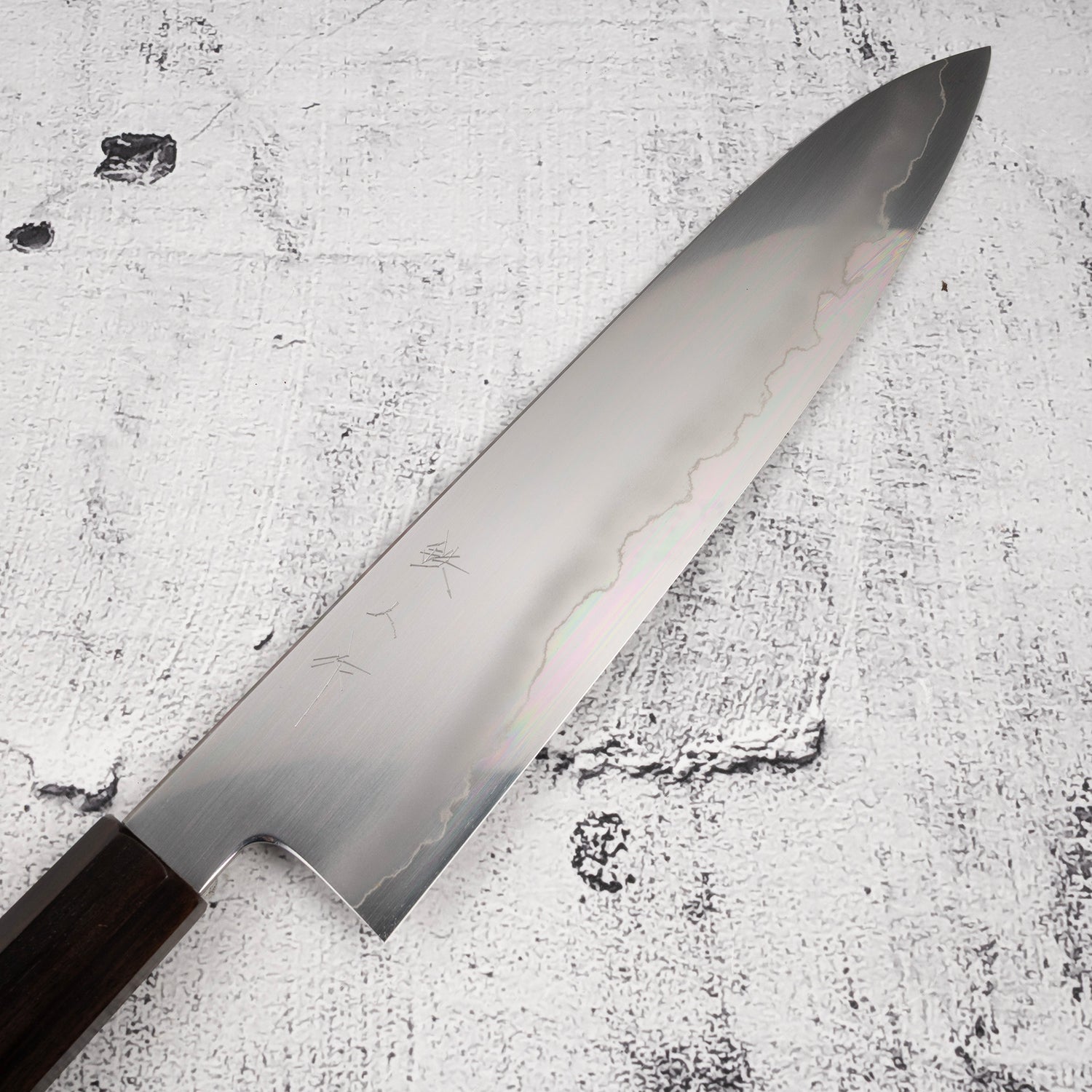
Ukiba
Handle
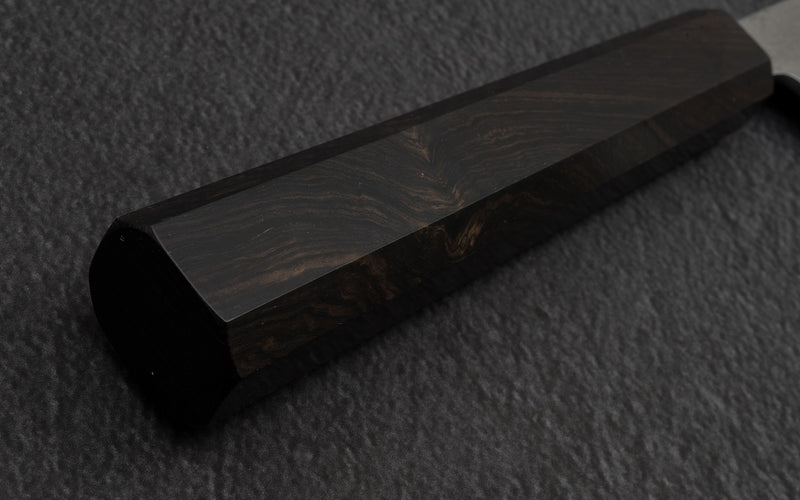
Octagonal Ebony
Region
Tosa
Best for
Pro chefsFirst-timersStudents
  • Free shipping for knives over AU$200 Australia wide.
  • World-wide shipping via DHL Express, 3 to 5 days.


The Tetsujin Ginsan shares the same quality of all the other Tetsujin lines: excellent cutting performance with a sturdy in hand feel yet glides through ingridents effortlessly.

In case you are not familar with the Tetsujin brand, it is a collaboration between two friends and colleagues: Toru Tamura and Naohito Myojin of Myojin Riki. 

Blacksmith: Toru Tamura (田村 徹)

Sharpener: Naohito Myojin (明神 直人)

Pros
  • Budget friendly
  • Excellent performance
  • Easy to look after
Cons
  • Non-premium steel
Care Instructions
  1. Don't cut hard things! Japanese knives are brittle so bone hacking is a NO NO!
  2. Wash with neutral detergent after use, and wipe dry;
  3. Please don't wash knife with dishwasher, it will damage the wood handle;
  4. Be careful not to leave the knife close to a heat source for a long time;
  5. It is a lot more dangerous to cut with a blunt knife than a sharp knife!
  6. It is best to sharpen a Japanese knife regularly on a waterstone.

Myojin Riki

The Myojin Riki Manufacturing, established by a founder who mastered his skills in Osaka, the heartland of blade-making, has been operational for over 80 years. Specializing in knives made from steel and iron, they've recently focused on stainless steel knives, valued for their light weight, resistance to rust, and exceptional sharpness. These knives are popular among both professionals and general consumers, partly due to their application of the "stacked steel pattern" traditionally found in swords. The second generation continues to innovate, customizing products to meet users' needs, while also contributing to cultural preservation through their involvement with local traditional performances and blade repairs.

Full story

The Myojin Riki Manufacturing, established by a founder who mastered his skills in Osaka, the heartland of blade-making, has been operational for over 80 years. Specializing in knives made from steel and iron, they've recently focused on stainless steel knives, valued for their light weight, resistance to rust, and exceptional sharpness. These knives are popular among both professionals and general consumers, partly due to their application of the "stacked steel pattern" traditionally found in swords. The second generation continues to innovate, customizing products to meet users' needs, while also contributing to cultural preservation through their involvement with local traditional performances and blade repairs.

Naohito Myojin, the second generation craftsman of Myojin Riki, has dedicated himself to continuing the legacy of his predecessor's craftsmanship in knife making. Focused on innovation while preserving traditional techniques, Naohito has made a significant mark in the field by customizing knives that not only meet the practical needs of users but also contribute to the cultural heritage through his involvement in local traditions and blade restoration efforts. His work reflects a deep commitment to quality, functionality, and the preservation of the artistry involved in Japanese knife making.

Est. 1950
Read more about Myojin Riki
Myojin Riki — Tosa
Open in Maps app
Tip: add map_place_id for best accuracy.

About This Knife

Profile
3D

Gyuto Chefs Knife

牛刀

A Japanese chef's knife is known as a gyuto (牛刀 ぎゅうとう) gyūtō?), literally meaning 'beef knife'. Its blade resembles a flatter version of a French chef's knife. Japanese cutlery is known for sharpness due to its acute blade geometry, and the hardness of the steel used, sometimes exceeding 60 HRC on the Rockwell Scale A typical western chef's knife may be sharpened to an edge angle of 20-22°, while a Japanese gyuto generally has a sharper edge angle of 15-18° (or even lower), which requires a harder, more brittle grade of steel. In recent years Japanese gyuto have gained in popularity with western chefs.

A modern chef's knife is a multi-purpose knife designed to perform well at many differing kitchen tasks, rather than excelling at any one in particular. It can be used for mincing, slicing, and chopping vegetables, slicing meat, and disjointing large cuts.
General Purpose
Learn more
Steel
Ginsan / Silver #3Stainless
C
1.0%
Cr
13.0%
Mn
0.7%
Si
0.35%
P
0.03%
S
0.02%
Hardness 60–62 HRC
5558616467

Ginsan / Silver #3 Stainless

Ginsan steel, also known as Silver 3 or G3 steel, is a type of stainless steel used in high-quality kitchen knives. It is appreciated for its ability to offer the traditional feel and sharpness of carbon steel while providing the corrosion resistance of stainless steel. Ginsan steel contains a moderate amount of carbon, chromium, and other alloying elements that ensure a good balance between edge retention and ease of sharpening. This steel is particularly favored for its fine grain structure, which allows for a very sharp edge, and its resistance to rust makes it a popular choice among professional chefs and home cooks who seek the performance of carbon steel without the maintenance challenges. Ginsan steel knives are known for their durability, ease of care, and excellent cutting performance, making them a preferred option for those looking for high-quality stainless steel cutlery.
Manufacturer
  • Hitachi Special Steel, Japan
Learn more
Construction
Sanmai - Stainless Clad

Sanmai - Stainless Clad

Sanmai(Three-Piece) is a common construction for double bevel knives where two pieces of softer cladding steel are forgewelded to each side of a harder core steel. The harder but more brittle core steel will form the hard cutting edge after heat treating, and the softer cladding will support the core to increase the overall strength of the blade.

The soft cladding enables the thinning process to be a lot easier than a honyaki or monosteel construction. And in the case where the cladding steel are stainless in nature, it can offer protection for the carbon or semi-stainless cores against rusting and discoluoring.

Finish
Ukiba

Ukiba

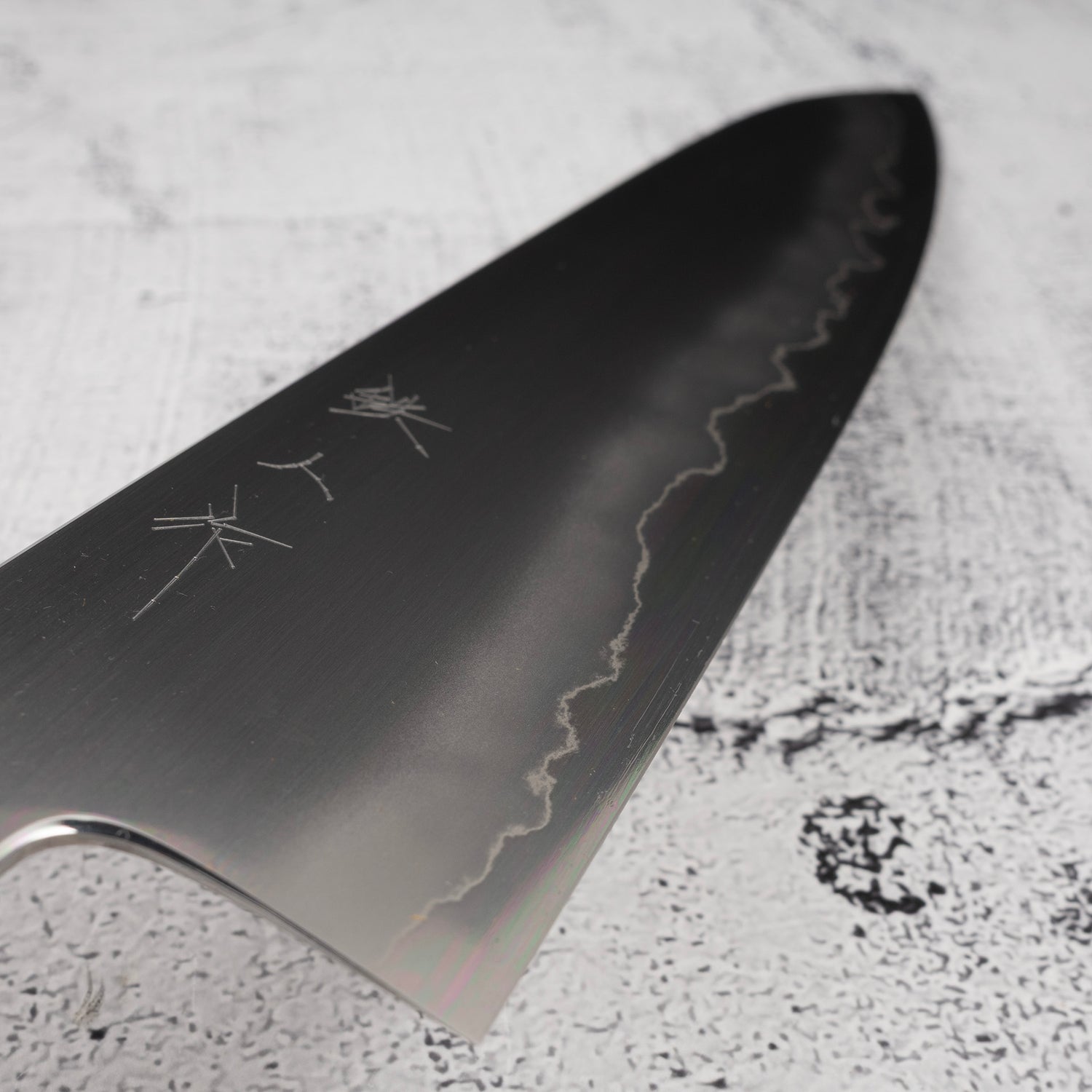
Ukiba(浮き刃, floating edge) finish describes a very specific look where the blade is finished mostly in Migaki/brushed finish, and a band of hazy matt finish is applied right above the cladding line using sandblasting. The shiny core steel contrasts with the matt band on the cladding and highlight the edge. As the cladding lines are usually wavy, the edge would looks like it's floating above a cloud, which grant this finish the name Ukiba.

Handle
Octagonal Ebony

Octagonal Ebony

Profile Octagonal WA
Material
  • Ebony

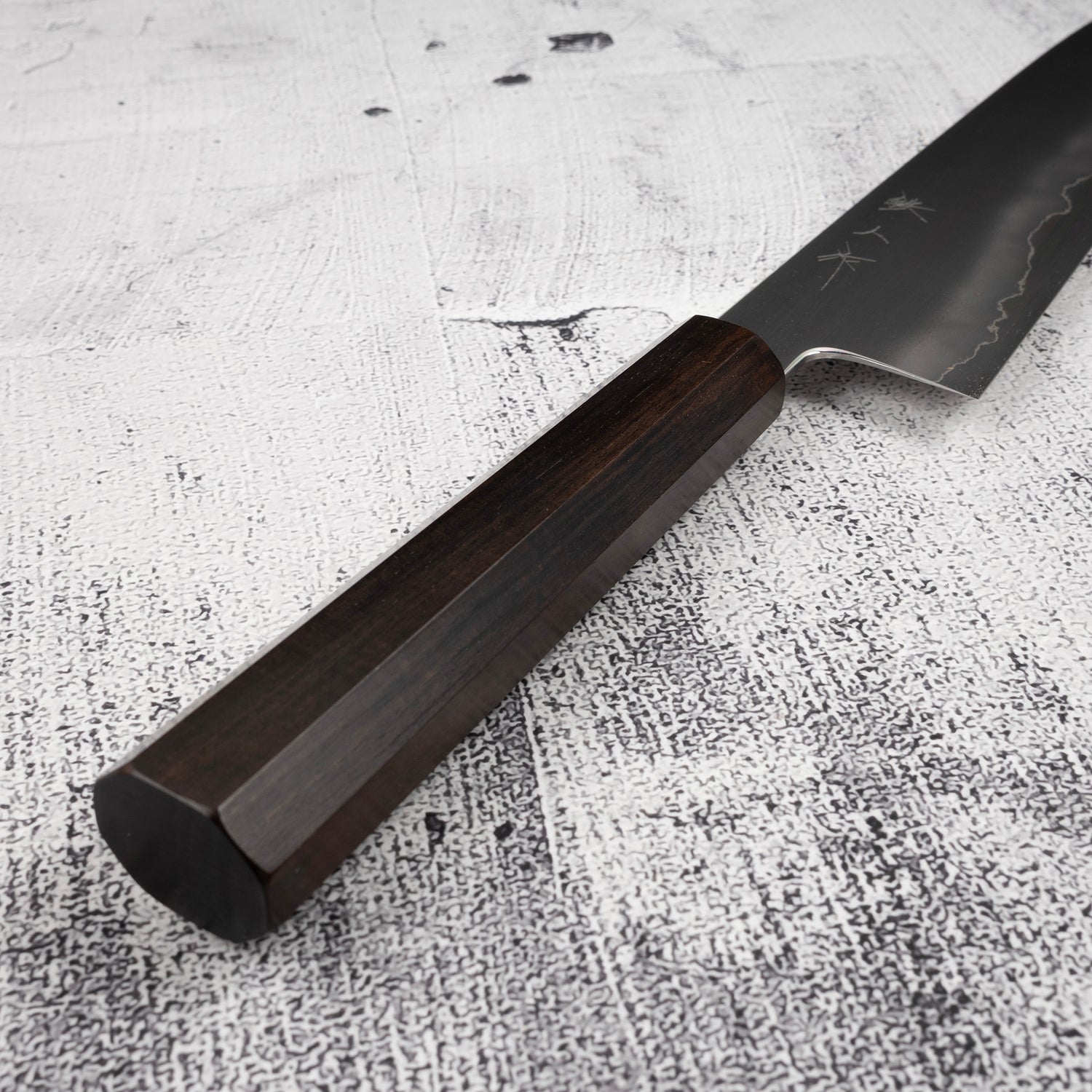
This handle, crafted from a single piece of ebony, exemplifies minimalist elegance and functional design. Its unique octagonal shape, featuring a subtle taper, offers a comfortable grip and a visually appealing geometric profile. The ebony wood, known for its deep, rich color and durability, has been meticulously milled from a single block, ensuring a seamless construction that highlights the wood's natural beauty and grain. The handle's surface has been highly polished, achieving a glossy finish that not only enhances the ebony's luxurious dark hue but also provides a smooth, tactile experience for the user. This design choice reflects a minimalist approach, focusing on simplicity, quality, and usability. The combination of the octagonal shape with the taper adds a modern twist to the classic material, making it a standout piece that blends traditional craftsmanship with contemporary aesthetics.