Crows Nest 門市現已於星期五至星期二營業,店內限定優惠等你來!

Tojiro  |  庫存單位: TOJI_GY240_F809

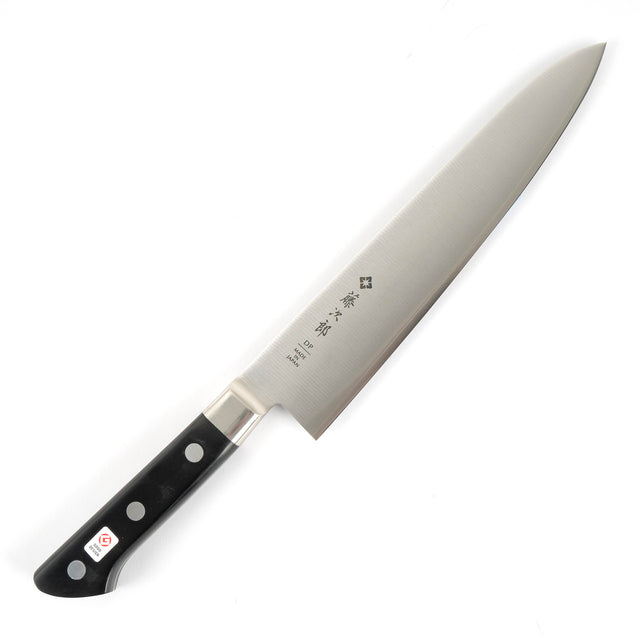
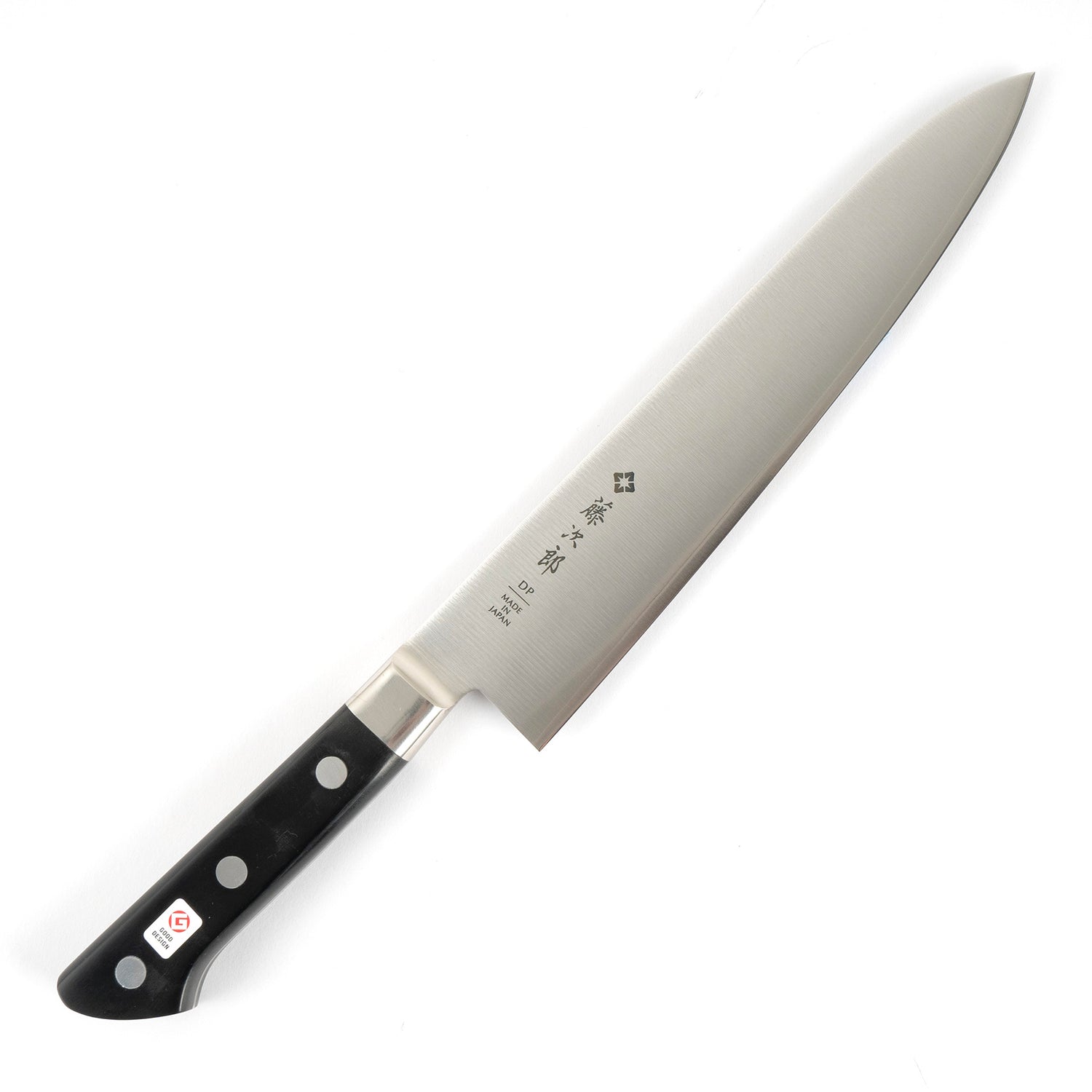
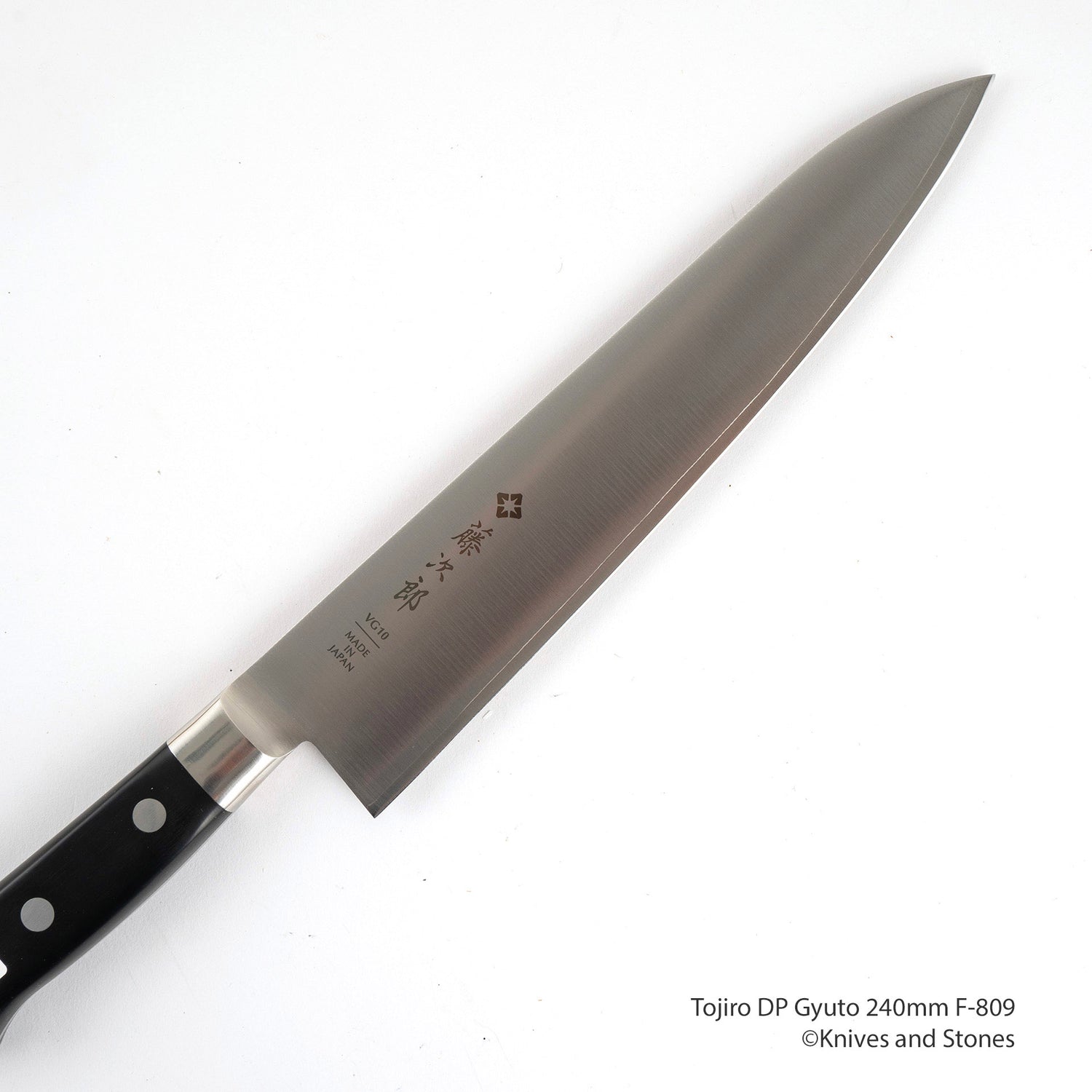
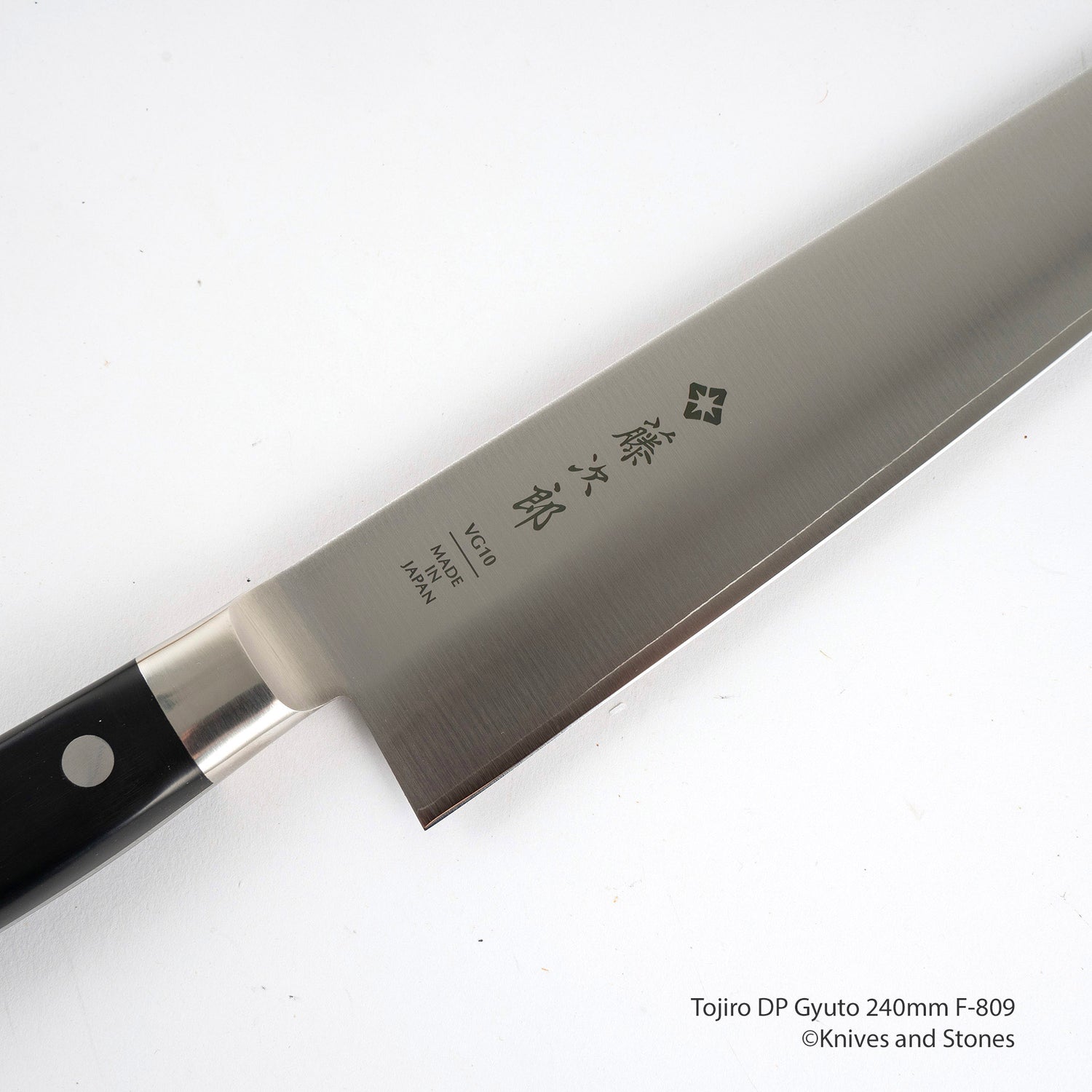
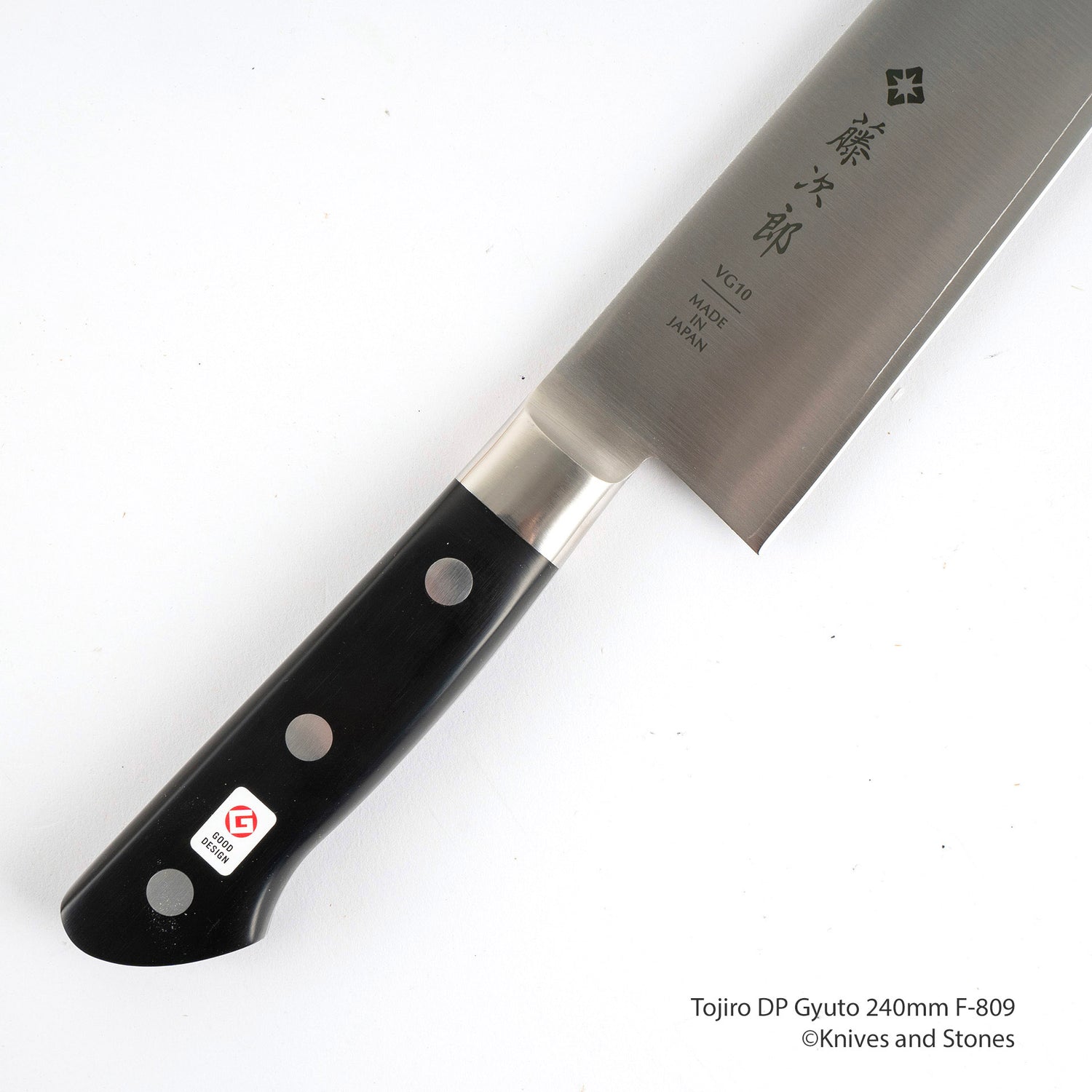
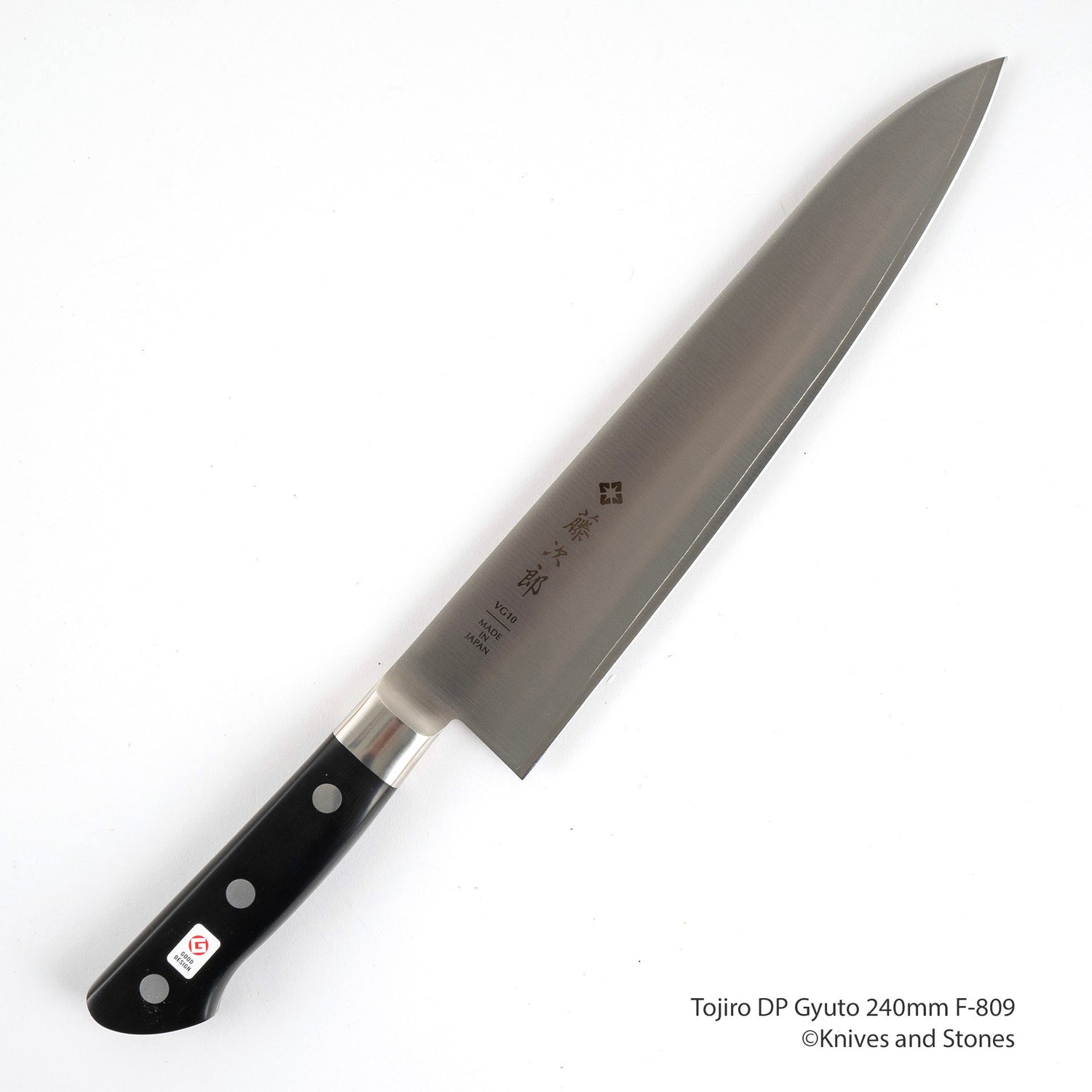
藤次郎 DP3 牛刀 240 mm F-809

正常價格 $179.95

可在Crows Nest取貨

通常會在 24 小時內準備就緒

添加 Saya 或 K&S 刀卷即可獲得 20 美元的套裝折扣!

Detailed Specifications
Line 藤次郎 DP
Profile 牛刀 / 主廚刀
Bevel Type 雙斜面
Weight 254 g | 9.0 oz
Edge Length 240 mm | 9 29/64″
Heel Height 49 mm | 1 59/64″
Width @ Heel 1.9 mm | 5/64″
Width @ Mid 1.9 mm | 5/64″
Width @ 1cm from Tip 1.0 mm | 3/64″
Steel VG10 | 不鏽鋼
Blade Construction 三枚 - 不鏽鋼夾層
Hardness (HRC) 59 - 61
Surface Finish 磨光
Handle 西式合成木(Pakka Wood)配護手
Region
Best for
  • 新手
  • 學生
    • 澳洲境內 200 澳元以上的刀具可免費送貨。
    • 透過 DHL Express 進行全球運輸,需要 3 至 5 天。


    藤次郎 DP 就是我認為日本刀市場中的「白色Toyota」,價格親民、由信譽良好的製造商大量生產,且長期以來以性價比著稱。

    芯鋼採用的是武生 VG10鋼,屬於中高階不鏽鋼,廣泛被許多刀匠採用。然而,藤次郎卻能將這款刀壓到極低的價格,甚至低到原本只能找到 AUS-8 鋼的價位。這種降價並非以犧牲性能為代價——由於規模化生產仍能確保熱處理與研磨品質,因此你依然能得到一把銳利度與刃口保持力可媲美較高價 VG10 刀的刀片。

    取而代之的是這些刀在工藝細節上的讓步:乍看之下尚可接受,但仔細檢查會發現一些小瑕疵。例如刀背偶爾有刮痕、刀身與護手接合處也有類似問題、刀柄邊緣可見膠水殘留,且刀頸(choil)並未圓滑處理,甚至能用它削馬鈴薯……通常一把藤次郎 DP 上會出現一到這樣的細節瑕疵,但大多數下只需20分鐘與幾張砂紙就能輕鬆改善。

    總而言之,藤次郎 DP 能長期保持銳利,在砧板上表現可靠;低廉價格加上相對容易研磨的特性,成為學習磨刀的理想選擇;鏡面不鏽鋼表面也能承受一定程度的撞擊與刮痕。這些特點結合起來,讓它成為一款性價比極高的門級家用刀——就像你人生中的第一輛普通白色Toyota,或許沒有Alcantara裝、雙渦輪V8引擎或四系統,但它可靠耐用,能輕鬆應付99%的日常任務,而且價格非常親民。

    優點 缺點
    • 預算友善
    • 易於維護
    • 適合家庭使用
    • 工藝細節仍有改善空間
    Care Instruction
    1. Don't cut hard things! Japanese knives are brittle so bone hacking is a NO NO!
    2. Wash with neutral detergent after use, and wipe dry;
    3. Please don't wash knife with dishwasher, it will damage the wood handle;
    4. Be careful not to leave the knife close to a heat source for a long time;
    5. It is a lot more dangerous to cut with a blunt knife than a sharp knife!
    6. It is best to sharpen a Japanese knife regularly on a waterstone.
    7. Error: Steel nature unknown

    藤次郎

    藤次郎——燕市的廚刀品牌

    藤次郎(Tojiro)是知名的日本廚刀品牌,卓越的品質與高性價比備受讚譽。源自以鋼鐵製造聞名的新潟縣,藤次郎將傳統工藝與進技術相結合,打造出美觀與實用性的廚刀。刀刃通常採用高碳不鏽鋼,以極致的鋒利度、優異的刃口保持力及抗蝕性著稱。每把刀都經過細緻打磨,確保握感舒適的人體工學手柄與整體平衡感。藤次郎提供多樣化的刀型選擇,從多功能牛刀與三德刀到專用菜切刀,滿足專業廚師與家庭主婦的需求。這種對高品質與親民價格的,使藤次郎贏得強大聲譽,成為可靠、高效且工藝精美的廚房首選。

    繼續閱讀

    「一期一會」——一生此一次

    單一把刀,我們在思考的前提下持續製造刀。人與人之間、人與刀之間的相遇,都是「一生此一次」。為了豐富這樣的邂,我們製造刀。

    藤次郎能為刀做什麼?

    藤次郎廚刀的歷史始於1955年推出的不鏽鋼水果刀。當時人們普遍認為不鏽鋼刀不如碳鋼鋒利。因此,藤次郎致力追求「真正好切的刀」,不斷改進與演進。如今,我們的企業理念是「是鋒利」。

    我們希望傳遞的不只是鋒利感,更希望在使用時能感受到刀貼合手掌、如夥伴般自然的觸感。我們持續努力,精心製造每一把藤次郎廚刀,讓它為顧客帶來最大的滿足感。

    傳統與創新

    在製造過程中,傳統與創新並存。

    我們最常使用的材料是夾鋼(Clad steel),鍛造方式沿襲日本刀「 katana」所用的玉鋼。另一方面,我們所在的地區——新潟縣燕市,自古便是金屬製品生產中心。數十年來,當地的金屬加工技術不斷進步,我們也深諳奧妙。

    在此基礎上,我們融合傳統與現代科技:利用沖壓機將夾鋼板材壓制出形狀。換句話說,我們同時發揮了夾鋼的優質特性與現代機械的高效生產力。

    儘管機器提升了效率,但決定性因素仍來自工匠的技藝與直覺。由於刀是人們直接握在手中使用的,我們極度重視製造技術——這是製造的根本。因此,我們嚴格監控每一道工序,直到每位藤次郎工匠滿意為止。由傳統工藝與現代工業技術打造的藤次郎廚刀,在日本乃至都備受推崇。作為日本少數幾家完整自主生產的廚刀廠家之一,藤次郎將持續追求傳統繼承與技術創新的平衡。

    工匠

    藤次郎的工匠希望您能感受到使用時那份「喜」——一種源自連結的樂趣。他們每日精進技藝,製造出值得信賴的刀。只要我們仍是工匠,提升技能的道路就永無止境。我們真心為日復一日地製作刀。這樣用心孕育出的產品,正是製對顧客最真摯的訊息。

    從燕市到世界

    我們在這片自古以來便傳承著製造精神與技術的區域,持續生產最高品質的廚刀。藤次郎所在的燕市,是著名的「燕・三条」金屬加工產業群聚地。

    自17世紀初開始生產日本釘(Wakugi)起,此地就陸續製造刀、飛機零件、管件、器、金屬雕刻、等產品,並逐漸擴大出口規模。

    藤次郎將來自日本代表性產區的優質產品帶向世界,各工序的專業廠商在友誼與競爭中發展技術與製造精神。

    Beyond a single knife, while thinking of its user, TOJIRO continues to manufacture knives. Person to person, person to knife, both are “once in a lifetime”. To enrich such encounters, we manufacture knives.

    What TOJIRO can do for knives

    The history of TOJIRO knives started with stainless steel fruit knife that was released in 1955. At that time, it was said that stainless steel blades were not sharp enough compare to carbon steel. Therefore, TOJIRO pursued in earnest “cuttable knives”, realizing continuous improvement and evolution. Today, our corporate message is “More than just sharpness”.

    We wish to deliver not only sharpness, but the feeling that a knife fits comfortably in your hands as you use it, becoming your partner. We are continuing our efforts to carefully manufacture knives so that a single TOJIRO knife can provide the greatest satisfaction to our customers.

    Tradition and innovation

    Both tradition and innovation are being existed in our manufacturing process.

    Clad steel is the material that we use most in our production. It is forged in the same way of forging a traditional Japanese sword “Katana” from Tamahagane.

    On the other hand, our area, Tsubame in Niigata Prefecture, is well-known as a center of manufacturing metal products. Modern technology of metal processing has been therefore improved over the decades in here and we are good at it.

    Here we merge the tradition and the modern technology – pressing out sheet of clad steel by stamping machine. In other words, we are taking advantage of quality of clad steel and high production efficiency of modern machines.

    Although machines have allowed the process to become more efficient, the deciding factor lays, of course, in the skill and instinct of craftsmen. As knives are tools that people directly take into their hands to use, we value the skills of producers, which are the foundation of manufacturing, and keep a close eye on all processes until each craftsman at TOJIRO is completely satisfied. Our knives that are produced by traditional techniques and modern industrial technology are held in the highest regard not only in Japan, but around the world. We, TOJIRO, will continue to strive for a balance between inherited tradition and technical innovation as one of the few full-scale production kitchen knife manufactures in Japan.

    Craftsman

    The craftsman at TOJIRO would like you to feel the “joy” of using a tool with attachment. They hone their skills to manufacture worthy knives daily. As long as we are craftsmen, the road to improving our skills will never end. We are earnest about making knives daily for users. A product born such devotion is a message from maker to customer.

    From Tsubame-Sanjo to the world

    We continue to manufacture the highest quality knives in this region where the spirit and techniques of manufacturing have been handed down since ancient times. Tsubame, where TOJIRO is located, is a metal-processing industrial cluster area known as “Tsubame-Sanjo”.

    Since manufacture of Wakugi (Japanese nail) started in the early 1600s, knives, flies, pipes, copperware, metal-carving, cutlery and other products have been manufactured here, and have increased in export.

    TOJIRO has delivered products from the representative production area of Japan to the world, where professional vendors of each process have developed techniques and spirit together through friendly competition.

    “燕市不鏽鋼刀——為50個國家的廚房帶來工廠級精準與高性價比。”

    創立 1953 | 昭和28年
    特色 平價不鏽鋼廚刀 |流程自主製造 |球分銷
    官網 tojiro-japan.com Instagram @tojiro_jp 了解更多 藤次郎
    藤次郎 — 燕
    Profile: 牛刀
    Profile

    牛刀

    主廚刀

    日本主廚刀被稱為牛刀(牛刀 ぎゅうとう gyūtō),字面意思是「牛肉刀」。它的刀型類似法式主廚刀的較平直版本。日本刀具以鋒利著稱,這源於其銳利的刀刃幾何結構,以及所用鋼材的高硬度,有時在洛氏硬度標準上可超過 60 HRC。典型的西式主廚刀開刃角約為 20–22°,而日本牛刀通常具有約 15–18°(甚至更小)的更鋒利刃角,這就需要使用更硬、也更脆的鋼材。近年來,日本牛刀在西方主廚之間越來越受歡迎。

    現代主廚刀是一種多用途廚刀,設計目的是在各種不同的廚房工作中都有良好表現,而非只在某一項特別出眾。它可用於剁碎、切片和切丁蔬菜、切割肉類,以及分割大型肉塊。
    Composition

    VG10 Element Composition

    Compare with
      VG10
      15.0% 11.3% 7.5% 3.8% 0
      C Carbon 1.0%
      Primary hardening element. Raises hardness and wear resistance — but too much increases brittleness and corrosion susceptibility. As a reference: German 1.4112 (~0.5%) sits at the low end; VG-10 (~1.0%) is a common mid-range; SG2 (1.25–1.45%) and ZDP-189 (~3.0%) represent high and extreme ends respectively.
      C
      1.0%
      Cr Chromium 15.0%
      Raises corrosion resistance; 13%+ qualifies steel as stainless. Also improves hardenability and wear resistance. In kitchen use, higher chromium levels contribute to a slight drag or sticking sensation when cutting — a trade-off for the rust resistance it provides.
      Cr
      15.0%
      V Vanadium 0.25%
      Forms extremely hard carbides for superior edge retention. Also refines grain structure, improving toughness.
      V
      0.25%
      Mo Molybdenum 1.0%
      Improves hardenability and toughness. Boosts corrosion resistance and helps the steel hold hardness under heat.
      Mo
      1.0%
      Co Cobalt 1.55%
      Allows higher hardening temperatures, increasing hardness and wear resistance. Slightly reduces toughness at high levels.
      Co
      1.55%
      C — Carbon Cr — Chromium V — Vanadium Mo — Molybdenum Co — Cobalt
      Hardness 59–61 HRC
      555759616365+
      Steel
      VG10
      Category
      不鏽鋼
      Manufacturer
      日本武生特殊鋼
      Hardness
      59–61 HRC
      Steel

      VG10

      • Manufacturer
        • 日本武生特殊鋼
      • Nature 不鏽鋼
      • Hardness59–61 HRC
      越前VG10鋼是一種高階不鏽鋼,卓越的刃口保持力與鋒利度而聞名。它是日本廚刀製造商廣泛採用的材質,常見於各式廚刀、折疊刀及固定刀片中。

      VG10鋼可達到約60-61 HRC的硬度,部分製造商甚至將提升至62 HRC,確保優異的刃口保持性與抗蝕能力。此鋼材成分15%鉻(Cr)以提供抗蝕性、1%鉬(Mo)及1.5%鈷(Co)用於強化基體結構,從而實現高硬度與耐用度。添加的釩(V)可精緻微觀組織,並與Cr和Mo形成硬質碳化物,提升耐磨性。VG10鋼易於打磨、加工性能良好,且支持高溫回火產生二次硬化,適合用於可能接受高達約450℃表面塗層處理的刀片。均衡的特性使VG10鋼極多樣性,無論是廚房刀、通用刀或機械刀片,皆能表現出色。
      Construction: 三枚 - 不鏽鋼夾層
      Construction

      三枚 - 不鏽鋼夾層

      三枚(Sanmai,三層夾鋼)是雙刃刀常見的構造方式,將兩片較軟的夾鋼分別鍛接在較硬的核心鋼兩側。經過熱處理後,較硬但較脆的核心鋼會形成堅硬的切刃,而較軟的夾鋼則支撐核心以提升整體刀身強度。

      軟夾鋼讓刀身修薄過程比本燒或單鋼構造容易許多。而當夾鋼本身是不鏽鋼時,更能為碳鋼或半不鏽鋼芯材提供防鏽與防變色的保護。

      Finish: 磨光
      Finish

      磨光

      「Migaki」在日文中意指「拋光」或「磨亮」。在日本廚刀領域,「Migaki仕上」並不專指鏡面拋光,而是泛指從半光澤到細膩柔和光澤的各種拋光處理,而非極度反光的表面。Migaki拋光的主要目的是提升刀具的功能性與美觀,重點在於打造光滑表面以增強抗腐蝕性並減少切割時的阻力,而不是單純追求鏡面效果。

      Handle
      Handle

      Handle Specs

      • Profile 西式帶護手
      • Material
        • Pakka 木材

      西式Pakka木手柄是入門級刀具的常見選擇,有些情況下會配有焊接在刀身上的護手。Pakka木是以木材與樹脂層壓製成,形成一種緻密的材料,可以呈現不同顏色的層次。與天然木材相比,這種工程木更堅硬且吸水性更低,此外,其低廉的生產成本也使其成為入門級刀具握柄的理想選擇。

      1 / 5